
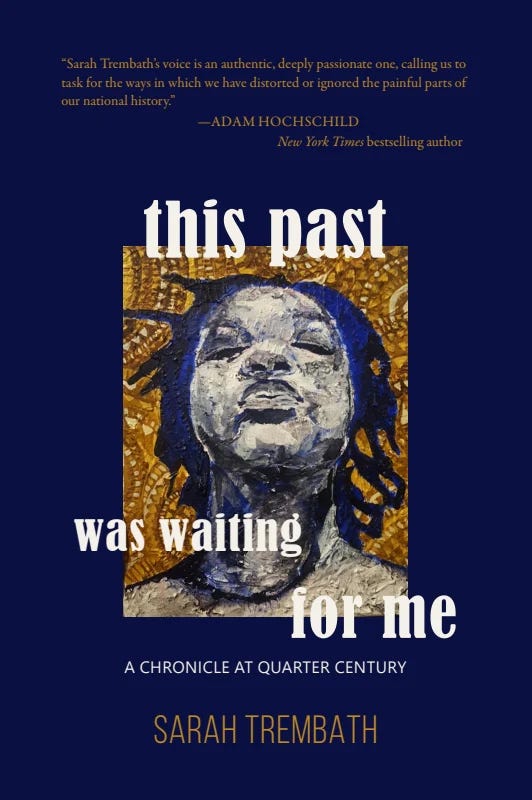
Afro•Reads is climbing the ladder. My community is finding me, and I am welcoming them with open arms, including Sakani of Lazuli Literary Press, who graciously sent me a copy of This Past Was Waiting for Me. Before her, no one had ever sent me a title to review, and this will be one for the memory books!
Borrowed from an excerpt of a Lucille Clifton poem, is lyrically written by American University professor Sarah Trembath, an educator who put her entire being into revising her personal essays for inclusion in the book.
i am accused of tending to the past
as if i made it,
as if i sculpted it
with my own hands. i did not.
this past was waiting for me
when i came,
a monstrous unnamed baby,
and i with my mother’s itch
took it to breast
and named it
History.
she is more human now,
learning language everyday,
remembering faces, names and dates.
when she is strong enough to travel
on her own, beware, she will.
The Collected Poems of Lucille Clifton 1965-2010
Like golden threads, this work weaves selective quotes, artwork, poetry, and primary sources, making it a necessary addition to academic and personal bookshelves. As part of her archives, the original writings date back over a decade and serve as a reminder to salvage all creative work, especially that crafted by ancestors.
Dedicated to the Shaw, DC neighborhood, colloquially known as Chocolate City, the first essay explores how gentrification modifies neighborhoods, while simultaneously destroying culture and erasing history. Although the newcomers don’t know what was, natives typically view a lack of knowledge as a caustic inability to care.
Of course people who came just for college (like Ta-Nehisi Coates and like me), Natives (like my artist friend and the guy I met at the playground), and former crack-smokers (like Castaneda) remember the same place differently. And, as far as this letter to you goes, of course people who have been here a mere five years understand the place differently than those who’ve been here 25, 45, 65, or more.
But only one of the above narratives lives on among newcomers like you: the one in which old DC was bad and new DC is good. “Stars and bars!” “I’m DC as fuck!”18 as many of you say. And also: Get over it, Natives. We’re here now, as much of your behavior suggests. (Pg. 27)
A divided power, DC, the municipal corporation, simultaneously heralds saviors who revitalize drug- and crime-infested eyesores. However, that isn’t typically how it goes; urban areas are never initially, yet become blighted, and once unfit for habitation, gentrification begins.
Of the essays included, Defusing the Cultural Bomb and Digging in the Hole The Explosion Left in Our Slave History (Four Parts) is a most cherished because it is a deep dive that casts blame squarely onto the shoulders of good ole Uncle Sam, the popular personification of the federal government. An analysis of the strategy to take over the educational system by deliberately including false narratives in history books, online sources, and statutes and monuments designated by the National Park Service, it corrects the record!
A distillation of artistic experience, this work suggests that misinformation is race-based misremembering. An account of Black history that does not shy away from the richness or horror embedded in the eras of America’s existence, this work adds context to the placement of minorities at the low end of financial and economic scales by literally describing it as contemporary colonization.
Filled with primary sources, including excerpts from the Slave Narratives, the author stoked the historian flame burning deep in my bones by unraveling the misconstruction that America’s shame began with slavery; for clarity, it began when Columbus claimed the lands inhabited by the Indigenous groups that primarily inhabited what we now call the Caribbean.
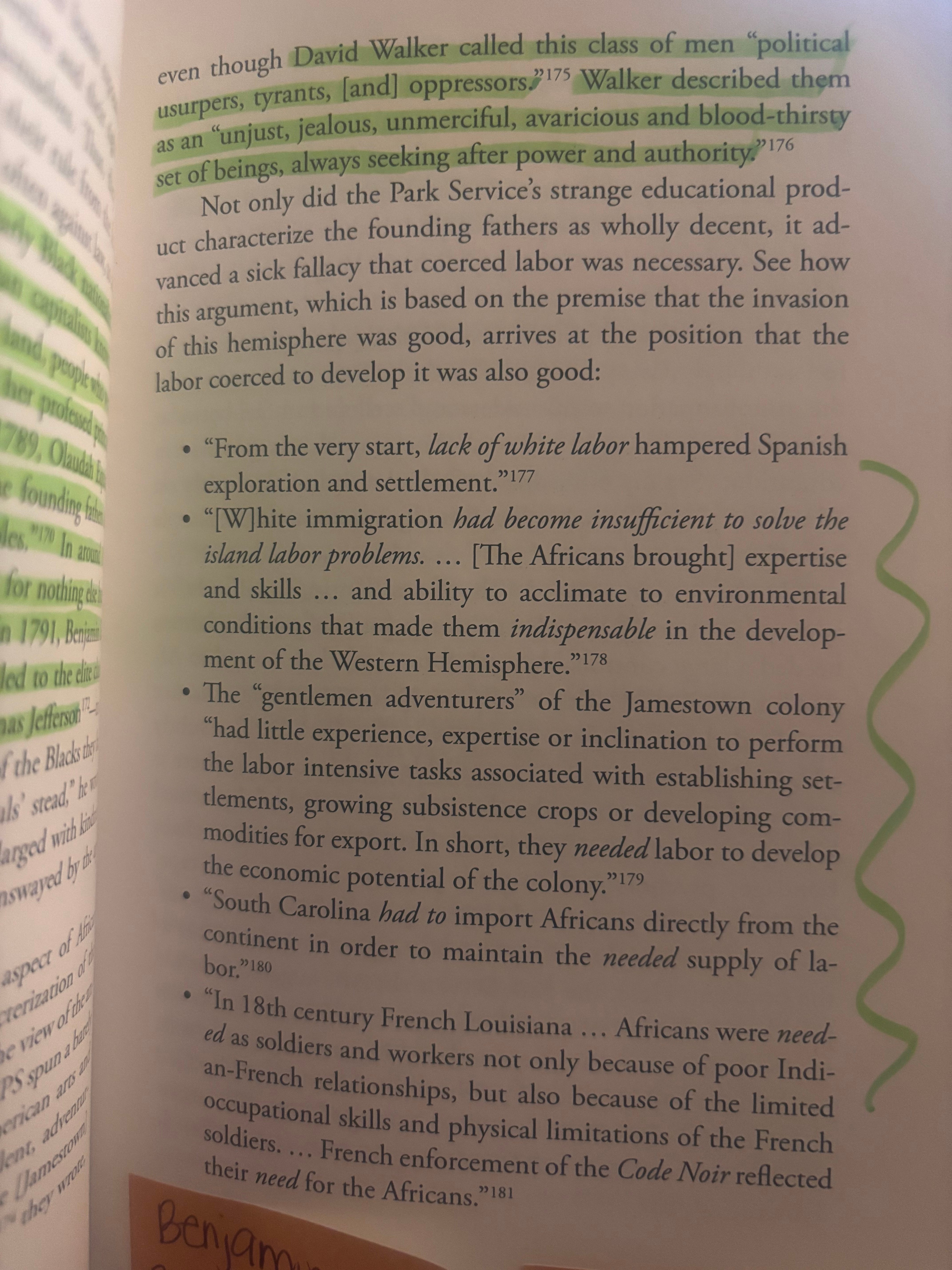
Uncertain how to convey the message of this book’s value, I carried it around for a while after reading. Groundbreaking and multifunctional, this one should be used both at home and in classrooms to dispel misunderstandings and support convictions that ‘Manifest Destiny’ is a façade.
About the Author 🔎
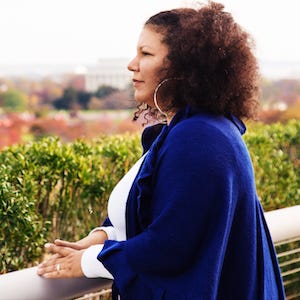
Dr. Sarah Trembeth teaches writing, storytelling, and literature at American University, where she has been a faculty member since 2014 and is currently the executive director of AUS’s Anti racist Research and Policy Center. Dr. Trembeth is a poet and decolonial scholar who writes extensively on matters of social justice, and is a recipient of the American Studies Association’s Gloria Anzaldúa Award. She lives in Baltimore, MD with her family.
Comments
Nothing yet. Say the first thing.
Sign in to join the conversation.