
This newsletter is published every Wednesday at 5pm WAT.
Gotten published from an opportunity you found on African Writer Weekly? Help us celebrate you by telling us all about it.
1. Call for Pitches: The Chemistry Issue
Good Tape is exploring collaboration, conflict, and the cultural conditions that make podcasting projects click or combust. They’re interested in the bonds that hold projects together, the experiments that push them forward, and the circumstances that can just as easily pull them apart. What makes a collaboration click or combust? Does chemistry have to be organic, or can it be crafted? Where does it arise in unexpected ways?
They’re looking for wide-ranging musings on chemistry in podcasting — stick to the theme or subvert it — as we continue exploring the ideas, people, and forces shaping our industry, and we want to hear from you.
Deadline: 15th May 2026, 5 p.m. EST | Pay: from $175 to $1,500
Things to note:
Please pitch only one piece per submission. You’re welcome to submit multiple submissions.
They prefer pieces that report on broader trends and incorporate others’ experiences alongside your own.
“We’ll also take anything from compelling conversations to industry insights to analyses of podcasting’s wider cultural impact (for better or worse). If you’re ready to write but still unsure of what fits here, look to general entertainment coverage as an example — after all, this is TV now.”—GT
For more information, click here
To pitch them, use this link
2. Pitch to The Atavist Magazine
The Atavist Magazine publishes one incredible true story every month. They specialize in longform narratives, the kind you want to read to the very last word. Atavist stories can be historical or current; they can be about crime or science, adventure or romance; they can be rooted in investigative reporting or in first-person experiences. What unites them is their narrative approach—the stories are plot- and character-driven, cinematic, the kind of yarns you don’t want to stop reading because you can’t wait to see what happens next.
Deadline: Rolling | Pay: From $6,000
Things to note:
The best way to understand theor approach to storytelling is to read some of their most recent stories and the award-winning pieces in the archive
They are not looking for news dispatches or analyses, think pieces, trend pieces, reviews, round-ups on a subject, profiles of well-known figures, and most any other topic-driven feature. Also, blog posts, op-eds, and academic papers.
Range: 8,000 to 30,000 words.
They offer a story fee plus, if applicable, a budget for expenses.
They guarantee 25 percent payment for all assigned stories, because that’s the equivalent of their kill fee.
In your pitch, tell them the story you want to write as if you were telling it to friends over dinner—be compelling and demonstrate that you have a strong grasp on the narrative. Also, show why you are the person to write the story: How are you uniquely situated to tackle the material? Do you have the cooperation of key sources? What other legwork have you done on the reporting front?
There is no minimum or maximum length for pitches. Use your judgment.
For more details, see here.
Send pitches to seyward@atavist.com and/or jonah@atavist.com.
3. Call for Proposals: Applied African Speculative Fiction – Volume 2
Applied African SF is a project funded by Imperial College and Anglia Ruskin University etc. Following the forthcoming publication of Applied African Speculative Fiction: Volume 1 (Ping Press, 2026), they are pleased to announce a new call for proposals for Volume 2, focused on the future of work in the age of artificial intelligence.
They are seeking proposals from African and diasporic fiction writers interested in developing short stories in collaboration with researchers and practitioners working at the forefront of AI and technology. They are particularly interested in stories that engage with AI not as abstraction, but as something embedded in labour systems, economic structures, everyday life, and cultural and political realities.
Deadline: 20th May 2026 | Pay: £200 per story (with an additional honorarium for expert collaborators)
Things to note:
Possible areas of exploration include (but are not limited to):
Labour, automation, and new forms of work
Data labour, content moderation, and invisible infrastructures
AI governance, regulation, and power
Platform economies and digital economies
Sustainable and alternative technological futures grounded in African ontologies
Collective organising, resistance, and new solidarities
The relationship between AI, care, and community
Visions of African-led technological futures
Selected writers will be paired with an expert collaborator—AI researchers, data scientists, technologists, policymakers and entrepreneurs. They will participate in:
at least one online workshop (hosted by Anglia Ruskin University)
a series of 1:1 conversations with their paired collaborator
To apply send a short proposal (max one page)
a brief outline of your story idea or themes
areas of interest (e.g. AI, labour, specific sectors or contexts)
a short bio, including previous publications (if any)
Please also indicate whether you are a member of the African Speculative Fiction Society (ASFS) or another writers’ organisation or whether you already have a potential collaborator in mind (optional)
Submit to: rethinkingfutures@gmail.com
Story length: approximately 1,000–5,000 words
Applicants will be notified in early June.
To read the full call, click here.
Get the best opportunities straight to your inbox every Wednesday!
4. Submit to Brittle Paper’s Horror Anthology
Over the past decade, there has been a surge in the African horror literary genre, and Brittle Paper wants you to be a part of it. They are publishing an anthology that will include 15 pieces from writers from the continent and diaspora, and they are looking for work that will make their readers shiver and leave the light on when they go to bed.
So, if you have short stories or a haunting poem that will illicit eerie, creepy, ghostly vibes, submit to the anthology!
Deadline: 31st May 2026 | Pay: Unstated amount
Things to note:
All submissions need to consist of unpublished work
Poetry submission word limit: 500 words
Fiction, Nonfiction, and Essay submission word limit: 3500 words
Include an author biography, along with nationality
Simultaneous submissions are allowed, but each submission needs to consist of only one piece of original and unpublished work.
Submissions need to be in Word format
AI use to construct work is not allowed.
Selection process will take place after the deadline, and late submissions may not be included in the selection process.
Email subject heading: Horror Anthology Submission
Email your submission to submissions@brittlepaper.com
5. Tolka Literary Journal Call for Non-Fiction
Tolka is a biannual literary journal of non-fiction. They publish work that is formally promiscuous and does not always fall into neat categories. For their next issue, they are currently open to all forms of non-fiction: personal essay, memoir, reportage, travel writing, auto-fiction, and the writing that falls in between.
Deadline: 31st May 2026. | Pay: €600
Things to note:
1,000–3,000 words.
All submissions should be previously unpublished.
Submissions should be in one .doc, .docx or PDF attachment and double-spaced.
Simultaneous submissions are welcome but notify them if your work be accepted elsewhere.
For practical and economic reasons, they discourage the use of images unless integral to a piece of writing.
Familiarise yourself with the kind of writing they publish before submitting.
Submissions must be original work and cannot infringe upon the right or copyright of any person or entity.
They do not publish AI-generated work, unless explicitly created for artistic purposes, and clearly framed as such.
To submit, click here.
6. Call for Poetry & Fiction Submissions
Philly Chapbook Review is open to original poetry submissions of three to five poems and either one piece of short fiction or up to three pieces of flash fiction for their Summer 2026 issue and beyond.
Deadline: 31st May 2026 | Prize: $10
Things to note:
Poetry: They’re looking for serious poetry that has something important to say. This can mean poems about topics important to you, poems telling us about who you are or what you think, or an unusual or clever creative style. Poems don’t need to deal with weighty subjects, but should be meaningful.
Submissions must include at least three poems.
Each submission is judged as a whole. Poems must be 40 non-space lines or less.
Submissions must be at least 50% English
Fiction: They are open to a wide range of styles and genres within literary fiction, including speculative, flash fiction, experimental, and hybrid work. By “literary,” we mean fiction that shows strong attention to language, voice, and character, rather than relying primarily on plot or genre conventions.
One story of 1,000-5,000 words.
Up to three piece of flash fiction of 500-1,000 words each.
All submissions will be considered for Best of the Net and Pushcart nominations at the end of the year.
Poems and stories may not be previously published in a periodical. (They define periodicals as magazines, websites, blogs, or social media feeds with more than 500 followers.)
7. SLF Older Writers Grant
Since 2004, the Older Writers Grant has been awarded annually to writers who are at least fifty years of age at the time of application to assist such writers who are just starting to work at a professional level. These funds may be used as each writer determines will best assist their work. This grant, as with all SLF grants, is intended to help writers working with speculative literature.
Speculative literature spans the breadth of fantastic writing, encompassing literature ranging from hard science fiction to epic fantasy, including ghost stories, horror, folk and fairy tales, slipstream, magical realism, and more. Any piece of literature containing a fabulist or speculative element would fall under their aegis
Deadline: 31st May 2026 | Pay: $1000
Things to note:
Required materials include:
A cover letter: Include a short (500-1000 words) autobiographical statement describing your work thus far, including date of birth, and a bibliography of previously published work, if applicable. Applicants need not have prior publishing credits to apply.
A writing sample: Up to 10 pages of poetry, 10 pages of drama, or 5,000 words of fiction or creative nonfiction. If you are sending a segment of a novel, novella, or novelette, please include a one-page synopsis as the first page of the document. The submitted work must be speculative, as defined above.
To apply, click here.
8. African Human Rights Prison Writing Contest
The African Secretariat of the International Human Rights Art Movement (IHRAM) announces the Call for Entries for the African Human Rights Prison Writing Contest, a continental literary initiative created to spotlight the voices, experiences, and human rights challenges of individuals who have passed through the African correctional system.
This year’s edition opens the door not only to currently incarcerated persons but also to formerly incarcerated individuals who wish to share their personal reflections, testimonies, and human rights experiences during and after imprisonment. The contest seeks to transform lived prison encounters into documented knowledge that can inspire reform, healing, advocacy, and public awareness.
Deadline: 31st May 2026 | Prize: Total of $225
Things to note:
Eligible Participants
Current inmates in any correctional facility across Africa.
Former inmates who have regained their freedom but have stories, insights, and reflections to share regarding incarceration and human rights.
To ensure depth, clarity, and strong human rights engagement, only essays or articles are accepted. Entries may explore:
human rights conditions in prisons
rehabilitation, reintegration, and personal transformation
injustice, dignity, and access to fair treatment
health, education, and welfare in correctional settings
discrimination, vulnerability, and resilience
reform recommendations and personal testimonies
Submission Guidelines
All entries must be original, unpublished, and written by the participant.
Length: 800–1,500 words.
Entries must be typed.
Current inmates must submit through their facility librarian, welfare officer, or designated authority.
Former inmates must include a short bio indicating their facility, country, and year of release.
Each entry must clearly state the writer’s full name, Country, correctional facility (or former facility), country, and contact information.
Designated officers and individuals should send entries to:
African Secretariat, International Human Rights Art Movement (IHRAM)
Email: wole@humanrightsartmovement.org and copy ihrafafrica@humanrightsartmovement.orgFor additional information or clarification, contact the Contest Coordinator via:
oluwoleadedoyinonline@gmail.com
9. Na-La Mapambazuko Afrika Award
Writers Space Africa is pleased to announce the Na-la Mapambazuko Afrika Award, established by Tanzanian writers Nahida Esmail and Richard Mabala to encourage the writing of original fiction in Kiswahili for children and adolescents.
The award was created in response to the limited availability of engaging fiction in Kiswahili for older children and teenagers, despite the importance of this age group in developing strong reading cultures across Africa. The prize aims to promote imaginative, original, and inspiring stories that speak to the realities and experiences of young readers. For the 2026 edition, submissions are invited for fiction suitable for readers aged 9–12 years.
Deadline: 1st July 2026 | Prize: $150
Things to note:
Genre: Fiction
Language: Swahili only
Word count: 1,000 – 3,000 words (excluding the title)
Eligibility: Writers of African Descent
The winner will receive: A cash prize, certificate of achievement, mentorship from an experienced children’s author, introduction to a publisher, and opportunity to connect with writers across Africa.
Second- and third-place winners will receive all of the above except the cash prize.
Please note that submissions will be disqualified if they:
Contain AI-generated content
Have been previously published
Are copied from other sources
Retell traditional stories without originality
Are outside the word limit
Are scripts, excerpts, poems, or song lyrics
Use characters or settings from existing works
Please click here to submit.
Send this to a writer who needs it ❤️
10. Call for Submissions: Spiritual Drip (Nigeria & Ghana)
Archiving(dot)fashion journal is a yearly print magazine that critically engages with a select theme, as an anchor to understand our relationship with clothing, fashion and the African fashion landscape. The theme for their first journal issue is Spiritual Drip, and they’re inviting Nigerians and Ghanaians to submit manuscripts.
They are exploring the complexity of the relationship with religion (specifically Christianity) and clothing. How does faith shape our wardrobe in and outside religious contexts? Conversely, how does our wardrobe dictate our performance of faith? Beyond trends, what overlapping ideas are present in Nigerian and Ghanaian relationships with Christianity, fashion, and being?
Deadline: 1st July 2026, 11.59 PM WAT | Pay: $80-$100
Things to note:
They’re interested in stories informed not only by observation and critical analysis, but also by lived experience on the continent.
Personal, historical, communal, and contemporary stories that are exploratory and offer a better understanding of the Nigerian and Ghanaian experience are welcome, within these sub-themes:
Church in contemporary fashion design
Church style and larger culture
Church style and personhood
Writing that expands our understanding of how people use the affordances of digital technologies to signal and perform their [lack of] faith: In addition to the Dress Like Your Miracle trend of the Hallelujah Challenge, examples of story directions include using Christian religious style as an aesthetic to grow an online audience, using gospel music for get-ready-with-me videos, exploring AI as a style assistant, and poking fun at religious theatre.
For more details on the above sub-themes, see here
Anyone living in Nigeria or Ghana for at least 8 months in a year, can submit.
The subject line for your submission email be: [Pitch] [Submission Title]. For example: “[Pitch] The Devil Wears Kaunda”.
The following information should be in the body of your submission email:
Completed essay (or written submission) between 1,500 - 2,500 words in a Word Document
The city in Ghana or Nigeria where you live and work.
A paragraph describing why this story matters to you, what you’re aiming for with the story and how this fits into the larger theme of Spiritual Drip. They don’t expect you to be a Christian to write, but we’d love to know why you care about the story.
Send your submission to info@archiving.fashion
Click here to submit an opportunity.
If you did not receive a reply to a previous editorial inquiry by 31st January 2026, please send a query to editor.afww@gmail.com.
Prose of the Week
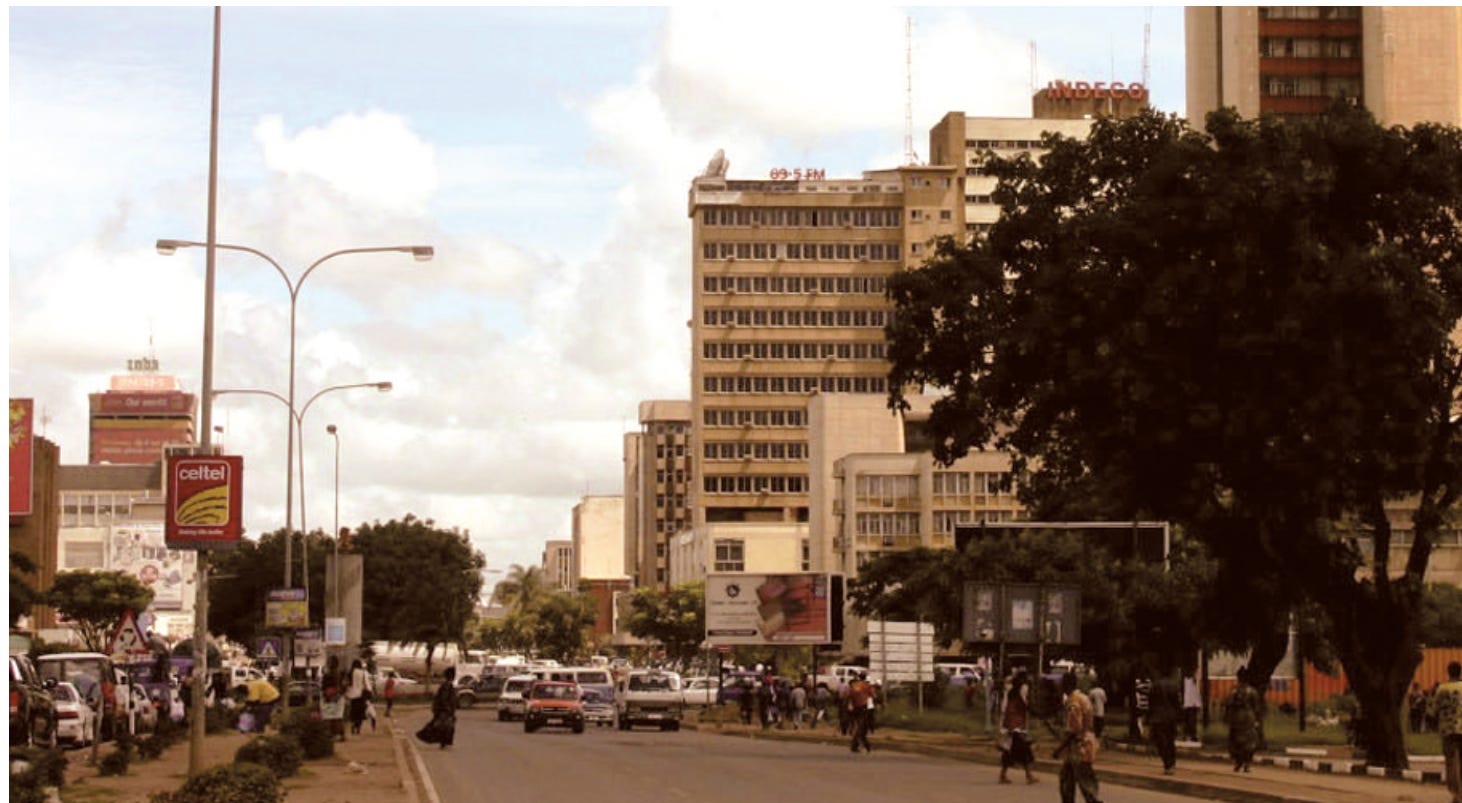
Madam’s Sister | Mbozi Haimbe (Zambia)
Elina, the maid, is doing her thing of standing in a nice shaded spot on the veranda, while I stew in the heat. I carry on sweeping the paved front yard, sweat trickling down my back. The flagstones are patterned with black oil stains from the cars that park here at day’s end. I pass my straw broom over these patches which refuse to be cleaned, even with water and soap. They make me look bad; lazy.
‘Hey, Cephas . . . Cephas. Hey, Mr Nyambe, it’s you I’m talking to. Did you hear what I said? Madam’s sister, the one who lives in the UK, she’s coming at the end of the week. You better move your lazy bones and clean this yard, yah? Make sure it shines London style.’
My hand tightens on the broom. One: I’m not lazy. How can I be lazy, me? I’m the gardener. I’m the guard. I’m the car washer. And also the odd-job-man for all four households within the gated cluster of detached houses.
Two: shine London style. I can’t even begin to interpret Elina’s demand…
If you’d like your already PUBLISHED prose featured in ‘Prose of The Week’ please fill this form.
Poetry of the Week
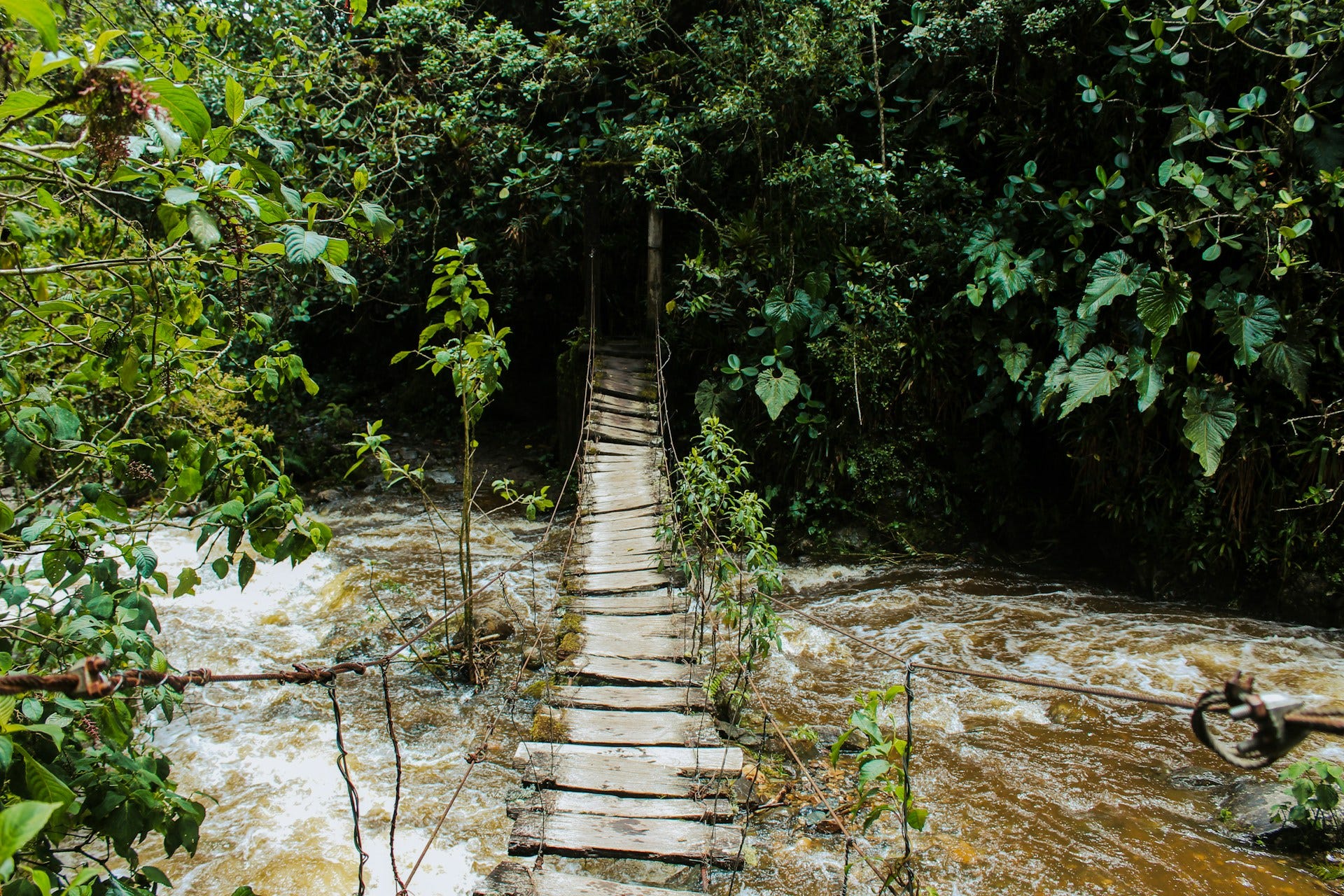
Photo by Backroad Packers on Unsplash
Point of No Return | Taonesesa Karidza (Zimbabwe)
Part of me is in denial
I’m in the middle of the sea on a narrow shaky bridge as I turn my head to see how the other wide stable bridge is going…
I’m in the middle….
There’s no turning back now.
If I go back, I might miss the point of this moment
I will miss it
In the moment of no return, I feel my Soul shift and surrender…
If you’d like your already PUBLISHED poetry featured in ‘Poetry of The Week’ please fill this form.
Thanks for diving into our newsletter! Don't miss out—subscribe now (if you haven’t) for a weekly curated list including writing competitions, publishing opportunities, grants, fellowships, and content crafted to fuel the growth of African writers. Join the literary journey!
Zvinhu Zvikufambire mushe (May things go well for you—Shona, Zimbabwe)
Comments
Nothing yet. Say the first thing.
Sign in to join the conversation.