
This newsletter is published every Wednesday at 5pm WAT.
Gotten published from an opportunity you found on African Writer Weekly? Help us celebrate you by telling us all about it here.
Iron Oak Editions is both book publisher and a quarterly online and print literary journal. They are now accepting manuscripts of poetry, fiction, and creative non-fiction. As a publisher, they are committed to the principles of diversity, equity, and inclusion, and want to hear from underrepresented voices of all types
Deadline: 13th July 2026 | Pay: Book Deal
Things to note:
General Formatting Guidelines
All submissions should be in Times New Roman, 12pt font, single-spaced, one-inch margins.
Please include page numbers.
They can only consider work written in English, but welcome British, Canadian, Australian, and New Zealand English in addition to American English.
Please proofread and only send us polished, completed work.
Poetry:
Submit full-length manuscripts of approximately 60-80 pages paginated consecutively with a table of contents.
Include a cover page with a clear title of the work.
Please single space poems.
Include a cover letter that describes your work that also includes a short 3rd person biography of no more than 150 words.
If your work is a simultaneous submission, please let us know immediately if it is published elsewhere.
Writers may not submit more than once per calendar year.
Fiction:
An excerpt containing the first 7,000 words of your manuscript, ending at a natural break in the narrative (going very slightly over the word limit, if strictly necessary, is permissible).
A traditional query letter, comprising a general narrative introduction to your book, 2-4 comparable titles, a brief third-person bio of approximately 100 words, and a note as to why you are sending your work to IOE.
A synopsis of 1-2 pages, outlining the characters, situation, narrative arc, progression, themes, conflicts, resolutions, and overall conclusion (complete with spoilers). Note that there may be some overlap between the synopsis (a more detailed document) and the introductory portion of the query letter.
JAY Lit publishes creative writing, poetry, prose (stories and narratives), plays, with a storyline in ANY language used in Africa, such as Swahili, Amharic, Yoruba, Zulu, Chichewa, English, French, etc. Submissions must be by, about, and/or for born-in-Africa youths. For the purposes of the Journal, ‘African’ is defined according to place of birth or heritage. It is not related to colour or race.
Deadline: 31st July 2026 | Pay: Nomination for JayLit Annual Prize
Things to note:
All submissions must be the original creation of the individual submitting them, and they cannot have been previously published elsewhere.
Please note that while the content they publish is mostly by youth aged 15 to 35, they also publish older individuals whose work is made with this age bracket in mind.
– Use 12-point Times New Roman
– Double-space your work with justified alignment
– British and American English are accepted, but please be consistent
– Add page numbers at the bottom of each page
– Send documents in MS Word format
Simultaneous submissions are accepted.
If your submission is not in English please include a short summary in English of what your submission is about when you send it.
Remove your name and every identification detail from the document
Poetry:
For short poems, they want poems of up to 20 lines each. You can submit up to 5 short poems at once. For longer poems, they want 21-50 lines. Please submit only one long poem at a time.
Please send your submission to poetry.submissions@jaylit.com. In the subject line, indicate if your submission is a long poem or short poem(s), put your name and the title of your submission. If you’re submitting a packet of poems, put the number of poems in the subject line instead.
Prose:
For short stories and personal essays (CNF), they want between 1,000-4,000 words. For shorter prose (flash fiction or flash CNF), they want between 250 and 1,000 words.
Please send your submission to prose.submissions@jaylit.com. In the subject line, indicate if your submission is a short story, a personal essay, a flash fiction, or a flash CNF, put your name and the title of your submission. E.g. [Short Story – Sipho Adewale – Laugh Laugh Laugh].
Plays:
For short plays, they want up to 4,000 words. For longer plays, they want between 4,000 and 20,000 words.
Please send your submission to prose.submissions@jaylit.com. In the subject line, indicate if your submission is a short play or a long play, put your name and the title of your submission. E.g. [Long Play – Sipho Adewale – Laugh Laugh Laugh].
Critical Essays and Reviews:
Send to ibrahim.ibrahim@jaylit.com. Word count should not exceed 2,000 words.
For translations, make sure you’ve secured the rights to the original text if you’re interested in submitting translated work to us. Please send a pitch to ibrahim.ibrahim@jaylit.com to discuss further.
This issue of Magma aims to highlight and celebrate the best of Black poetry in the UK and across the African diaspora. By creating a space solely for Black poets, they want to demolish any imagined boxes that Black writers might feel they must create within.
“We want poems that centre Black perspectives and that are in dialogue with: the legacies, consequences and lived experiences of those in Africa and the diaspora. We welcome poems across time periods and temporalities that express the under-explored breadth and depth of Black experiences. There are some great poets out there waiting for an opportunity to be seen; here’s your chance.”—Magma
Deadline: 31st July 2026 | Pay: unstated
Things to note:
They welcome poems that have not been previously published in print, online, or broadcast.
They accept simultaneous submissions, but please withdraw your submission or contact them if it is accepted for publication somewhere else first.
You may submit up to 4 previously unpublished poems: ONLINE in a single Word document.
Click this link to submit
Open Arts Press is a publishing house dedicated to nurturing and sharing African stories. They champion writers whose voices carry history, imagination, and truth to build global pathways for their work. They are have now offering the Open Arts Prize for the best unpublished fiction by an African/Black author, on the theme: inheritance.
“Whether your work explores family history, cultural memory, intergenerational conflict, or personal transformation, the judges are seeking fiction that tells the truth with boldness, grace, and originality.” —CWS (source)
Deadline: 31st July 2026, 11:59 PM WAT | Pay: $500
Things to note:
Maximum Word Count: 3,500 words
Submission Format: Microsoft Word (.doc or .docx), Times New Roman or Garamond, 12-point font
All submissions must be written in English, original and unpublished.
Only one submission per writer
Simultaneous submissions are permitted, but writers must withdraw their entry if it is accepted elsewhere.
Send submissions to submissions@openarts.press
For more info, see here.
IHRAM Press—The International Human Rights Art Movement—was founded out of artist-activist Tom Block’s passion to use creativity to spur positive social change. They are now open to submissions for an issue dedicated to amplifying the voices of women of colour.
This issue will explore stories of hope, resistance, and resilience—shining a light on the struggles, strengths, and creativity of women of colour worldwide.
“We also acknowledge that terms such as “women of colour,” “BIPOC,” or “BAME” can be limiting, centering whiteness in ways that feel triggering or reductive. We invite contributors to self-identify in the ways that feel most authentic to them. This issue is a platform for visibility, empowerment, and art as resistance. We recognize that not all inequalities are experienced the same way. Therefore, we wish to highlight intersectional feminism in this collection and amplify those voices.”—IP
Deadline: 1st August 2026 | Pay: up to $50
Things to note:
They’re looking for:
Experiences of discrimination and inequality (health, social, political, economic).
Intersectional feminism: recognizing that inequalities are lived differently across identities and contexts.
Cultural and generational stories—memories, traditions, and the legacies women carry.
Creative expressions of solidarity, empowerment, and collective care.
Short stories/essays: 2500 words or less
Poetry: Maximum 5 poems per submission, one publication per author.
Include the call you are responding to in the email’s subject line. And in the email include:
Your full name and/or pen name.
Your country of residence.
A brief third-person bio (roughly 100 words). If your bio includes references of your past work, feel free to provide links!
A brief foreword to your piece (between 300-500 words), explaining your inspiration for creating it, background information, explanation of key characters, and any other key insight for the reader.
Submit your work to submit@humanrightsartmovement.org
World History Encyclopedia’s international historical and mythological short story contest is now open for submissions. Stories should be set at least 50 years ago, with historical stories set against the political, social, and cultural climate of the event a participant wants to write about. For mythological stories, writers should make it clear which myth they are writing about, but the time period and place of the original myth can be changed.
Deadline: 22nd August 2026 | Prize: Custom artwork + book + lifetime membership
Things to note:
Historical fiction:
A story set at least fifty years ago, which takes the social, political, or cultural atmosphere of the past into consideration. Alternative history – events that could have happened – is allowed, but no time travel.
Stories set in prehistory, before written records, are welcome if they plausibly evoke the lived experience, worldview, or oral traditions of that time.
Make sure no part of the story happens more recently than fifty years ago.
Mythological fiction:
A story set in the past, at least fifty years ago for this contest, which clearly draws from a myth, mythic figure, or cultural belief e.g., Circe from Greek Mythology, or Ravana from Southeast Asia, yakkas from Sri Lankan folklore.
Stories do not need to be set in the time or place of the original myth.
Fantasy elements are welcome, but stories must remain rooted in specific mythological or folkloric traditions.
Global myths and oral traditions are encouraged; not all cultures had vast pantheons.
Excluded Topics
Stories that are pure fantasy without being rooted in genuine mythology or traditional beliefs are not accepted.
All parts of the story must be set at least fifty years ago. No time travel or stories set in the present day that discuss events or people in the past.
No content that is religiously, politically, or otherwise offensive in that it encourages hate or intolerance.
Some of our reading team do not enjoy excessive gore, so if it’s gratuitous, you might miss out on being longlisted.
Only previously unpublished stories are eligible (your own blog or social feed is okay). Entrants must be 18 or older for the main contest.
Submissions must be in English but can be from anywhere in the world. No creative or academic nonfiction, poetry, or illustrations.
Each author may submit one story strictly between 1,500 and 2,000 words. Youth entries are strictly between 800–1,000 words. Your title isn’t included in the word count.
Submissions must be accompanied by a third-person author biography (less than 100 words). An author bio is optional for the youth category.
Five winners receive custom artwork inspired by their stories, created by our in-house cartographer and graphic designer, a history book of their choice, and a free lifetime World History Encyclopedia membership and World History Insider e-magazine subscription.
For more guidelines and formatting rules, click here.
To enter the contest, click here.
Weber—The Contemporary West is an international journal spotlighting fiction, poetry, creative nonfiction, and art that speaks to the environment and culture of the American west and beyond. Ukamaka Olisakwe, author of Ogadinma, is one of the new editors-in-chief of the journal, and she is inviting submissions for across all genres for publication.
Deadline: 28th August 2026 | Pay: Unstated
Things to note:
All submissions must be emailed to submissions@weber.edu.
The subject line of your email must state your genre and your name (for example, Short Story: Peter Snider).All submissions should be accompanied by a third-person biography.
Poetry: You can submit up to four pages or poems, or one long poem of the same page count. Please submit these as a single Microsoft Word document.
Short stories: up to 6,000 words. Your manuscript should be double-spaced, and the font preferably Times New Roman, size 12, and saved as a Microsoft Word document.
Creative nonfiction: can be up to 4,000 words. Your manuscript should be double-spaced, and the font preferably Times New Roman, size 12, and saved as a Microsoft Word document.
They do not accept previously published works (by this, we mean any story, essay, poem, or art/photography that has appeared on the web or in print, or on your personal blog). However, they will consider translated works if the original languages weren’t in English.
Pepper Coast Mag — formerly Pepper Coast Lit — is a nonprofit hub dedicated to amplifying bold, innovative voices from Liberia, Africa, and the global African diaspora. In honour of Kofi Awoonor, a Ghanaian poet, the magazine established this prize to promote African literature, support emerging writers. They aim to preserve Awoonor’s legacy by encouraging literary excellence, reflecting African culture and experiences by recognizing outstanding literary works, particularly poetry. This year’s prize will be judged by Loic Ekinga.
Deadline: 1st September 2026. | Prize: $150
Things to note:
The Prize is open to writers worldwide. Each entrant may submit ONE unpublished poem. Multiple submissions by the same writer are not permitted.
Please do not submit any poem that has appeared in any form — including chapbooks, anthologies, full-length collections, social media, blogs, newsletters, or literary magazines.
Submitted poems should not exceed 50 lines. (Epigraphs and the poem’s title are not counted as part of the line total.)
Submissions must be anonymous. Do not include your name or any biographical information in the manuscript document.
In the body of your email only, please include:Name
Phone number
Email address
Country of residence
Submit your poem as a PDF or Word (.doc/.docx) file attachment to: kofiawoonorpoetryprize@gmail.com
Email Subject Line: Kofi Awoonor Poetry Prize 2026Submissions that do not adhere to these guidelines — or that are received after the deadline — will be automatically disqualified and not read.
Close friends, relatives, and recent students of the judge are not eligible to submit.
There is no entry fee.
Administrators at Pepper Coast Mag will receive and collate all entries and forward them to the judge. The judge reads all work anonymously.
The judge’s decision is final.
The winner will receive $150 USD and publication in Pepper Coast Mag.
Finalists will be announced in October 2026.
The winner will be announced in December 2026.
The Simple Script Writers’ Project, an annual writing competition, is a writing project that was founded in 2024 primarily aimed at supporting writers in Ghana and in the future all writers globally. This year, they are inviting entries under the theme: The Concept of Religion.
“Religion in and of itself is not a bad thing. Nothing is. However, like every other idea/concept explored by humans, it has advantages and disadvantages, as well as susceptibility to abuse, especially in Ghana. We have to talk about it, because it is the honest conversations that will bring about the healing, the understanding and the balance which is lacking in contemporary Ghana.”—TSSP
Deadline: 30th September 2026 | Prize: GHS 13,000 total
Things to note:
Writers can draft their stories around these subtopics.
Religion as both a unifying and a potentially divisive force.
The role of religion in both advancing and regressing Ghana’s society.
The clash of Ghanaian culture and religion; post-colonial Ghana.
Any other storyline on the concept of religion within Ghanaian societies as inspired by writers.
This year’s competition is open to ONLY writers of Ghanaian descent. Writers do not necessarily have to reside in Ghana at the time of submission.
Only one story per person.
Your story should be written ONLY as prose. Any story written as a screenplay will be automatically disqualified.
Any story written with AI will be automatically disqualified.
Words should be 5000 words maximum and 2500 words minimum.
Font style should be Times New Roman
Font size should be 12
The document should be uploaded in PDF and your name or any personal details should not be on the document.
The winning and shortlisted stories will be published on our Simple Script Writers Project website.
Any enquiries about the submission should be sent to thesimplescriptproject@gmail.com
Send this to a writer who needs it ❤️
Named after Thomas Wakley, who founded The Lancet in 1823, the Wakley Prize is awarded to the best discursive essay on any clinical topic of importance to health. We invite you to enter the 2026 prize with an essay on the theme of Learning Experience. We are particularly interested in the perspective of health-care workers early on in their careers, but are also open to more senior clinicians who wish to reminisce on their formative years.
“For this year's Wakley Prize, we're interested in the early years of a health professional's career. What challenges did you face? What—and who—helped you to overcome them? How did you acquire not only knowledge, but wisdom? There could be a specific incident, a colleague, a patient, or even something about a particular workplace that helped you to find your professional feet.”—The Lancet
Deadline: 14th October 2026 | Prize: £2000
Things to note:
The Wakley Prize essay competition is open to anyone who works in medicine, research, or a health-related field.
Submissions must be 1600–2000 words; should not have been previously published elsewhere in any print, online, or social media format; and must be original.
Only one submission per author is allowed and essays should not contain information that might identify individual patients.
The Wakley Prize is a space for human interpretation and your unique, personal voice; the use of artificial intelligence is not allowed for this essay competition.
Please submit your essay through The Lancet's online editorial submission system with Wakley Prize selected as the submission category.
Click here to submit an opportunity.
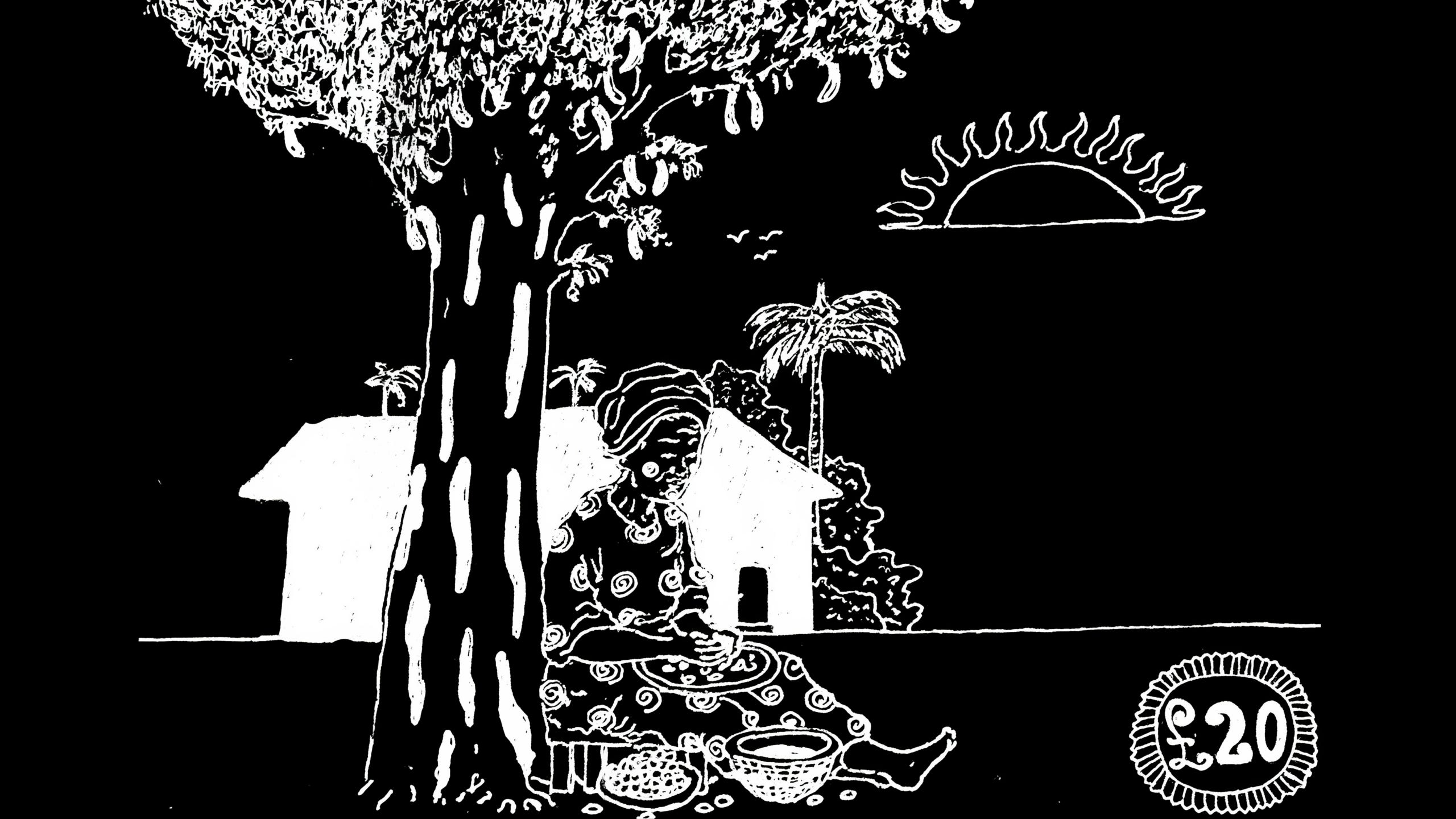
What the Ugba Tree Remembers | Bill Nwonwu (Nigeria)
Tere is an ugba tree at the edge of my grandmother’s compound in Oguta, Imo State, that has never been cut. My grandmother, Mama Chidinma, said it was older than the war. She said it stood through everything: through the sound of federal jets overhead, through the weeks when there was no salt, and through the morning they buried her brother under moonlight because the daytime was too dangerous for the living. She said the tree had seen things she could not speak of. And so, as a child, I would press my palm against its bark and try to listen.
I am the grandchild of Biafra. I did not live through the war; I was born decades after January 1970, when Lieutenant Colonel Ojukwu fled the country and the Republic of Biafra formally surrendered. But the war did not end for our family when the guns went silent. It ended, if ever, in fragments…
If you’d like your already PUBLISHED prose featured in ‘Prose of The Week’ please fill this form.
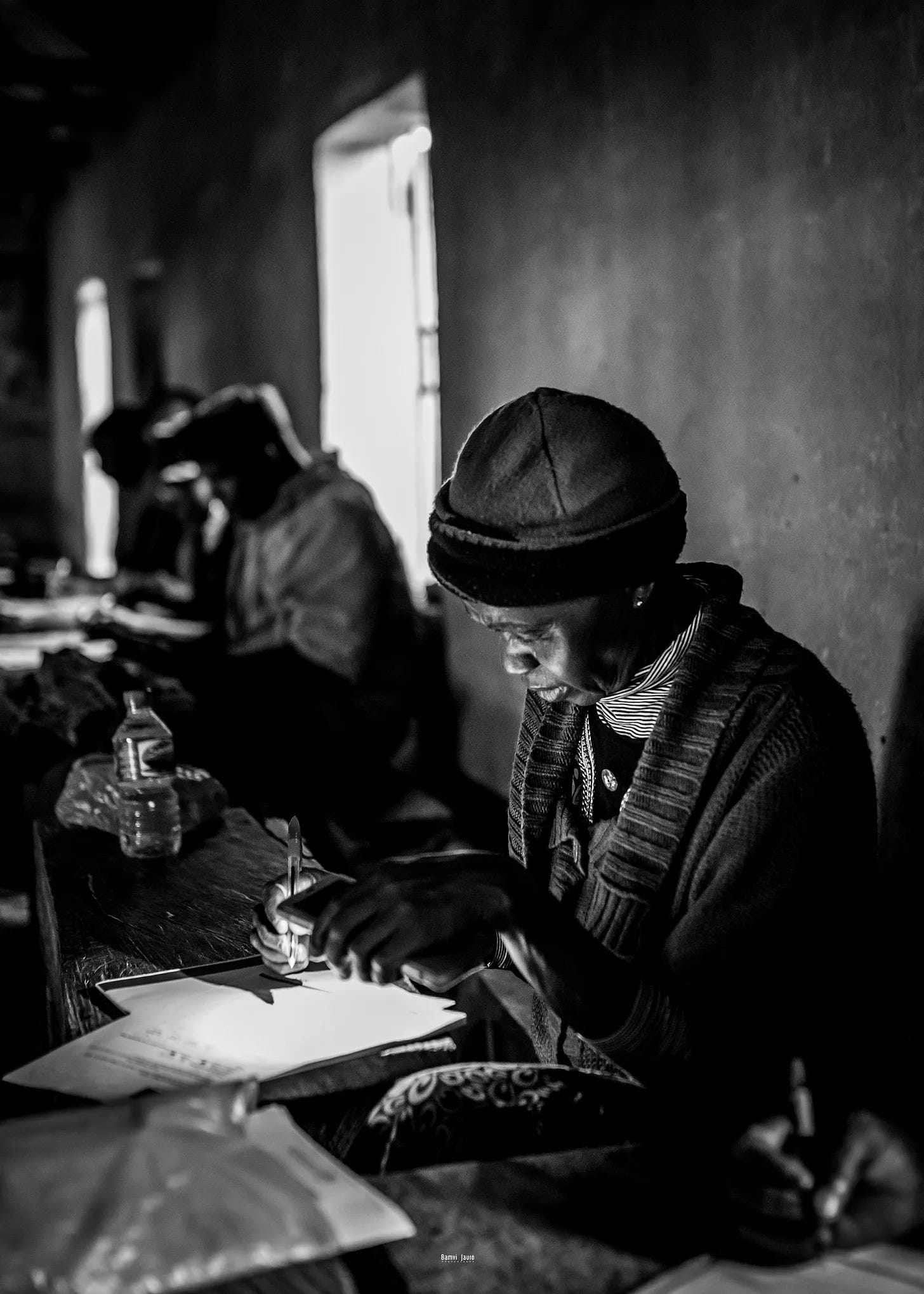
Bamvi Jauro | Tender Photos
The Architecture of Noticing | Nicole Kadzo (Kenya)
To be a poet is to be the architect of air,
To build houses from what others forget.
To watch red dust settle on a roadside
and see the history of a thousand journeys.
It is the quiet labour of midnight.
A stained thumb and a heart that won’t sleep…
If you’d like your already PUBLISHED poetry featured in ‘Poetry of The Week’ please fill this form.
Thanks for diving into our newsletter! Don't miss out—subscribe now (if you haven’t) for a weekly curated list including writing competitions, publishing opportunities, grants, fellowships, and content crafted to fuel the growth of African writers. Join the literary journey!
Nakutakia Kila la heri (I wish you well—Swahili, Kenya)
Comments
Nothing yet. Say the first thing.
Sign in to join the conversation.