
This newsletter is published every Wednesday at 5pm WAT.
1. Ụlọ Playwriting Residency 2026
Ụlọ Playwriting Residency is a programme designed to support emerging playwrights and encourage the development of original stage works. The residency is currently accepting original, full-length stage plays that are ‘unperformed and unpublished.’
Deadline: 3rd May 2026 | Prize: Total of ₦1,750,000
Things to note:
For your submission, you will be required to provide:
Title
Logline
Run time
A 300 word synopsis of your play
All selected writers will also take part in a six-week writing residency scheduled to run from October to November 2026.
Although not explicitly stated, this opportunity appears to be for writers resident in Nigeria.
To apply, click here.
2. Lọ́unlọ́un Issue 5: Fiction Open Call
Lọ́unlọ́un is a pan-African journal that focuses on literature rooted in historical events that have shaped and defined places and times in Africa. They are currently open to fiction and non-fiction submissions.
Deadline: 8th May 2026 | Pay: $50 CAD
Things to note:
Fiction: submissions can be speculative or factual tellings of African history, centred on the following themes: Economics, Society & Politics; Gender & Feminism; Hope & Healing; Identity & Belonging; and War, Conflicts & Disaster.
2,000 – 4,000 words
To submit your work, send an email to submissions@lounloun.com with the subject ‘Fiction Submission.’
In the body of the email, include your third-person bio and attach the story. Please ensure the story has references and is in Word document format.
3. Call for Pitches: The Chemistry Issue
Good Tape is exploring collaboration, conflict, and the cultural conditions that make podcasting projects click or combust. They’re interested in the bonds that hold projects together, the experiments that push them forward, and the circumstances that can just as easily pull them apart. What makes a collaboration click or combust? Does chemistry have to be organic, or can it be crafted? Where does it arise in unexpected ways?
They’re looking for wide-ranging musings on chemistry in podcasting — stick to the theme or subvert it — as we continue exploring the ideas, people, and forces shaping our industry, and we want to hear from you.
Deadline: 15th May 2026, 5 p.m. EST | Pay: from $175 to $1,500
Things to note:
Please pitch only one piece per submission. You’re welcome to submit multiple submissions.
They prefer pieces that report on broader trends and incorporate others’ experiences alongside your own.
“We’ll also take anything from compelling conversations to industry insights to analyses of podcasting’s wider cultural impact (for better or worse). If you’re ready to write but still unsure of what fits here, look to general entertainment coverage as an example — after all, this is TV now.”—GT
For more information, click here
To pitch them, use this link
4. Call for Proposals: Applied African Speculative Fiction – Volume 2
Applied African SF is a project funded by Imperial College and Anglia Ruskin University etc. Following the forthcoming publication of Applied African Speculative Fiction: Volume 1 (Ping Press, 2026), they are pleased to announce a new call for proposals for Volume 2, focused on the future of work in the age of artificial intelligence.
They are seeking proposals from African and diasporic fiction writers interested in developing short stories in collaboration with researchers and practitioners working at the forefront of AI and technology. They are particularly interested in stories that engage with AI not as abstraction, but as something embedded in labour systems, economic structures, everyday life, and cultural and political realities.
Deadline: 20th May 2026 | Pay: £200 per story (with an additional honorarium for expert collaborators)
Things to note:
Possible areas of exploration include (but are not limited to):
Labour, automation, and new forms of work
Data labour, content moderation, and invisible infrastructures
AI governance, regulation, and power
Platform economies and digital economies
Sustainable and alternative technological futures grounded in African ontologies
Collective organising, resistance, and new solidarities
The relationship between AI, care, and community
Visions of African-led technological futures
Selected writers will be paired with an expert collaborator—AI researchers, data scientists, technologists, policymakers and entrepreneurs. They will participate in:
at least one online workshop (hosted by Anglia Ruskin University)
a series of 1:1 conversations with their paired collaborator
To apply send a short proposal (max one page)
a brief outline of your story idea or themes
areas of interest (e.g. AI, labour, specific sectors or contexts)
a short bio, including previous publications (if any)
Please also indicate whether you are a member of the African Speculative Fiction Society (ASFS) or another writers’ organisation or whether you already have a potential collaborator in mind (optional)
Submit to: rethinkingfutures@gmail.com
Story length: approximately 1,000–5,000 words
Applicants will be notified in early June.
To read the full call, click here.
Get the best opportunities straight to your inbox every Wednesday!
5. Submit to Iskanchi Magazine
Iskanchi Mag publishes short, irreverent, disobedient, and experimental work too brief to stand alone as a book. They are committed to showcasing writing that explores what experimental form can mean in an African literary context. They are inviting submissions of unsolicited prose submissions for their Summer Issue. All submissions must be previously unpublished.
Deadline: 30th May 2026 | Pay: Unstated
Things to note:
Please include a short cover letter, a brief bio, and your social media links.
Simultaneous submissions are welcome, but please notify us immediately if your work is accepted elsewhere.
Send magazine submissions to submissions@iskanchi.com.
Writers will be contacted if their work is accepted for publication.
6. Shallow Tales Review is Open for Submissions from May 1st
The Shallow Tales Review accepts fiction, creative non-fiction, book reviews, poems, one-act plays, cultural and social essays, art photographs, and translations tackling issues more generally viewed as specifically African, or Black. Literary criticisms should concern texts that are of modern and African temperament. For critical essays, they expect themes to be tackled logically and as clearly as possible. They fact-check. By “modern,” they refer to books published at most 5 years before.
Deadline: 31st May 2026. | Compensation: Nomination for prizes
Things to note:
Entries should be sent in by mail to:
poetry.tstr@gmail.com (poetry)
essays.tstr@gmail.com (Essays & Creative Nonfiction)
theshallowtalesreview@gmail.com (Fiction/Plays/Art & Photography)
Use “TSTR Submissions” in the subject line.
In the body of the mail, include a short cover letter describing the genre of the work, word count (for prose), number of poems included (for poetry), short author bio, and any other relevant information relating to the piece. Do not add any identifying information in the document with the entry.
Entries should be between 1,500 – 4,000 words and should come in .doc or .docx format.
Poetry submissions should not be more than forty (40) lines, per poem. They accept a maximum of three poetry entries at a time.
Entries must be sent single-spaced in 12 point, Times New Roman font.
Files should be saved with the title of the work, and in the case of a body of poems, with the first poem in the file. The editors respond before they begin to review towards publication.
Only previously unpublished works would be reviewed and considered.
Reprints are NOT allowed. Do inform us if your piece has been considered or is being considered for publication elsewhere. At publication, all intellectual rights revert to the contributor.
They only accept one body of work in a genre at a time. Feel free to resubmit in another issue if your work was rejected within a submission window.
7. Submit to the Inaugural Alhaji Arole Agarawu African Poetry Prize
The Alhaji Arole Agarawu African Poetry Prize seeks to showcase excellence in African poetry while honoring the legacy and contributions of Alhaji Arole Agarawu—a songwriter, photographer, and musician—to African oral traditions. In its inaugural year, the foundation will recognize poets who demonstrate exceptional craft, cultural insight, and innovative use of language in their work, elevate African voices in contemporary poetry, and foster a deeper appreciation for the continent’s rich literary heritage.
Deadline: 31st May 2026 | Prize: Total of $2,000
Things to note:
Open to poets of African descent — however that may be defined — regardless of nationality or residence. This includes, but is not limited to, poets from the African continent, the African diaspora, Black Americans, Black British, Caribbean, Afro-Latin, and all communities rooted in the African heritage.
There are TWO prizes. One writer can win both prizes
The Arole Agarawu African Poetry Prize, awarded to any writer who identifies as African or a descendant of Africa
The Arole Grayling Wraith Prize, generously supported by Grayling and Wraith, awarded to any writer living on the African continent for a suite of 10 poems nominated by the board. In addition to the cash prize, Grayling and Wraith will produce a production-grade video of a selected poem by the winning poet.
Entrants must be 18 years of age or older at the time of submission.
Poets who have published up to two full-length poetry collections are eligible.
Poets who have published three or more full-length collections are NOT eligible.
Submit a packet of ten (10) original, unpublished poems.
Previously published poems, whether in part or whole, including on personal blogs, Substack, or social media, are not eligible.
Poems found to have been generated by artificial intelligence, in whole or in part, will be disqualified.
Poems must be written in English. Poems written in other languages are eligible if accompanied by an English translation.
While there is no line limit per poem, the full submission should not exceed 15 pages.
Only one entry per entrant. Multiple submissions will result in disqualification.
Simultaneous submissions are accepted. Please notify them at info@aroleagarawufoundation.com immediately if your work is accepted elsewhere.
Submissions must be completed via the submission manager on the submission page. Attach your work as a Word document (.doc or .docx) or PDF.
Your name and contact information must not appear anywhere on the manuscript.
All entries are final. No changes may be made once the submission window closes.
To read the full call, click here.
Create an account and submit your poems through the submission portal.
8. Split Lip Press: Call for Creative Non-Fiction
Split Lip is calling all essayists to submit creative non-fiction and memoir under 2000 words. Their memoir editor, Krys Malcolm Belc, is especially looking for micro memoir, interesting forms, joyful essays, graphic & image/text work.
May is a free submission month for Black Writers on Split Lip.
Deadline: 31st May 2026 | Pay: unstated amount
Things to note:
One submission per writer at a time, please.
They accept simultaneous submissions. But please withdraw your piece immediately if it’s accepted elsewhere.
Content warnings: If your work deals with sensitive or triggering topics, please identify/note them in your cover letter.
If you used AI to write/create your piece, you must disclose this fact in your cover letter.
If you have some edits to make after you’ve submitted: withdraw your submission, update it, and re-submit!
Double space your work.
They vastly prefer .doc and .docx files, although a PDF is okay in a pinch.
To submit, click here
9. Quramo Writers’ Prize Manuscript Submissions 2026
Created in 2017 as an avenue for fresh writers to showcase their manuscripts to the global literary community and contribute their works to the canonisation of African literature, the Quramo Writers’ Prize celebrates unpublished writers who work every day to hone their craft and record our continent’s original stories. They are now open for submissions for the 10th installment of the prize.
Deadline: 31st May 2026 | Prize: N1,000,000 + Book Deal
Things to note:
The Quramo Writers’ Prize is only open to unpublished Nigerian and African writers living within and outside the continent.
The fiction prose manuscript must be the original, unpublished work of the entrant. Published work is not eligible for the prize.
Short story collections, plays, and poetry are not eligible.
Manuscripts must contain a minimum of 50,000 words.
All entrants must be 18 years of age and above.
All entries must be submitted through this form in the following format:
Times New Roman font type
MS Word format
Font Size 12. Left justified. Double line spacing
Page numbers on each page
All submissions must be sent in with the following information:
A one-page synopsis
A short personal biography of 100 words max. (in third person POV)
Social media profiles (Twitter, Instagram, and LinkedIn)
Full (legal) name
Physical address
Email address
Phone number
Manuscripts submitted for the QWP must not have been entered into any other competitions running concurrently. Prior entries for the QWP are also ineligible.
Identifying information (name, address, etc.) should not be included on the pages of the manuscript.
To submit your manuscript, fill here.
Send this to a writer who needs it ❤️
10. Usawa: Call for Submissions—Refuse
Usawa in Swahili means equality. The Usawa Literary Review is a bi-annual English language literary magazine dedicated to feminist literature and writings by and about underrepresented communities. They are currently calling for submissions under their July issue themed ‘Refuse’
“Out of place. Still here. Not going anywhere. Refuse names both what is cast out and the act of resistance. Waste, garbage, remainder, what is left behind and meant to disappear. But also: to resist, to withhold consent, to say no with the full weight of one’s body. That the two meanings share a spelling is not an accident. Language remembers what power would prefer to split apart.”—U
Deadline: 31st May 2026 | Pay: $12
Things to note:
To read the full call, click here
You may submit up to one entry for each genre during a given submission period. They include:
Poetry
Fiction
Non-Fiction
Book review
Translation
To submit, click here. Category: Usawa Literary Review, Summer 2026.
Please write to them at editor@usawa.in if you have any questions.
11. The Novel Prize
The Novel Prize, a biennial award for book-length works of literary fiction written in English by both published and unpublished writers from around the world. Writers based in Africa and Europe are invited to submit to Fitzcarraldo Editions. African writers based elsewhere, should check this page for their submission pathway.
Deadline: 1st June 2026, midnight GMT | Prize: $10,000
Things to note:
Entrants residing in Africa and Europe should submit a full manuscript of their novel (minimum 30,000 words) to novelprize@fitzcarraldoeditions.com. The manuscript should be double-spaced, 12pt.
Each submission should include a cover letter including a biographical note, contact details and brief outline of the novel.
The entry must be the entrant’s own original creation and must not infringe upon the right or copyright of any person or entity.
Co-authored entries will not be accepted.
Writers who have existing contracts, or who have previously held contracts, with publishers for books of fiction or non-fiction are eligible to enter.
Writers who have published writing (fiction or non-fiction) in magazines and journals are eligible to enter.
Writers who have published books of poetry are eligible to enter.
Writers may submit only one manuscript per iteration of the prize.
The novel must be written in English (no translations).
Submissions may be made by the author of the novel or (if they have one) their agent.
There are no age restrictions, and we welcome submissions from writers of all backgrounds.
Submissions from writers residing outside of the Americas will not be considered or passed on to the relevant publishers.
All submissions should include page numbers.
The novel must be original and should not have been previously published anywhere in full. Published work is taken to mean published in any printed, publicly accessible form, e.g. anthology, magazine, newspaper. It is also taken to mean published online, with the exception of personal blogs and personal websites.
A shortlist will be announced in January 2027. The winner will be announced in February 2027, and published in early 2028. Unsuccessful entrants will not be contacted.
New Directions, Fitzcarraldo Editions, and Giramondo reserve the right to organize a meeting or phone call with all shortlisted writers to discuss their novel before the award of the prize.
12. Call for Submissions: Unheard Voices (South Africa)
Holland House presents the opportunity for new South African writers, who have not had a full-length book published, to write a short story of any genre for a new anthology ! This anthology will be edited by three of Karen Jennings’ honour students in collaboration with Holland House, and published in South Africa and the United Kingdom.
Deadline: 14th June 2026 | Pay: Unstated
Things to note:
Every entry will be checked for AI
Writer must not have a full-length book published and must be aged 18+ years
Must have South African citizenship
All entries must be written in English, using the following format:
Times New Roman, Arial, Garamond, or Calibri font in size 12 pt, with 1.5 or double spacing
Any genre is welcome, 2,000 to 5,000 words in length
The short story that is being submitted must NOT be published elsewhere
Entries should include one descriptive sentence about the story
Include the first six digits of your ID number to prove your citizenship
Entries should be emailed as attachments to: contact@hhousebooks.com
13. The Wakini Kuria Prize for Children’s Literature
The Wakini Kuria Prize for Children’s Literature, established in 2019, honours the memory and legacy of Wakini Kuria, who served on the Advisory Board of the African Writers Development Trust and was the Chief Editor of Writers Space Africa (WSA) Magazine from 2017 until her passing in 2019. She also coordinated the Writers Space Africa – Kenya Chapter and played a key role in developing platforms for emerging African writers. For the 8th edition of the prize, submissions are invited in the children’s literature genre for readers aged 6 to 12 years.
Deadline: 1st July 2026 | Prize: Total of $450
Things to note:
Theme: Digital World
Word limit: Maximum 1,200 words
Eligibility: Writers of African descent only
Please note:
Poetry is not accepted for this edition
Entries must be original and unpublished, including on personal blogs
AI-generated submissions are not accepted
To submit, click here
14. African Writers Awards
Writers Space Africa (WSA) is pleased to announce the 9th edition of the African Writers Awards . This award recognises outstanding creative writing by African writers and aims to promote original voices across the continent and the diaspora.
For the 2026 edition, submissions are invited in two genres: Poetry and Short Story. Participants must choose one genre only. Entries submitted in more than one genre will be disqualified.
Deadline: 1st July 2026 | Prize: $100 + certificate of achievement
Things to note:
Genres: Poetry or Short Story
Theme: Belonging
Poetry: Minimum of 14 lines
Short Story: 3,000 – 5,000 words
Entries must be original and unpublished, including on personal blogs
AI-generated submissions are not accepted
Click here to submit.
Click here to submit an opportunity.
If you did not receive a reply to a previous editorial inquiry by 31st January 2026, please send a query to editor.afww@gmail.com.
Prose of the Week
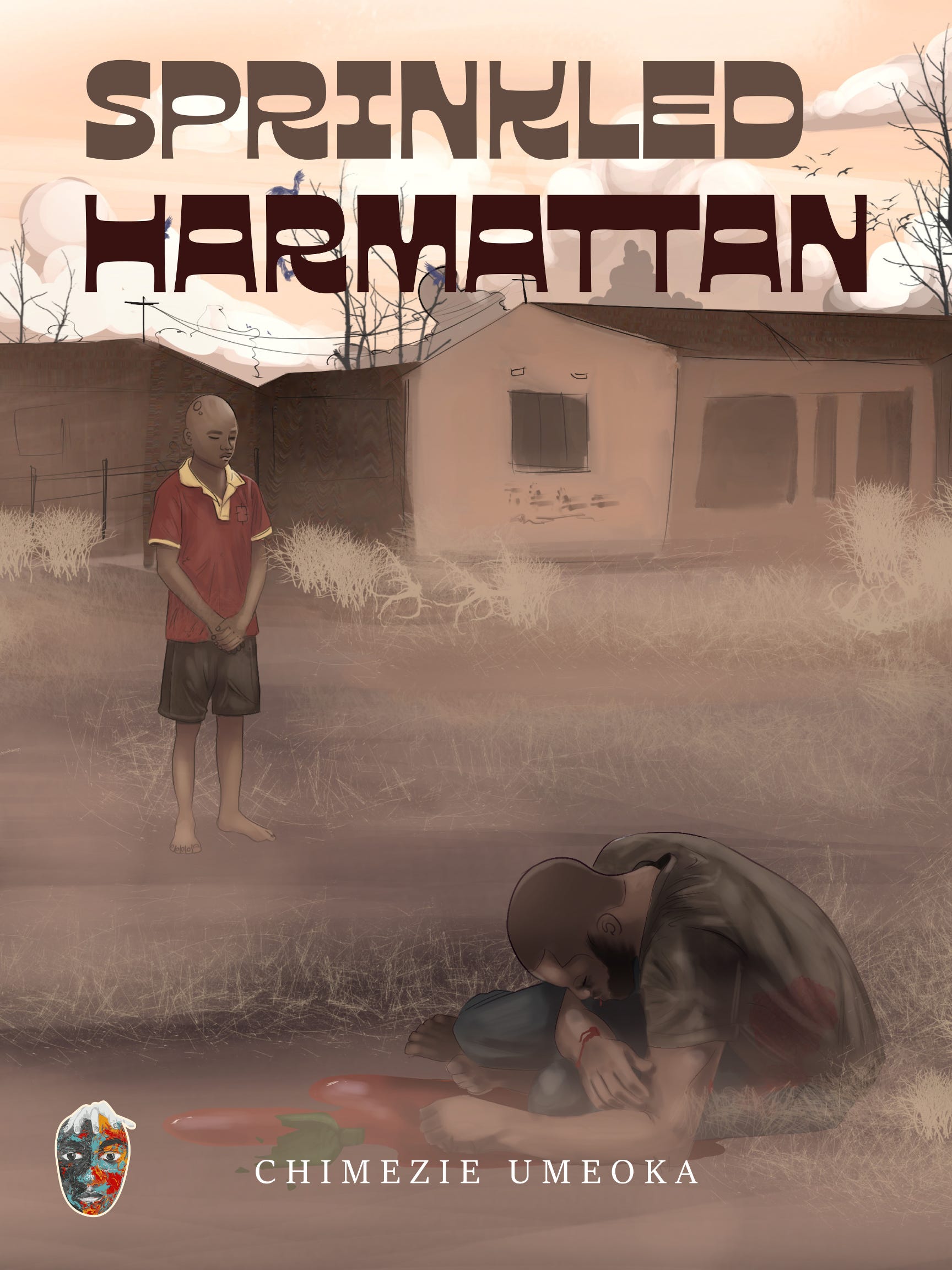
Sprinkled Harmattan | Chimezie Umeoka (Nigeria)
Everything was dry. Like a desert rendered to an eternal lack of rainfall. Everything was dry; crusty whiteness defiled the naked skin of the children in our street. The roofs seated low before my eyes were covered in a thick coat of dust. The grounds of our yard were clean and the moss-speckled holes forged in the splattering of rain drops left pockmarks under my feet. The green rug inside our room raised dust when we walked and grew denser whenever we swept it with a broom. This dust would perch on our netted window, inside our empty pots, so that Edu, my younger brother, complained incessantly about how he had to rinse the pots repeatedly whenever Mama wanted to cook.
This dust dwells in the memory of my breath, so that after these five harmattan seasons, I still remember the acute smell of the dryness suspended in our small, dark room that never bore light during the day. Our passageway was too enclosed and distant from the creaking door that led to a column of single rooms of which ours was the last. I still remember this dryness: this dryness that was sprinkled into our small lives, into my own fragile life and how it sealed my lips, numbed my bones so that when that doomed war broke out…
If you’d like your already PUBLISHED prose featured in ‘Prose of The Week’ please fill this form.
Poetry of the Week
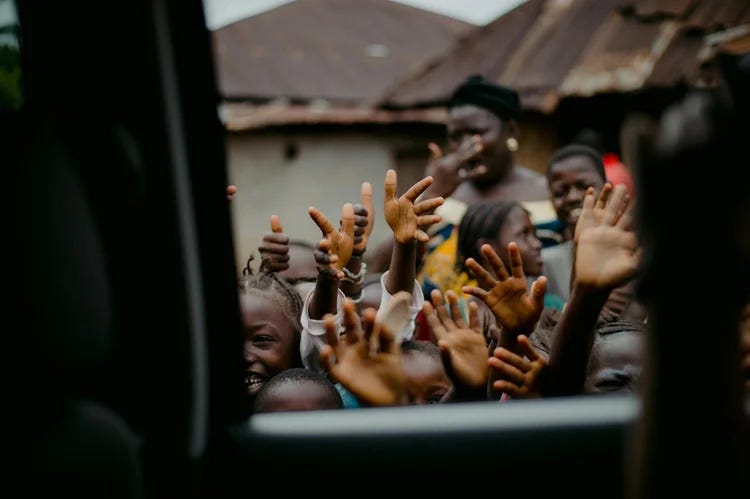
So the Gaunt May Wither No More | Oumar Farouk Sesay (Sierra Leone)
We have done all things to build this nation.
Toiled till our hands grew calloused,
walked till blisters marred our soles.
We have prayed till our knees turned to stone,
fasted till our ribs played melodies of hunger,
bathed in salt water, as if the ocean could cleanse our fate…
If you’d like your already PUBLISHED poetry featured in ‘Poetry of The Week’ please fill this form.
Thanks for diving into our newsletter! Don't miss out—subscribe now (if you haven’t) for a weekly curated list including writing competitions, publishing opportunities, grants, fellowships, and content crafted to fuel the growth of African writers. Join the literary journey!
Udo nọnyelu gị (May peace be with you—Igbo, Nigeria)
Comments
Nothing yet. Say the first thing.
Sign in to join the conversation.