
This newsletter is published every Wednesday at 5pm WAT.
1. The Joe Ushie Poetry Prize (Nigeria)
The Joe Ushie Poetry Prize celebrates the transformative power of poetry as a vehicle for expression, connection and change, in honour of the legacy of Professor Joe Ushie – a longtime champion of artistic integrity and social justice. The Prize honors emerging and established poets for artistic excellence and social commitment in their art.
Deadline: 20th April 2026, 11:59 p.m. GMT | Prize: $500
Things to note:
Each entrant is allowed to submit only one poem.
The submission must not exceed fifty lines.
Entries are to be made in English; however, few words from other languages are allowed as part of poetic license
Each entry must be accompanied by proof of Nigerian citizenship and a bio of about 200 words.
Proof of citizenship must be a photo ID with full name, place and date of birth, etc. Acceptable forms include international passport data page, national ID card, voter’s card or driver’s license
Poems must be typed in 12 pts Times New Roman font and single-spaced.
Docx format is recommended for submission.
Entries are to be made via the Google form.
There should be no identifying information (e.g. poet’s name) on the document containing the poem itself
Entries will not be returned; authors are advised to keep a copy for their own records.
ALL longlisted poems will be published in the Joe Ushie Poetry Prize Anthology (Vol. 2, 2027); by entering for the Prize, entrants consent to the publication of their longlisted poem in the Prize anthology
Entrants are required to like and follow the Joe Ushie Literature Foundation social media handles throughout the Prize cycle to remain eligible. [Facebook – Joe Ushie Literature Foundation; X – @JULitFoundation; TikTok – @ju.lit.foundation/JULF]
2. Submit to Writers Space Africa
Writers Space Africa (WSA) magazine is accepting submissions for the June 2026 edition of WSA Magazine (114th Edition). Theme: The Unemployed
Deadline: 20th April 2026 | Honorarium: Unstated amount
Things to note:
Creative Non-Fiction – 1,200 words maximum
Children’s Literature – 700 words maximum (illustrations may be attached and poems not longer than 24 lines)
Flash Fiction – 300 words maximum
Poetry – 1 poem, a maximum of 24 lines
Short Stories – 1,500 words maximum
Please edit your work and submit it to one category only.
Include the title and category in your submission.
Our editors will reply to selected writers and those whose works have not been selected.
Our editors will reach out to all authors by May 2026.
All selected and published entries will be uploaded to our website after the magazine is released.
The author retains the copyright.
Click here to submit.
3. The Sophie Coe Prize
The Sophie Coe Prize is awarded annually to the author of an original, informative article or essay on any aspect of food history relating to any period, place, people or culture. The Prize is specifically for essays, articles or papers as opposed to books, although something taken from a book can be considered. Examples would be: an essay contributed to a book of essays by various authors; an appendix on a particular food topic in a book on a wider subject; or something like a chapter on ‘The Food of Bulgarian Peasants in the 15th Century’ in a book about medieval Bulgaria generally
Deadline: 24th April 2026, 23:59 GMT | Pay: £1,500
Things to note:
Entries will normally range from 2,500 words up to a maximum total of 10,000 words including notes and bibliography.
Authors may submit one entry only in a given year.
Files should be formatted to be readable in the latest version of Microsoft Word or other format readable in this programme. PDF files are acceptable.*
Entries from a published source such as a book, journal, magazine or newspaper should be revised as necessary so as to be free of publication details, identifying information, advertising or other complications.
File names must be structured as follows:
– Entry: TitleOfEntry-SCPrize2026
– Cover Sheet: LastNameOfAuthor-TitleOfEntry-SCPrize2026Entry file instructions
– The entry should contain no identifying information.
– Pages should be numbered sequentially, with page numbers on all pages including the first.
– Authors should use footnotes, not endnotes. While no specific referencing system is stipulated, there is a strong preference for footnoted over author-date styles.
– Bibliographies should include only works specifically cited.Cover sheet instructions
The cover sheet must include the following information:
– Author’s name and address.
– Email address.
– Telephone number.
– Title of the essay.
– A 100-200 word summary of its content.
– Word count.
Where relevant, please also include:
– Particulars of publication (if already achieved or confidently foreseen).
– Original language (if a translation), with name of translator.Content: Food history, food and cookery are large subject areas and the panel of judges does not wish to rule out or focus particular attention on any of them. All aspects of history qualify. Entries on drink in relationship with food have been considered and rewarded in previous years. Please ensure that the work being entered meets the Purpose of the Prize requirements (above). In particular, take note of the requirement for originality, new research or new insights.
Submit your entry to sophiecoeprize@gmail.com
To read the full call, click here.
4. Submit to The Fieldstone Review
The Fieldstone Review is now accepting submissions for their 2026 issue! This year, they invite writers and artists to explore the theme WILD SPACES in imaginative and creative ways. Wild spaces might be jungles, rivers, prairies, or shorelines, but they might also be interior landscapes: kitchens, bars, back stairwells, a football stadium, or a Mardi Gras party on the pool deck of a cruise ship on a hot afternoon.
They welcome original, previously unpublished work across a wide range of genres, including poetry, short fiction, creative nonfiction, and visual art and photography
Deadline: 30th April 2026 | Pay: $100
Things to note:
Please send all submissions as attachments. Documents should be attached in .doc/.docx format. However, .pdf is suitable for poems with unique formatting. Please submit visual art in .JPG format.
Please do not indicate your name or identifying information anywhere on the attachment containing your submission. Instead, please include the following in the body of your e-mail:
full name
contact information
a biography of 50 to 100 words
the title(s) of the work(s) submitted
notification if the work is a simultaneous submission
Submission documents should be formatted in 12pt Times New Roman font
All submissions except for poetry should be double-spaced.
FICTION: One submission per author to a max of 4,000 words.
fsr.fictioneditor@usask.ca | 2026 Editor: Anna Gow (she/her)
POETRY: One submission per author to a max of six pages, sent as a single attachment.
fsr.poetryeditor@usask.ca | 2026 Editor: Van Osborne (they/them)
CREATIVE NONFICTION: One submission per author to a max of 2,500 words, OR two submissions to a max of 1,000 words each.
fsr.reviewseditor@usask.ca | 2026 Editor: Bonnie Heilman (she/her)
Get the best opportunities straight to your inbox every Wednesday!
5. Submit to Haven Spec Magazine
Haven Spec is a speculative fiction magazine featuring stories and poems for a 21st century audience. They love stories with a sense of adventure, stories that teach us, that touch us, that leave us wanting more. They especially like writing that is subtle in its telling and that sticks with readers long after they’ve finished, and they're more likely to buy stories that balance a sense of wonder with a bold plot and emotional depth. For poetry, most important to them is vivid imagery, clever lyricism, and a strong emotional core. They are now accepting submissions from underrepresented writers
Deadline: 30th April 2026 | Pay: $20-$500
Things to note:
Fiction: Word limit: 5000 words
Poetry : Five poems, submitted in a single submission
Language: English
File type: .doc, .docx, .rtf
You may submit under their ‘wet’ or ‘dry’ themes:
Wet: focus on stories of water—monsoons and the rising tides, hurricanes and the disappearing coast—we’ll center stories by authors directly affected by the climate crisis, though we’ll consider anything that fits the theme, even vaguely!
Dry: Here they're looking for content that focuses on the dry aspects of climate change—desertification and falling reservoirs, rising temperatures and endless droughts—they'll center stories by authors directly affected by the climate crisis.
To submit a story for either theme, make sure to mention in your cover letter how your submission relates to the theme and, if you’d like, how you’ve been personally affected by the crisis at hand. Submissions by climate refugees are very welcome.
Rights: We buy first serial print and electronic rights for publication of the story in the English language and throughout the world. We also buy non-exclusive archival rights for our website and non-exclusive anthology rights.
For more details, see here.
To submit, click here.
6. Submit to Torch Magazine
Torch Literary Arts seeks original creative work by Black women writers. They are interested in work that challenges and disrupts preconceived notions of what Black women’s contemporary writing should be. Accepted submissions will be published in their Friday Features.
Deadline: Rolling basis | Pay: $150
Things to note:
Include a one (1) page cover letter noting the title(s) of the work(s) submitted and a brief bio. The cover letter page does not contribute to the overall page count.
Note: Submissions without a cover letter may not be read.
Upload your text submission as a Word (DOC, DOCX) or portable document format (PDF).
Typed, double-spaced (poetry may be single-spaced) pages.
Numbered pages.
Margins should be between 1” and 1.5”.
Poetry: submit up to five (5) poems totaling no more than eight (8) pages.
Fiction, Creative Nonfiction: 12-point font. No more than fifteen (15) pages or 3500 words (whichever is achieved first). Excerpts of longer works are welcome if self-contained.
They want CNF that is thought-provoking, engaging, and personal. Please see the following examples for the type of creative nonfiction we publish:
Brittany Rogers, “Before Uses of the Erotic”
Deborah D.E.E.P. Mouton, “Two Traumatic Births Changed My Experience of Motherhood”
Drama/Screenwriting: submit one act or a collection of short scenes no longer than fifteen (15) pages. Excerpts of longer works are welcome if self-contained. Indicate if a performance video or dramatic audio reading will be available with the text submission if selected.
7. Call for Submissions: Childhood joys that echo in our work’
The Creative Writing Hour in collaboration with Afrique Noire is now accepting writing pitches. The theme is ‘Childhood joys that echo in our work’. You’re welcome to submit personal essays, poetry, interviews etc
Deadline: 30th April 2026 | Pay: Unstated
Things to note:
Send your work to submissions@afriquenoirmagazine.com
Send this to a writer who needs it ❤️
8. Afreada Magazine: Call for Fiction
Afreada is inviting fiction submissions from African writers. They’re drawn to slice-of-life, literary fiction that allows readers to travel — across the continent and throughout the diaspora — experiencing different places, cultures, and perspectives through the ordinary dramas of daily life. However, they are not the right home for genre-led fiction such as crime, horror, thriller, fantasy, or sci-fi.
Deadline: Rolling | Pay: £100
Things to note:
Send stories of 2,500 words and above, though they remain open to exceptional short stories of any length.
Please format your document in Times New Roman, 12pt, with double spacing throughout.
Simultaneous submissions are welcome, but please withdraw your work from consideration if accepted elsewhere.
All published work is subject to an editorial process, and they work closely with writers to shape the final piece.
Selected stories may be adapted for audio, but they will always seek permission before any adaptation.
To submit, fill the form on this page.
9. Patricia Kailis International Writing Fellowship
The Patricia Kailis International Writing Fellowship is open to writers living outside Australia. It is a residency based at the Centre for Stories in Perth, Western Australia. Dr Patricia Kailis was a highly respected doctor, academic, astute businesswoman, community leader and philanthropist. This fellowship is in her honor. It aims to support the work of talented individuals who have demonstrated a commitment to ideas and practices that foster belonging and better cross-cultural understanding.
Deadline: 8th May 2026 | Prize: $12,000 AUD + Funded Travel
Things to note:
The Fellowship is open to fiction, non-fiction, poetry and short story writers who work in English and whose work is available in Australia.
Applicants must have at least two full-length publications published by a trade publisher.
You are required to submit the following support material:
Reviews of your work (max. 3 pages).
Curriculum Vitae that outlines your literary history for the last five years, including journal publications and talks (max. 3 pages).
Three letters of support which speak to your literary achievements and capacity for thoughtfulness, intellectual generosity and humanity (max. 1 page per letter).
Links to your webpages, your publications, reviews, and public appearances.
A statement on how you plan to use this Fellowship (max. 800 words)
To review the full call, click here.
To apply, fill this form.
10. The 2026 Nature Poetry Prize
As summer crawls forth, Palette Poetry invites you to step outside and immerse yourself (and your writing) in nature! For their second year of the Nature Poetry Prize, we are ecstatic to have Kimiko Hahn serve as judge. “Please join us in celebrating the natural world through poems contemplating our relationship to flora and fauna, on how words can bloom from soil, and about the melody you hear whispered in the winds. Whether your connection to nature is positive, antagonistic, or dependent—we look forward to reading it all!”—PP
Deadline: 14th June 2026 | Prize: $3500
Things to note:
This prize is free for BIPOC writers to enter through this form.
Submissions are open internationally, to any poet writing in English—inclusion of other languages is welcome, as long as the poem is largely written in English.
At this time, Palette does not accept translated work unless you are also the author of the original poem.
Your submission must be no more than three poems and under ten pages. Please submit all your poems in ONE document. Please begin each poem on a new page and include each poem’s individual title.
No multiple submissions (of one to three poems apiece).
Writers from historically marginalized groups are invited to until we reach the fifty free entries budgeted for this particular contest.
They accept simultaneous submissions—just please send a note if your work is accepted for publication elsewhere.
Only send unpublished work. If your poem has been published elsewhere, even on a blog or on social media, it is not eligible.
DO NOT INCLUDE your name or identifying information in the document OR submission title box.
Please include a brief cover letter in the cover letter box with your publication history, if any. This text box is where you can include your name and/or bio! If you select the editorial feedback option, this cover letter is also where you can name which poem you’d like feedback on. To safeguard our reading staff, please include content warnings in the cover letter, if applicable, as well.
11. Send Manuscripts to Parrésia
Parrésia’s primary mission is to publish books by first-time authors and provide Nigerian readers with diverse literary works. They are dedicated to promoting the freedom of imagination and fostering a culture of free expression. They are now accepting manuscript submissions for fiction under the Regium imprint.
Deadline: 30th June 2026 | Pay: Book Deal
Things to note:
Send General fiction, Literary fiction, Collection of Short Stories, Creative non-fiction or Historical fiction.
Manuscripts must be typed using Times New Roman with a 12 point font size, 1.5 spacing.
Please make sure that manuscripts do not have the printing functionality disabled.
If watermarks are included, please ensure that the text behind the watermark is legible. Most importantly, files MUST be sent in PDF or Microsoft Word formats (They will not accept files saved in WordPad or sent via links to a website).
Please do not paste or type your submission in the body of the email.
The first three chapters or the first fifty pages with a thorough synopsis should please be submitted.
The subject of your email should be the title of your manuscript.
The body of your email should please be polite. ”E.g. Dear Editor, My name is Suleiman Olayinka Ebere, and I have written a 200,000-word novel titled My Eyes Deceive me. Please find the first three chapters and the synopsis attached.”
Send to submissions@parresia.com.ng
Click here to submit an opportunity.
If you did not receive a reply to a previous editorial inquiry by 31st January 2026, please send a query to editor.afww@gmail.com.
Prose of the Week
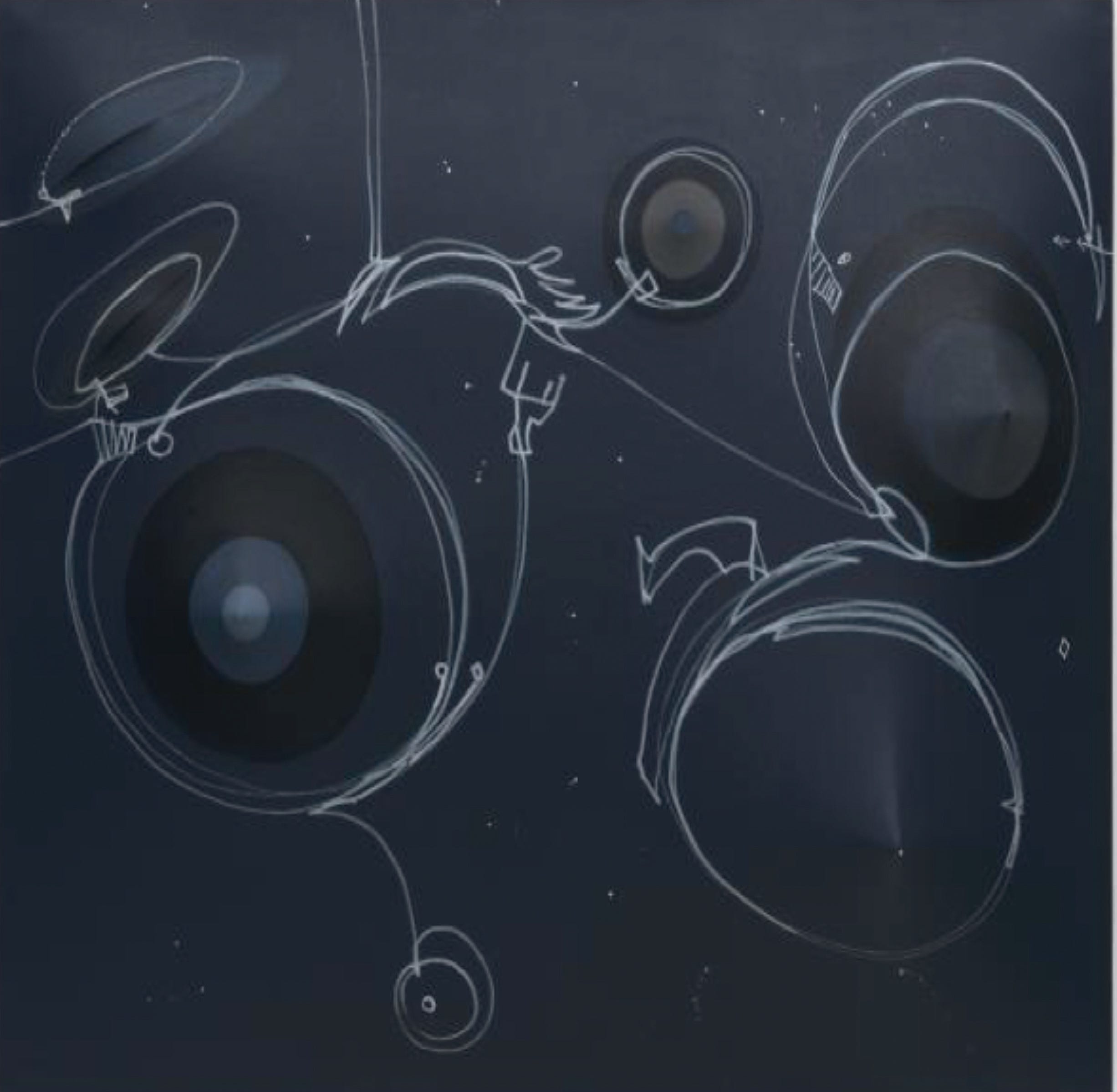
Islandhood | Khaddafina Mbabazi (Uganda)
One of the frostier Saturday mornings of March 2019 found me at The Phillips Collection in Washington, D.C. I didn’t have much time because I’d promised to meet with some friends, two of whom were celebrating birthdays, so I intended only to conform to my recently established habit when at this museum: to sit alone in the Rothko Room, and quietly observe his abstract splendours. There is something spiritually exfoliating about Rothko. And so in a kind of ritual cleansing I’d peruse the other works in the museum before ending each visit with him. But that March day I only had time for one exhibit and the lady at the front desk was zealous in her recommendation of Zilia Sanchez.
Until that moment, I hadn’t heard of Sanchez and struggled to envision what lay ahead. Was she an abstract expressionist? Is this why the woman at the front desk – whom I’d briefed on my love of Rothko – was recommending her? Or did Sanchez hew, in style and in idiom, to something quite different? In the end…
If you’d like your already PUBLISHED prose featured in ‘Prose of The Week’ please fill this form.
Poetry of the Week

An Uninvited Guest | Elton Ndudzo (Zimbabwe)
Every day is scary.
No one knows what might come,
or who might be next.
In the very end, it will come for us all.
An uninvited guest…
If you’d like your already PUBLISHED poetry featured in ‘Poetry of The Week’ please fill this form.
Thanks for diving into our newsletter! Don't miss out—subscribe now (if you haven’t) for a weekly curated list including writing competitions, publishing opportunities, grants, fellowships, and content crafted to fuel the growth of African writers. Join the literary journey!
Mana nì m̀ kɔ̃o! (Good luck!—Bassa, Liberia)
Comments
Nothing yet. Say the first thing.
Sign in to join the conversation.