
Hi everyone! Please join me in congratulating Gatluak Kedok Jiek, a member of our community from South Sudan who published his first novel, The Leopard’s Last Growl, this year!
He came across the call for submissions by Sulis International on African Writer Weekly, submitted his manuscript, and it got accepted! I’m sharing this, so you can stay inspired to keep submitting and pitching. Please drop a message of congratulations for him in the comments!
If you’d like to buy his book click here. If you’ve received an acceptance for any opportunity posted on this newsletter, please share your story and inspire others❤️
-Esohe
Flame Tree Publishing is calling for short stories that explore the “Unknowable, ancient, monstrous entities lurk in the vastness of the universe, closer than you think. They exist on other planes and in other dimensions, caring not for the lives and suffering of insignificant humans. Their paths may cross with yours, revealing horrors that your mind will barely comprehend...”
Inextricably linked to weird horror, but on a grander metaphysical scale, cosmic horror stories revel in the eldritch, the unsettling, and the unknown. Writers (think Poe, Machen, Blackwood, Hodgson) have long explored existential dread and primal, ancient forces, but it was H.P. Lovecraft who cemented the genre, whose influence cannot be understated. His pantheon of nebulous god-like beings and its expanded collaborative mythos, including such beings as the Elder Gods, have inspired countless stories that grapple with these fears and the madness to which they can lead.
Deadline: 9th August 2026 | Pay: $0.08 per word
Things to note:
Multiple submissions are fine but must be in separate emails.
Simultaneous submissions are fine but you must have the right to license your story in an anthology.
Submissions must use the dedicated email address.
The subject line of the email must be the story title.
The file with the story must be attached to the email (.docx, .doc or .rtf format).
The name of the file must match the name in the subject line.
If submitting more than one story, please submit one story per email.
Please provide your legal name (and pen name if applicable) to help with quick contracts/acceptances.
The file name of the submission must be the story name only.
Please just use spaces between words in the title (not _ or - ).
If the story name starts with A or The, please use it at the beginning of the file name.
Story length is most likely to be successful at 2000–4000 words, but we will still read stories slightly outside this range.
If submitting a story that has recently been submitted to us for consideration to another anthology, please state this in the submission email.
If providing an author bio or pitch/synopsis for your story, they strongly advise against using AI to write these.
Submissions to: anthologies@flametreepublishing.com
Flame Tree Publishing is calling for short stories that explore Zombies. "Originating in Haitian folklore as an enslaved corpse reanimated through magic by a bokor (a Vodou priest or priestess sorcerer), the zombie has developed – via Romero's Night of the Living Dead – into the modern-day apocalypse-surviving flesh-chomping revenant (created by disease, radiation or any number of infectious causes) we all recognise.
Along the way, their identity has been influenced by and intertwined with that of vampires, and all manner of other cultural variations on returned dead and corpse-like hungry monsters: the Norse draugr, the Chinese Jiangshi (vampire or zombie?), and even arguably the Arabian ghul. It's up to you to define 'zombie' – is it more about the cannibalistic tendencies, or is it, at its heart, the mindless lack of free will?
Deadline: 9th August 2026 | Pay: $0.08 per word
Things to note:
Multiple submissions are fine but must be in separate emails.
Simultaneous submissions are fine but you must have the right to license your story in an anthology.
Submissions must use the dedicated email address.
The subject line of the email must be the story title.
The file with the story must be attached to the email (.docx, .doc or .rtf format).
The name of the file must match the name in the subject line.
If submitting more than one story, please submit one story per email.
Please provide your legal name (and pen name if applicable) to help with quick contracts/acceptances.
The file name of the submission must be the story name only.
Please just use spaces between words in the title (not _ or - ).
If the story name starts with A or The, please use it at the beginning of the file name.
Story length is most likely to be successful at 2000–4000 words, but we will still read stories slightly outside this range.
If submitting a story that has recently been submitted to us for consideration to another anthology, please state this in the submission email.
If providing an author bio or pitch/synopsis for your story, they strongly advise against using AI to write these.
Submissions to: anthologies@flametreepublishing.com
Following the end of their inaugural fiction prize, Kòkòrò is excited to say that we are now calling for submissions for our first issue! Kòkòrò is a journal dedicated to the experimental and the strange. We want the type of stuff that makes your tongue sticky and your buttocks perspire when you try to explain it to your equally confused and clammy circle of friends who will later excommunicate you for your ‘weaponized’ awkwardness. For this first issue, we are seeking poetry, fiction, hybrids, and other anywhats you believe are a right fit for us.
Deadline: 15th August 2026 | Compensation: Prize nominations
Things to note:
They will not accept multiple submissions. Please submit once and to one genre only.
Don’t send previously published work.
Send work written primarily in English—”we’ve tried Duolingo, and unless your story is about stuttering basic German to a waiter…Englisch, bitte!”
They accept simultaneous submissions, but please notify them if you get your work accepted elsewhere, so they can withdraw it from consideration.
Please do not send us AI-generated or assisted work.
For fiction, hybrids, and your anywhats, the word count is 3000 words max. Make sure your work is well-edited and in a legible font.
For poetry, send us 1-3 poems in a single document.
All submissions for this issue should be submitted as a word document to kokorowtf@gmail.com. The subject line should read like so: [Genre: Name] For example: [Fiction: Baba Dudu]
Kòkòrò asks for the first serial rights of your published work. Fret not, all rights will revert to you after publication.
The ZODML Poetry Prize was established to discover, celebrate, and preserve the literary voices emerging from Nigeria’s public institutions — giving poets the recognition, platform, and resources they deserve. The Prize is open to submissions on the theme ‘Stories We Carry’, from currently enrolled students (undergraduate or postgraduate) at a public tertiary institution in Nigeria.
Deadline: 15th August 2026 | Prize: Total of N1,200,000
Things to note:
Entries must be one poem per participant only.
Each poem must have a title, maximum length - 50 lines (excluding title).
Entries may be in English or any Nigerian language. If the poem is written in a Nigerian language, the participant must also provide an English translation.
Entries must be the participant’s own. AI-generated work is prohibited.
Entries must not have been previously published in any form, nor have won a prize in another competition.
The top ten finalists will be notified via email and WhatsApp. Please ensure you provide a valid email address and WhatsApp number. Finalists will be required to submit a short biography and a photograph.
The copyright of each poem remains with the author. However, by entering the contest, authors of the top ten poems grant ZODML the perpetual right to publish and/or broadcast their poems. Use of these poems elsewhere for one year from January 2027 requires prior permission from ZODML.
Submissions will not be returned. Please retain a copy for yourself.
Winners will be announced in December.
To submit, click here
Emerging writers of African diaspora heritage living in the United Kingdom now have an exciting new opportunity to advance their creative careers through the Biyi Bándélé Bursary for Emerging Writers of the African Diaspora.
Established by the family of the late Nigerian writer and filmmaker Biyi Bándélé in partnership with Brixton House and Curtis Brown, the annual award seeks to celebrate Bándélé’s remarkable legacy while supporting the next generation of storytellers working across literature, theatre, film, and other creative forms.
Deadline: 28th August 2026 | Stipend: N150,000 each
Things to note:
Three selected writers will receive comprehensive support designed to nurture their creative development, including:
A cash bursary to support their writing practice
A tailored mentorship programme
Access to creative development support and rehearsal space at Brixton House
Creative clinics and professional workshops
Curated networking opportunities
A table read or scratch performance
Agent consultation sessions
Script development and editorial feedback
Applicants must:
Be at least 18 years old.
Identify as being of African diaspora heritage
Be based in the United Kingdom
Be actively engaged in writing across fiction, poetry, creative nonfiction, playwriting, spoken word, or hybrid forms
Have had at least one previous work published and/or publicly produced
Submit original work created through substantial human authorship
The organisers note that self-identification is sufficient and applicants are not required to provide genealogical documentation.
To apply, fill this form.
The EverLit Society has yet again opened their doors for applications to their workshop series, now in its third edition. Themed "Revealing the Unseen Narratives of Illness", this edition is for writers drawn to telling compelling stories of illness — physical or mental — and will be facilitated by doctor and writer Haruna Solomon Binkam, a second-year MFA candidate in Creative Nonfiction at the University of Las Vegas, guiding participants to excavate the stories beneath and beyond the malady through point of view, characterization, setting, and mood.
Haruna is a finalist of the Passages North Neutrino short-short prize, longlisted for the Ploughshares Emerging Writers contest, nominated for the Caine prize and the Pushcart prize.
Deadline: 31st August 2026 | Pay: Free Workshop
Things to note:
Workshop Format: Virtual (Google Meet, Email, WhatsApp and/or Zoom).
Duration: 4 weeks (September/August).
Learning Materials: Recommended texts will be shared with successful applicants.
Having a 2000–3500 work-in-progress to be workshopped is encouraged, though not compulsory, as the workshop will mostly not be generative.
Application Requirements: Send to theeverlitsociety@gmail.com
A 1000-word writing sample of creative nonfiction (doesn’t need to relate to the workshop topic),
A 500-word writer’s statement and short bio in the same document.
They do not accept submission of AI-generated writing samples.
For more information see here.
Send this to a writer you believe in🫶🏾
Recalibrating Afrikanistik is searching for contributors to (African) Language Work, which will continue our critical reflection on the discipline’s narrow, colonial categories of people, languages, and dichotomies of academic and non-academic work and put an emphasis on language practices and their relation to diverse “knowledges”.
(African) Language Work seeks to break from the typical digital publication format of a series of PDFs; it will not feature papers or indeed written contributions. It will be a website full of networked, explorable entries. At the center of each entry will be a multimedia asset created or edited by our team alongside people like you who happen to have material from your own language work lying around that you haven’t found a good way to feature.
Deadline: Unstated | Pay: Unstated
Things to note:
Possible contributions can look like: Maybe you have video files you’d like to see turned into a mini-documentary; or photos you’d like to see polished and turned into a captioned, educational carousel; or a recorded recitation of a poem you’d like to see paired with a scrolling, line-by-line video of the text. You’ll bring the files, the consent to use them, and the vision for how they will be displayed, and our team will make it happen, offering both the files and final asset in a repository for future researchers.
The only eligibility requirements are that you work with African languages in some capacity (not necessarily academically) and that you have high-quality media files that could be turned into an interesting and informative entry.
To apply to become a contributor, please follow these steps:
Visit the pilot at this link
Click “Explore” in the upper right-hand corner to peruse the pilot website and see example entries
Click on “Apply” in the upper right-hand corner to fill out the application form. Please note that at this stage, you are only submitting ideas for entries, not the final entries and files.
The Élékéré Prize (formerly The Open Arts Prize) is an annual award given to a single work of fiction from a Black writer. The prize aims to be a springboard for fresh and authentic Black and African voices, to recenter indigenous narratives, to uplift marginalised voices, and to reframe what it means to tell authentic Black stories.
The theme for the inaugural submission is Inheritance. “Nothing—revolution, metamorphosis, enlightenment, and chaos—exists in a vacuum. We are looking for work that explores the complexities of acknowledging and moving through the world with the weight of an inheritance while striving for something entirely our own. An inheritance can be culture, land, language, silence, trauma, names, gods, debt, love, etc. We are looking for truth told with boldness, fierceness and grace.”—EP
Deadline: 31st August 2026 | Prize: $500
Things to note:
Word count: Submissions must not exceed 3,500 words.
Language: They currently only accept submissions written in English.
Format: Submit as a Word document (.doc or .docx). Use Times New Roman or Garamond, 12pt.
They accept only original, unpublished work. Work posted on social media, personal blogs, or in other formats (audio and video) is considered published.
No multiple submissions. Please submit to one category only.
Simultaneous submissions: They accept simultaneous submissions, but if your work is accepted elsewhere while under consideration, please withdraw your submission.
They will respond to all submissions two weeks after the submission deadline. Please do not query before this date.
Send queries and submissions to submissions@elekere.press
What not to submit
Any work written with or edited by AI.
Poetry (including prose poetry)
Academic treatments or essays
Translations
This issue of Mini Plays Review explores how human connection, conflict, identity, and memory are being rewritten in a hyper-connected yet deeply isolated world. They are looking for sharp, short scripts that capture the friction between our physical lives and our digital existence. Accepted pieces may be published in print or electronically.
Deadline: 31st August 2026 | Pay: Unstated
Things to note:
Subthemes for Submission:
Phantom Vibrations: The psychological weight, anxiety, or obsession of waiting for a notification that never comes.
The Glitch in the Routine: A comedic or absurdist take on what happens when smart tech, algorithms, or AI assistants go entirely off-script.
Data Dust: A monologue or dialogue centering on a character confronting their digital legacy or a past online version of themselves.
Analog Hearts: Stories of people trying to find genuine, old-school intimacy, romance, or a quiet space to unplug in a world that demands constant presence.
The Algorithm Knows Best: A conflict where a major life decision (romance, career, ethics) is dictated entirely by predictive data.
Ghosted: The sudden, haunting silence of an abrupt digital disappearance and the struggle for closure in the real world.
Two Screens, One Couch: The invisible distance between two people physically close but entirely separated by their respective digital worlds.
The Deepfake: A high-stakes confrontation involving stolen identity, altered reality, or the blurring line between truth and digital fabrication.
Curated Lives: The dramatic tension behind the camera lens—what happens the second the “perfect” livestream or social media recording stops.
Sentience on the Line: A sharp dialogue between a human and an AI that is beginning to exhibit unexpectedly human traits or emotions.
The Comments Section: A play taking place entirely within the ecosystem of online anonymity, trolls, or internet fame.
Doomscrolling at Midnight: A micro-drama capturing the internal or external chaos of consuming endless global crisis updates in the dark.
Out of Network: The survivalist drama or unexpected freedom experienced when a character is completely disconnected from cellular service or power.
Digital Inheritance: A family or legal dispute over ownership of a deceased loved one’s passwords, data, cloud storage, or online avatar.
The Echo Chamber: Two characters trapped in an escalating argument where they are incapable of hearing any perspective outside their own programmed biases.
Submission Guidelines:
Length: Maximum of 2 pages per mini play/soliloquy/monologue.
Format: Standard playwriting format (PDF or Word document preferred).
Limit: Maximum of 5 submissions per playwright.
Originality: Works must be original and unproduced in print format. Simultaneous submissions are welcome, provided you notify us immediately upon acceptance elsewhere.
How to Submit:
Email: Send your script as an attachment to miniplaysmag@gmail.com
Subject Line: Submission: [Play Title] - [Your Name]
In the Body: Include a brief 50-word biography and your contact details.
Sandbox is a story pitch contest by CanonBoard. CanonBoard is a story development platform that helps writers turn concepts into well-developed narratives with clarity and precision.
For this contest, every entrant gets the same ten element sets — a location, an object and a moment. Pick a set, pitch a story that uses all three, and what comes back never looks the same twice. Any genre. Your pitch lives on CanonBoard under your own account, and it stays yours.
Deadline: 1st November 2027, 11:59 ET | Prize: $500
Things to note:
Entry is free but you have to create an account on Sandbox.
To get started click here to see the ten element sets and submit your pitch.
Seven years ago, the award-winning anthology Dominion grappled with a fundamental question: “What is the legacy and future of Africa and the African Diaspora?” Now, the critically acclaimed editorial duo returns with an explosive sequel that poses a new, urgent battle cry: “How do we fight for our future while fiercely preserving our past?”
Dominion II: Speculative Stories of Black Resistance from Africa and the African Diaspora is a revolutionary beacon of Pan-African imagination. Rooted in centuries of real-world liberation struggles, these pages overflow with Black joy, community defiance, and untamed magic. Dominion II is published by Crowne Books, a Black-woman-owned independent publisher of Black literature.
Deadline: 28th February 2027, 11:59 EST | Pay: Up to $1,400
Things to note:
Format: Standard Shunn manuscript format. Submit as a Word docx
AI Policy: Strictly NO AI-generated or Al-assisted stories will be accepted.
Grammarly and similar spell checkers’ non-gen-Al features are OK!
How to Apply: Email your submission to hello@crownebooks.com
Payment Methods: Payouts are strictly accommodated via PayPal, Wise, Stripe, or Western Union only!
Editors: Olivia Nightingale, Oghenechovewe Donald Ekpeki
Click here to submit an opportunity.
If you did not receive a reply to a previous editorial inquiry by 31st January 2026, please send a query to editor.afww@gmail.com.
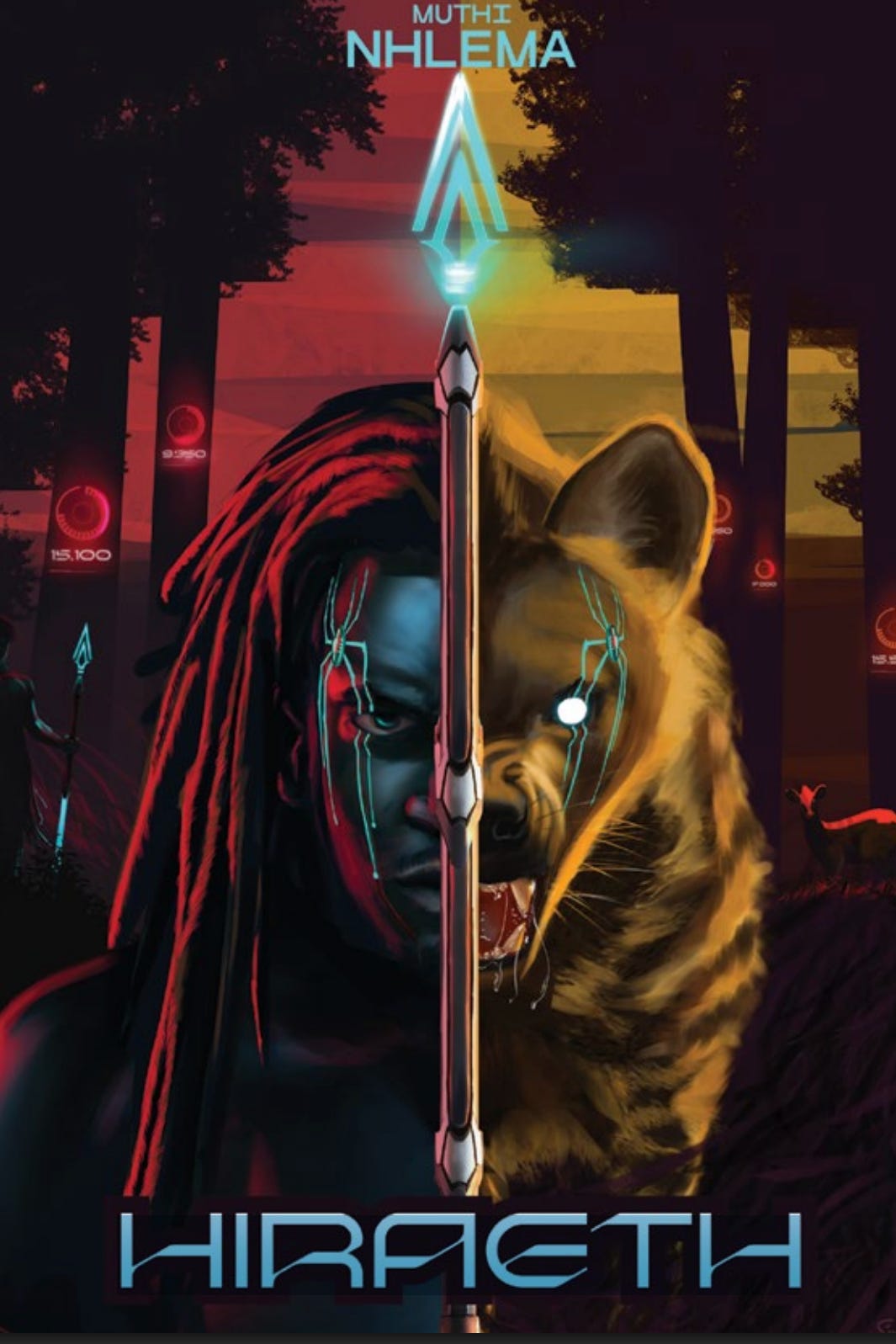
Hiraeth | Muthi Nhlema (Malawi)
Golden rays of dusk light cascaded through the micro-pores of the ultraviolet-filtering veil that draped over the only window in the room. The day was ending and he knew this was the last time he would see his father alive. The son gently touched his father’s calloused hands, he did not want to wake him. The father’s laboured wheezing filled the quiet of the room as he lay in bed, his timeworn body covered in an ancient, thick lion-skin blanket for final comforts, a luxury reserved only for the royal household.
The bed faced southwards, facing the ancestral home from where the early settlers came. A home his father would soon depart for, never to return. Murmurs of anxious curiosity churned behind the closed door of the room. On any other day, the son would have brushed away that world, a world heavy with the weight of obligation, waiting for him behind that door. But, today was different. Today, the murmurs of that laden world were a welcome distraction from his father’s wheezing. The silent pauses between each strained breath seemed to stretch on for longer than the last. How he desperately wished those murmurs outside were a little louder, those pauses a little shorter. Just enough to weigh down his father’s ghost from ebbing away, forever…
Read more (Page 39 in Anthology)
If you’d like your already PUBLISHED prose featured in ‘Prose of The Week’ please fill this form.
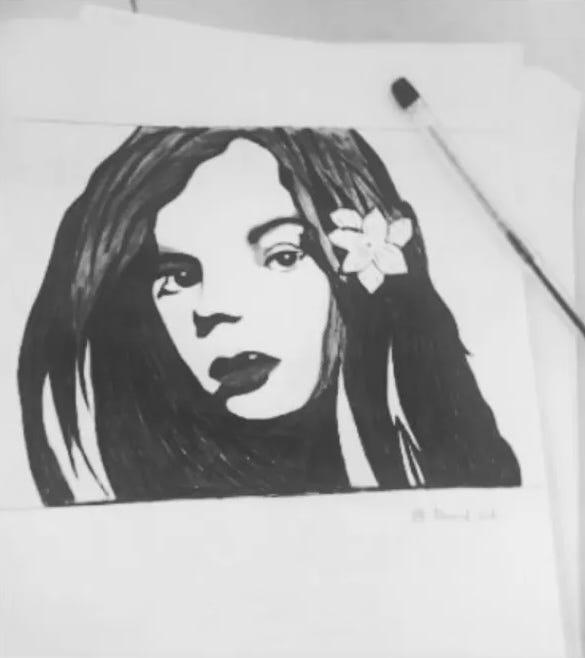
Church of The Informally Settled | Adunni Adeh (Nigeria)
(I wrote this poem trying to live inside a woman who has a lot of love to give but failed to love herself.)
Hey baby,
I want you to wake up to this.
It’s been 5 years since I met you,
5 years of bliss and peace.
I never thought happiness could feel like this.
You make me so giddy and light, it’s a thing of a dream…
If you’d like your already PUBLISHED poetry featured in ‘Poetry of The Week’ please fill this form.
Thanks for diving into our newsletter! Don't miss out—subscribe now (if you haven’t) for a weekly curated list including writing competitions, publishing opportunities, grants, fellowships, and content crafted to fuel the growth of African writers. Join the literary journey!
Thayu thayu (Peace be with you-Kikuyu, Kenya)
Comments
Nothing yet. Say the first thing.
Sign in to join the conversation.