
Recently, I watched a video of a group of pro-colonialism Jewish men and the like who surrounded and followed a woman and police officer through the streets of a city in the United States. They were allegedly shouting “Death to Arabs” at her (in Hebrew) as they shoved her, threw objects and toppled bins in her direction. If not for the lone policer officer who looked understandably and highly anxious, the woman may have been assaulted by the group.
On the video there is no visible evidence that the woman is of the Muslim faith and obviously no evidence that she is Arab or of Arab descent.
Many transfixed by the acts of aggression and threatened violence against an unarmed woman perhaps did not notice one particular moment.
At one point, one of the men stalking this woman shouted, “We have an army now!”
Maybe to anyone else this sentence would go unnoticed, hoping that the police officer and unarmed woman were not swarmed by the men and beaten to death, but I found his choice of wording interesting.
Think about it.
“We have an army now.”
We (pro-colonialism Jews in support of Israel) have an army (military forces and weaponry) now.
None of those words together make rational sense. Pro-colonialism Jews arriving in Palestine were afforded weaponry and western colonial backing, including silent backing, prior to the state of Israel being created. The colonialism project always had military force, first as weaponised western-led (British and European) “commandos” of Jewish faith (sound familiar, South Africa?) and then as a military body (under an Israeli flag).
So why use the word now?
The colonialism project has been in existence for almost a century and began during British colonialism, with British, American, European and Russian backing and structural help.
Why use the word now?
I think the word represents something deeper. It symbolises two things born and required of the colonialism project:
Indoctrination of those born to, raised and/or living within the colonial or colonising identity; and
The exploitation of generational trauma, leveraging both fear and deep hurt to, in this case, sustain and further a colonialism project.
These two elements combined are preceded by two objectives to serve and sustain the colonialism project,
Jews and pro-colonialism non-Jews must believe at the core of their being that without the colonialism project, Jews (especially of Europe and Britain) are under a much greater existential threat than any other persecuted people in history; and
Jews and pro-colonialism non-Jews must believe at the core of their being that the colonialism project’s violent militarism or threat of violent militarism is the only thing that stands between them and total Jewish annihilation.
Indoctrination and generational trauma is reflected back to us in one sentence. It is revealed in one angry moment.
And the tragedy, the human cost of colonialism is brought to life in full colour.
There is great pain in being of a colonising identity. There is great suffering too.
And the cost is always your equal humanity and a capacity to see how much your own framework of ideas, however much widespread and ingrained over generations, harms you in the now.
“If you're going to hold someone down you're going to have to hold on by the other end of the chain. You are confined by your own repression,” Toni Morrison, American author of Sula and the Bluest Eye.
REMEMBERING THE EQUAL HUMANITY OF ORANIA’S LEADERS AND SUPPORTERS
Having watched that video, I recalled a painful moment with my husband. A man born of the colonising or colonial identity commonly referred to as “white” in South Africa.
My husband is racialised white but is also an Afrikaner on both his maternal and paternal side of this family. He grew up in Gauteng, supported the (apparently forever losing) Lions rugby team (and only because the wealthier teams “stole” their good players like the talentless poachers that they are); his moderate middle-class paternal grandfather was in the local Broederbond chapter and his lower-middle class maternal grandfather was a mineworker. His entire family were proud of Dutch-based colonialism and great supporters of its British and Dutch aftermath, which was unified colonial apartheid.
In South Africa, my husband’s entire family would be considered right-wing.
And the moment I recall is him telling me that it was difficult to hear the extent of harm inflicted on those racialised not-white in South Africa. The moment stays with me even now:
“It’s hard to see what your people did to other people. And when they look at me they see their pain in my skin. They hate us…If I was them, I would hate us too.”
And once again, like the pro-colonialism Jews and their supporters, so much pain is riddled in my husband’s admission. Something he said to me years ago reveals something much deeper.
It reveals grief, very human is it not?
Grief and a struggle to find personal belonging amidst a lost collective sense of belonging as a colonising identity ruling over the colonised of Africa and controlling their land.
The pain of those born to, raised and living within the colonial or colonising identity is real.
And it remains a huge inner weight to carry as colonialism continues to morph and insist on its rightful existence in the world and across Africa (we see you military bases, proxy-conflicts, market manipulation, bilateral trade agreement tees and cees, investor dispute mechanisms, assassinations, coups and economic sanctions).
But my white husband’s long ago admission was also based on a false premise.
His pain leads him to still believe that the indigenous of Africa, in their tens of millions, racialised both as “black” and to whatever extent as “coloured”, are somehow collectively:
Aggrieved by the very existence of European and British people or their descendants in southern Africa; and
Motivated in their policies and processes by hate toward European and British people and descendants who largely colonised southern Africa and are still in overwhelmingly and unreasonable control of the (South) African economy.
Once again, a single admission reveals the indoctrination and exploitation of trauma, which I believe to be trauma born of western colonialism. These remain strong elements to maintaining support for western control of Africa, including South Africa.
And I would argue that white-led political parties and associations have milked that fear-based cow for all its worth for centuries, including the thirty-years of democracy.
The produced result of both the indoctrination and exploitation of racial trauma is a sentiment running across lines expressed within the colonial identity even today:
“They” want to destroy “our” culture;
“They” are coming for “our” way of life;
“They” want to take what is “ours”;
“They” are lazy and entitled;
“They” are greedy and hateful,
and so on and so forth.
Very common.
Too common.
Now, that doesn’t mean the politicking of our socialist party, the Economic Freedom Fighters of southern Africa (EFF) have helped matters in reviving the apartheid-era liberation song, Kill the Boer, but let’s not pretend (lie) that prior to that song being sung those of the colonial identity, including Afrikaners, did not over generations sustain a belief system that presented the indigenous of Africa, an overwhelming working class, as an existential threat.
The existential threat propaganda (hiding behind terms such as swart gevaar) started before the EFF took to the stage and started hopping from one foot to another; it flows directly from and out of western colonialism of Africa.
And it was used to cement support for colonial control, it still does.
THE REAL ISSUE WITH ORANIA IS ITS WESTERN COLONIAL NATURE, NOT ITS EXISTENCE AS A TOWN
The town Orania in South Africa is not an anomaly.
There are many neighbourhoods and schools that are attended or managed predominantly by one racialised group.
Western colonial apartheid of racially segregated and disparate development did not magically end in 1994 with our dancing President Mandela, stoic President Mbeki and amenable President Zuma, it persisted behind “new” relationships with foreign countries such as the UK’s Westminster Foundation for Democracy, “a British intelligence cutout” active in our country before the 1994 elections.
(Nice not telling us about that by the way…what else didn’t you mention since the 1990s?)
The impact of western colonialism remains visible within our class system and the architected and national land injustices that created our lived-in spaces.
Within this context, integration of (unifying) an African country in an African continent, an overwhelmingly racialised “not-white” country, predominantly black, in an almost completely black continent has been difficult.
Much more needs to be done.
And this is because much was left to chance, performative window-dressing, relying on more interpersonal polite and friendlier relations and a wishful hope.
Poor top-down commitment, poor creative thinking, “rainbow” cotton-candy rhetoric and a dearth of consequence-driven accountability across government, which in turn meant little to zero accountability for the corporate sector, established media and academia and South Africa’s large property owners has led us here.
The recent hubbub around a single town is ultimately because Orania, unlike any other town, city, suburb, township or village that we know of (as yet), specifies a category of African citizen or resident that may be allowed to reside within the town.
A predominantly Afrikaans-speaking town of only those belonging to the colonising or colonial identity commonly referred to as “white” has been given national political permission to set the terms of who can live within a South African town…in a black country on a black continent.
Let’s forget the fact that those of the colonial identity remain collectively the overwhelming upper-middle-to-upper-class, the economically most powerful and land controlling, pushing back for many years against any agrarian reform aimed at handing land back to the indigenous Africans.
Just take Afriforum’s lobbying fiasco for example.
Let’s also forget the fact that those of the colonial identity continue to be a tiny, miniscule minority in southern Africa, sitting at the economic tippy top, demanding special terms and conditions on their privately held African land on an African continent.
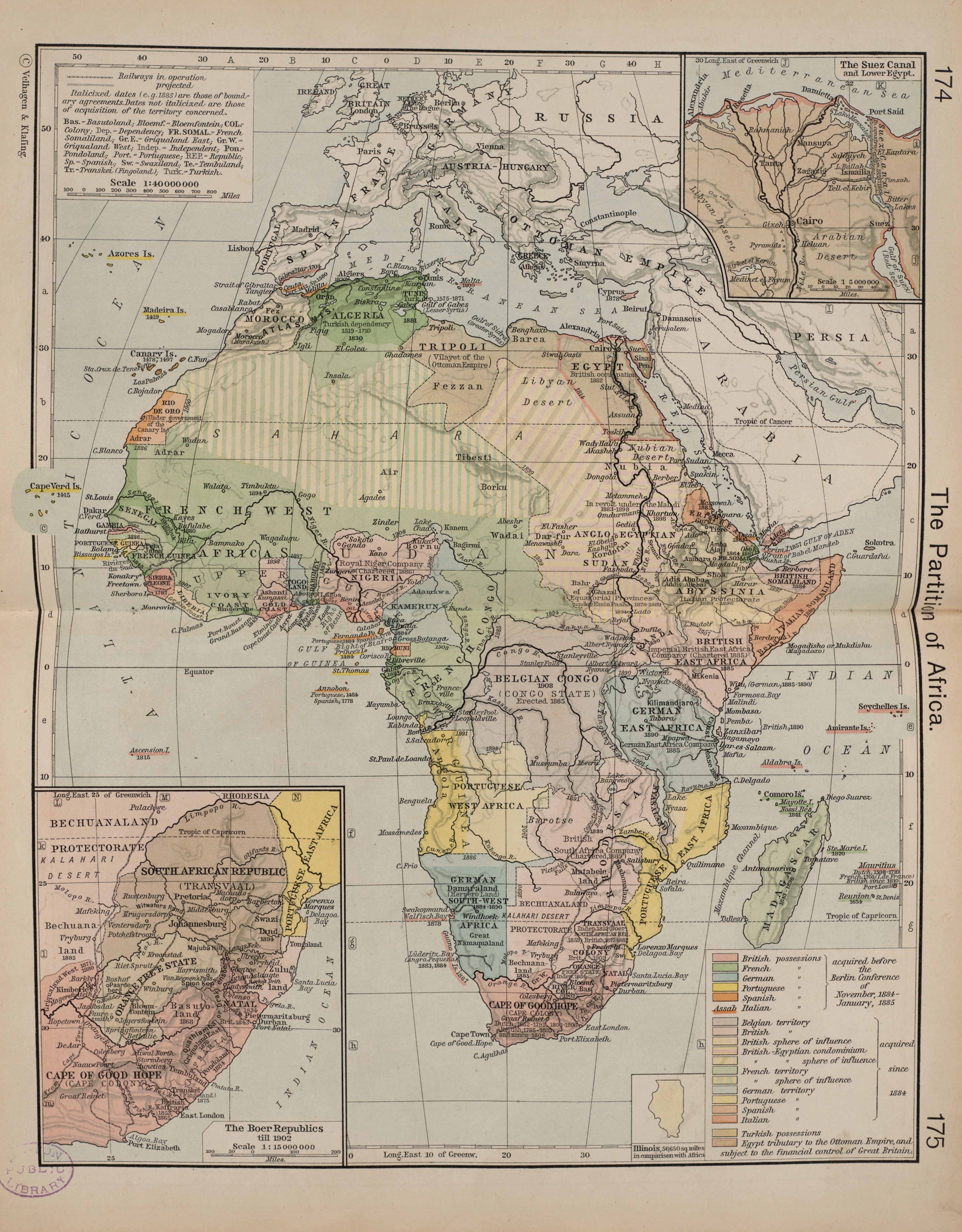
I shouldn’t have to explain at this point why a whites-only town in a black country on a black continent would rub many up the wrong way, especially in a country born of brutal western colonial unreasonable entitlement to African land, political and economic control, which lasted for hundreds of years:
Orania is symbolic.
It represents the pain of the African indigenous and of course that pain is deep and severe.
As I have said before, the two wounds I believe exist in South Africa relate to those historically colonised and those born within a colonising identity.
The indigenous and “not-white” economically power-less and the comparatively economically power-full of the colonial identity.
My husband carries within him the wound of the latter as much as I at times am triggered by the wound of the former.
A town allowed to dictate the terms of not only entry but land control and racialised residence would be akin to asking:
Post-colonised India to set aside a town or city for descendants of British colonisers to live in, where Indians would not hold control of the land and be allowed to reside for “cultural” reasons;
Post-colonised Indonesia to set aside a town or city for descendants of Dutch colonisers to live in, where Indonesians would not hold control of the land and would not be allowed to reside for “cultural” reasons;
Post-colonised Hong Kong, to set aside a square block for descendants of British colonisers to live in, where the people of Hong Kong (who are racialised “not-white) would not hold control of the land and would not be allowed to reside for “cultural” reasons;
(To whatever extent) Post-colonised Ireland, to set aside a city or town for the descendants of British colonisers to live, where the people of Ireland (who are not British descendants or residents) would not hold control of the land and would not be allowed to reside for “cultural” reasons; and
So-called post-colonised Botswana, Namibia, Kenya, Angola etc etc where descendants of British, German and Portuguese colonisers could live in, where the indigenous of Africa would not hold control of the land and would not be allowed to reside for “cultural” reasons.
I’m sure you see where I am going with this.
The fact that a western hold-out has been normalised in South Africa was always going to rub many of the indigenous of Africa up the wrong way at some point.
Because, of course, its an absurd distortion of the word freedom from western colonialism; liberation from apartheid, which is what the freedom and liberation movement was fundamentally about in southern Africa.
And the danger of an Orania is it provides legitimacy and precedence to western colonising projects or ideas existing within South Africa (and in cahoots with foreign western colonial countries).
Colonialism 2.0 should not be allowed. The western control of land under a neoliberal mask is one thing but the annexation of African land to create a western-controlled colony separate to South Africa would be a declaration of war against the Republic of South Africa.
And there is some evidence to suggest that danger is real and imminent. (For another post)
But even if we ignore the history of colonialism, if I immigrate to France and am shocked by protests, any police violence or apathy, the poverty, any neoliberal deindustrialisation and crime, and then me and a few of my immigrant friends want a town in France where only immigrants to France are allowed to control land and reside thus sheltering ourselves from the problems of the country, this will at some point be flagged by France or many of the French as an issue of contention and societal division.
At some point, Orania’s selective residency dream, especially of western colonial heritage and land control, was going to come under scrutiny.
USING A COLONIAL IDENTITY (RACE) PURITY TEST
The western colonial heritage of Afrikaners is not the only issue with Orania. It is their defined parameters of what it means to be “Afrikaner”.
Many don’t like admitting this but Afrikaners are not limited to racialised or outwardly passing “white people”.
And this is why claims that Orania represents all Afrikaners or what Afrikanerdom is or is supposed to mean is a farce in an endless highway of farcical claims made in South Africa that are steeped in a race-based pseudo theory upon which our white supremacist capitalist/western colonialism reality was built.
My husband is an Afrikaner, my mother-in-law, brother-in-law etc, all Afrikaners. Yes, they are all racialised within the colonial identity (or racialised white). They are all native Afrikaans speakers.
But the first grandson of this immediate family was born to a racialised Indian wife.
The born son of an Afrikaner is not considered “white”.
Our son is a descendant of Afrikaners going as far back as the Dutch, German and French colonising settlers that first arrived in Africa’s southern parts.
Were his forefathers supportive of racist western colonialism, very likely, almost all supported apartheid and were and are securely right-wing.
But Afrikaner heritage is still our son’s heritage, whatever he looks like.
He is the son of an Afrikaner man and has as his lineage a full line of Afrikaner people from which he comes, including those that were in the Great Trek and very likely involved in the Anglo-Boer War.
When a whites-only town say they represent Afrikaners, what they’re saying is that only those that they decide are Afrikaners who are permitted residence in their town are the identifiable Afrikaners.
And that’s a deliberate exclusion of everyone else’s claim to the Afrikaner heritage.
It is another distortion of who we are as a country.
Afrikaner families can appear “not-white” and be “not-white” people too. A distant cousin with brown skin and 3C hair like the tragic Sandra Laing who was forced away from her “white” parents.
I would go so far to say that Afrikaners who adopt children of “not-white” people are still a family of Afrikaners.
The colonial identity, this racialised whiteness (born of western colonialism around the world) is at the core of what a town like Orania considers Afrikaans, which becomes more problematic when you know of racialised “white” people who are not Afrikaners that were allowed to reside in Orania when sons and daughters like mine with all their actual Afrikaner heritage wouldn’t be allowed.
IGNORING THE WOUND AND DISMISSING RESPONSIBILITY
The woundedness historic harms have caused was always coupled with an owed responsibility of primarily economic repair that sat at the feet of western colonisers and any and all descendants. This duty of repair has been I would say dismissed and ignored by the likes of an Orania, showing a pre-1994 self-absorption as descendants of western colonial countries who architected, supported and/or violently maintained colonial apartheid and its Nazism.
No one within the colonial identity residing in South Africa should have been allowed to opt-out of their responsibility.
But they were allowed to do so, including and especially the upper-middle-to-upper-class who could have born the costs of significantly making right what was done wrong, which the lower classes racialised white would have more struggled with.
Here I am talking about high-net individuals and the corporate sector elites, inside and outside SA, including the many who are Afrikaners.
“[In response to the claim that the British empire was an amazing force for good, for civilisation and raising people’s standard of living [in the Caribbean] so why should they [the British government] pay for that? Surely, the British should be paid?]
I would actually pose that question to you? Would you say that about Jews?
I’ll just give you context. First and foremost one could easily argue that the Jewish community benefitted from the Holocaust and Hitler due to the fact that they have the state of Israel, their life expectancy improved and Israel’s GDP improved as a result of Germany giving them reparations in 1952.
So would you say on national TV about the Jews that they should be happy and should be thanking Hitler and the Holocaust for what they had gone through because they had benefitted?” Imaryn Ayton, Founder of the UK Black Reformist Movement, GB News, 28 Oct 2024.
And this failure to partake in repair should have been more critiqued by ethical white-led political associations.
Perhaps that’s wishful thinking on my part.
However, an Orania still claims to be “owed” an African space on an African continent where they get to set the rules, ignoring what a system of economic western control did to the indigenous people they believe themselves to be so totally “culturally” different to.
Mandela made a deal with them is what is said.
And I say this with the greatest of compassion, like the exploitation of racial trauma and generational indoctrination by white-led political associations in South Africa, the poor leadership of the African National Congress (ANC) brought Orania to this point.
Circumstances of the 1994 deal were challenging I am sure, but the ANC promising a mini western colony within a supposed colonialism-free and liberated Africa of not-white people does not seem to be a deal Mandela or anyone had the right to make.
It is the opposite outcome to the so-called rainbow we were meant to celebrate from 1994.
And it was bound at some point to hit the headlines as a symbol of western colonialism and a reminder of an apartheid ideology.
The ANC’s consistent compromising, with little demand of substantive change, reflects the tremendous pressure the old guard were under but also their desperation to reach consensus to the point of making liberation meaningless for most of the people they were said to represent.
ORDINARY PEOPLE OF THE COLONIAL IDENTITY MOVE TO ORANIA FOR SELF-INTEREST, NOT PURELY RACIAL DISCOMFORT
Orania’s publicity campaigns have presented them as a western-controlled, whites-only haven, minimising the harmful nature of the town’s residency requirements and their opting-out of their share of responsibility post-apartheid, focussing people’s attention more on what they offer racialised white people, especially those who are Afrikaans.
And the offer has been an escape from dysfunctional and painful South African neoliberal capitalist existence across all nine provinces.
Many people of the colonial identity, whether Afrikaners or not, would find this offer enticing because like the immigrants who flooded South Africa during economic Nazism or colonial apartheid, if you have the opportunity to cash in on a golden ticket, why wouldn’t you take a tour of Willy Wonka’s marvellous factory?
People who face job loss, business loss, home loss, crime etc would take the offer and minimise in their own minds the residency parameters and the opting out of responsibility.
This is all too human.
And so, we must remember that ordinary people are not necessarily supportive or proud of Orania because they take glee in a whites-only town.
Some (or many) people do but we cannot say all do.
Often people are merely searching in their own way to have the experience of material comfort, economic certainty and minimal crime existence that they would like to enjoy in their cities and neighbourhoods in South Africa.
We may criticise the nature of Orania but people are always just people.
This is an important factor when considering how to deal with an Orania because as we know a vote for the socialist party or EFF (even with their much-loved and hated ANC liberation song) came from within the whites-only town of Orania.
Even within the ordinary working family of Afrikaners, people are paying attention to neoliberal capitalism. Even those of the working class family of the colonial identity want their class to win in the class war we find ourselves in.
HOW TO MANAGE ORANIA’S TRIGGER OF A COLONIAL IDENTITY
The broad issue with Orania (like Afriforum and Solidarity) is they are often middle-to-upper-class mense that have benefitted or maximised their benefitting through western colonialism (western control) of southern African, now trying to justify predominantly western control of land or a whites-only town in an African country of almost 60 million people.
This triggers the wound of the colonised and one of its core questions: Should we trust them? which flits across every single thing an Orania does, says, chooses not to do or say.
When an Orania consciously and deliberately fails to partake in the “rainbow” building since 1994, but chooses to criticise the “black” government of South Africa, the wound is triggered.
Because we know the one-sidedness of their critique seeing that they choose not to publicly criticise the foreign “white”/western economic subordination of African countries, using foreign western military bases, economic structures and continued acts of western imperialism, including:
using government aid/financing to control or influence “independent” media, NGOs, research centres and political parties;
using economic tariffs and sanctions to economically crush entire African countries; or
funding terrorist groups, violent proxies in-continent, secessionist groups or the complete bombardment and obliteration of an African country (Libya).
The Africans needing their own space where they set the rules have had nothing to say in Africa’s defence, specifically when it comes up against foreign western colonialism and foreign western-steered economic mass murder or violence.
But there’s nothing that can be done about what was not done or said in the recent or historic past.
What needs to change with Orania is in the now.
What needs to change is the defining of a town’s culture as a whites-only or an only colonising identity endeavour.
SOME IDEAS FOR PROGRESSIVE GOVERNANCE
First, a full investigation must be made into whether Orania’s leadership have in any way worked with those within Solidarity, the DA (I hope not) and the Cape Independence Group to further a western-led colonising project.
This must include research into:
any links and the strength of those links between the US government, UK government and any European governments in funding, through private companies or directly:
the DA;
Solidarity;
the Cape Independence Group; and/or
Orania, and
any meetings and the content of the meetings held between the US government, UK government and any European governments, through private companies or directly with:
the DA;
Solidarity;
the Cape Independence Group; and/or
Orania.
I sincerely hope there is no fire underneath the tendrils of obvious smoke coming from these white-led structures but reforming Orania would be completely off the table if they were involved in a colonial project to take over parts of South Africa.
If any of these endeavours exclude Orania, then I think there is an option open for the town.
Recognising Afrikanerdom to be an expansive and welcoming concept
First, progressive governance can recognise the needs of Orania to live in an Afrikaner existence, except a revision of their residence entrance parameters will need to change.
For example, Orania can open up residence to and give priority to:
Afrikaners of interracial marriages;
Afrikaners who have adopted children that are racialised “not white”.
They can also open the town up to:
Racialised coloured and black people of no Afrikaner heritage who speak fluent Afrikaans and wish to reside, as was the case of those racialised white people of no Afrikaner heritage who have or had been given residence in the history of the town’s selection process.
A monitoring and auditing of these parameters would need to be done to ensure that the parameters have changed.
Ultimately, using race as the determinant of who is allowed to live in the town must be removed from the residence policy with immediate effect.
This will stand as an example to all cultural communities, racialised within the indigenous African community, the colonial identity or any other that race will no longer be used, either overtly or as a hidden common denominator in the cumulative effect of policies to create a racially inequitable lived and run experience.
Also, the education programme in Orania cannot exclude the ugliness of western colonialism and the lives of indigenous African people.
Let’s get real here.
Orania is not some cute, quaint Amish town. They’re not walking around with bonnets on their heads and churning butter by hand.
It’s a town born of a western settler colonial state of deliberate racially segregated and disparate development in Africa.
Africa being the important word here.
This context is why Orania’s founders wanted to exist separately from an African Africa post democracy in the first place.
And we need all towns to be welcome and understanding of Africans of Africa.
It is dangerous to the unification of South Africa post-apartheid to have a pseudo “state within a state” that teaches a history that is devoid of black African struggle, heroism, diverse culture, literature and liberation.
Children indoctrinated (like they were in apartheid) to believe the Dutch were just random farmers rather than part of the Dutch East India company’s colonial agenda set the country up for a repeat of apartheid and violent western colonialism.
The whole point of history in all its ugliness is to learn from it, not learn to repeat it by deferring the ugly parts as “just how it was back then” so let’s not hurt the children’s sensibilities.
Cultures do evolve, and can evolve out of an Afrikaner identity soaked in a western colonialism ideology of white supremacy
The fact that Afrikaners raised and racialised within the colonial identity known as white are not choosing horses and wagons as they sole mode of transportation, means that the ideas of what it means to be “Afrikaner” have and can evolve by choice.
And this is true of all language-based or religious-based “cultures” or traditions.
In the Hindu traditions, there used to be a tradition called sati where widows were expected to commit suicide by burning themselves on the funeral pyres of their deceased husbands.
Horrific and certainly not practiced within the religious community identifying as Hindu (Thank the Lord for that!).
In the Zulu traditions, there used to be a practice of ukuthwala where female children could be kidnapped and married off (of course without their consent) to interested men. Not only is this practice illegal in South African law but far from welcomed, encouraged or condoned within Zulu language families.
Cultures evolve.
Cultures change.
And it boils down to choice and the courage to acknowledge our discomforts and generational indoctrination.
The fact that the whites-only town of Orania:
has TVs and computers,
engages in social media activity,
does not force suspected adulterers to be stoned to death in accordance with sections of the Christian bible, or
is willing to speak English at all,
says that choices are being made on what parts of perceived Afrikaner identity and Christian identity is being held onto and what parts are being discarded as inappropriate or irrelevant.
Choices are being consciously made within Orania on what identity means as time moves forward and the world changes.
And if you can choose to move past bonnet-wearing to social media or Netflix and chill, then you can choose (however difficult) to process an ideology that harms your African country, continent and the comfort of your children’s children in a continent that was always “black”.
LIVING IN AN AFRICAN AFRICA COULD BE A FRESH START
It is the responsibility of any incumbent hopefully progressive government to prioritise the end of neoliberal capitalism in South Africa.
The trickle-down that floods upwards (and out of South Africa) has led to Orania’s appeal and one of the swiftest ways to extinguish its appeal is to take back control of the economy from those that seek private self-interest and profiting at the expense of the majority working class, which includes Afrikaners by the way.
South Africa has faced significant economic deterioration, deprivation and attacks from both outside and inside the country at the highest levels of economic power and for that we must never prioritise an Orania town over the rest of South Africa (unless and until we have proof that they are involved in a western colonialism project).
If governance can move less toward protecting upper-class interests and toward prioritising and honouring the working class, we might find more space to debate Orania as a whites-only town in a refreshingly and actual new South Africa.
For now, survival remains a priority.
“The Minister [of Finance] says he is short of R28 billion on his budget, that’s why he is increasing the VAT.
The VAT [increase] will not give him R28 billion, it will give him R13.5 billion so he will still be short.
We are saying to him that you don’t need the VAT.
First, you need to tax the rich. the corporate tax was at one point 29% but was dropped to 27%…
It is not true that companies are not making money. They are making money. The issue is illicit financial flows, underreporting of their profits and and and…
SARS says there is R800 billion that is out there that they can collect so even if SARS were to get 10% of that that would solve the Minister’s problem.
The problem is not that there are no other avenues. The problem is that they are scared to touch the rich.
The second point is there are a lot of trusts sitting with luxury properties that are not being taxed but they use those [property] portfolios to ask banks for loans and that is allowed. And by the way, the banks know of those portfolios. They are not being taxed,” Omphile Maotwe, EFF Treasurer General.
Orania may be a symbol of a real and imminent colonial danger (we see the brewing in the Western Cape) but unless there is proof of involvement in a plot don’t let Orania be a distraction to bring the economy back to its people.
Get the working class’s African country back in their hands working for their interests.
Orania’s policies are an antiquated symbol of a time long ago.
People are changing in SA. My mother-in-law is not going to rush into Orania if it means her grandson can never stay with her. It’s just not the world everyone wants to live in.
South Africa’s progressive party policies can be a symbol too. A more powerful one and far more appealing.
The kind that heals wounds long buried or triggered.
The kind that makes an African Africa a vision of progressive success and national healing.
The kind that makes a rainbow a lived reality.
Think big picture, big wins not small-town mentality.
Comments
Nothing yet. Say the first thing.
Sign in to join the conversation.