
Everyone dreams of moving to France - the wine, the cheese, the life-changing realization that butter has a personality. However, what the travel brochures don’t tell you is that within 48 hours, you’ll be in an emotional standoff with a grocery cart, standing in the Mairie holding a form you didn’t know existed, and panic-eating truffle ravioli under fluorescent lights in a frozen food aisle that feels like a perfume ad.
Since you asked... here are 10 essential lessons you won’t find in any guidebook, French class, or Pinterest board. Consider this the instruction manual they forgot to give you, which I learned the hard way through bureaucracy, shame, near-death duck experiences and a deeply personal relationship with a two-button toilet.
1. The Shopping Cart Requires a Coin and Possibly a Blood Oath
The first time it’s funny. The second time? It’s embarrassing. The grocery store carts are chained together like prisoners waiting for trial, lined up in the cart port next to a Lamborghini you will hit by accident. They steer like rogue boats and navigating them is French driving culture condensed into steel and squeaking plastic.
To unlock one, you need a one-euro coin. Not a centime. Not your charming smile. A euro. Without it, you’re cartless, helpless, and performing interpretive dance in the parking lot, miming “can I borrow yours?” to strangers who have suddenly developed an extreme interest in the horizon.
Once you have your cart, you think you’re done. You’re not. You still have to return it, reconnect it perfectly to the line, and recover your euro, a ritual so precise it could be taught in military academies. Miss by half a centimetre and you’re back in a battle with the cart while everyone around you glides past like they were issued the instruction manual at birth.
2. Toilet Buttons: The Flush of Judgment
I’ve been to Japan. I’ve seen heated seats. I’ve seen toilets that play symphonies. I have now lived in France for 5 years and still pause before every flush like I’m being asked to launch a satellite.
Two buttons. Same toilet. No labels. No instructions.
Why isn’t there some sort of indicator? Like, soft or hard? Liquid or Solid? One for a gentle farewell? One for sending your sins to another dimension?
If I press both, will it open a portal? Will I accidentally flush next Tuesday?
Choose wisely.
I’m still not entirely sure I ever have.
3. Dogs Are Allowed to Join You EVERYWHERE in France
The first thing my French vet ever said to me wasn’t about vaccines.
It was, “Take her everywhere.”
When I brought Fleur to the vet for the first time, I thought we were having a conversation about being a responsible dog owner. Instead, I was apparently receiving instructions on how to become more French.
And they meant it.
In France, dogs are welcome in restaurants, on trains, in shops, and probably in confession. They walk into places with the confidence of someone who has already been invited.
Fleur has eaten lunch beside me at cafés, spent hours under bar stools, wandered through antique shops, and entered rooms with the absolute certainty that everyone was expecting her. Nobody points. Nobody asks if she’s allowed. Everyone pats her on the head and brings a bowl of water.
Meanwhile, I’m still wondering if I am dressed appropriately.
They sit in chairs at restaurants, stare directly into your soul while you butcher “entrecôte,” and somehow manage to look more sophisticated than the humans around them. They’re silent, furry critics. They glide into boutiques where a pristine Limoges porcelain water bowl awaits them, which is more dignified than my last hotel stay.
Want French approval?
Don’t learn the language.
Get a dog.
4. You Can Drink in Public Like a Civilized Pirate
Yes, you can drink alcohol in public. Legally. At a picnic, in a park, on a sidewalk, at a village fête or funeral, or even while herding goats, although I have not personally tested that last one.
Nobody cares. Nobody calls the police. Nobody dramatically lowers their voice and says, “Someone has wine outside.” In France, a person sitting on a bench with a glass of wine is not a public emergency. It is ‘normal’.
That was the part that took me the longest to understand. The wine wasn’t the shocking thing. The shocking thing was that nobody thought it was shocking.
Oh, and your toddler can accompany you into the bar. They assume you’ll be the responsible one.
Which, honestly, is both charming and a little terrifying.
5. Opening Hours Are Classified Information
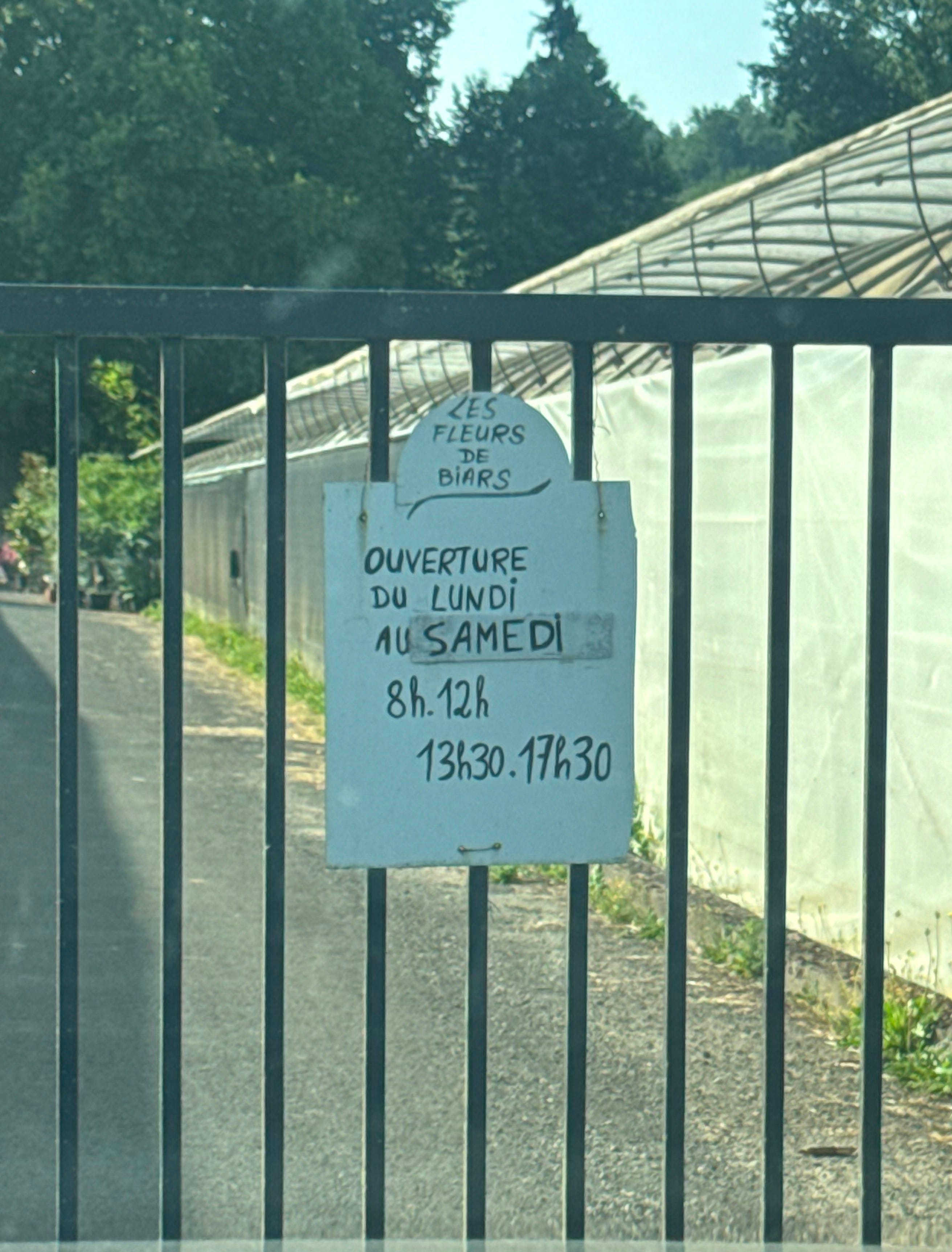
In rural France, opening hours are published in several places, which sounds helpful until you realize that none of them agree. Google says 9:00. The website says 9:30. The sign on the door says 10:00, unless it is summer, winter, August, a school holiday, the day before a holiday, the day after a holiday, lunchtime, or exceptionnellement fermé, which roughly translates as, “Whatever plans you had today are no longer our concern.”
This is particularly exciting when you have driven forty minutes to get there because the website, which has apparently not been updated since François Mitterrand was president, confidently assured you they were open.
Eventually, you learn that opening hours in rural France are not really hours at all. They’re more of a general indication that, under the right circumstances and with favorable planetary alignment, someone might be there.
Always have a Plan B.
Preferably one that is already open.
6. Picard: The Frozen Food Church of France
Oh Picard!
Everything is frozen. Everything is beautiful. You’re suddenly debating four kinds of scallops and a yuzu-glazed duck breast. Picard is not just a store; it’s a cult disguised as a Swiss skincare brand. You go in for peas and emerge with a foie gras yule log, a truffle sorbet, and a new identity.
Your freezer becomes a shrine.
You are now one of them.
7. Lunch Is a Sacred, Time-Bending Ritual
At noon, rural France stops. Shops shut, pharmacies vanish and your ability to get anything done dies until the world reboots at 2 p.m. Maybe. During that window, nothing exists but lunch. Lunch is sacred. It is two hours of communion with 4 courses. Submit or starve, literally. If you don’t eat lunch between 12:00 and 14:00, you won’t get lunch or food until 19:00. You linger, you pretend that you aren’t drinking that day because of what happened the night before, and you just submit to the culture, enjoy and wait for the cheese course.
8. Small Talk Is a Sin Against Efficiency
I am the Queen of Small Talk. No awkward silence, ever. Just ask my daughter or my ex. But in France? Do not ask the cashier how their day is. Do not comment on the weather. Do not ask your server, “Where are you from?” Me? I arrived with a Costco-sized bag of conversation.
These are not pleasantries, they are conversational crimes. The French view unnecessary words as a form of verbal littering. Speak only when summoned. Or smirk slightly like a noble who may or may not own land.
9. The Mairie Is the Village Control Tower
Every French village has a Mairie, but calling it a town hall doesn’t really cover it. The Mairie is where you go to get married, register things, request things, complain about things, ask permission to change the color of your shutters, find out why the road is closed, pick up bags to put your recycling in, discover when the fête starts, and occasionally learn something about your own property that apparently everyone in the village knew except you.
Eventually, everything seems to involve the Mairie. Swimming pools, roofs, fences, building permits, rubbish collection, elections, village fêtes and mysterious pieces of land whose ownership hasn’t been entirely clear since approximately 1847 all seem to pass through the same building, where somebody behind a desk will listen patiently while you explain your problem in terrible French and then disappear into a room containing several centuries of folders.
At some point, they return holding a piece of paper you have never seen before, didn’t know existed and will apparently need three copies of.
Welcome to the Mairie.
10. Everyone Has A Guy
In rural France, the answer to almost any problem is not The Internet. It is knowing someone who knows someone. Need a plumber? Someone has a guy. Your car needs the tires rotated? Someone has a guy. Need a tree cut down, a stone wall rebuilt, a field cleared, a septic tank looked at, or something enormous removed from somewhere it clearly should not be in the first place? There is a guy for that too.
You will not find this person online. He will not have a website, a sign, or any obvious indication that he operates a business at all. You cannot book him through an app and there will be no cheerful email confirming your appointment for Wednesday between 10:00 and 12:00. Instead, somebody will give you a first name and a phone number, usually accompanied by the words, “Tell him I sent you,” as though you’ve just been admitted to a small but highly effective criminal organization.
Then, one day, a van will appear in your driveway and a man you’ve never met will get out, look at the problem you’ve been worrying about for three weeks, say approximately four words, and fix it.
This is how things get done in rural France. And, eventually, after you’ve lived here long enough, someone will ask if you know anybody who can help them with something.
You will.
You have a guy.
POSTSCRIPT:
Travel brochures don’t prepare you for any of this. They show crystal wine glasses, sunsets over lavender fields, and a woman named Céline carrying baguettes without crumbs. But real French life isn’t curated. It’s confusing and bureaucratic and gorgeous and opinionated and frozen and divine – yes, all at the same time.
And somehow, you adjust. You get the euro cart token. You eat the truffle sorbet.
And one day, you realize: you’re still not fluent, but you know which toilet button to press.
That, my friend, is progress.
No posts
Comments
Nothing yet. Say the first thing.
Sign in to join the conversation.