
After spending the morning exploring the Hippodrome, the Blue Mosque, and Hagia Sophia, my wife and I made our way to the final stop of an unforgettable first day in Istanbul: Topkapi Palace (Topkapı Sarayı). This fortress served as home to the Ottoman sultans for nearly four centuries. The visit offered a fascinating glimpse into one of history’s most powerful empires. We allowed ourselves the better part of an afternoon to wander the massive complex.
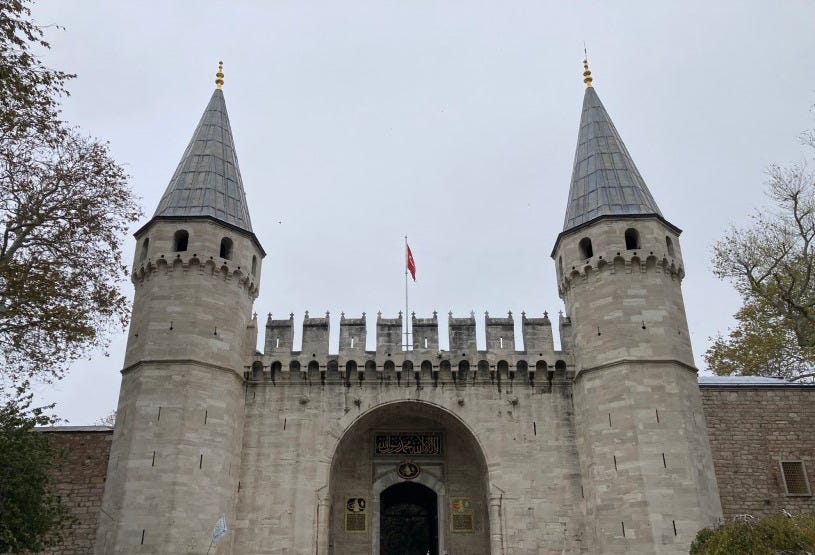
Passing through the Imperial Gate, it was immediately apparent that this was far more than a royal residence. The palace is a city unto itself, spread across multiple courtyards overlooking the Bosphorus. Each of the four “courtyards” was unique, with their own charm and historical purpose. The architecture, gardens, and open spaces created an atmosphere that felt surprisingly peaceful despite the thousands of visitors exploring alongside us.
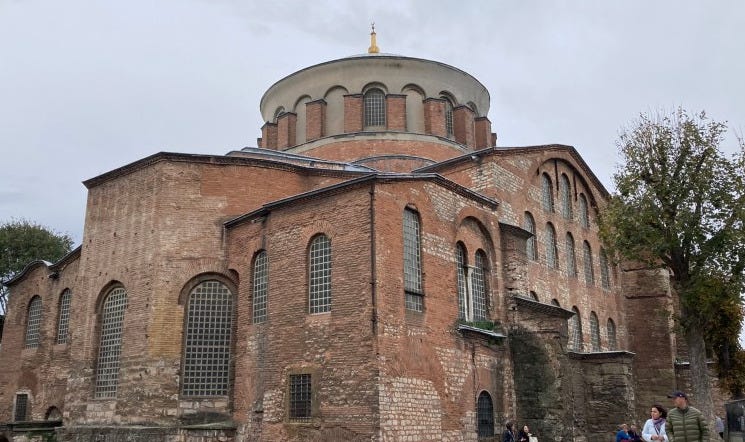
The first courtyard, known as the Court of the Janissaries, welcomed us with broad walkways and beautifully maintained grounds. One of the highlights here is Hagia Irene, a remarkable church that predates Hagia Sophia by nearly two centuries. Standing beside one of the oldest surviving churches in Istanbul was a reminder that this site has witnessed far more history than just the Ottoman Empire. In fact, this city served as the seat of the Holy Roman Empire for a millennia prior to the Ottoman era.
Continuing through the impressive Gate of Salutation, we entered the second courtyard, where the daily operations of the palace once unfolded. The enormous palace kitchens now display porcelain, silver, and elaborate serving pieces used to entertain dignitaries from around the world. Nearby, the Imperial Council Chamber served as the administrative heart of the empire, where decisions affecting millions of people were debated beneath beautifully decorated Ottoman ceilings.
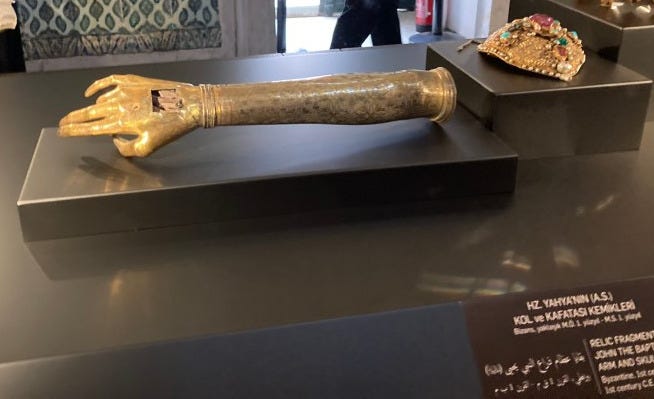
The third courtyard was the most memorable. Here, the palace becomes noticeably more intimate, with the sultan’s private quarters and the famous Harem tucked behind richly decorated walls. While the tile work and architecture were stunning, what fascinated me most was the museum housing the palace’s collection of religious relics.
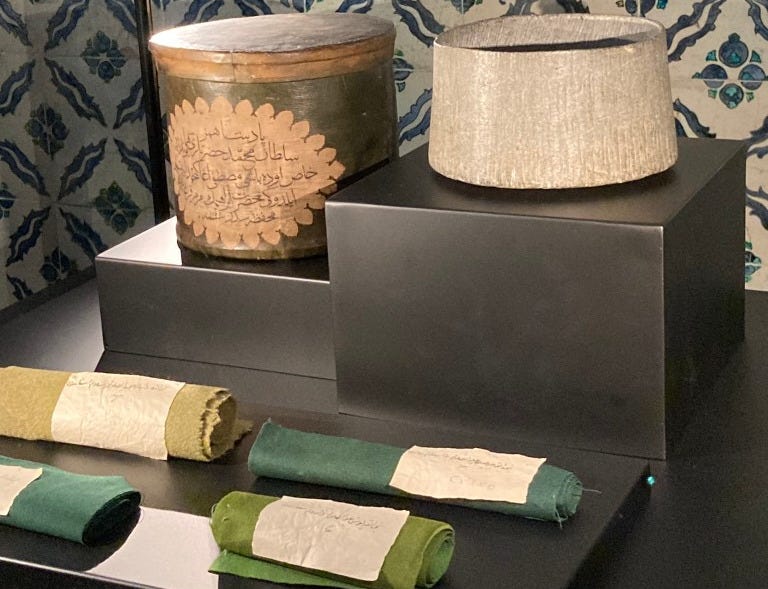
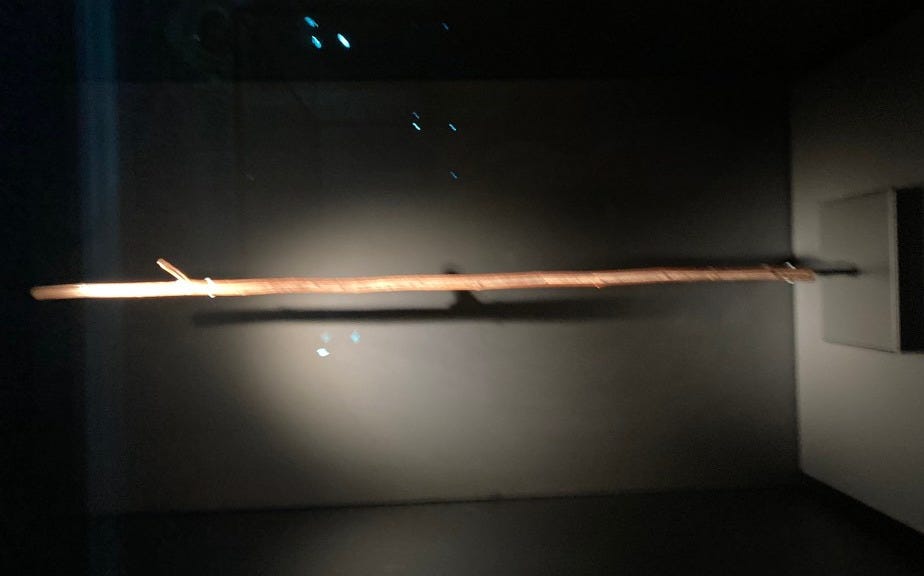
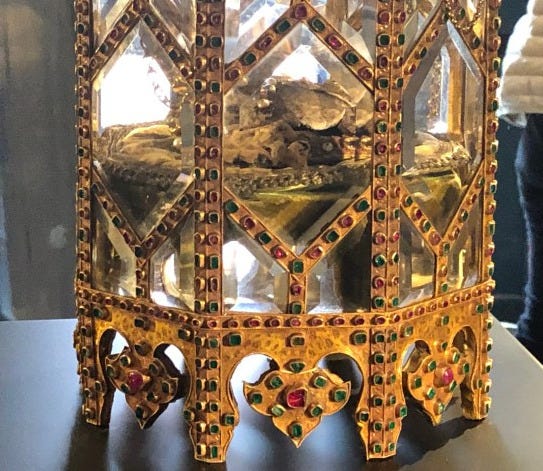
Many of the artifacts are traditionally attributed to figures from the Bible and Islamic history, including Moses’ staff, Abraham’s cooking pot, Joseph’s turban, David’s sword, and relics associated with John the Baptist. Whether these objects can truly be connected to the individuals they represent is, at best, highly uncertain. Still, seeing the reverence with which they have been preserved offered an interesting window into both Ottoman history and the role religion played within the empire.
Nearby, the Treasury displayed another side of imperial life. The dazzling collection of jewels, ceremonial weapons, and priceless artifacts included the famous Topkapi Dagger and the enormous Spoonmaker’s Diamond. Even among so many remarkable exhibits, these pieces drew crowds of visitors eager to catch a glimpse of two of the Ottoman Empire’s most celebrated treasures.
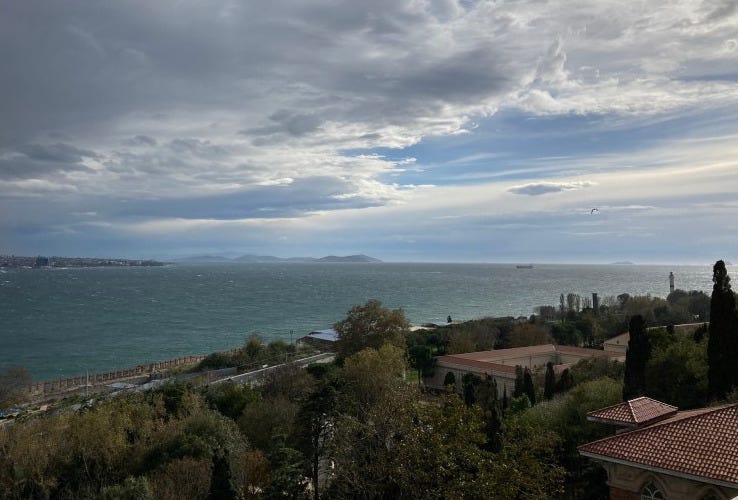
Our meandering concluded in the fourth courtyard, where terraces and gardens overlook the Bosphorus and the Golden Horn. After spending several hours walking through ornate halls and museum galleries, it was the perfect opportunity to slow down for a few minutes and simply admire the spectacular views. It wasn’t difficult to understand why the sultans chose this location for their palace. Few royal residences anywhere in the world enjoy such a commanding setting.
Topkapi Palace was a great way to wrap up our first day in Turkey. Combined with the Blue Mosque and Hagia Sophia, it provided an incredible introduction to Istanbul’s rich history and unique location at the crossroads of Europe and Asia. Whether you enjoy history, architecture, or simply want to better understand the Ottoman Empire, Topkapi Palace fits the bill.
Plan on spending at least half a day exploring the grounds, because there’s far more to see here than first meets the eye. The palace is open Wednesday through Monday from 9am until 5pm. Between April and November, the closing time is extended to 5:30pm.
No posts
Comments
Nothing yet. Say the first thing.
Sign in to join the conversation.