
The Historic City of Troy sits near the town of Hisarlik in modern-day Turkey, a city that has spent more of its existence as myth than as verified history. It is a UNESCO World Heritage site now, which is a fitting honor for a place that spent three thousand years as a battleground for gods and kings. We stopped there on the way to an overnight stay at the Kolin Hotel in Canakkale, and it was worth the detour.
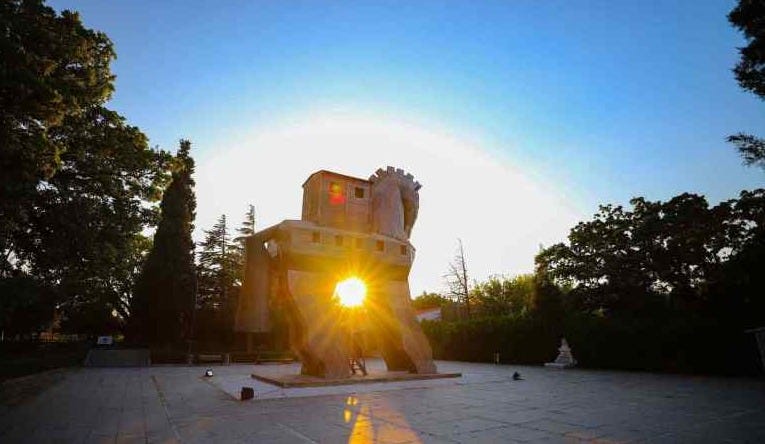
The legend is the reason most people know the name at all. Homer’s Iliad and Odyssey tell of a war sparked by the abduction of Helen, wife of the Spartan king Menelaus, by the Trojan prince Paris. The Greeks laid siege, eventually breaching the city through the trick of the Trojan Horse, and the war ended with Troy in ruins. Whether any of it happened the way Homer told it is still debated by people who have devoted their careers to the question. What is not in doubt is how thoroughly the story has worked its way into the foundations of Western literature.
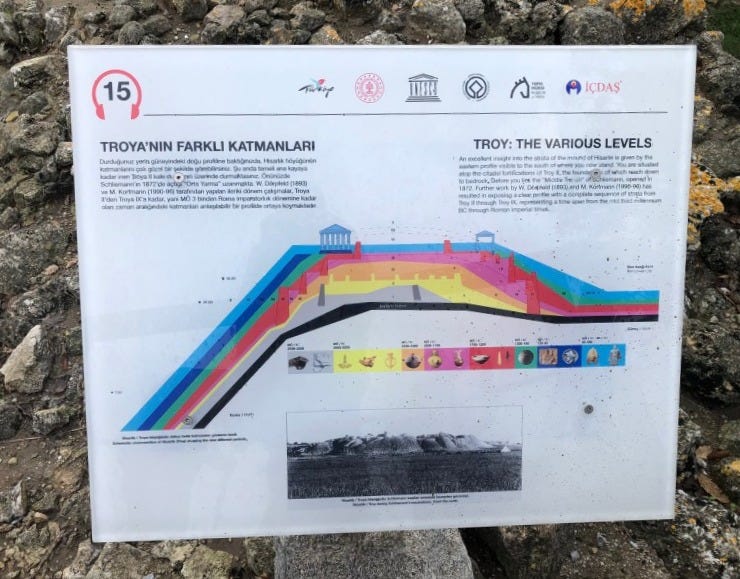
The archaeological record is its own kind of remarkable. Heinrich Schliemann rediscovered the site in the nineteenth century and found not one city but nine, stacked on top of each other like sediment. Troy I through Troy IX span roughly from 3000 BCE to 500 CE, each layer a different civilization that decided this particular hill was worth building upon. Walking the site now means walking through the layered eras, which takes some mental sorting but is part of what makes the place worth the trip.
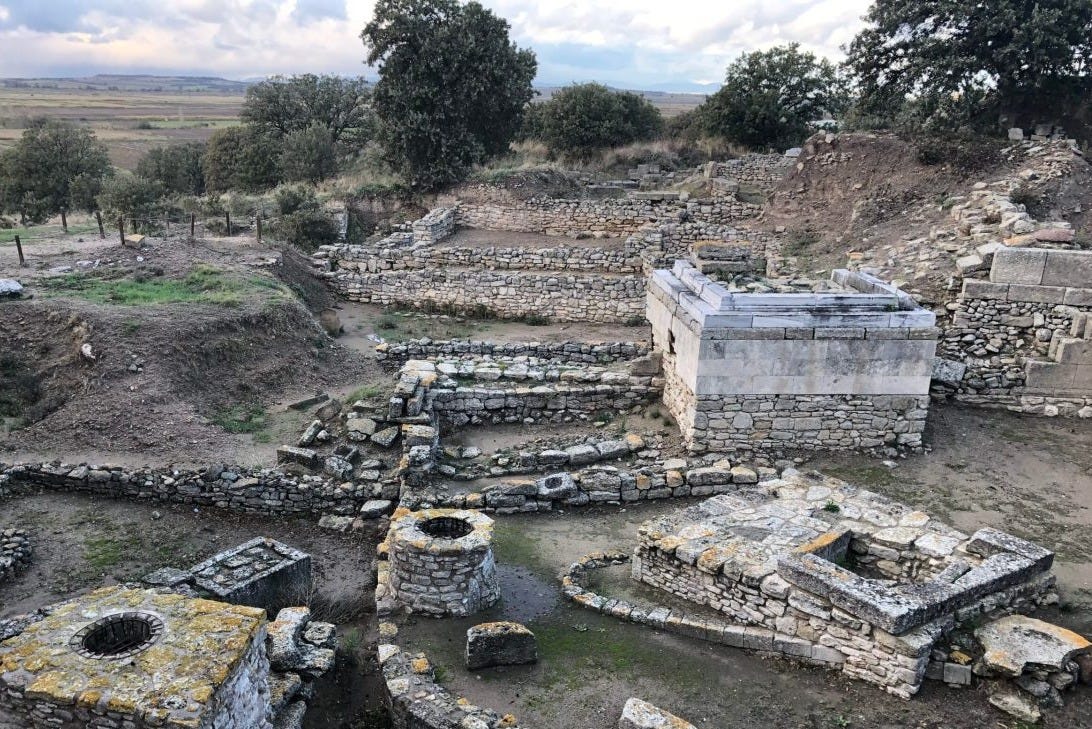
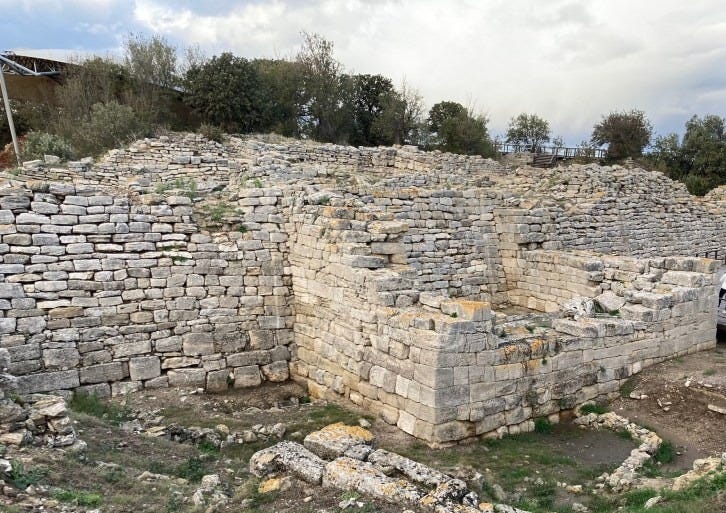
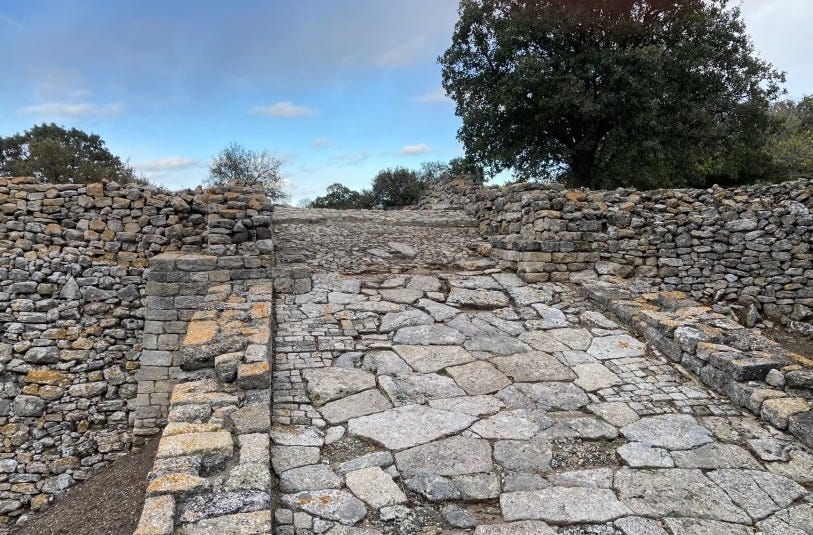
The stone walls are the first thing that grab you, particularly the sections from Troy VI and VII that date to roughly the era of the Trojan War itself. They were built to keep people out. Standing next to them it is easy to understand why an army camped outside for years instead of just walking in. Nearby is the Scaean Gate, one of the main entrances and the spot most closely tied to the war’s mythology. It takes little imagination to picture warriors passing through it.
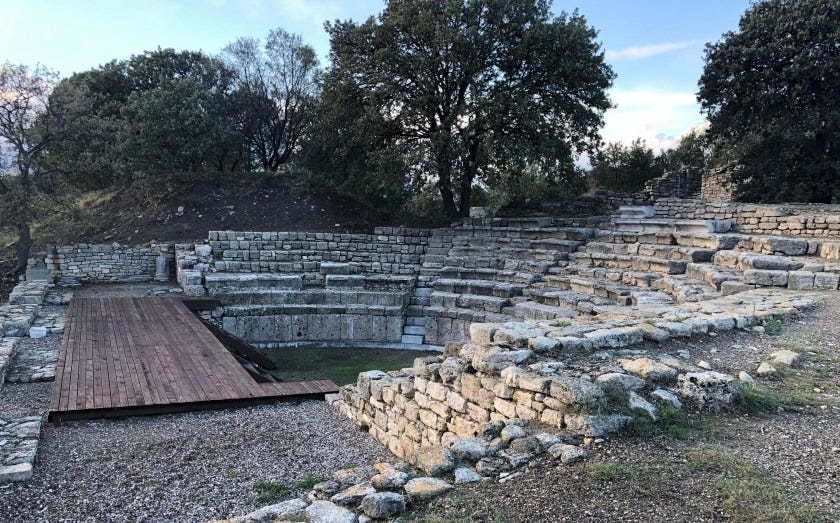
Elsewhere on the site is the Sanctuary of Athena, a reminder that Troy was a religious center as much as a military one. The nearby Roman Odeon and Bouleuterion show the city still mattered centuries later under Roman rule. The Odeon hosted music, the Bouleuterion hosted council business, and both point to a city that kept reinventing its purpose long after the war that made it famous. There is also a wooden Trojan Horse replica near the entrance, no older than a few decades but popular enough that visitors climb inside it or pose for photos.
Troy sits about thirty kilometers south of Canakkale and is open daily. Hours shift with the season, so it is worth checking current times before you go. A guided tour is the best way to get the layers of history to make sense as you walk them. This site rewards context more than most ruins do. Wear real shoes. The paths wind past walls and foundations that have stood for millennia, and on the day we visited a bit of rain turned some of the stone slick, which is not the moment to find out your sandals have no grip. Pro tip: Wear good walking shoes.
Visiting Troy never requires you to choose between myth and history. You can walk it as the setting of Homer’s war or as nine cities built one on top of another over three thousand years. Either way, you leave with a better sense of how much history this small hill in northwestern Turkey has actually witnessed.
No posts
Comments
Nothing yet. Say the first thing.
Sign in to join the conversation.