
One of the things I love about traveling is discovering places that don’t necessarily look spectacular at first glance. Destiinations that become fascinating once you know what happened there. The Hippodrome in Istanbul is exactly that kind of place.
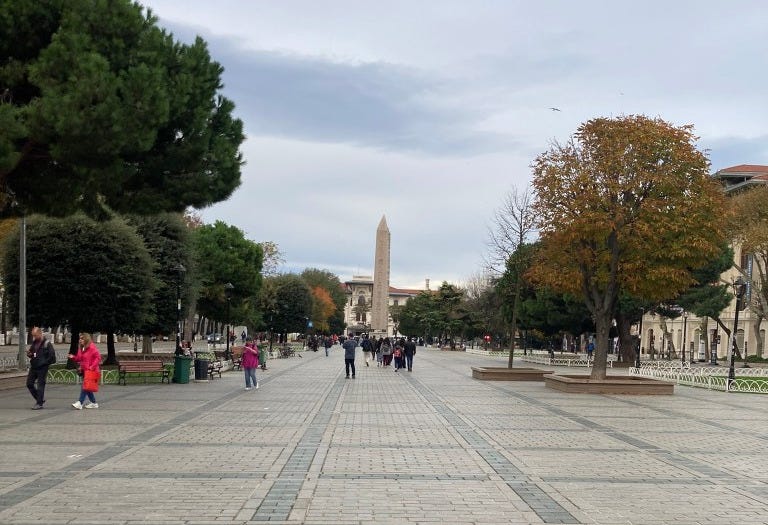
My wife and I began our morning in Sultanahmet Square, arriving before the crowds. Today it’s a peaceful public plaza surrounded by some of Istanbul’s most famous landmarks. Sixteen centuries ago this was the beating heart of Constantinople. Beneath our feet lay the original Hippodrome, the city’s massive sports arena where emperors watched thrilling chariot races and more than 100,000 spectators cheered, argued, celebrated, and occasionally rioted.
It’s essentially the Byzantine version of NASCAR, just with four-horse chariots, imperial politics, and considerably higher stakes.
The Hippodrome was first established by Emperor Septimius Severus in the 3rd century. It was dramatically expanded a century later by Constantine the Great after he made Constantinople the capital of the Roman Empire. While the stadium itself disappeared long ago, the outline of the original track can still be traced by the stone pavers in the square. The original racing surface lies about six feet below today’s street level, buried beneath centuries of history.
The most impressive witness to that bygone era is the Obelisk of Theodosius.
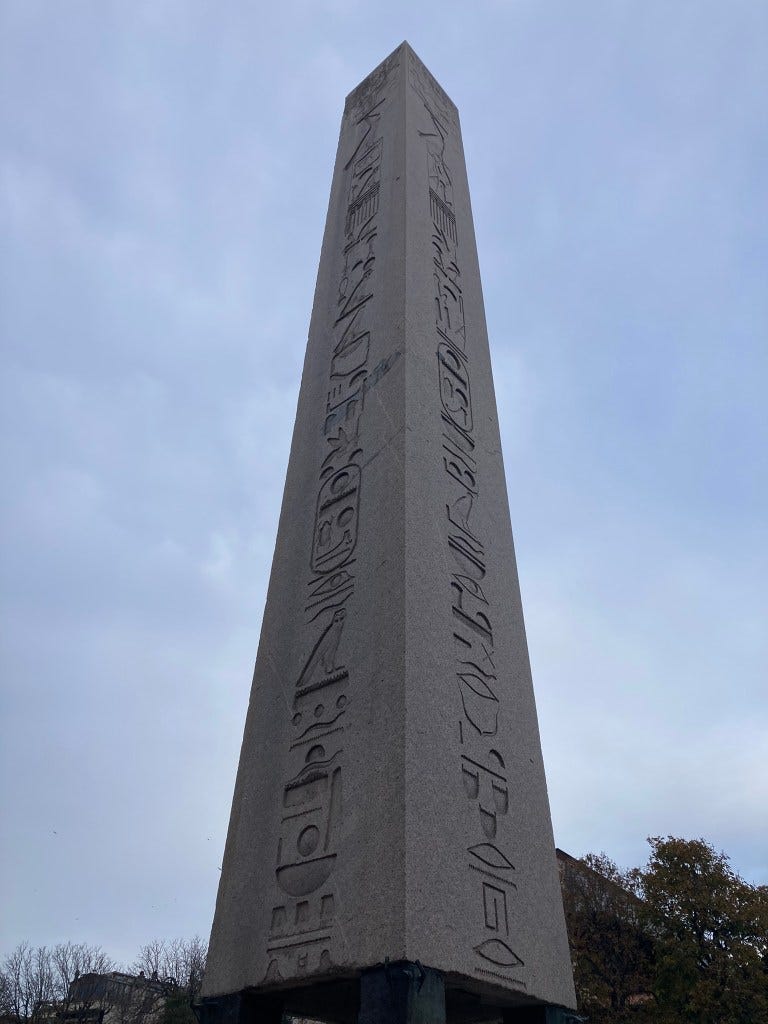
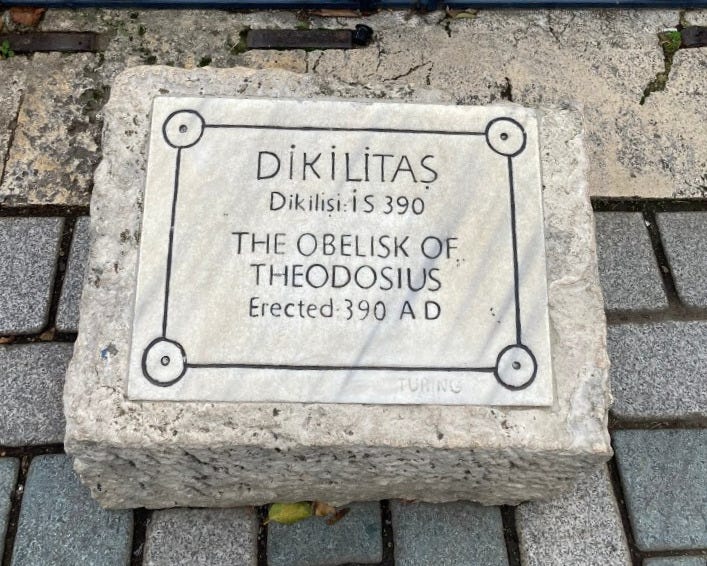
It’s hard not to be amazed by this monolith. Carved in Egypt more than 3,500 years ago, the granite obelisk was transported to Constantinople in 390 AD under Emperor Theodosius I. Even with modern equipment, moving a monument of this size would be an engineering challenge. Sixteen centuries ago, it must have been an astonishing feat.
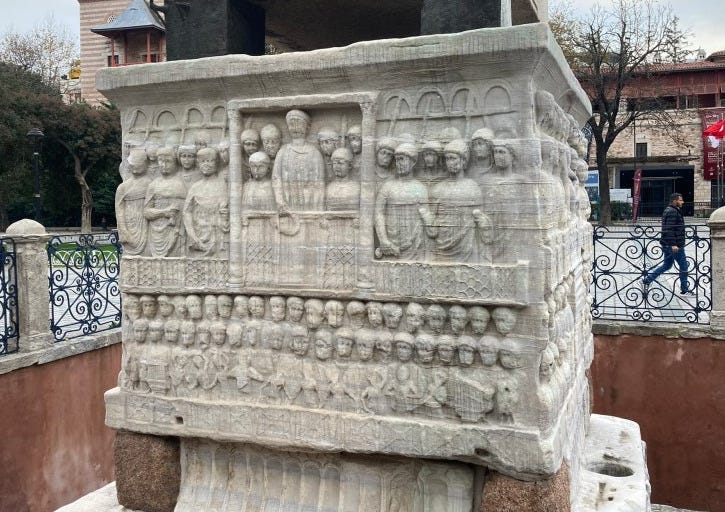
The current plaza sits atop the original Hippodrome. However, visitors are still able to see the beautifully carved marble base that supports the obelisk due to an excavated section of the square. The reliefs depict Emperor Theodosius presiding over games in the Hippodrome, with inscriptions commemorating the successful raising of the monument. Picturing the logistics of transporting this massive obelisk from Egypt gave me an even greater appreciation for what ancient engineers accomplished.
Walking through the square, it wasn’t difficult to imagine the scene that once unfolded here. Chariots charging around the track. Tens of thousands of spectators shouting for their favorite teams. Emperors looking on from the imperial box. This wasn’t simply a sporting venue. It was the social, political, and entertainment center of one of history’s greatest cities.
It turned out to be very easy to incorporate the Hippodrome into a day of sightseeing. Since it’s an open public square, there’s no admission fee, and you don’t need to set aside hours to explore it. We visited first thing in the morning before heading next door to the Blue Mosque and then Hagia Sophia, making for an excellent introduction to Istanbul’s remarkable history.
Note: for those going next door to visit the Blue Mosque, there were vendors on the square selling scarves. The vendors add convenience for visitors (women) who want to visit the mosque but didn’t remember to bring along a head covering.
The Hippodrome may no longer echo with the thunder of racing chariots, but standing among its surviving monuments offers an opportunity to picture ancient Constantinople at its height. For history lovers, it’s much more than a promenade or public square. It’s where the seat of the Roman Empire stood for a millennia. A place where the world once came together to cheer, celebrate, and occasionally lose its collective mind over a chariot race.
Affordable Travel is a reader-supported publication. To receive new posts and support my work, consider becoming a free or paid subscriber.
Comments
Nothing yet. Say the first thing.
Sign in to join the conversation.