
“And all the rain falls down, amen, on the works of last year’s man.” — Leonard Cohen
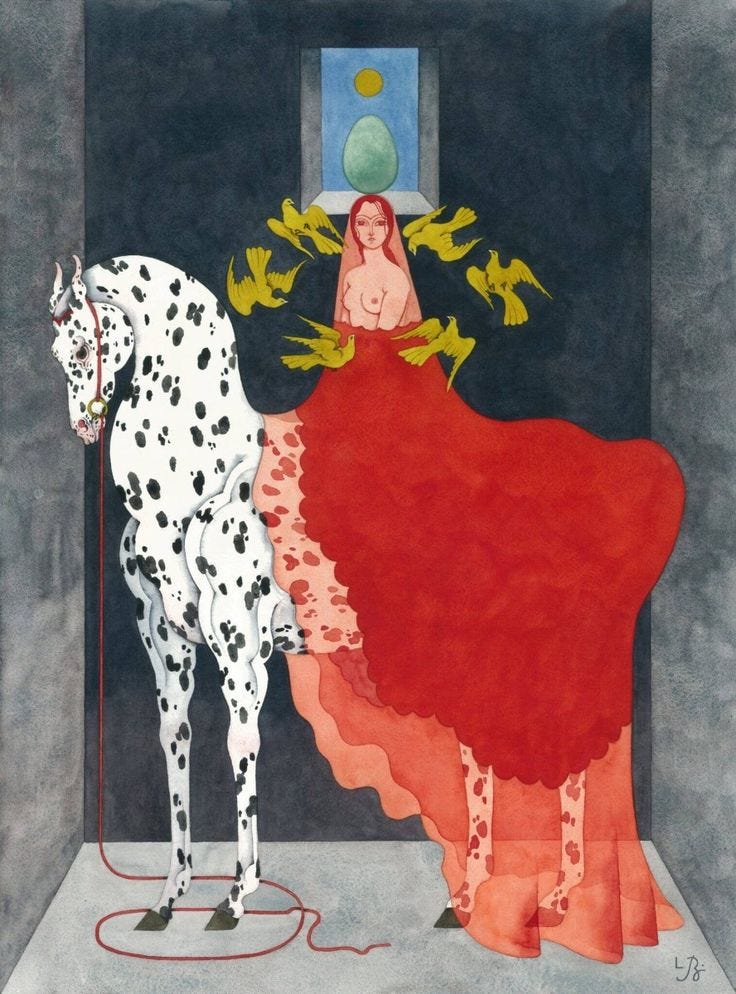
January is here, and just like that, we step into 2026. Ready or not, the gate swings open. The month derives its name from Janus, the two-faced god of thresholds, portals, and new beginnings, a key deity in the Roman pantheon from whom we inherited the fiscal year. At this time, we, too, like Janus, look backward and forward. We take stock of what has passed. We reorient and set our intentions for what is to come. But the New Year often feels like a coerced ending and a false start.
Threshold rituals help create intention and meaning in moments of change. They name and acknowledge the occurring transition and support the integration of personal and collective transformation. They help delineate the passage of time and create a structure for us to move through and be shaped by so that hopefully, we come out the other end renewed and reborn.
But polarizing time along a past and future axis is a two-dimensional construct. It collapses the fertile void of liminality into fixed categories. Neither here nor now. So I want to share a few thoughts about navigating and honouring the in between, not just because it’s January, but because we live in liminal times. The future is not what it used to be.
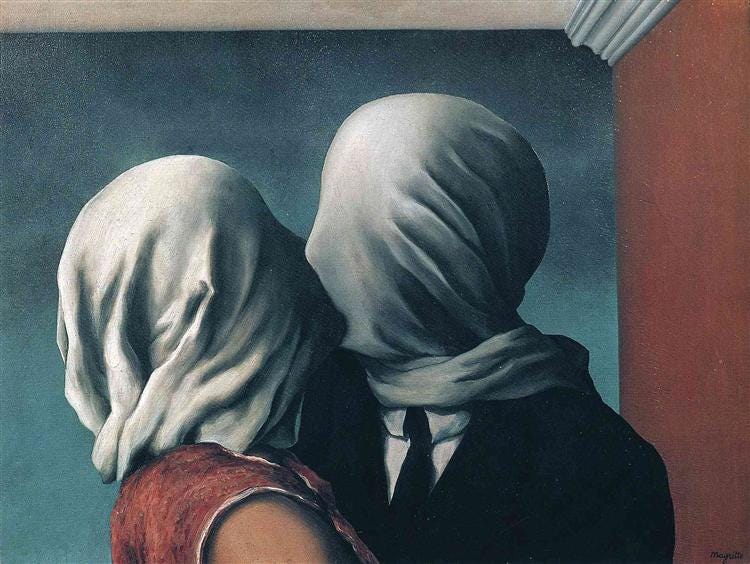
If you keep up with astrological transits, you know we’ll be starting the year with a wild one: Saturn conjuncts Neptune on February 20, setting the tone for the entire year. Historically, this transit has been correlated to periods of significant global and political shifts and with the dissolution of established systems. Recent examples include the fall of the Berlin Wall in 1989, as well as the Bolshevik Revolution and the onset of World War I in 1917.
While this conjunction occurs every 36 years or so (and the world is constantly in a state of upheavals), the fact that it’s occurring at 0°Aries is significant: the very first degree of the astrological wheel is a most potent threshold.
Here, dreams (Neptune), be they religious visions or nightmarish utopias, meet reality (Saturn) in fiery Aires (impulsive action). As astrologer Austin Coppock sums it up: “Saturn is out to lunch with Neptune and letting his eight-year-old run things for a couple of years. A lot of stupid things are possible.”
Whether you believe in astrology or not, ontological disruption is on the horizon1. You’ve seen what AI can do (there are already deepfakes of Venezuelans celebrating Maduro’s kidnapping). Add to that religious fanaticism, information warfare, algorithmic surveillance, UFO/UAP disclosure, pandemics, cyber attacks, nuclear weapons, and environmental collapse, and we’re in for a ride. Narratives will be imposed on us, stories no one really believes in, but are coerced into.
Things are going to get weird, confronting us with both the limits and malleability of reality. We will have to navigate our loss of the plot together with polarizing media technology that collapses all nuances into binaries on platforms held by billionaires mining for our attention, with agendas of their own. I wish us all to be kind to one another and cultivate our capacity for ambiguity. Reality undefined is not comfortable—people will ache for a story to latch onto.
I love Charles Eisenstein’s idea that “sanity is a group project.” He suggests that we cannot hold a story alone, that reality itself needs to be held in community. Writing and sharing my thoughts here on Substack feels, to me, like a kind of threshold ritual: a practice I’ll be maintaining in 2026 to metabolize my experiences, and an attempt to hold and test my reality in communion with others.
Liminality is dysregulating to the nervous system. The unknown triggers a deep, primordial fear in us. There is more to keeping each other sane than simply affirming one another’s view of reality, because this same idea can just as easily sustain collective psychosis instead of sanity if we are not tending to our systems. Humans need one another to co-regulate, to shake off stress, and to feel safe again through subtle, multisensory cues. Simply being bodies together (assuming one among us is calm) can ripple outward and weave a net of safety that holds us back from falling into the abyss.
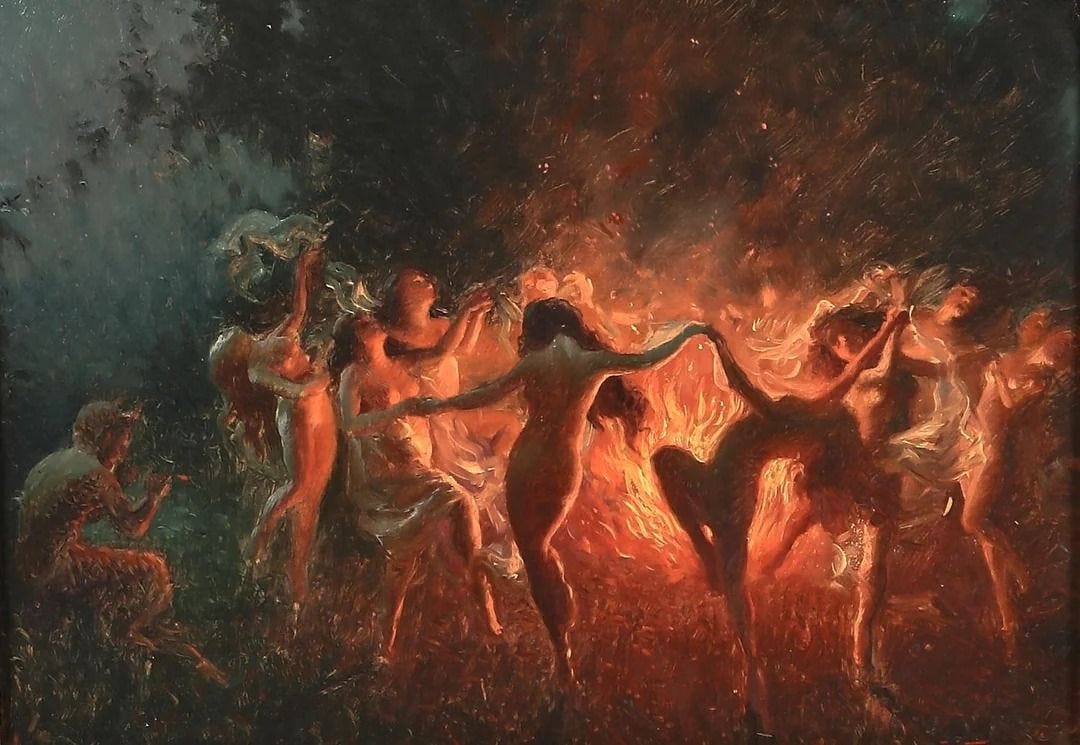
Why make art when the world is burning, and people everywhere are suffering?
I’ve been writing a lot about the parallels between art and magic. To some, this attempt to cultivate a relationship with the unseen and paint pretty pictures about it might seem like indulgent escapism. Sometimes, I ask myself the same thing. Yet, can we afford to abandon the very capacities (attention, imagination, coherence) that enable us to navigate the unknown with grace?
An art practice, like any spiritual or magical practice, is a reflection of who we are. It is alchemical to the degree that we are willing to engage with it at that level. My practice is sacred to me, but like everyone else, it’s also wrapped up in layers of conditioning. I’m not chill about art or writing. Ingrained stories of productivity and time scarcity loop constantly in my mind, making my breathing shallow and keeping me in a state of busyness. When I create from that place, I feel like a cornered animal.
I don’t always make art for the “right” reasons, but I try to stay attentive to the climate of strife my practice is entangled with, and to gently unravel it. To bring in more ease and surrender. My reflections on the erotic nature of creativity, and on reclaiming the pleasure inherent in bringing new things into the world, are part of this inner work. It works a lot more like sex than we tend to acknowledge.
For creativity to be Eros-driven and genuinely pleasurable and exciting, it has to be grounded in embodied reality. Our bodies need to feel safe and open enough to tap unconscious layers of the psyche and allow something new to emerge. Therefore, creating from this place is regulating. There is also an intelligence to the erotic spark. Desire can be distorted into compulsive patterns that perpetuate suffering, just as it can function as a compass, pulling us toward greater wholeness. Practices that generate flow states are not indulgent; they are a prerequisite for insight, innovation, and, dare I say, genius.
Through creative flow, we bring forth things the rational mind cannot access. We metabolize experience into understanding, and understanding into wisdom. Through self-expression, we offer our idiosyncratic way of seeing not to add to the noise and confusion, but in the hope of contributing clarity and coherence to the wider discourse.
The flow state that arises from engaging our creative spark is the opposite of attention capture, and perhaps even an antidote. I don’t see it as an escape, but rather a form of resilience, one that strengthens our capacity to remain present, receptive, and responsive to a world in flux.
My intention is for my art practice to become more of a threshold ritual. A way to regulate my nervous system, bring order to chaos, and reclaim my attention at a time when it is constantly under siege. The creative process is one of the few ways we can imagine new stories, new myths, and new solutions that do not simply repeat the same destructive patterns over and over again. May your creative spark light the way forward in these liminal times.
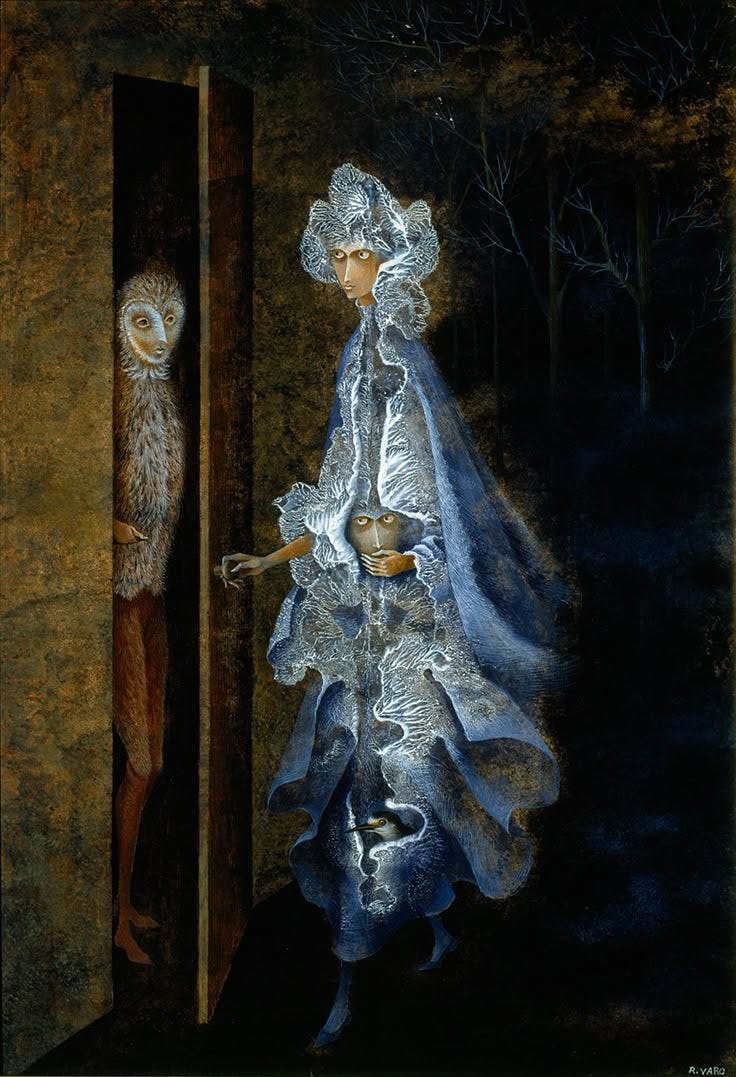
Every night, we cross a threshold and find ourselves inside our own phantasmagorical dreamscape. Dreams are mysterious but revealing about the nature of integration. Metabolizing experience is not something we consciously do. It’s an intelligent process inherent in the mind-body that we surrender to in the dark.
Often referred to as a “threshold plant,” Mugwort2 has long been valued for its ability to assist transitions, especially the passage from waking consciousness to the dream state. Both used for medicinal and magical purposes, it works paradoxically as a nervine that relaxes the body, while also stimulating the mind, leading to a heightened hypnagogic state and more vivid dreams.
Mugwort’s Latin name, Artemisia vulgaris, reflects the plant’s historical association with Artemis and the moon, linking it to cycles, the subconscious, and unseen realms. When prepared as an oil, mugwort can support dreamwork and oneiric exploration. While I suck at recording my dreams consistently, another threshold ritual I’m experimenting with this year, especially around the full and new moons, is to rub my temples, third eye, or abdomen with a small amount of mugwort oil before bed. My intention is to deepen my relationship with the dreamworld and with the archetypal forces that move through my subconscious. Dreams are everyone’s direct line to the psyche’s mad wisdom.
January is here, and while we might feel excited by new goals, intentions, and resolutions, it’s still winter. Nature is asleep—dreaming, integrating, gestating. Hit the snooze button. Linger a little longer in the in-between. Relish the liminal. Get comfortable with uncertainty, with dissolution. Let’s hope it all goes well. Wishing you all the very best for 2026.
Comments
Nothing yet. Say the first thing.
Sign in to join the conversation.