
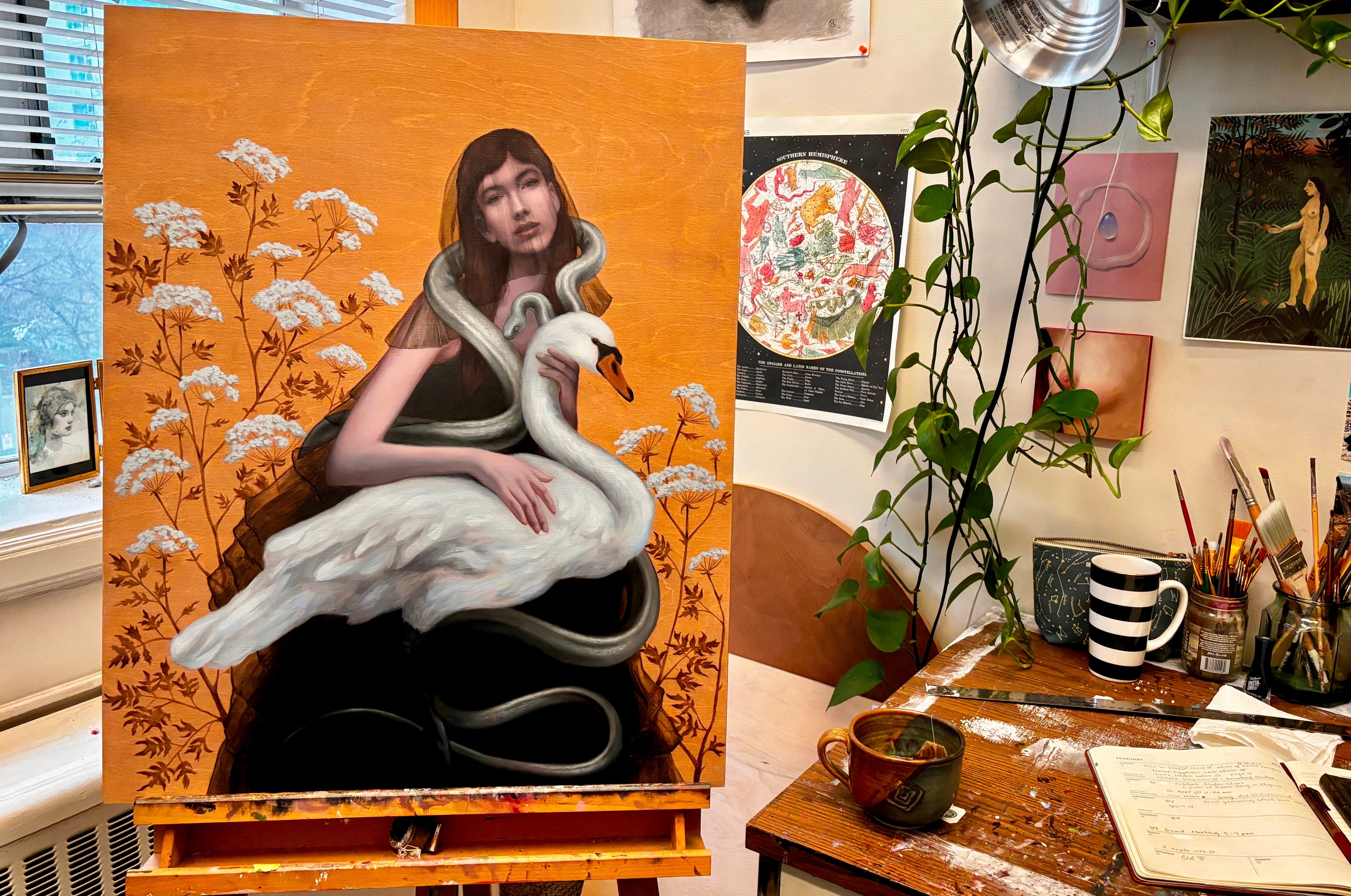
Studio Notes offer glimpses into my studio practice and creative process. Here is a reflection on Swan Song, my latest oil painting.
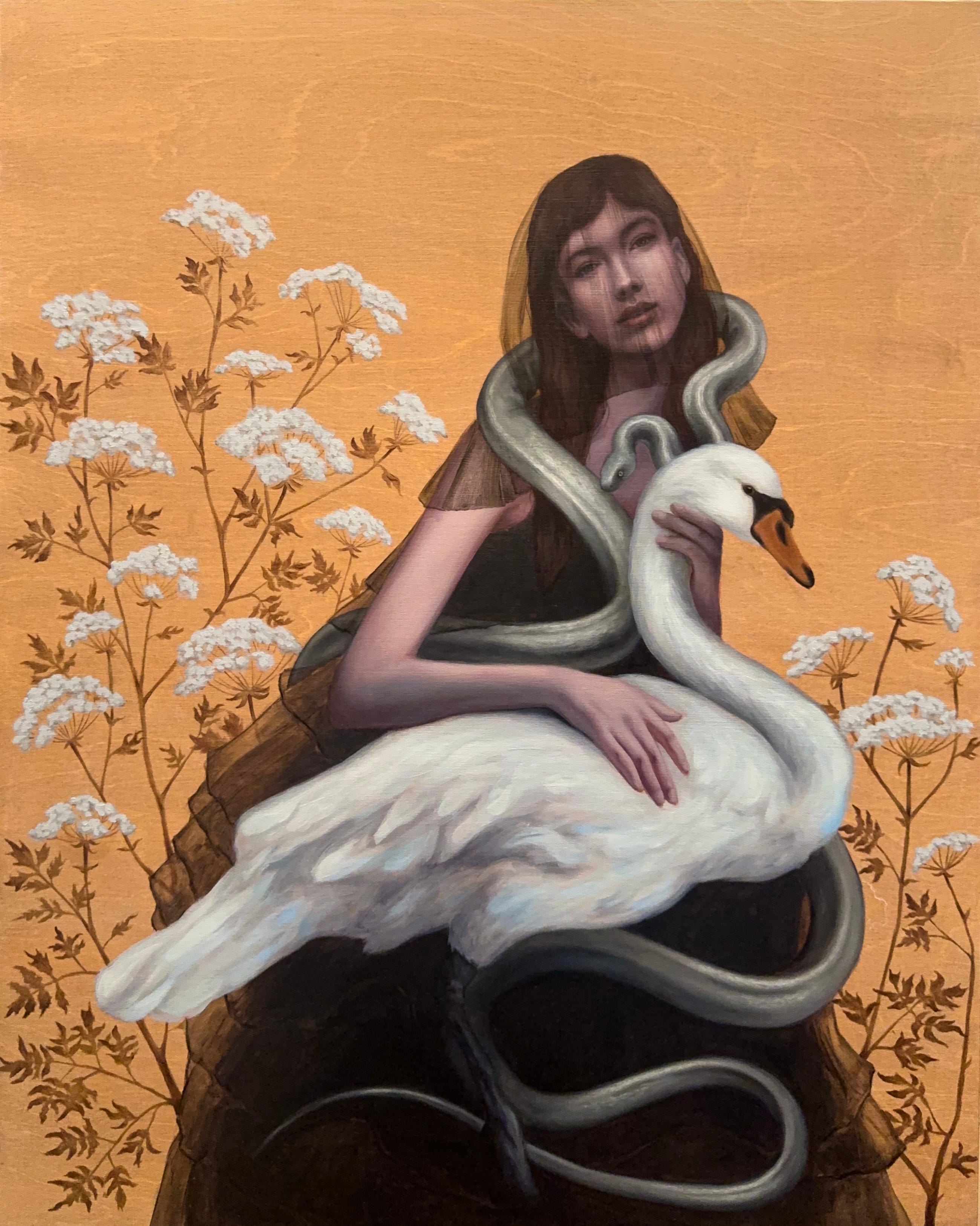
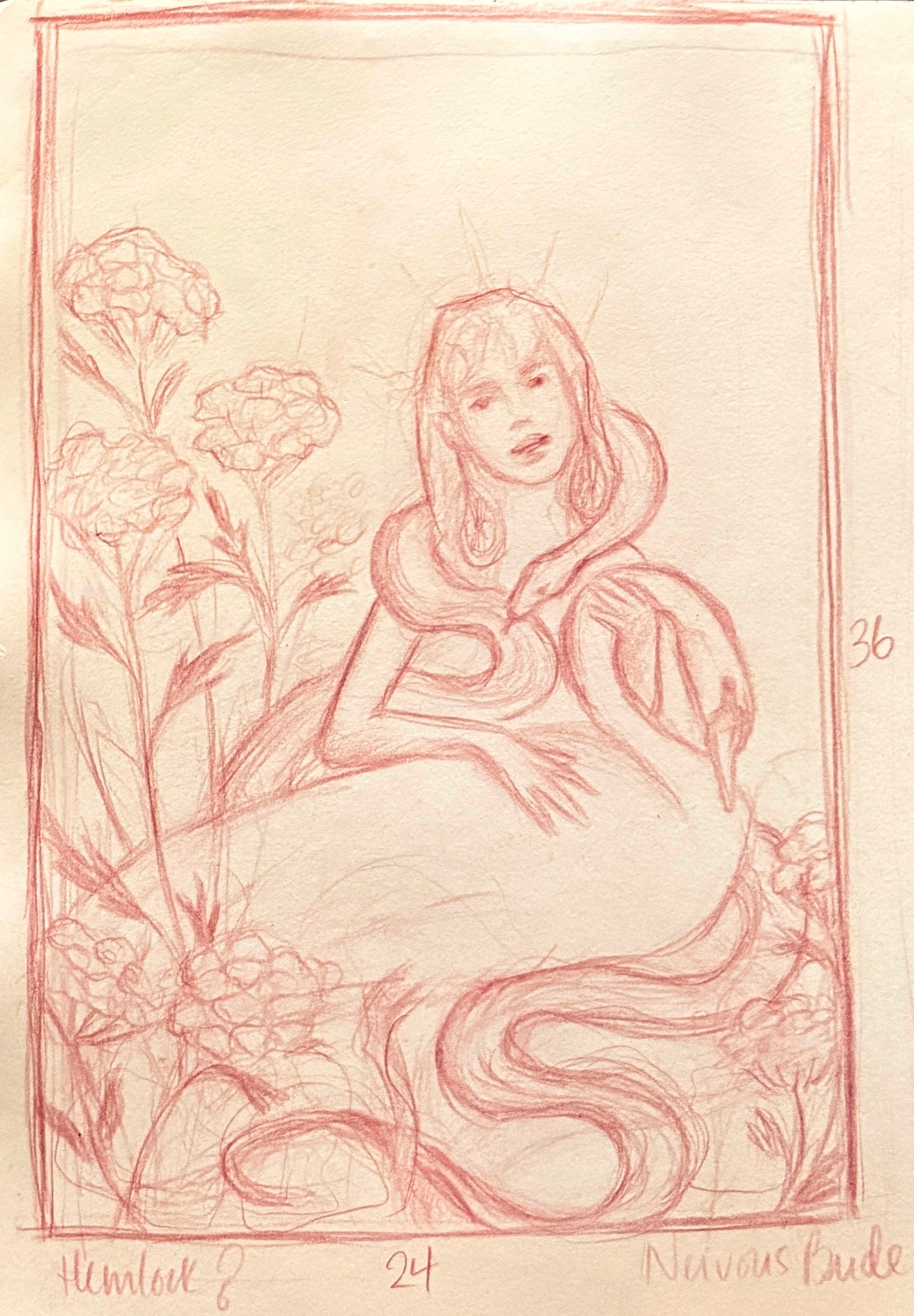
Swan Song speaks of death, grief, and grace. But I didn’t yet know that when I first sketched her into my notebook four or five years ago. She first appeared as a bride, until I understood she was a widow. Brides, like swans, are wrapped in white as virginal symbols of purity and grace. They are solar and divine figures who carry their opposites within. Like all light casts a shadow, the bride augurs the widow.
Every single thing you love, you will lose.
And yet, few of us have learned to grieve properly. No shared cultural story or myth maps the descent into the wound, nor the way back through toward healing or renewal. Instead, the prevailing myth is one of denial—of compulsory optimism at best, or, at worst, the sedating script of an industry that profits off it. Both stem from the fear that grief is a devouring void, a vampire feasting on all that is holy and good. Don’t you just wanna be in a good mood?
To negate grief is to resist being undone and put back together. It’s to delay the dismantling that reveals our bare bones, our luminous core. I see all magnitudes of sorrow as potentially soul-revealing. I’m not only referring to heart-shattering moments of utter loss and tragedy, but also to the quiet, almost banal suffering we coexist with each day, just walking downtown and witnessing the same old carnage of a world in decay, feeling numb to it as we go through the motions between home, work, and the grocery store. It’s ok to feel dull and heavy and slow and sink our way down into the Underworld. It’s where grief inevitably leads. The descent is where transformation begins.
Yes, shedding skins sucks. But what we won’t let go of tends to harden and calcify over festering wounds, making us sicker. Swan Song reflects back at me all the parts that are still holding on to denial, the parts that resist mourning. Let me be the thick, slithery, iridescent serpent that rises and grows wings. Let me shed myself raw and grow ever fuller, expanding anew into the fullness of my Self, as the world devours its tail.
I say grieve. I say wail.
As the lore goes, swans are silent for most of their lives and sing only once at the time of death, a most beautiful and haunting song. In myth and folklore, swans often serve as psychopomps. Gliding effortlessly across water—that mirror of the unconscious and window between realms—the swan moves between the shore of all that is known and everything unseen beyond. Like luminous guides at the threshold between worlds, swans escort the soul with eerie grace.
In many ancient traditions, from Sumer to Egypt to Ireland, it was believed that the soul needed to be coaxed from the body after death, or it would remain trapped. It was the weeping and keening, the singing and lamentation of the mourners, often women, that stirred and disentangled the soul from its old skin, calling it forward into the Otherworld. These acted as shared rituals of release, sacred, necessary, and, in their own way, artful. One of the oldest poems in recorded history is itself a lament: the Sumerian Lament for the Destruction of Ur (c. 2112–2004 BCE), which already mourned a world in ruins, pleading to gods who had abandoned their people. It gave voice to unspeakable loss, a swan song guiding the souls of our ancestors onward through death and destruction, carved in stone so we too would sing along.
And now, in our own sad world, I wonder what swan songs might carry us forward and through. Though these ancient traditions may be lost to us, the art of lament remains available in art and music. Only by allowing ourselves to touch what is unbearably raw and tender can we draw down grace in moments of excruciating pain, transmuting grief into something at once beautiful and devastating. Lhasa de Sela recorded her final album while battling breast cancer, a magical feat of sublime melancholy, a gift (listen to “I’m Going In” and see for yourself). Following the death of his wife, Geneviève Castree, Phil Elverum of Mount Eerie wrote A Crow Looks at Me, one of the rawest and most plainly human albums I’ve ever heard (try “Real Death”). I have listened to this album probably more than I should. Yet in the vulnerability and aching relatability of these songs, I feel the shape of my own mortality and am struck by the delicate fragility of everyone I love. To embrace grief in this way is to be reoriented to what really matters. It opens the heart and makes the shedding easier.
In the awareness of death, art is born. And so to art I turn, as a way back through the dark pit of sorrow and reclaim grief as something holy. This is what my painting Swan Song is about.
Remember death.
If my art speaks to you, you can support my practice by purchasing a print or becoming a paid subscriber. Thank you for helping me bring more of this work into the world <3
Comments
Nothing yet. Say the first thing.
Sign in to join the conversation.