
Later this morning, I will be presenting a keynote address: How Electromagnetism & Quantum Mechanics Work & Where Physics Went Wrong to the 2026 IEEE International Symposium on EMC & SIPI (Electromagnetic Compatibility and Signal Integrity and Power Integrity). Thanks to Benoit Derat and the conference organizers for the kind invitation to join the distinguished cast of speakers.
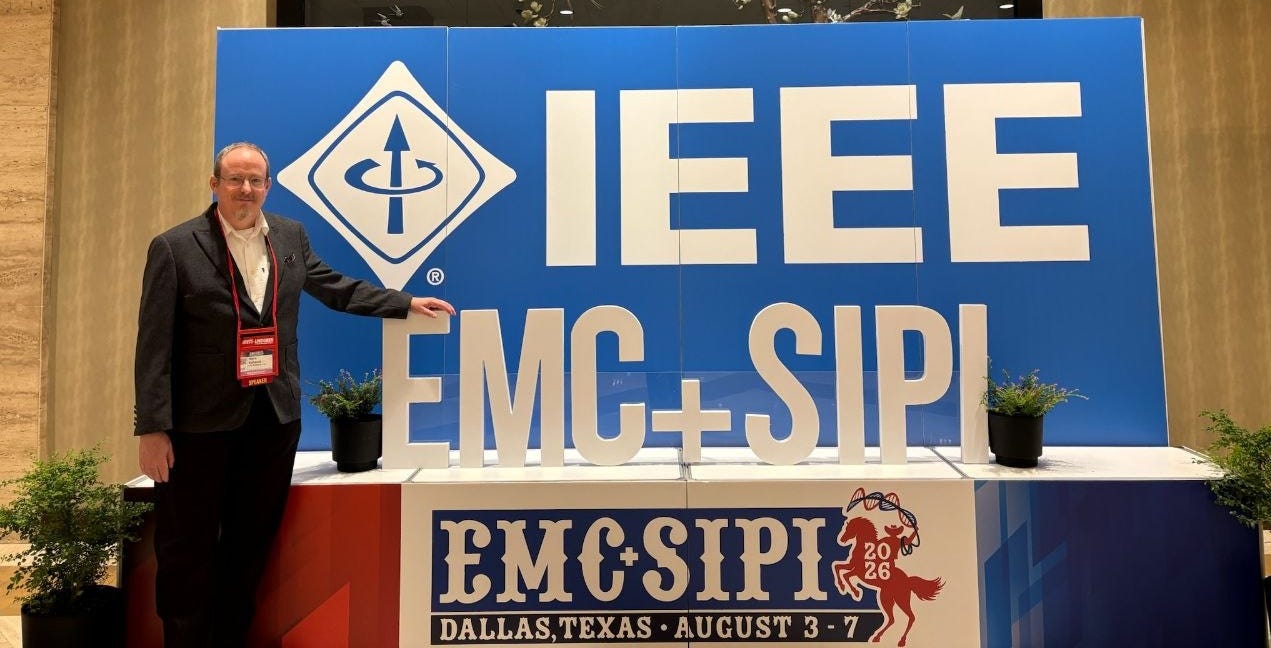
This talk presents the central thesis of the Fields & Energy Project. Electromagnetism is not best understood as the action of a single entity, a photon, endowed with the mutually contradictory properties of localized particle and non-localized wave. Instead, electromagnetic phenomena emerge from the interaction of two distinct elements: spatially extended fields that behave as waves, and energy that, in the quantum limit, is transferred in discrete amounts.
Through examples drawn from fields and their interactions, antenna theory, and atomic emission and absorption, this talk demonstrates how the fields-and-energy model provides a conceptually coherent and technically productive framework. This perspective clarifies long-standing puzzles associated with radiation reaction and wave–particle duality and connects Maxwellian theory, quantum emission and absorption, and engineering practice within a unified narrative.
The broader aim is to recover conceptual clarity in the foundations of physics, to reestablish continuity between classical and quantum descriptions, and to examine the historical and philosophical developments that shaped modern interpretations. By restoring a disciplined distinction between fields and energy, the talk argues for a simpler and more intelligible account of electromagnetic processes — one capable of unifying principles across physics and engineering.
In a couple of weeks, I’ll share the video, slides, and a full transcript of my IEEE EMC+SIPI keynote. Sign up for free to receive future posts by email.
Until then, here are some resources and additional information.
One presentation cannot do justice to 150 years of electromagnetic science, nor to the historical path that led modern physics away from many of the intuitions of Faraday, Maxwell, Heaviside, and Hertz, or how the Fields & Energy perspective can lead to a deeper understanding of how electromagnetism works. This page collects some of the papers, books, historical references, and Fields & Energy articles that expand upon the ideas presented in my talk. Think of it as the bibliography and study guide that accompanies the presentation.
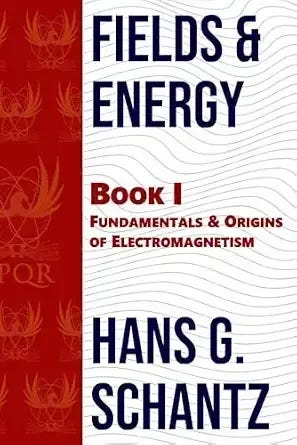
Fields & Energy Book I: Fundamentals and Origins of Electromagnetism is available already on Amazon. All of the Book I content, and most of the material that will ultimately by Book II: Where Physics Went Wrong is also available on the Fields & Energy Substack.
There are nearly two hundred posts now at Fields & Energy. Here are a few of the best to get you oriented and introduced to the Fields & Energy mindset:
Fields & Energy: Start Here!
The gateway to the entire Fields & Energy project, explaining the trilogy’s central thesis that fields guide the flow of energy and organizing the material by topic.Fields & Energy
·
October 29, 2023
Is electromagnetism due to one thing: a photon which is somehow simultaneously a localized point particle and a non-localized wave? Or is it two different yet complimentary things: non-local fields guiding localized energy? Alex Macris over at the Contemplations on the Tree of Woe Substack
The Right & Wrong Way To Do (Electromagnetic) Science
Introduces the philosophical motivation for the project, arguing that “fields guide energy” is a more useful physical model than treating photons as wave-particle hybrids.3.2 Michael Faraday: And an Introduction to Fields
Explains Faraday’s revolutionary conception of fields and why physical models were central to the birth of electromagnetism.3.2 Michael Faraday
·
March 12, 2024
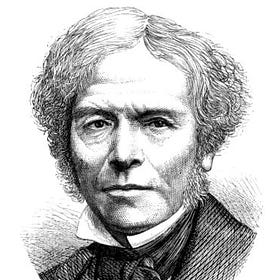
Normally, new Fields & Energy posts appear on Wednesday mornings. And yet, here we are, a day early, on Tuesday March 12, 2024. Why? Because today is the 192nd anniversary of what is arguably the single most important day in electromagnetic history. What happened on March 12, 1832? And why don’t more people know about it?
4.0 Electromagnetism Comes of Age
Introduces Heaviside, Poynting, and the emergence of energy-flow thinking that underlies the Fields & Energy model.4.0 Electromagnetism Comes of Age
·
June 5, 2024
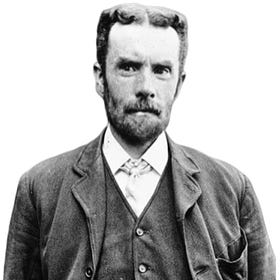
“It is to be hoped that some author with a genius for popular exposition will soon write a ‘New Electromagnetism’ with action at a distance strictly tabooed…. Such a work would be electromagnetism up to date, and its possibility would be largely due to Oliver Heaviside.”
4.1 Heaviside, Poynting, & Energy Flow
Presents the core physical insight that electromagnetic energy flows through the surrounding fields rather than through the conductors themselves.4.1 Heaviside, Poynting, & Energy Flow
·
June 12, 2024
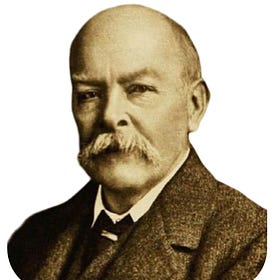
Between them, Poynting and Heaviside solved the problem of following how electromagnetic energy moves from place to place. As Poynting noted:
Reading List for Chapter 4
Collects the principal historical and technical references supporting the energy-flow interpretation of electromagnetism and radiation.Reading List for Chapter 4
·
October 20, 2024

I was inspired on my own path to understand electromagnetism by a few key texts I highly recommend and would like to share with you.
Fixing Physics with Fields [& Energy]
The most complete public exposition of the Fields & Energy model, covering Heaviside, energy flow, wave interference, reactive fields, antennas, and implications for quantum mechanics.Fixing Physics with Fields [& Energy]
·
October 12, 2025
![Fixing Physics with Fields [& Energy]](https://substackcdn.com/image/fetch/$s_!zAJy!,w_280,h_280,c_fill,f_auto,q_auto:good,fl_progressive:steep,g_auto/https%3A%2F%2Fsubstack-post-media.s3.amazonaws.com%2Fpublic%2Fimages%2F12fdfe29-4abb-4397-9db1-3cb0ec1abb2e_1613x913.png)
The Riding Tide Foundation was kind enough to host me on Sunday October 5 for a lecture, Fixing Physics with Fields [& Energy]. You can watch the video over on their Substack.
What Physicists Don’t Know About Electromagnetism
A presentation illustrating how concepts familiar to practicing RF engineers—impedance, reactive energy, Smith charts, and energy flow—provide intuition often absent from modern physics.What Physicists Don't Know About Electromagnetism
·
September 21, 2025
While I continue working on getting Fields & Energy Book I: Fuindamentals & Origins of Electromagnetism finalized and copies on order, here’s a talk I gave a couple of years ago at the LibertyCon. As usual, the transcript retains a great many verbal quirks, but will allow you to follow the argument without watching the video, if you prefer.
Is Hydrogen an Electrically Small Antenna?
Applies the Fields & Energy framework to atomic physics by comparing hydrogen’s radiative transitions with classical electrically small antenna limits.Is Hydrogen an Electrically Small Antenna?
·
Apr 9
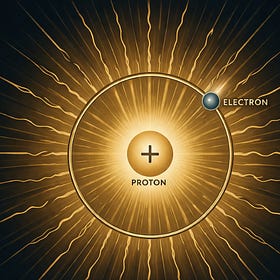
Abstract—Atoms are unambiguously electrically small radiators and absorbers of electromagnetic radiation. This paper demonstrates that hydrogen’s radiative properties including frequency and bandwidth scale with orbital radius like those of an electrically small antenna. The quantum mechanical observables are not the end of the story. Instead, atomic tr…
If you prefer technical papers, I have you covered there, too.
Many of the ideas presented in this talk were developed over nearly three decades of research. Here’s a bibliography of key papers.
Hans G. Schantz, The Flow of Electromagnetic Energy in the Decay of an Electric Dipole, American Journal of Physics 63(6), 1995, pp. 513–520. DOI: 10.1119/1.17862 Introduces the concept of causal surfaces and argues that radiated energy originates in the surrounding electromagnetic field rather than directly from accelerating charges.
Hans G. Schantz, Electromagnetic Radiation Made Simple, APS/AAPT Joint Meeting, 1997. Presents an intuitive geometrical explanation of dipole radiation.
Hans G. Schantz, Electromagnetic Energy Around Hertzian Dipoles, IEEE Antennas and Propagation Magazine 43(2), 2001. DOI: 10.1109/74.924604 Extends the causal-surface approach to harmonic dipoles and demonstrates how reactive energy is converted into radiated energy.
Hans G. Schantz, On the Localization of Electromagnetic Energy. Develops practical methods for tracking electromagnetic energy and minimizing reactive energy in antenna systems.
Hans G. Schantz, On the Superposition and Elastic Recoil of Electromagnetic Waves.
arXiv: https://arxiv.org/abs/1407.1800 (arXiv)
Analyzes constructive and destructive interference in terms of energy exchange and recoil, anticipating the “waves exchange energy” section of the presentation.
Hans G. Schantz, Energy Velocity and Reactive Fields, Philosophical Transactions of the Royal Society A 376, 2018. DOI: 10.1098/rsta.2017.0453
Introduces normalized energy velocity and the Great Circle of Electromagnetism.
Hans G. Schantz, The Schelkunoff–Smith Chart and How Near Fields Work.
Provides a graphical interpretation of impedance, reactive fields, and energy flow.
Hans G. Schantz, Energy Flow for Reflecting & Interacting Beams, IEEE Texas Symposium on Wireless & Microwave Circuits and Systems, 2022. DOI: 10.1109/WMCS55582.2022.9866409.
Applies the Fields & Energy model to reflections, beam interactions, image theory, and optical systems.
Hans G. Schantz, Is the Hydrogen Atom an Electrically Small Antenna? Proceedings of the 2026 IEEE Texas Symposium on Wireless and Microwave Circuits and Systems. DOI: 10.1109/WMCS70298.2026.11591442
Is Hydrogen an Electrically Small Antenna?
·
Apr 9
Abstract—Atoms are unambiguously electrically small radiators and absorbers of electromagnetic radiation. This paper demonstrates that hydrogen’s radiative properties including frequency and bandwidth scale with orbital radius like those of an electrically small antenna. The quantum mechanical observables are not the end of the story. Instead, atomic tr…
Compares hydrogen’s radiative transitions with classical electrically small antenna limits, illustrating the bridge between classical electromagnetics and quantum mechanics.
If these Fields & Energy ideas resonate with you, consider participating in the Heaviside Symposium, MLK Day Weekend January 17-18, 2027 in Huntsville, AL. Abstracts are due October 1.
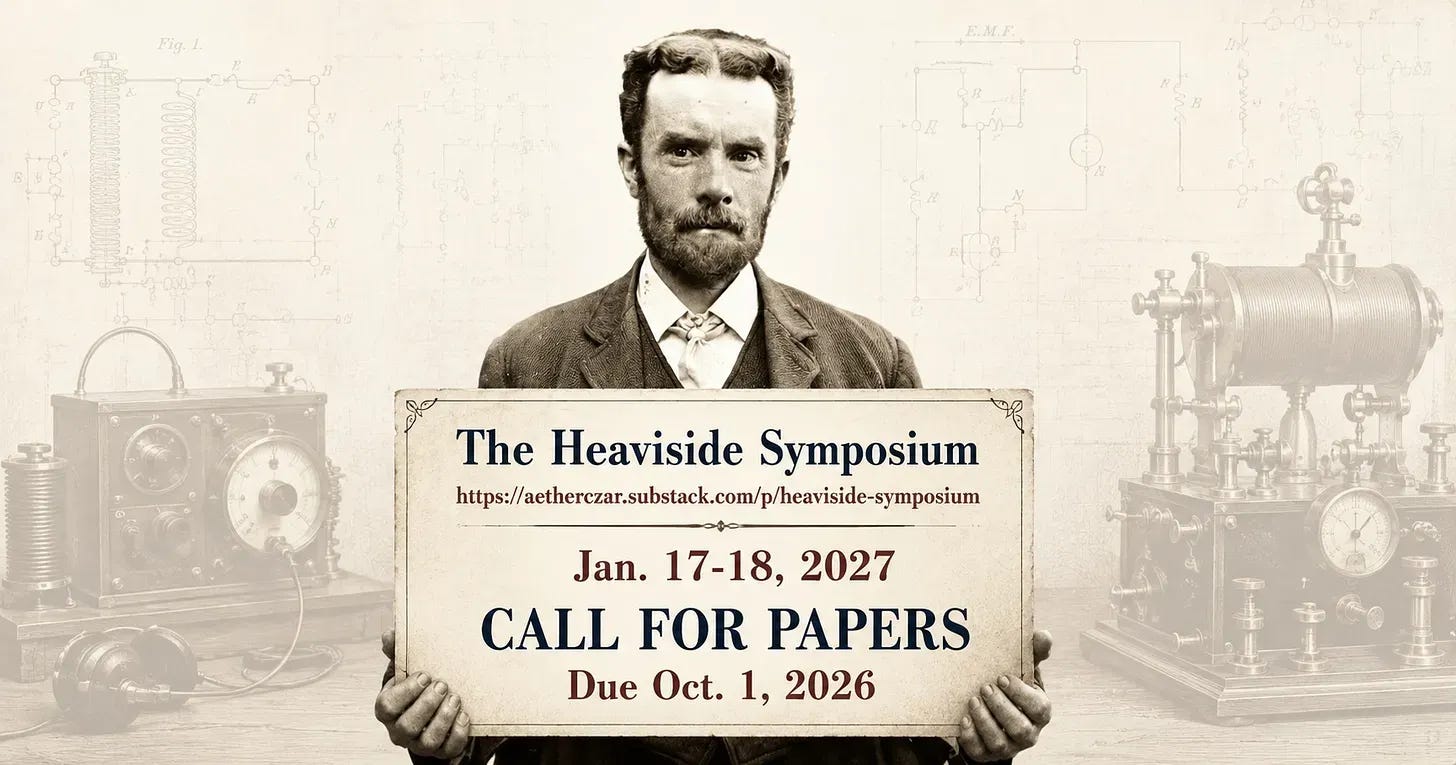
Oliver Heaviside transformed Maxwell’s theory into the language engineers still use today. Yet many of his deepest physical insights into energy flow, radiation, and the nature of electromagnetic fields remain surprisingly underexplored. The symposium aims to bring together historians, engineers, physicists, mathematicians, and independent scholars to reexamine Heaviside’s legacy, reconnect electromagnetism with its Maxwellian roots, and explore what that perspective may have to offer modern physics, from antenna theory to quantum mechanics and beyond.
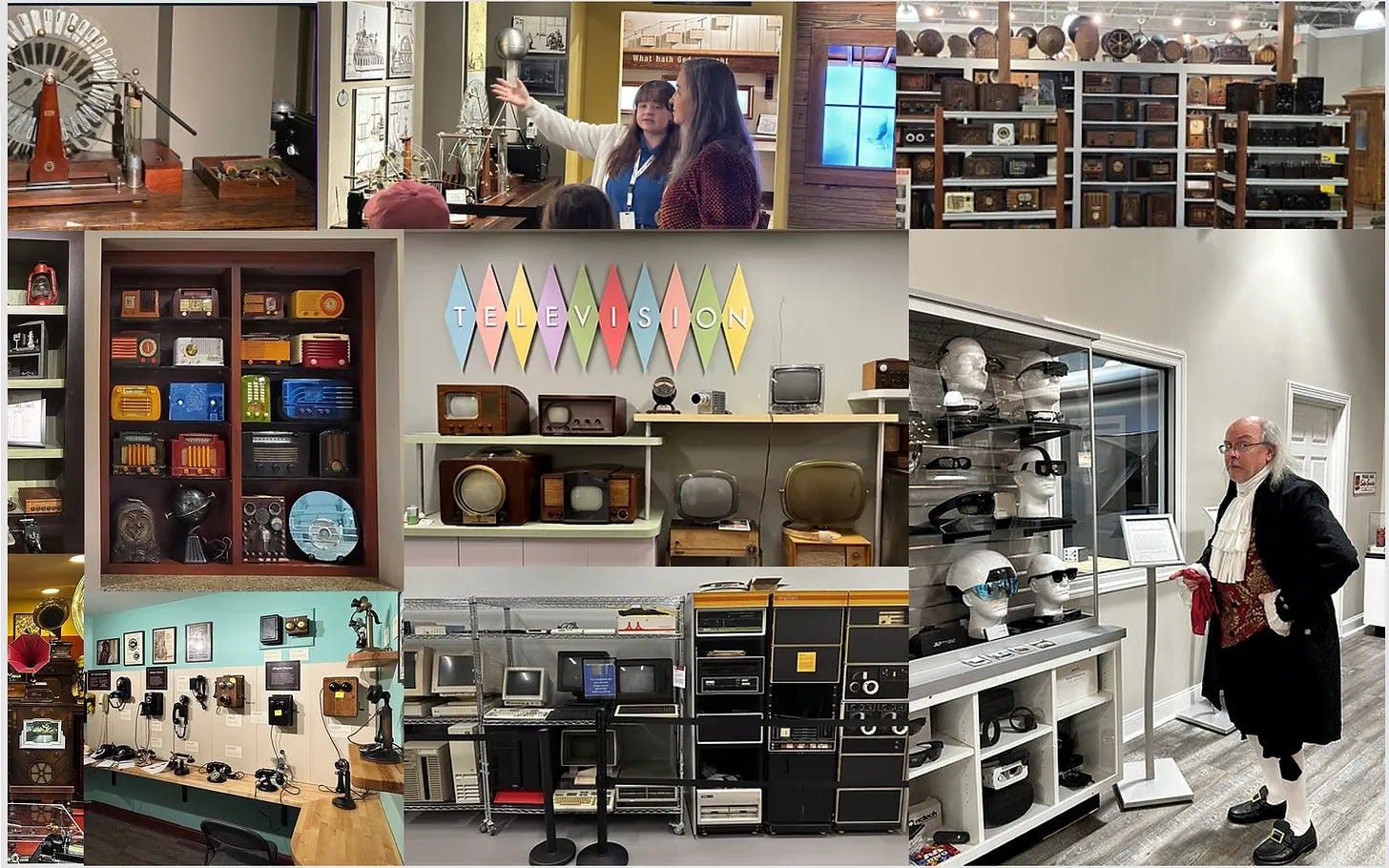
We will gather MLK Day Weekend, January 17-18, 2027, for a two-day symposium at the SIGNALS Museum in Huntsville, Alabama: a superb venue with an amazing collection of historical communications equipment.
Whether your interests lie in history, engineering, theoretical physics, or philosophy of science, we invite you to contribute a paper, share your research, and help shape the next chapter in our understanding of electromagnetism.
Call For Papers: The Heaviside Symposium
·
Aug 1
MLK Day Weekend January 17-18, 2027; Hosted by, Signals: The Museum of the Information Explosion in Huntsville, Alabama. Want to present a paper? Email your title and a 150-200 word abstract. The abstract deadline is October 1, 2026.
Accepted papers will be published in the symposium proceedings. The proceedings will also include G. F. C. Searle’s long out-of-print biography, Heaviside the Man, making this volume both a permanent scholarly reference and the definitive record of the symposium. An OCR’d version of Ivor Catt’s 1987 edition is here.
Whether your interest lies in the history of science, electrical engineering, applied mathematics, communications technology, or the foundations of physics, the Heaviside Symposium offers a unique opportunity to present your work, engage with fellow scholars, and help restore one of the nineteenth century’s greatest scientific minds to his proper place in history.
Want to present a paper? Email your title and a 150-200 word abstract. The abstract deadline is October 1, 2026. And stay tuned for more updates on keynote presentations!
That’s all for now. Until next time remember to keep calm and make physics great again.
Hans
You may follow me online in other places as well:
Telegram: 𝔸𝕖𝕥𝕙𝕖𝕣𝕔𝕫𝕒𝕣’𝕤 𝔸𝕖𝕥𝕙𝕖𝕣𝕤𝕥𝕣𝕖𝕒𝕞
Gab: @aetherczar
Twitter: @aetherczar
Amazon: Hans G. Schantz
Comments
Nothing yet. Say the first thing.
Sign in to join the conversation.