
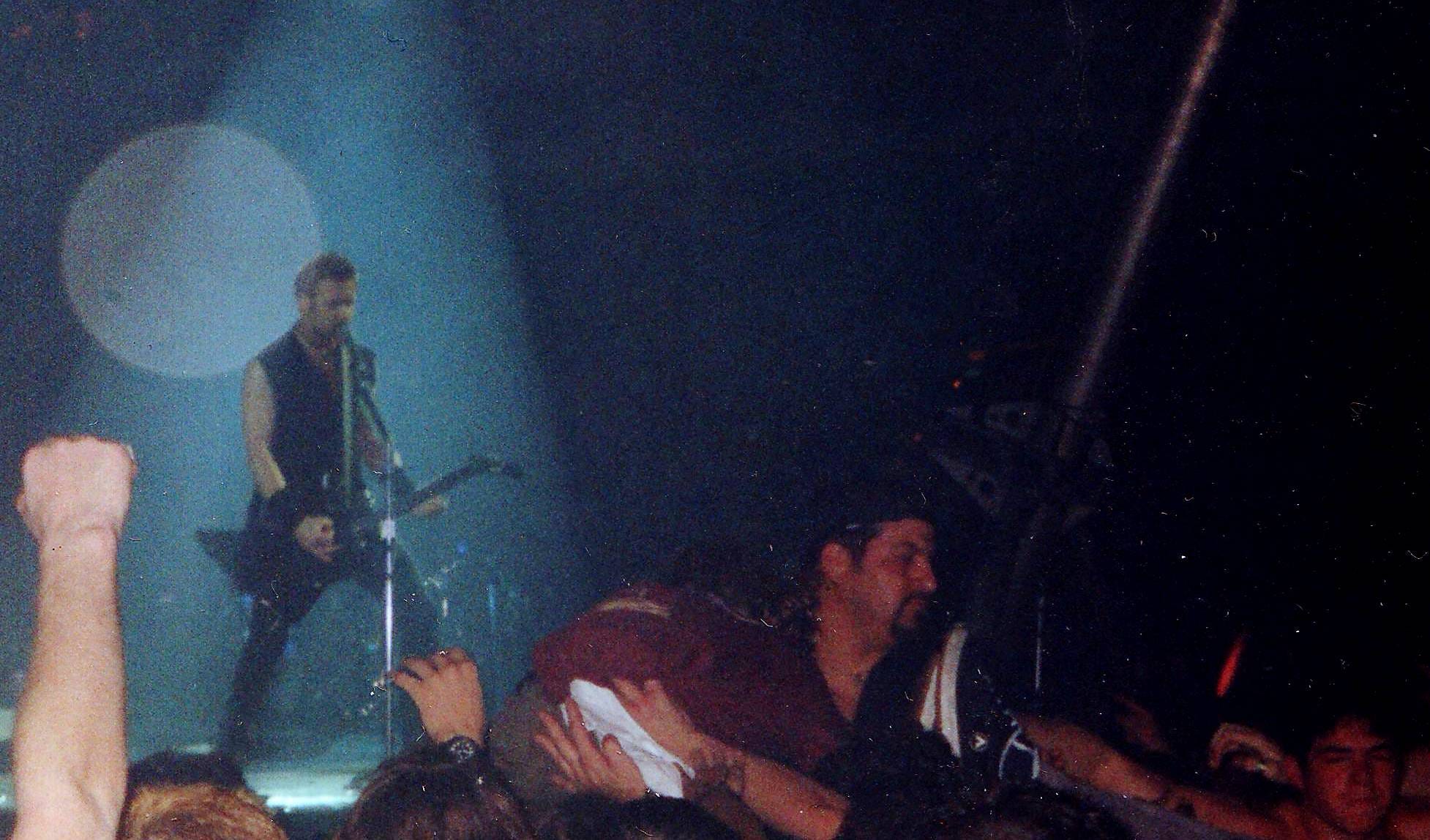
Before recording the Black Album in 1991, James Hetfield, lead singer of Metallica, started taking voice lessons. For a thrash metal vocalist, this was a quietly radical act. The genre runs on aggression, and aggression is supposed to sound like effort. Straining toward something is part of the aesthetic. The idea of refining his technique could easily be read as a betrayal of the form, and for some fans, it was.
There is often a suspicion that improvement comes at the cost of authenticity, that to smooth something out is to dilute what made it compelling in the first place. Selling out, in other words, disguised as self-improvement.
What Hetfield discovered instead was that most of the strain was waste. Years of forcing his voice had created tension in all the wrong places. Proper technique did not soften his delivery or sand down its edges. It removed resistance that had been costing him something without giving anything back. The result was a voice that sounded more powerful, not less, and that could sustain a career rather than shorten one.
The interesting part is not the biographical detail. It is what the example reveals about the relationship between function and beauty. Hetfield did not set out to sound better in some aesthetic sense. He set out to stop hurting himself. And then the beauty appeared.
There is a principle in that story, and it runs counter to how most people think about aesthetics. We tend to treat beauty as something applied, something added to a thing that already works in order to make it more appealing. But a different possibility is worth taking seriously. When something is working the way it is supposed to work, beauty tends to appear on its own. Strain, excess, and ornamentation are often signs of a thing fighting itself. Their absence is what we call elegance.
The Greeks had a word for this kind of excellence: arete. It carried connotations of rightness and proper function alongside moral and aesthetic virtue, and those categories were not as cleanly separated for them as they tend to be for us. Excellence was not just performance or output. It was something closer to a thing fulfilling its own nature completely. That conflation is worth recovering, because it suggests that beauty and function were never really distinct to begin with.
You can find this pattern across domains. A mathematical proof that achieves its result in half the steps is not just more efficient than a longer one. It is more beautiful. A well-made tool that fits the hand just right has a quality that purely decorative objects rarely achieve. A sentence that stops trying to impress communicates something that a more elaborate version cannot. In each case, the aesthetic quality is not layered on. It emerges from something being done correctly.
Most organizations that feel aesthetically off are not suffering from a design problem. They are suffering from a friction problem.
The meetings that go too long, the communications that require three readings to yield a single point, the processes that exhaust everyone involved without producing much: these are not just inefficiencies. They are symptoms. The excess reveals something working against its own grain. Because aesthetic experience is a form of perception, people feel that friction even when they cannot name it. They leave the meeting drained. They skim the memo. They disengage from the process. The organization reads this as an engagement problem or a culture problem and reaches for solutions that address neither.
This is also where the selling out concern reappears, in a different register. Efforts to reduce friction or refine how something works are sometimes met with resistance inside organizations, a sense that making things clearer or more coherent means making them less authentic, less hard-won. But as in Hetfield’s case, what looks like softening is usually the removal of what never needed to be there in the first place. The strain wasn’t the substance. It was in the way of it.
Noticing when something feels effortful in the wrong way, when a communication strains to make its point or a meeting labors toward a conclusion it never quite reaches, is the beginning of understanding what is actually wrong with how the thing is working. This is where aesthetic attention becomes a genuine leadership capacity, not as decoration or taste-signaling, but as a diagnostic tool. When a leadership team learns to read aesthetic friction as information, they are attending to how things actually feel to the people inside them, which turns out to be a more honest signal than most dashboards provide.
There is a temptation, especially in organizations that care about brand and presentation, to address aesthetic problems by adding more. More design, more messaging, more carefully curated surfaces. This rarely works, and it often makes things worse. Ornamentation layered over a struggling system does not produce beauty. It produces noise with better lighting. The underlying strain is still there. Now it is just harder to find.
What improved Hetfield’s voice was not additional technique piled onto his existing approach. It was the removal of what was getting in the way. The lesson is not that you need more. It is that you need less of the wrong things, and that what remains, if the underlying structure is sound, tends to take care of itself.
Elegance is not something you add. It is what remains when you stop fighting what the thing is trying to be.
I work with organizations and individuals who want to think more carefully about judgment, meaning, and the conditions that shape everyday decisions.
If that sounds like your situation, you can reach me at michaelrspicher@gmail.com
or learn more at michaelrspicher.com.
Beauty: Objective or Subjective
Reorienting through Aesthetics
My latest for Fast Company: Are You Part of the ‘Distraction Economy’?
“The Aesthetic Edge” is a free ebook, co-written by myself and Hannah Spicher. Download your copy today!
I appeared on Jeffrey Shaw’s podcast to talk about beauty, luxury, and the aesthetic advantage.
Michael’s interview with BOLD Journey.
Digital Fashion: Theory, Practice, Implications, edited by Michael R. Spicher, Sara Emilia Bernat, and Doris Domoszlai-Lantner, is available for purchase! (Our book was featured in a BeautyMatter article.)
No posts
Comments
Nothing yet. Say the first thing.
Sign in to join the conversation.