
In the crowded marketplace of parenting advice, few strategies prove as effective as fear. Two bestselling books, 20 years apart, Jonathan Haidt’s The Anxious Generation: How the Great Rewiring of Childhood Is Causing an Epidemic of Mental Illness (2024) and Richard Louv’s Last Child in the Woods: Saving Our Children from Nature-Deficit Disorder (2005), have mastered this art.
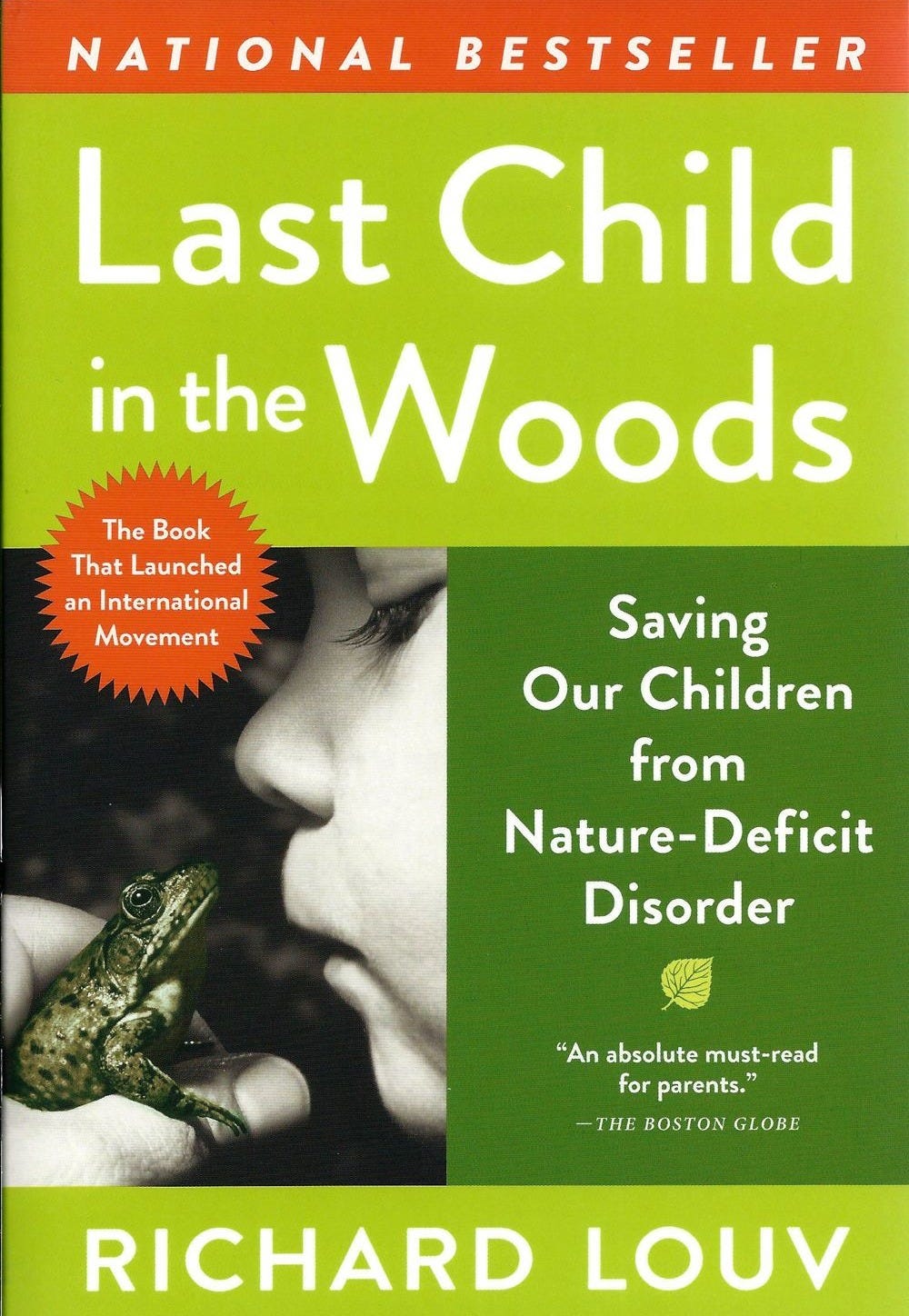
Both titles weaponize parental anxiety, transforming ordinary childhood experiences, or lack of experiences, into medical crises. By inventing or inflating disorders, “anxious generation” and “nature-deficit disorder,” and pairing them with apocalyptic subtitles, Haidt and Louv don’t just describe problems; one claims childhood lost, while the other diagnoses an entire generation with a mental health disorder.
The result? Sensationalist books that fly off shelves while pathologizing the very children they claim to protect.
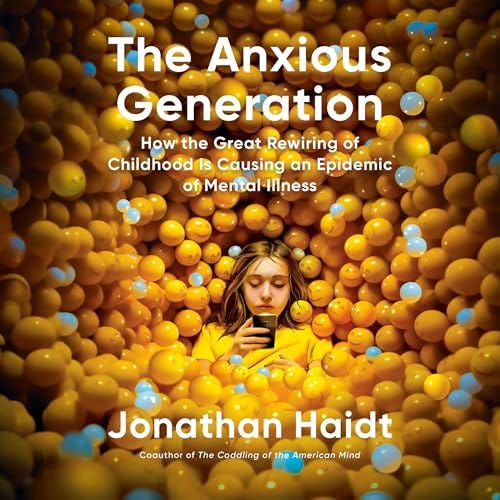
Consider the titles alone. The Anxious Generation doesn’t suggest worry but rather declares a collective pathology. “Anxious” isn’t just a mood; it’s a label, implying a clinical condition shared by a generation of kids.
Haidt, a social psychologist, borrows the language of epidemiology to frame smartphones and social media as pathogens. The subtitle escalates to a “great rewiring” (permanent brain damage) causing an “epidemic” (uncontrollable spread) of “mental illness” (severe, chronic). Parents scanning bookstore shelves don’t see a theory, but rather their child’s future in peril.
The use of “Causing an Epidemic” will not be addressed here. Suffice to say correlation IS NOT causation.
Louv’s Last Child in the Woods operated with similar precision. “Last child” evokes extinction, in this case the final member of a dying species. The subtitle introduces “nature-deficit disorder,” a term Louv admits he invented. Not a recognized medical condition, it functions as a pseudo-diagnosis, complete with symptoms (obesity, ADHD, depression) and a single cure = more outdoor time. The phrase “saving our children” triggers parent’s protection instincts. Like Haidt, Louv positions himself as the diagnostician who alone can name the invisible ailment plaguing modern kids.
Both titles pathologize normal variation. Some children are anxious; some probably prefer screens to forests. But Haidt and Louv universalize these traits, turning preferences into syndromes. The marketing genius lies in the specificity of the threat paired with the vagueness of the solution. But you have to buy the book to find out how bad it really is.
The subtitles function as fear slogans, compressing complex social changes into digestible terror. Haidt’s “epidemic of mental illness” mirrors public health campaigns about opioids or COVID-19. The word “epidemic” implies exponential growth, urgency, and the need for immediate intervention.
Data tells a more nuanced story. Teen suicide rates have risen but so have reporting and awareness. Anxiety diagnoses reflect broader cultural shifts in mental health language, but also may reflect the lowered bar of entry we’ve written about elsewhere. Haidt selectively amplifies correlations (screen time and depression) and the “great rewiring” metaphor suggests irreversible neurological damage, a claim that rests on preclinical studies of rats and small human samples. Yet the subtitle doesn’t hedge, it declares.
Louv’s “saving our children from nature-deficit disorder” uses salvation rhetoric. “Saving” implies imminent death; “disorder” medicalizes the cure. Louv cites rising ADHD diagnoses and obesity rates, linking them causally to reduced outdoor play. But again, correlation isn’t causation. Urbanization, dual-income households, and liability fears also keep kids indoors. “Nature-deficit disorder” never appears in the DSM, yet its pseudo-clinical status lends authority. Parents don’t need to verify the diagnosis; the phrase itself feels scientific.
Both authors deploy statistics like ammunition. Haidt graphs the hockey-stick rise in teen girls’ depression post-2012, pinning it on Instagram. Louv counters with charts of declining national park visits. Neither acknowledges counter-trends like Gen Z’s lower rates of teen pregnancy, binge drinking, or car accidents. The fear slogan doesn’t require balance, only alarm.
Inside the books, pathologization deepens. Haidt divides childhood into “play-based” (healthy) and “phone-based” (pathological). Fortnite becomes a digital opioid; group chats, a vector for contagion. He invokes “evolutionary mismatch”—modern tech hijacking ancient brains—without noting that every generation faces novel environments. The telegraph alarmed parents once, so did pinball and comic books. By framing screen time as brain rewiring, Haidt transforms social media use into illness.
Louv pathologized indoor play with equal fervor. Video games cause “nature-deficit disorder”; structured sports don’t count as nature. He describes children who can’t identify local trees but know Pokémon species, presenting this as cognitive deformity. The child who prefers Minecraft to mud pies is expressing symptoms, not personality. Louv’s anecdotes suggest kids can be cured by a single camping trip, their ADHD vanishing like a fever breaking. The implication: any child resisting outdoors is disordered.
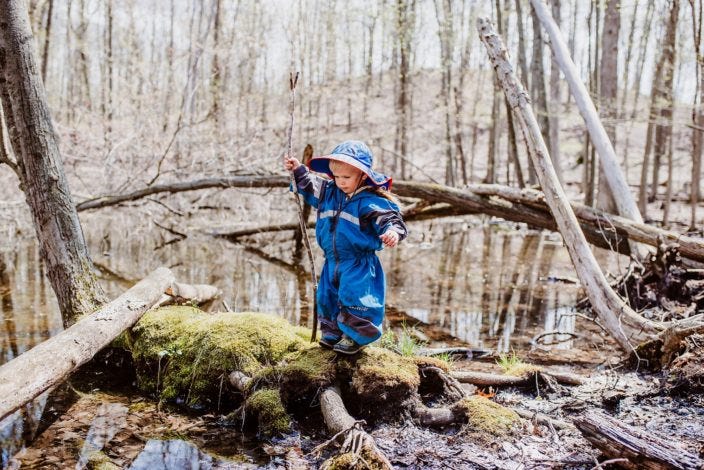
Louv’s nature prescriptions ignore urban families without cars or safe parks. The pathologized child becomes a middle-class archetype: white, suburban, screen-addicted or forest-deprived, awaiting salvation through the author’s patented cure. Interestingly, Haidt wraps up his book with Louv’s, and his friend Lenore Skenazy’s advice, get more outdoor play time. Maybe we shouldn’t be trying to scare kids into nature playtime?
What if we rejected the pathologizing frame? Some kids grow up and thrive on screens, mastering coding or global friendships. Others need forests to regulate their nervous systems. Neither group is disordered; both navigate a world their parents never imagined. The ‘anxious’ generation isn’t sick, it’s adapting. The last child in the woods isn’t deficient, maybe she’s urban.
Haidt and Louv profit from parental guilt, but childhood resilience predates their diagnoses. Kids have survived radio, television, and Dungeons & Dragons. They’ll survive TikTok and asphalt playgrounds. The real deficit isn’t nature or play but rather trust. When every preference becomes a disorder, we teach children their instincts are symptoms.
The next time a bestseller declares your child broken, close the book. Look at the kid in front of you, building Minecraft empires, or collecting weeds along the sidewalk. She’s not a diagnosis. She’s a person. And no subtitle can rewrite that.
Kids These Days was our attempt to rewrite the narrative about teens. We rebel against pathologizing, labeling, over intrusive adulting, and many other things that do not center the child, their sense of belonging, and their desire for mastery experiences. We can all do more to be the adult in the room, create environments we want our kids to flourish in, and to not put generalising pathologies onto our kids for simply having the adventure called adolescence.
Thanks for reading adults in the room.! This post is public so feel free to share it.
No posts
Comments
Nothing yet. Say the first thing.
Sign in to join the conversation.