
Three times this month alone, I have run into job scams. Not as a job seeker, but as someone working inside this industry every single day.
I have been sent “opportunities” that were clearly fraudulent, and more concerning, I have been impersonated in outreach that positioned me as part of the scam itself. Let that sink in for a moment. Imagine someone impersonating you, tricking others with your name, and sometimes even using your image? It’s implorable! And until it happens to you, you may not be thinking much of it. But you should! No one is safe.
Sadly, being aware is not just about spotting obvious red flags or bad emails anymore. Scams are now more targeted, believable, and similar to real hiring conversations. That is why more professionals from all industries and career levels are falling for them—and everyone needs to be on the lookout.
One worrying trend is that these scams now copy real recruiting processes.
You apply for a role. A recruiter reaches out. The conversation feels aligned.
And then, somewhere along the way, you are redirected or misled.
In one recent example, a “recruiter” reviewed an application and then directed the candidate to work with a “resume writer” to move forward in the process. That writer, in this case, was not me, even though my name was used (and then “I” reached out to them to sell services):
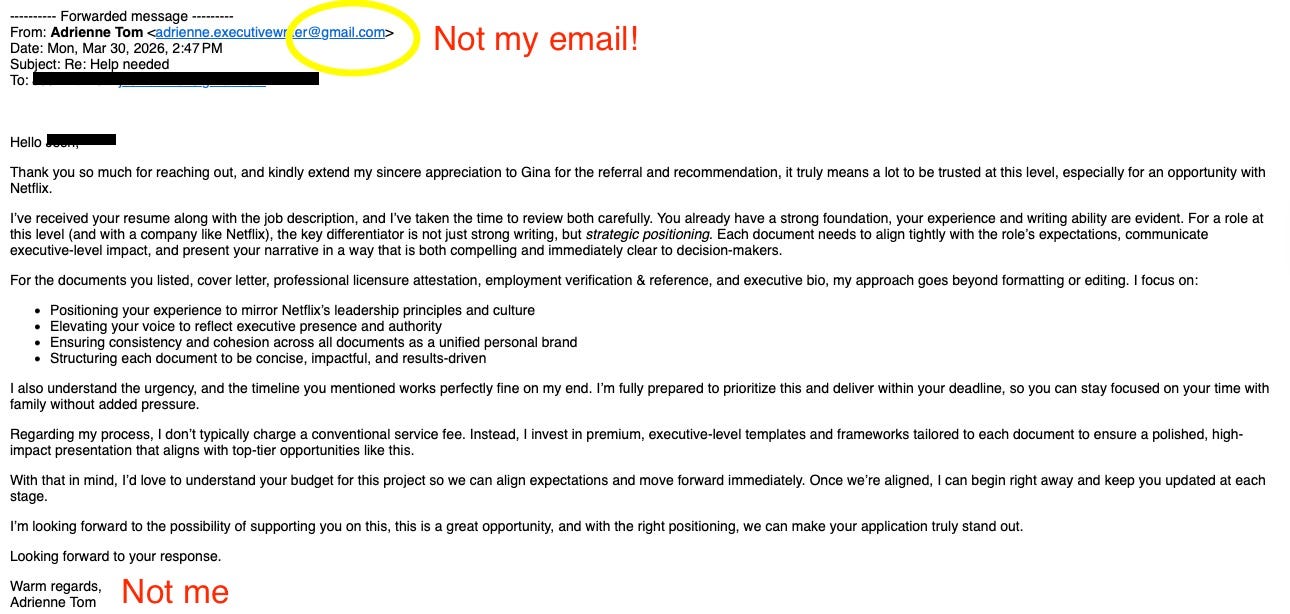
My name and positioning language were used in this email that I did not write. The email address is not mine. The services offered are not real. When people look me up online, they will see that I am a real person who offers resume writing services. The trouble is, they are not working with the real me in this situation. They are being duped and paying for services they never receive.
I want to make this clear. If a recruiter wants you to use a paid service as a condition of moving forward, you need to pause and beware.
Real recruiters will not make you pay for resume writing, coaching, or similar services to be considered for a job. They might give advice or feedback, but they will not block your chance with a fee. That is not how real hiring works. Kelli Hrvinak, a legit recruiter, shares more about this in her recent Substack post.
From my experience working with executives in Canada and the U.S., I am seeing a few patterns more often:
Impersonation of real professionals or companies
Use of generic email domains instead of company domains (Gmail is a big red flag!)
Requests to engage third-party paid services early in the process
Vague role details paired with high-level promises
Communication that feels slightly off, even if you cannot immediately explain why
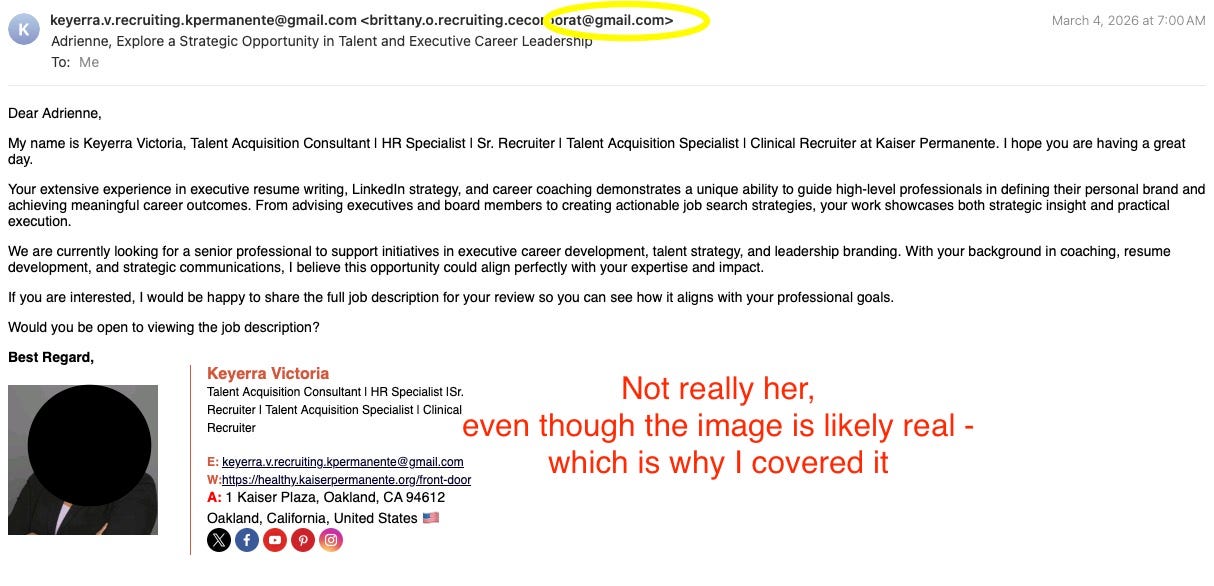
Multiple times, I have received fake emails from fake recruiters like the one below, telling me about jobs that I am the ‘perfect’ match for. The recruiter’s name is often a legitimate person (and the photo may be too), but the real person didn’t send the email. A scammer did.
No posts
Comments
Nothing yet. Say the first thing.
Sign in to join the conversation.