
For those of you who are unfamiliar with the Nature-Nurture issue in psychology, Nature revolves around genetics (heredity and other factors) and Nurture revolves around environmental (physical and social) factors. Thankfully, we know now that they aren’t separate issues (Nature vs. Nurture) and that they work together to make us who we are! As adoptees, could you imagine having to pick one side? Not me!
Note: For many of us, this has been a life-long twisted issue to contemplate (and we probably didn’t even know what we were contemplating). No wonder people think we are so fascinating!
To say I was not surprised to read in our Life-Span (Developmental Psychology) textbook that there is an adoption study would be an understatement. The research study questions if we are more like the people we share genetics with, or the people we share an environment with.
I can attest to both of these issues being true: I am like both (but more like my genetics).
Using myself as a Nature-Nurture example, I look almost identical to my biological mother. I have a lot of her personality traits, personal interests and mental + physical health issues as well. I cringe thinking I am anything like my adoptive family, but after growing up in an emotionally negligent (angry, abusive) household, I have had a lot of “work” to do. After living through childhood abuse and subsequently entering many abusive romantic relationships, its no wonder that when I injured my cervical spine falling off of a chair, Fibromyalgia appeared.
Fibromyalgia is a part of my genetic inheritance. From both sides (bio mother and bio father). I have the homozygous variant of the MTHFR gene mutation that can cause many issues ranging from Autism, MS, to Bipolar, all the way to blood clotting. Homozygous means I received the gene from both parents… I am going to make an educated guess and say that separation trauma at birth and other compounding childhood traumas were at least partly responsible for turning that gene on.
That is one Nature-Nurture issue (of many) in my adopted life.
So, are you more similar to your biological family (if you have the privilege of knowing about them) or are you more like your adoptive family? Or, are you a mix of both?
I would love to know how in the comments section below!
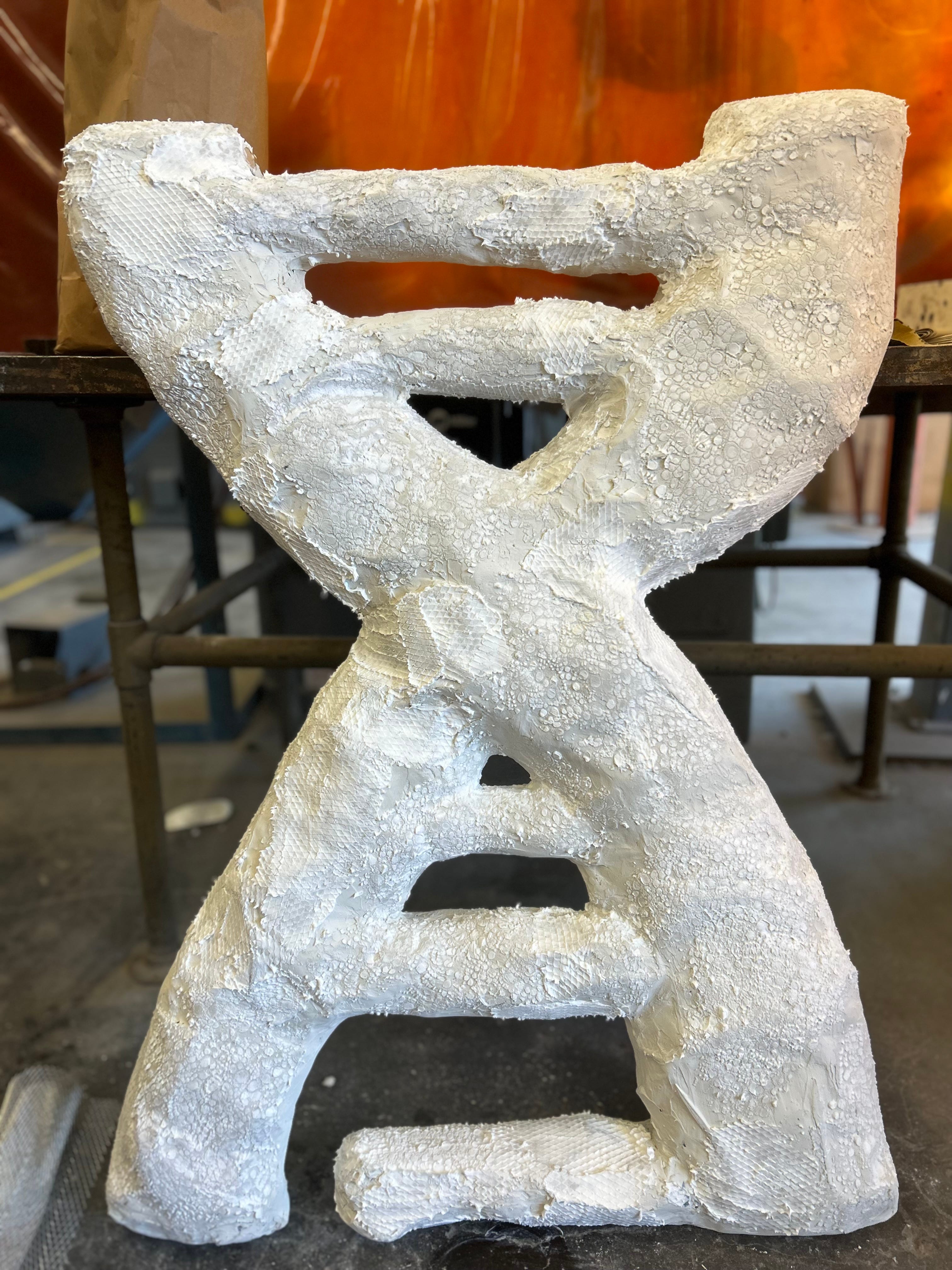
Sculpture (base) 2023, Emily Alber, Wayne State University
No posts
Comments
Nothing yet. Say the first thing.
Sign in to join the conversation.