
Some Background
In 2014, Gallup, Inc., in partnership with Purdue University and the Lumina Foundation, conducted a survey of 29,560 people across the U.S., aged 18 or older, who had earned at least a bachelor’s degree to study how college experiences prepared them for life after college. Survey respondees who felt college had prepared them well for life reported six key experiences:
At least one professor at their college made them excited about learning.
Professors cared about them as a person.
A mentor at their college encouraged them to pursue their goals and dreams.
Coursework included a project that took one semester or longer to complete.
An internship or job allowed them to apply what they learned in the classroom.
They were extremely active in extracurriculars and organizations while in college.
More recently, New York Times best-selling author Jeff Selingo published his latest book, Dream School, the culmination of two years worth of research. In his book, Selingo shares stories and findings from his research, and synthesizes the results into four key criteria that help college students thrive on campus. The results are strikingly similar to the Gallup-Purdue survey results.
Selingo’s 4 Key Criteria
A Supportive start
Easy connections
Real job experience
Good ROI: Value over prestige
The mistake in crowning the 75 example colleges in Selingo’s appendix as the new “It” colleges is that any one of those colleges might not be a “Dream School” for every student.
As you research colleges, the questions you ask that are specific to you will help you determine whether each fits the “Dream School” criteria in a way that centers your perspectives and needs.
Thanks for reading Admissions Tidbits! Subscribe for free to receive new posts in your inbox. You can support my work on my Ko-Fi page.
Put It Into Practice. College Research: Is it a “Dream School” for you?
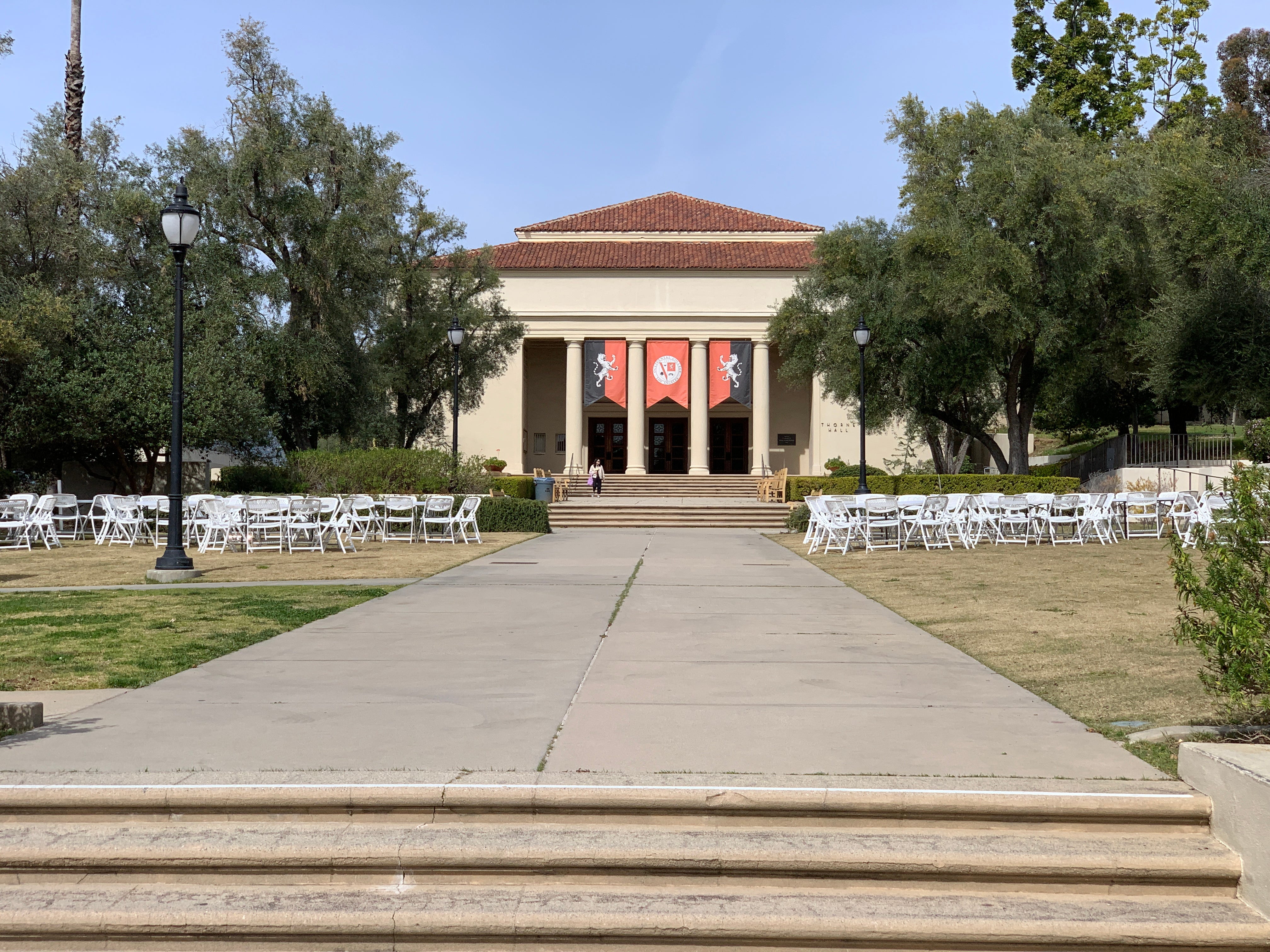
I recently co-hosted a presentation by, & discussion with, Duanduan Hsieh, spotlighting Occidental College, where he’s Senior Assistant Dean of Admissions, and I prepped him with some questions based on Selingo’s key criteria. Here’s a summary of some of the notes on Occidental (“Oxy”) I was able to grab while helping manage the webinar, supplemented by follow-up research to check details and add links:
Key Criteria
Occidental College (Los Angeles, CA) - 1881 Students. Admit rate: 44%.
Supportive start
First-Year Seminars (FYS) - 2 semesters required.
Easy connections
All undergrads, no graduate students.
Average class size = 17
All classes capped at 50; 92% are less than 30
Discussion-based
Senior Comprehensive Project (”senior comps”)
Oxy’s Culture of Care
Real job experience
Senior comps also offer opportunity for connection to industry.
All faculty receive a budget for experiential learning, LA is their extended classroom.
Urban & Environmental Policy majors work with the Los Angeles government.
Marine Biology research vessel, diving certification coursework
Choi Family Music Production Center - music majors have to record a full album.
Some internships are only for Oxy students.
Good ROI: Value over prestige
Total COA for 2026-2027, without financial aid: $95,365
No separate application for financial aid.
2024-2025 Ave. need-based aid (freshman / all): $60,045 / $60,015
2024-2025 Ave. merit-based aid for students with no need (freshman / all): $17,397 / $15,544
All students qualify for merit-based aid, range $10,000-$40,000.
Some highlighted grants & scholarships (more here)
How Outside Scholarships Affect Your Aid (outside scholarship policy)
1st - reduce need-based loans
2nd - reduce work study
“If grants and scholarships exceed your total financial need, adjustments may be made to institutional grant funding. These awards generally do not replace your calculated family contribution.” This is referred to as “scholarship displacement”, a not uncommon practice that is worth asking about at any college.
BONUS: Thoughts & random links I looked up out of curiosity.
(Yes, follow your curiosity!)
Important in the age of AI - things Oxy is strong in teaching:
Critical thinking
Analytical thinking
Writing
How to be a lifelong learner
Meet Our Majors (This is kind of cool!)
Major FAQs: At the bottom of every major webpage on Oxy’s website are some FAQs that touch on some of the key criteria.
Southern CA Conference for Undergraduate Research (SCCUR): Oxy sends the most students of any of the schools represented (& has only 2000 undergrads, while some schools have 10x as many students).
This isn’t necessarily a comprehensive summary of everything Oxy offers, but it gives you an idea of the things you might look for, and questions you might ask.
Is Occidental College a “Dream School” for you?
Only you can decide. Use the “Dream School” lens while building your college list, and you’ll already know “why” when faced with “Why Us?” and “Why Major?”supplemental essays.
Don’t mistake this overview as a shortcut to reading Jeff Selingo’s book! He’s been studying and writing about higher education for a long time, and his insights are invaluable. (I don’t receive compensation in exchange for recommending his book.)
#CollegeAdmissions
#CollegeResearch
#NoAIWasUsedForThisPost
Thanks for reading Admissions Tidbits! Subscribe for free to receive new posts in your inbox. You can support my work on my Ko-Fi page.
Comments
Nothing yet. Say the first thing.
Sign in to join the conversation.