

For more than five years, the civil sexual‑assault lawsuit against former Windsor Mayor Dominic Foppoli has dominated Sonoma County political discourse. Reporters have repeatedly declined to interview Foppoli directly, leaving a public record shaped almost entirely by the plaintiffs, their counsel, and political allies.
As a neutral reporter, I sought to publish an unbiased examination of the case by incorporating verified documents, court records, and direct statements from both sides—including attorneys Traci L. Carrillo and Andrew G. Watters, and Foppoli himself.
This article does not attempt to determine guilt or innocence. Instead, it evaluates whether political, institutional, or interpersonal motives may have influenced the trajectory of the civil lawsuit.
Two separate criminal investigations into allegations against Foppoli resulted in no criminal charges, with prosecutors citing:
“Insufficient evidence”
“Inability to meet the criminal burden of proof”
Despite this outcome, the civil lawsuit proceeded—where the burden of proof is lower and political narratives often shape public perception.
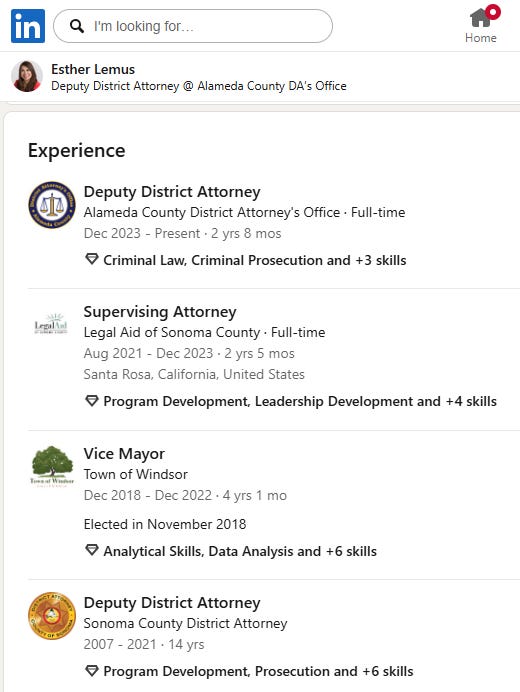
Esther Lemus held multiple influential roles, and was publicly ousted as a ‘Jane Doe’ in the Foppoli matter by The Press Democrat:
Deputy District Attorney, Sonoma County (2007–2021)
Windsor Town Councilmember & Vice Mayor (2018–2022)
Supervising Attorney, Legal Aid of Sonoma County (2021–2023)
Deputy District Attorney, Alameda County (2023–present)
These positions placed her at the intersection of law enforcement, local politics, and public‑interest litigation.
Lemus and Foppoli served together on the Windsor Town Council. She endorsed him for mayor after the alleged assaults. This timeline has long raised questions among observers.
Foppoli provided the following account of the 2019 mayoral selection:
“Esther Lemus and I went up against each other for Mayor of Windsor in 2019. I was already Mayor at the time… Esther made a big show of becoming the first Latina Mayor… and then she lost to me.”
He further alleges:
“Her only vote (besides for herself) was councilman Bruce Okrepkie… Both of us live in the 4th district so I heard he supported Esther to try and keep me from building too much popularity for a future supervisor run against his son.”
And concludes:
“That was a huge motivation to make Esther bitter enough to make up multiple stories about me the following year.”
These claims are Foppoli’s perspective, not established fact.
Readers should verify political details with trusted sources.
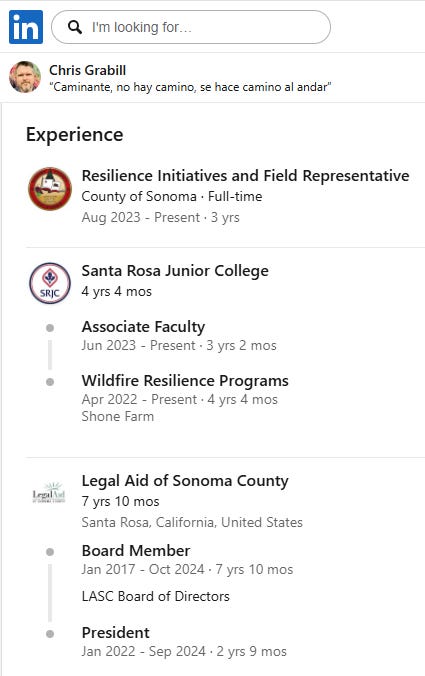
Chris Grabill is a well‑known Sonoma County political figure:
Field Representative for District 4 at the County of Sonoma, Office of Supervisor James Gore
Housing policy advocate
Santa Rosa Board of Public Utilities appointee
Son of prominent local political figures
Housing director at St. Vincent de Paul (which contracted with a Foppoli‑backed security company)
He also served as Board President of Legal Aid Sonoma County, where Lemus worked as an attorney.
According to Lemus’ attorney, Grabill was present the night Lemus became violently ill after a Boys & Girls Club crab feed after‑party.
He and Foppoli drove her home.
Authorities reportedly interviewed Grabill.
Carrillo stated that investigators told her:
Only Foppoli took Lemus inside her home
Grabill was “fully cooperative”
Grabill publicly condemned Foppoli after the San Francisco Chronicle exposé.
He expressed shame for not recognizing alleged misconduct earlier.
He voiced strong support for Lemus and survivors.
Later, he removed his Facebook page.
This is where the situation becomes more complex — and where questions about potential ulterior motives arise.
Lemus worked as an attorney at Legal Aid.
Grabill served as Board President.
The nonprofit had contracts with Sonoma County.
This creates a web of overlapping professional interests.
Judge Pardo appeared to preside over multiple hearings, including settlement enforcement. However, the Plaintiffs’ Counsel Traci Carrillo, Perry Johnson Anderson Miller & Moskowitz LLP disputes this characterization:
“Judge Pardo made ONE court appearance… when Judge Simonds was unexpectedly absent… He did not issue sanctions, as you claim. He issued an ‘order to show cause’ and referred the matter back to Judge Simonds…”
She further states:
“The background of his limited involvement… was addressed in Court before Judge Simonds.”
Watters strongly disagrees:
“Judge Pardo magically appeared in this case… failed to disclose that he formerly represented Doe #7… was familiar with the investigation… and proceeded to issue an order to show cause… The inference is that Judge Pardo sought to pressure my client to settle…”
Watters characterizes Pardo’s involvement as:
“Clearly an ethical violation… contrary to law.”
These opposing interpretations highlight the core dispute:
Was Pardo’s involvement routine judicial coverage—or improper influence?
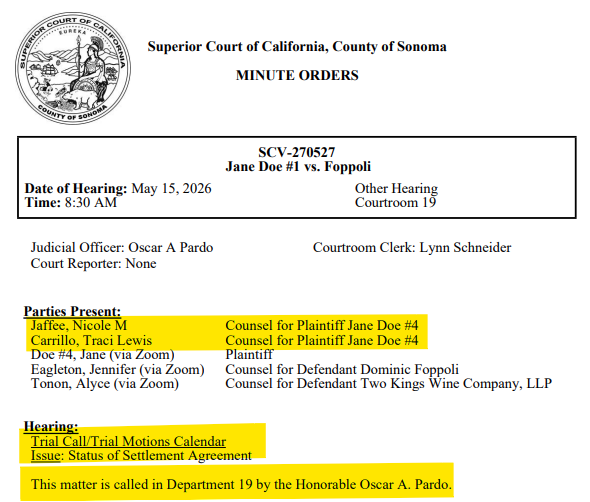
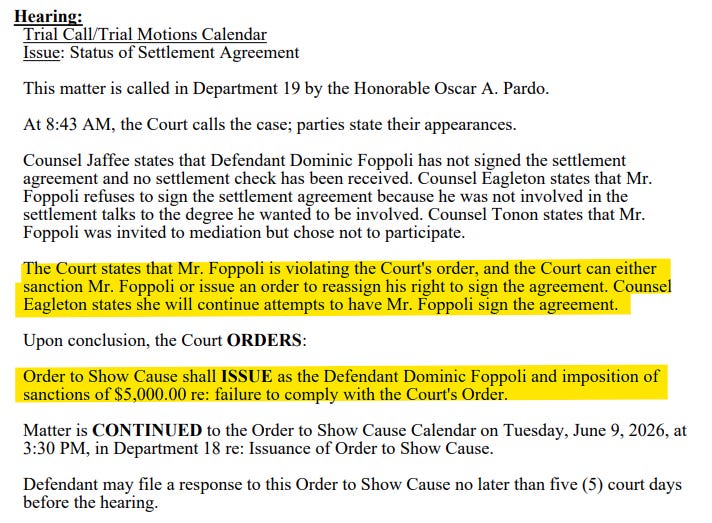
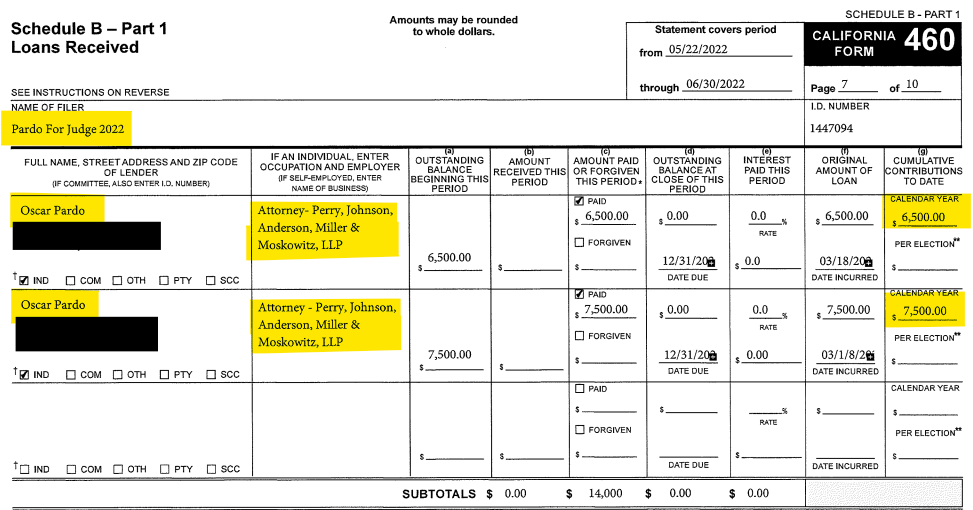
Pardo previously represented Lemus alongside attorney Traci Carrillo in matters involving Foppoli.
Pardo’s spouse is a County of Sonoma employee.
Grabill works for the County of Sonoma as BOS & CAO Field Representative for District 4, Supervisor James Gore’s Office.
Despite these overlapping relationships, Pardo did not recuse himself.
This is highly unusual in judicial ethics practice, where even the appearance of conflict typically triggers recusal.
A significant and under‑examined layer of the Foppoli civil case involves the longstanding professional proximity between Plaintiffs’ lead counsel, Traci L. Carrillo, and Judge Dana Simonds, the judge currently presiding over the matter. These connections do not, on their own, prove bias or misconduct. However, they raise legitimate questions about the appearance of impartiality, which is a central standard under California’s judicial ethics rules.
Carrillo served as a Senior Deputy District Attorney for Sonoma County through 2014, according to her publicly listed professional history. In that role, she worked within the same prosecutorial and judicial ecosystem that Judge Simonds also operated in as a sitting judicial officer. This means Carrillo and Simonds were part of the same legal community, interacting with the same judges, prosecutors, county officials, and legal organizations.
The overlap deepens through Sonoma County Women in Law (SCWiL), a mutual‑benefit legal organization. SCWiL’s archived materials show Carrillo hosting or participating in annual luncheons featuring female judges—including Judge Dana Simonds, who is now overseeing the Foppoli case. These events were not casual gatherings; they were structured professional forums designed to foster relationships between attorneys and judges in Sonoma County.
SCWiL’s current board structure further illustrates the institutional entanglement:
The Board President is Deputy District Attorney Carla Rodriguez, meaning the organization is directly led by a member of the same prosecutorial office Carrillo once served in.
The board includes attorneys from local firms, county agencies, and legal nonprofits—many of which intersect with individuals involved in the Foppoli matter.
Carrillo is a former Board Member for Sonoma County Women in Law, and current Member.
This creates a closed professional loop:
Carrillo → Sonoma County DA’s Office → SCWiL → Judge Simonds → Sonoma County courts.
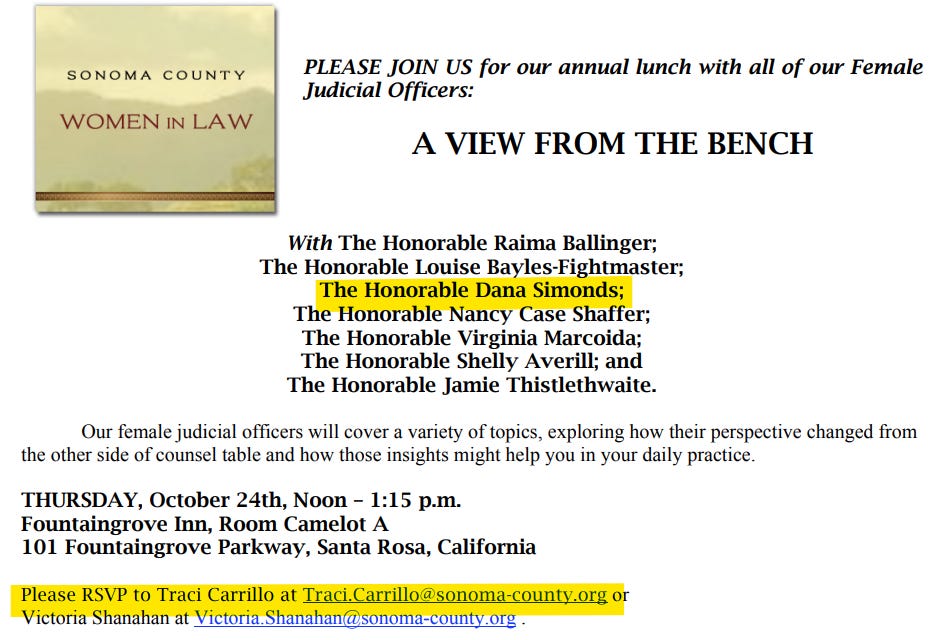
The 2012 luncheon flyer instructs prospective members to contact:
Toni Labra — Perry, Johnson, Anderson, Miller & Moskowitz LLP
for membership information and enrollment.
This means:
Perry Law was not merely a participant in SCWiL.
It served as a point of contact and administrative gateway for new members.
Attorneys seeking to join SCWiL were routed directly through the plaintiffs’ law firm.


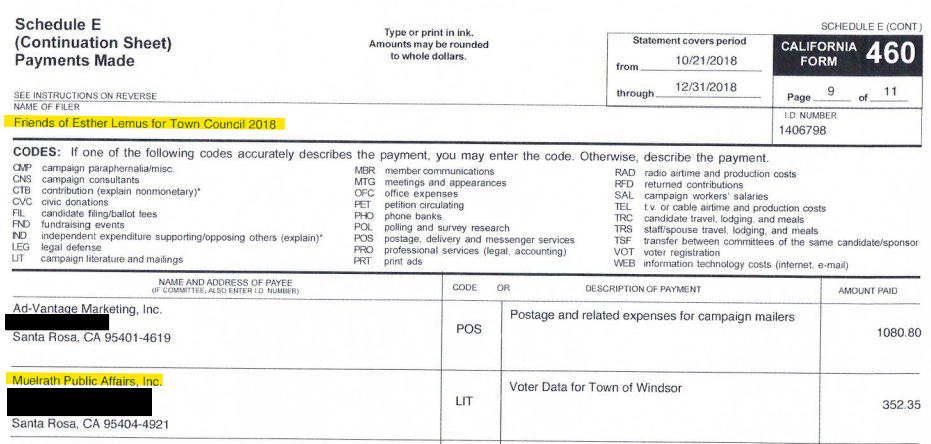
Campaign finance records show that Judge Pardo was represented by Muelrath Public Affairs.
Rob Muelrath:
Was brought onto the Whitestar Protection Group board during the Foppoli scandal for damage control
Served as public affairs representative for Supervisor James Gore
Served as a campaign consultant for Esther Lemus
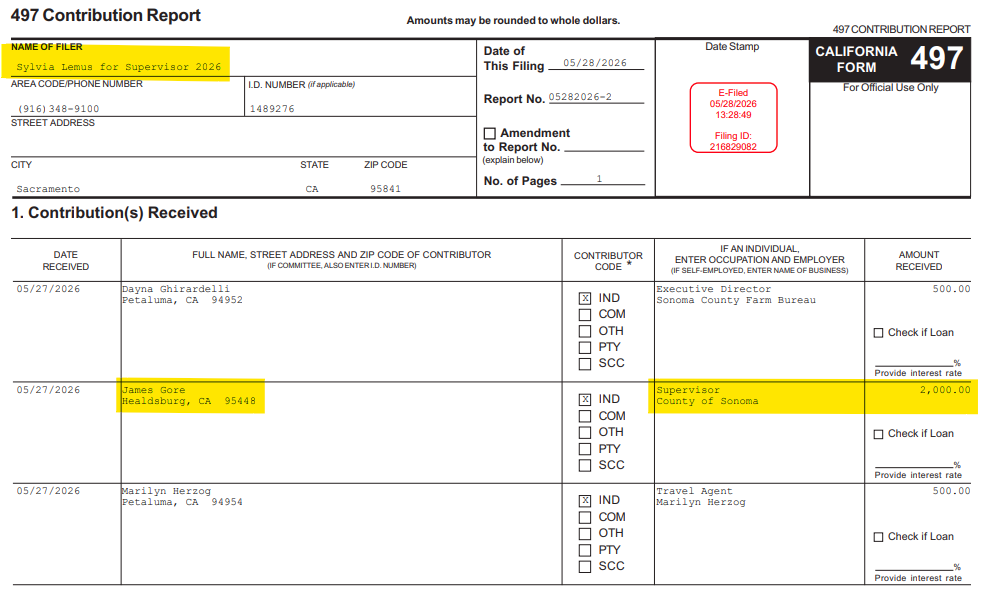
Currently represents Sylvia Lemus (Esther’s sister) in her campaign for county supervisor
This creates a triangle of overlapping political interests involving:
Pardo
The Lemus family
County political leadership
A firm involved in crisis management related to the Foppoli scandal
Sylvia Lemus donated to Pardo’s judicial campaign while employed by the County.
Traci Carrillo and her spouse made multiple 497 contributions to Pardo totaling several hundred dollars.
Supervisor Gore contributed thousands of dollars to Sylvia’s campaign
These contributions are legal — but they add to the appearance of interconnected political interests surrounding the case.
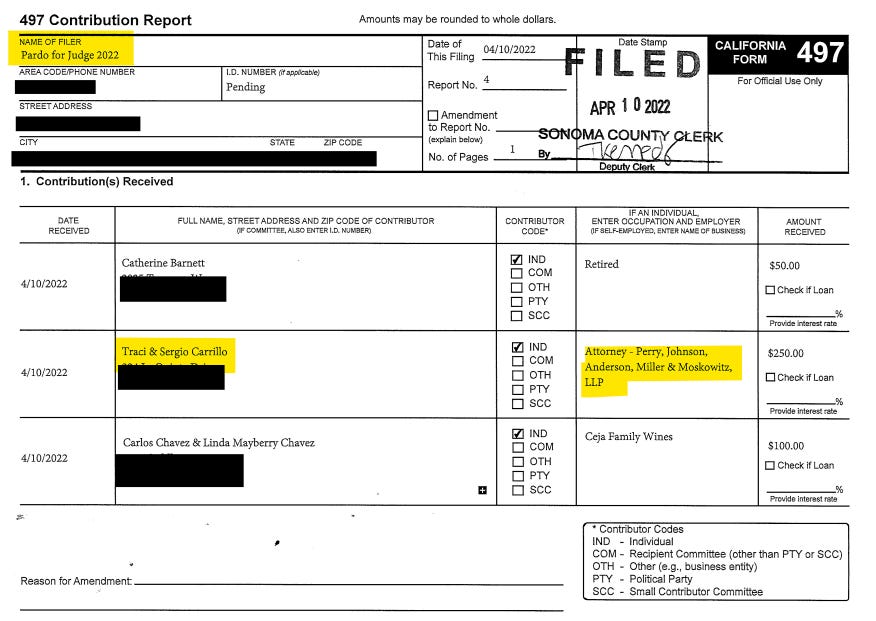
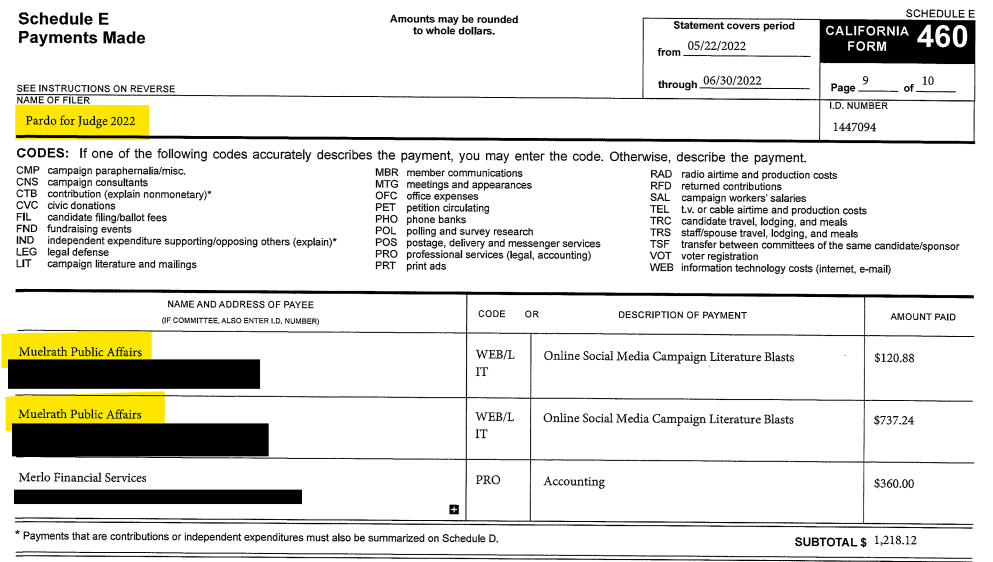
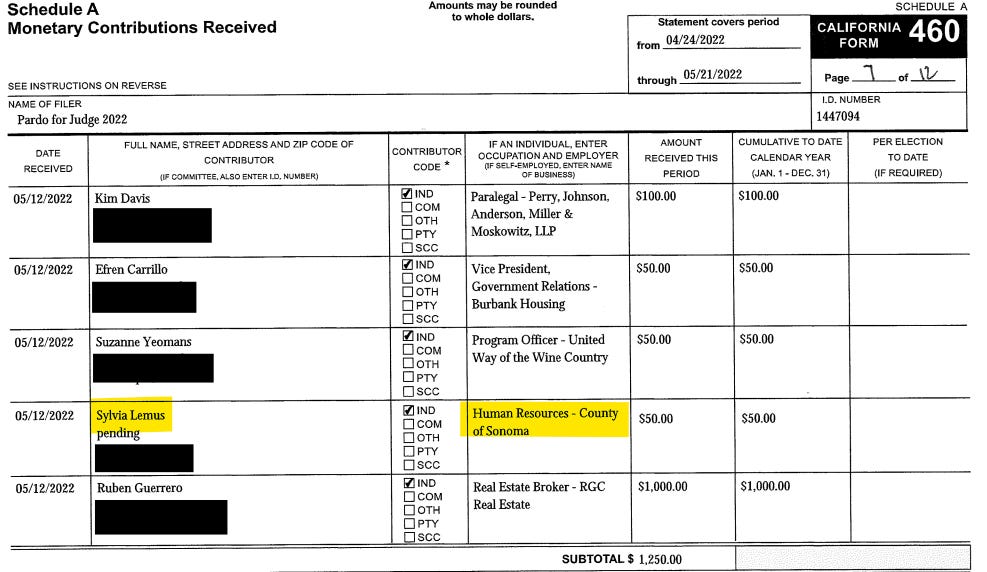
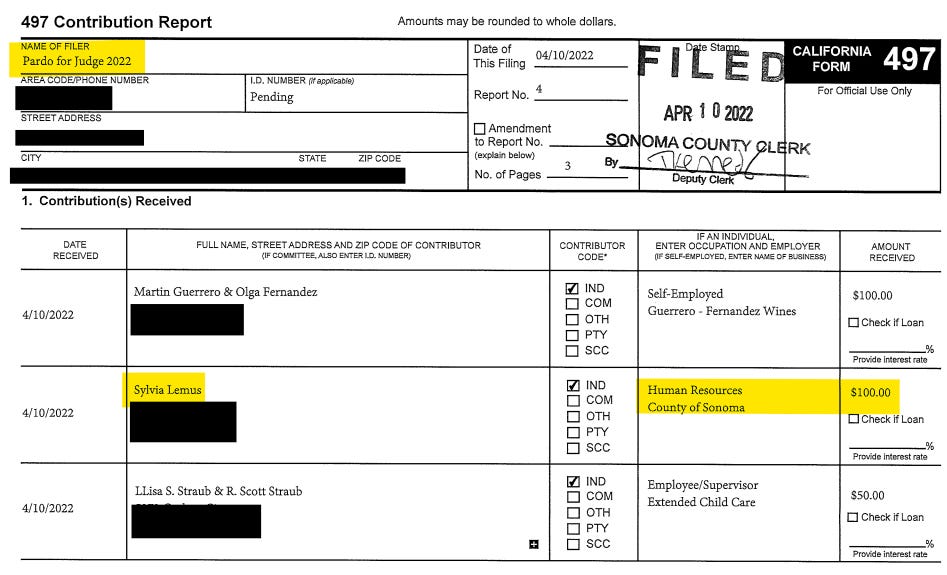

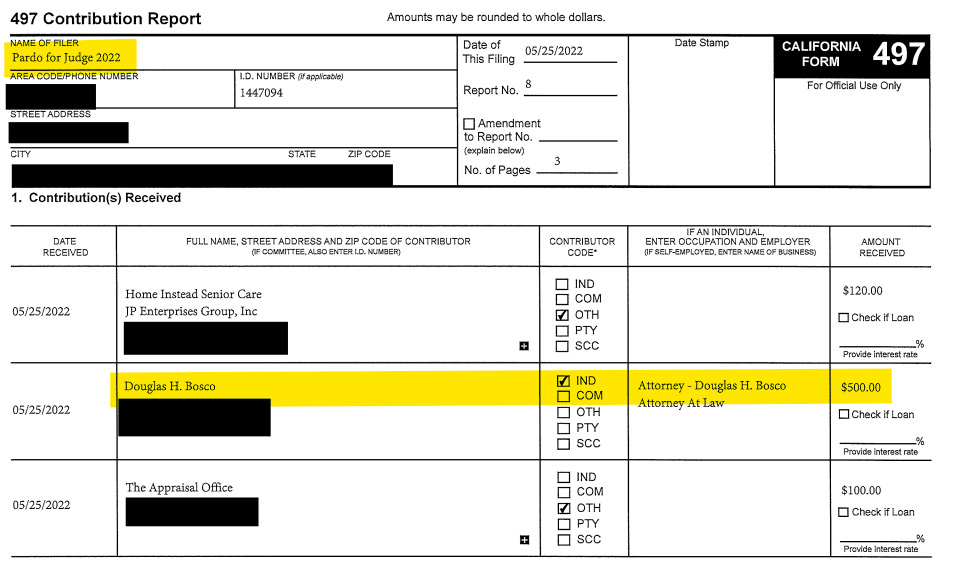
Campaign finance filings show that Doug Bosco — former U.S. Congressman and longtime part‑owner of The Press Democrat — donated $500 to Judge Oscar Pardo’s 2022 judicial campaign, as reflected in the Form 497 report filed on May 25, 2022. Bosco’s dual role as a political figure and media stakeholder adds another layer to the interconnected network of relationships surrounding the Foppoli civil case, particularly given The Press Democrat’s extensive coverage of the allegations and the individuals involved.
This section does not assert conclusions.
It lays out the plausible interpretations readers may consider.
Lemus was a rising figure in Sonoma County politics.
Her sister is now running for county supervisor.
Her attorney and allies have political ties to county leadership.
A high‑profile case against Foppoli — a Republican mayor — may have aligned with broader political interests in the region.
Legal Aid, the DA’s office, and county departments all intersect through:
Employment
Board leadership
Contracting
Political consulting
Public messaging
These institutions may have had reputational or strategic incentives to support the civil case.
Judge Pardo’s prior representation of Lemus and his political ties raise questions about:
Whether he should have recused
Whether his rulings were influenced by relationships rather than pure judicial neutrality
The civil case created a powerful public narrative:
A group of women standing against a disgraced mayor
A county rallying behind survivors
A political establishment distancing itself from a former ally
Narratives can shape legal strategy, media coverage, and institutional behavior.
No posts
Comments
Nothing yet. Say the first thing.
Sign in to join the conversation.