
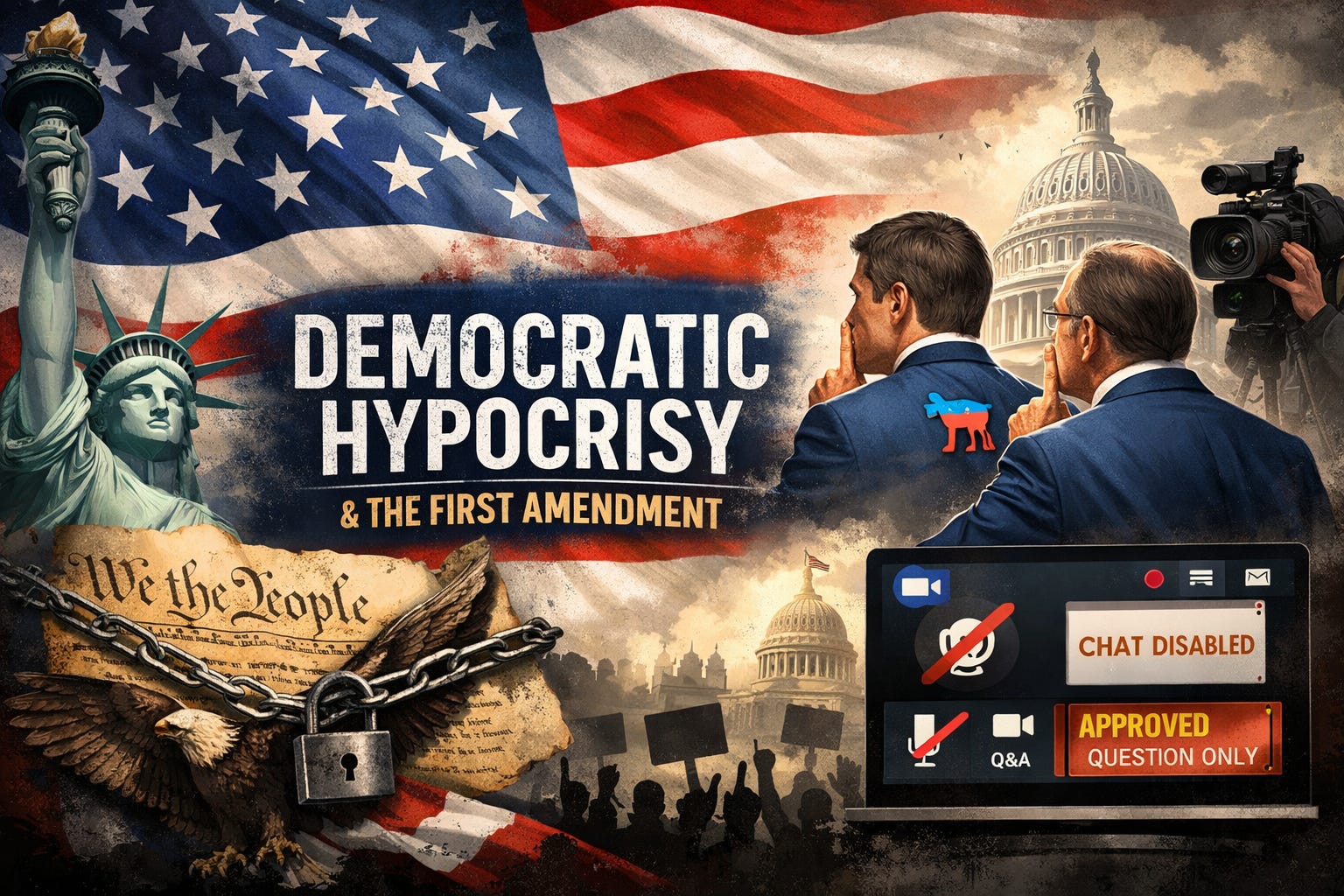
The July 7, 2026 League of Women Voters (LWV) First Amendment panel was advertised as a community forum on “Why the First Amendment Still Matters.” I took that promise seriously. I emailed the organizers, explained that my own First Amendment rights had been violated repeatedly by Sonoma County officials and library staff, and asked to participate on the panel.
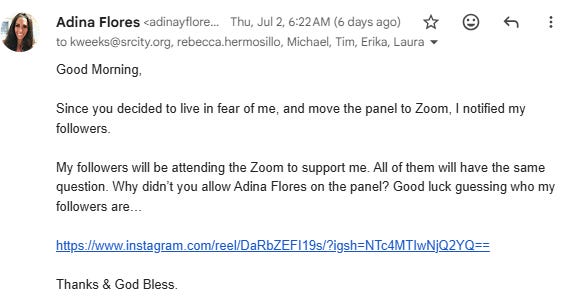
Instead of responding to my request, the organizers moved the event from an in‑person public forum to a controlled Zoom session, disabled the chat, and limited participation to a hand‑selected Q&A box where only approved questions would be surfaced.
A panel about free speech became a panel about managed speech.
This article documents what happened — and why it exposes a deeper hypocrisy in local democratic institutions.
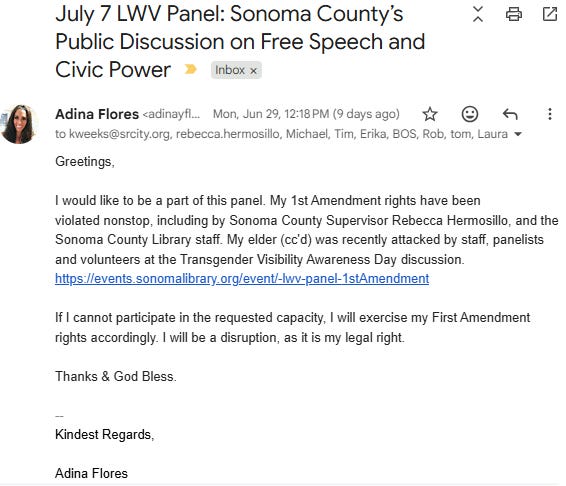
I emailed the LWV moderator, the Sonoma County Supervisor, and the library leadership:
“I would like to be a part of this panel. My First Amendment rights have been violated nonstop… If I cannot participate in the requested capacity, I will exercise my First Amendment rights accordingly.”
I cited:
My own documented First Amendment violations
The attack on my elder at a library event
The relevance of my lived experience to a panel about constitutional rights
I asked to participate in good faith, as a community member directly impacted by the issues the panel claimed to address.
I received no invitation, no acknowledgment, and no explanation.
Within days of my request, the event was quietly moved online.
Not only was it moved — it was stripped of all real-time public interaction:
Chat disabled
No open microphone
No public comment
Only the Zoom Q&A box, where moderators could filter, hide, or ignore questions
This was not a public forum.
It was a curated broadcast.
The organizers possibly claimed the move was for “safety.”
But the only “danger” present was the possibility of uncomfortable truths being spoken by someone they could not control.
The event description proclaimed:
“The most basic of human rights are covered by the First Amendment… And yet, the First Amendment will continue to be challenged every day.”
Yet when confronted with a resident whose First Amendment rights were actively being violated by the very institutions hosting the event, the organizers chose to:
Avoid the conversation
Avoid the speaker
Avoid the accountability
Avoid the public
This is not democracy.
This is democratic theater.
The panelists included:
A constitutional lawyer
A county supervisor
A former library commission chair
A public media director
All of them represent institutions with power, platforms, and public influence.
None of them represent:
Residents who have been silenced
People harmed by government retaliation
Community members whose speech has been suppressed
Voices outside the county’s political comfort zone
The LWV claims to “empower voters.”
The library claims to “defend intellectual freedom.”
Yet both chose to exclude the one person asking to speak about real, lived First Amendment violations.
This is not empowerment.
This is gatekeeping.
By disabling chat and limiting participation to the Q&A box, the organizers ensured:
Only “safe” questions would be answered
Only “preferred” topics would be discussed
Only “approved” voices would be heard
This is not a public conversation.
It is a moderated narrative.
A First Amendment panel should welcome dissent.
Instead, it pre‑screened it.
The LWV and Sonoma County Library publicly champion:
Free speech
Open dialogue
Civic participation
Government transparency
But when confronted with a resident demanding those very rights, they responded with:
Silence
Avoidance
Restriction
Control
This is the hypocrisy:
Institutions that claim to defend democracy often defend their version of democracy — one where dissent is inconvenient, and public participation is conditional.
This incident is not isolated.
It reflects a broader pattern:
Panels that exclude dissent
Forums that silence uncomfortable voices
Government officials who avoid accountability
Public institutions that curate “safe” democracy instead of real democracy
The July 7 panel was supposed to be a celebration of the First Amendment.
Instead, it became a demonstration of how fragile free speech becomes when institutions fear scrutiny.
“Woe to those who call evil good and good evil, who put darkness for light and light for darkness.” — Isaiah 5:20
No posts
Comments
Nothing yet. Say the first thing.
Sign in to join the conversation.