
This was supposed to be a week where I wrote about walking, not running. But then some running happened. But let’s go back to the beginning.
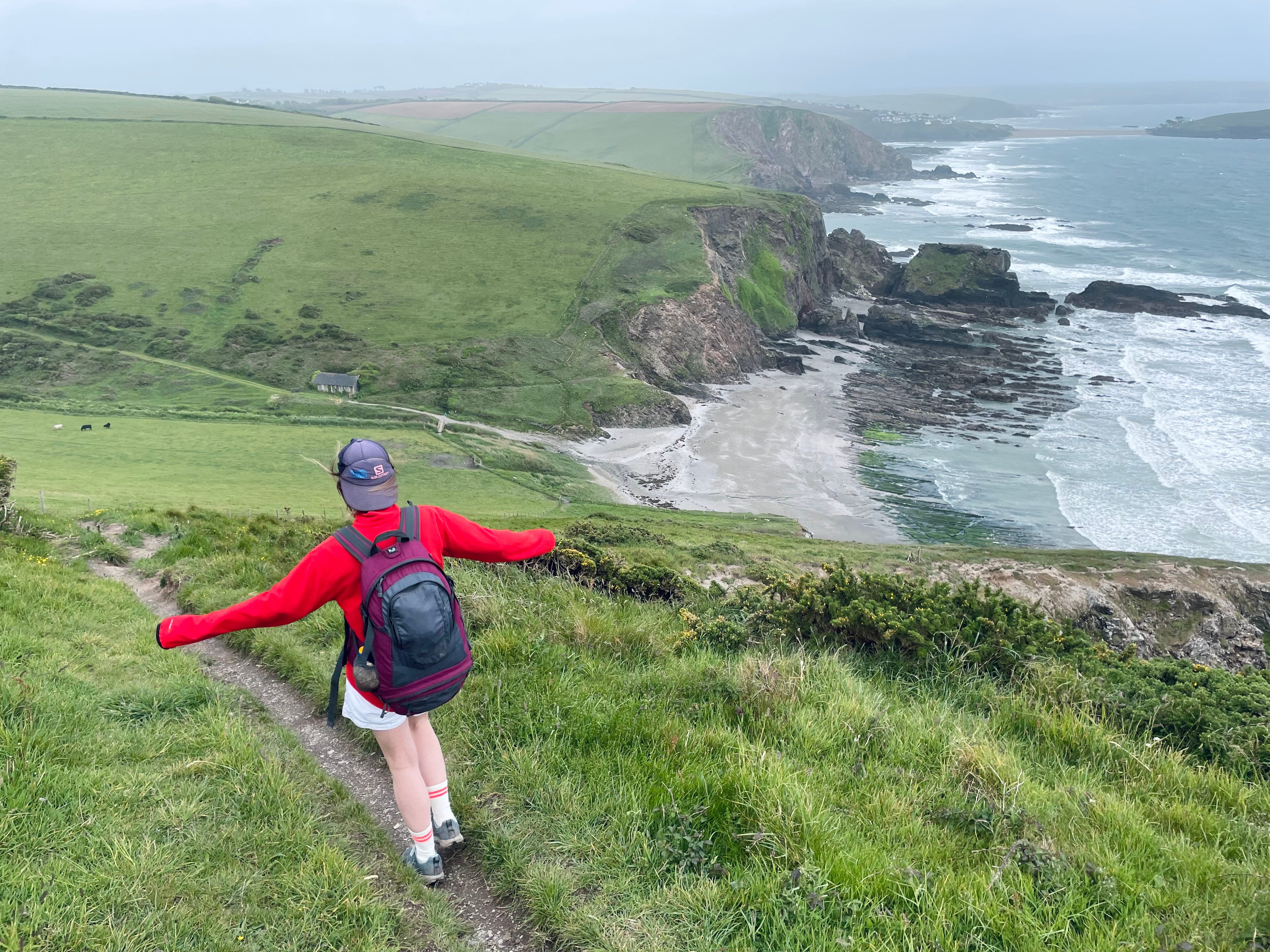
This past week, our son was away on a school trip, so Marietta and I decided to have a little adventure of our own. She’s not a runner, but she was up for some kind of running-style “adventure” - you know, getting out in the wilds, getting tired, feeling like you’ve been through something. So I had planned a two-day walk along the coast. I had planned it, but to add to the sense of adventure, I’d kept the precise details secret. She knew we were going on a two-day walk, but she didn’t know where, how far we would be walking, or where we would be staying.
My plan involved an earlyish start on day one, leaving home at 8.30am. This was important as the day involved two estuary crossings, one where we would wade across at low tide, and one, at the very end of the day, where we had to catch a ferry. But the last ferry was at 4pm.
However, it was 9.30am, and we still hadn’t left yet (I’d built in a little bit of leeway, of course, but we were now pushing up against it). Then, just as we were about to leave, my phone rang.
It was my daughter, calling from Durham, where she is at university. She sounded sleepy. She’d woken up after a night out to find that she had lost her phone, her bank card and her student ID. “What do I do?” she asked.
The problem was that her phone was registered in my name, so I had to contact the phone company. Cue me sitting on a live chat in the kitchen, waiting interminably to get through a series of impossible security questions, before finally getting to an actual person, who then seemed to take a 10-minute nap between each message. I was pulling my hair out as the time ticked by.
To cut a long story short, we managed to sort it all out, but we were now two hours behind what was already a tight schedule. Whenever we go walking, Marietta already accuses me of wanting to go too quickly, while she prefers to amble, to take things in, to stop to explore. But now that was impossible. We could do that on day two, I explained, saying that the late start meant we’d have to make day one a brisk walk. Sorry!
The thing is, I’ve never been very meticulous when it comes to planning. As Damian Hall said to me in our recent podcast chat, when he was talking about how every single finisher of the Barkley Marathons so far has been a scientist of some sort, he said that me and him, by contrast, were more “creative” in our approach to these things. We were more likely to say: “Let’s see what happens if we go this way.”
It was true, alas. And so, while I knew the rough distance we had to walk on day one, I suddenly realised I hadn’t factored in the ascents. And some of those hills on the coast path are steep. Like, really steep. And we were both carrying fairly big packs - enough food and clothes for two days.
I tried to keep things chilled. I didn’t want to ruin the whole thing by overly stressing. This was supposed to be a fun adventure, not an endurance test. Besides, I’d run this same section a few weeks earlier, and at that second crossing, on the ferry, the water didn’t seem crazy deep. If we put on our swimming costumes, I reckoned, we could probably wade across, if we held our packs over our heads.
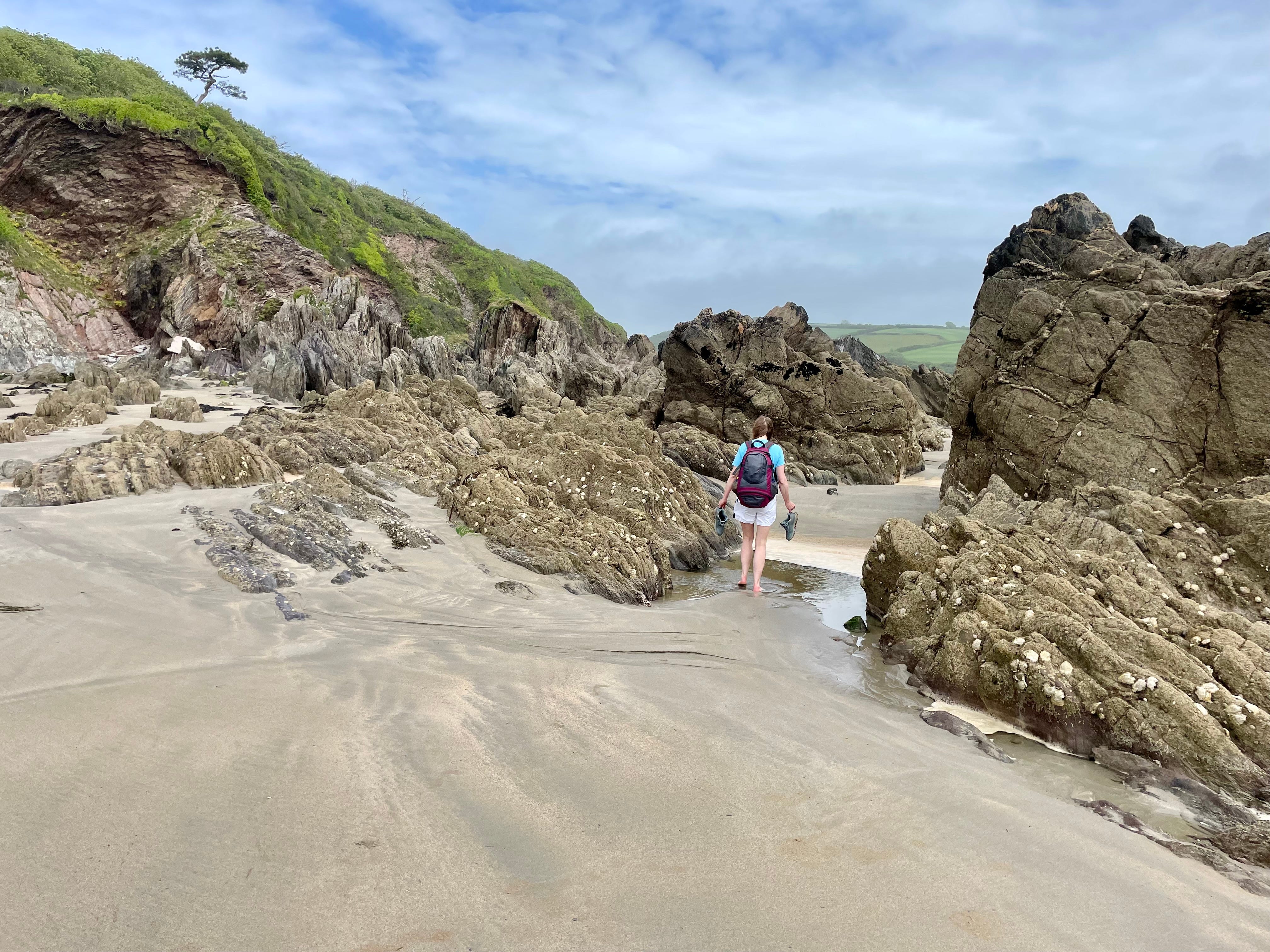
We made it to the first estuary crossing, around halfway through the walk, and we were only 30 minutes behind the original schedule, with the water still low enough to cross. But I now realised that even reaching that point bang on time would have still meant really pushing the pace on the second half of the walk to make the ferry. And we still hadn’t had lunch yet.
I decided to accept that we’d miss the ferry. We would wade or swim across somehow. There must be a way, I figured, rather unscientifically. What’s the worst that could happen? And so we stopped and sat down on the beach to have lunch.
The second half of the walk was more enjoyable, since we’d given up trying to make the ferry, though the wind was wild that day, buffeting us from side to side as we went, and the hills on the last section were brutal.
At the final crossing to Bantham, where we had our abode waiting for us - a camper van overlooking the estuary - and a table booked for dinner in the pub, we fast-walked our way up river looking for a place where we might be able to cross. But it looked deeper and faster flowing than I remembered it from a few weeks earlier. And it was getting deeper by the second.
We found what looked like the narrowest spot and I stripped down to my shorts to test it out. But two steps in, the ground dropped away below head height. There was no way we were wading across. It was swimmable, just about, but not with our bags. We were stuck.
I got dressed and we wandered back up to the path. A sign for the ferry strongly warned against trying to wade across the water. There was a path around the estuary, it said, but it was another nine miles, and we were both exhausted. And our table was booked in one hour’s time. A table in a cosy, seaside pub, sitting there waiting for us. We looked at each other standing there in the buffeting wind. Well, this was an adventure of sorts, right?
The final option was a taxi, but we had to get up on to the road first. And even then, taxis can be hard to find at the drop of a hat in these parts. But it was worth a try. So we speed hiked up the cliff, back to the road. And by some miracle, there was a taxi nearby. He would come and get us right away, he said. We were saved.
***
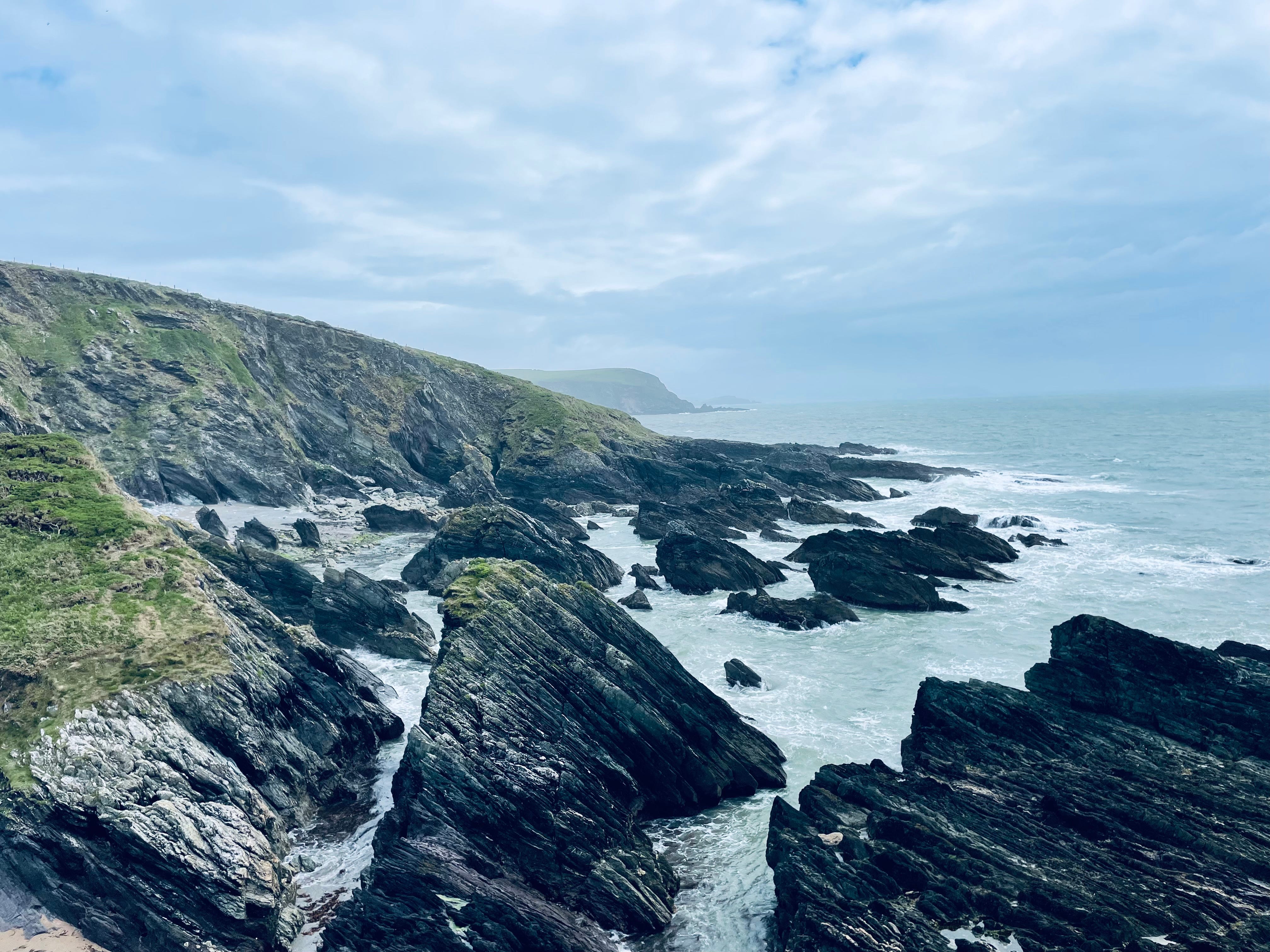
The forecast had been for a nicer day the next day, but we woke the next morning to grey skies and a chilly dampness in the air. The camper van was owned by the local cafe so we got ourselves a hearty breakfast and then packed up ready for another 13-mile hike, but this time with no time pressure. We could amble and enjoy the views at our own pace, with no estuary crossings to worry about.
Except that Marietta’s knee was shot. As soon as we started to walk, she had to stop. A sharp jabbing pain on each step. We tried doing some stretches, walking on a bit further to see if she could shake it off, but it was simply not playing ball. Even walking 100 metres was difficult. It seemed we had come to the end of our road.
She felt terrible, like she had somehow failed, or wimped out. But when something in your body goes like that, it’s no longer a battle of wills, or a question of resolve. You just have to accept it.
We returned to the cafe for the wifi so we could call a cab. Except, this time, every taxi in south Devon seemed to be already on a job and nobody could come to the middle of nowhere to pick us up and take us back to our car - which we’d left at the start of day one.
We were stuck. The only solution I could see was for me to run back along the coast to get the car. There were two problems with that. Firstly, I’d have to time it for the estuary crossings. Looking at the clock, we realised that meant leaving that very moment. Any later and I’d miss the low tide. The second problem was that it would take me a few hours at least to run 13 miles on that path, particularly as I didn’t have any running gear. (I was, luckily, wearing my running shoes at least.) So it meant Marietta sitting somewhere on a damp day with her crooked knee for at least three hours. But it seemed we had no other choice.
Sitting listening to all this, a woman in the cafe suddenly piped up. “Where do you need to go? I’ll drive you.”
Of course, part of me was secretly relishing a 13-mile coast run. But also, this was a pretty wonderful offer, to be whizzed back to safety. It turned out our car was in the opposite direction to where she had been planning to go, but she said she would take us anyway. She was running errands that day, she said. We could be one more.
I later thought that if this had happened in Ireland, I’d have been raving about how friendly the Irish were, and how something like this would never happen in England. But of course, there are friendly, kind people everywhere.
She even refused to take any petrol money, despite the drive back to our car taking about 45 minutes. But she was delighted when I suggested, instead, that I send her a copy of one of my books. It felt good to be able to offer that small exchange, at least.
And so just like that, we were back in the calm warmth of our car, the adventure over. It had still been an adventure, though, despite being cut short. A story to tell.
Not wanting it to end quite so soon, we stopped off at a beach sauna on the way home, and the sun came out and we ended up swimming in the waves under a blue sky. That’s the thing about adventures, you never know what’s going to happen. That’s why they’re called adventures, and why, sometimes, not planning everything meticulously can be just as much fun.
***
After my run across Dartmoor last weekend, I thought I’d need an easy running week this week. So my first run didn’t come until Thursday. I don’t know if was the fitness built up from the Dartmoor run (and the coastal walk), or just the few days without running, but I felt great, surging up each hill on a brisk 11-miler. After I got home, a thought popped into my head uninvited: maybe I’ll run a parkrun on Saturday.
I didn’t actually decide on it for sure until Friday night. But yes, why not. Of course, I told myself I wouldn’t race it. “Keep the effort at 80%,” I told myself. A hard run with other people. One notch down from a race. I wouldn’t start at the front, or stop my watch at the end. It would just be a faster section in a longer run.
Yeah, yeah, yeah.
Well, actually, I did start out like that. I held back up the first hill - I had decided to do my local, very hilly Sharpham parkrun - and I was sitting in about eighth position. (This was further back in the field then I normally finish at Sharpham, so I thought I was holding back, at least.)
Rolling down the first big downhill, again, I didn’t chase hard, but just opened up and let myself relax. One guy passed me just before the turnaround point, a bigger guy wearing a red T-shirt. I’d heard his friend tell him at the start that if he finished in under 20 minutes, his friend would buy him breakfast. At Sharpham, with the hills, getting under 20 minutes is tough. I’d only done it once in six attempts, and I’d been flying that day. This guy didn’t look like someone who could run sub-20 here, I’d thought (rather uncharitably, I admit).
But here he was, overtaking me. As we ran back past the runners coming up along behind us - it’s an out and back course - his friend saw him and shouted: “Go Callum, my hero!”
He started to get away from me up the long climb back to the finish, but near the very top of the hill, I realised I’d closed the gap back up. Suddenly I was less than 10 metres behind him. A voice in my head told me to ease back. “If you catch him now,” it said, “you’re going to have to have a sprint finish down the final hill.”
Ever since I was a kid I’ve always somehow hated a sprint finish. Or feared it, at least. I lost many sprint finishes as a kid. I would always feel myself almost getting sick, and needing to pull back. It was always crushing, horrible. Better simply to concede. Who cared, anyway? I wasn’t even racing.
But then my competitive spirit animal rose up from somewhere. “Or,” it said, “you can go hard now. Break him before it even gets to a sprint finish.” It sounds like a cheesy film, but suddenly the words of Lose Yourself came into my head. “You only get one shot, do not miss your chance to blow, this opportunity comes once in a lifetime, yo.”
Pure cheese, I know, but some switch just flicked and I was striding past him, repeating those words in my head, over the top of the hill and away, streaking down that final descent, not wanting to allow him even the chink of a thought that he might catch me.
After we finished, we shook hands. I hadn’t been timing it, so I had no idea how fast we had gone. Judging by the fact I’d finished seventh, I was expecting it to be about 21 minutes. But he was looking at his watch. I asked him if he was getting his free breakfast from his friend. He smiled back. “Yes, just about,” he said.
Amazingly, we’d both gone sub-20. In fact, I had run my course PB. On still tired legs from my Dartmoor crossing. Wow, I was slightly shocked. Maybe I was fitter than I realised.
***
When I wrote about the Enhanced Games in a big article for the Guardian back in 2024, I’d ended the piece thus: “Whichever way you look at it, the Enhanced Games is coming. If nothing else, we may finally learn how much of a difference performance-enhancing drugs make to an athlete’s performance. And perhaps the best hope for those of us who cling to the ideals of ‘natural sport’ is that the drugs don’t work after all.”
Of course, doping works to some degree, otherwise people wouldn’t do it. But the Enhanced Games claimed it was going to re-define sport, change humanity, even. The founder had told me he wanted to see a 60-year-old break Usain Bolt’s 100m world record.
A leading doctor I spoke to for the piece, who worked in anti-doping and knew about these things, had spluttered at this suggestion. “His tendons would snap,” he had said, laughing. No drugs could make a 60-year-old run that fast. In fact, he told me, the drugs didn’t make as much difference as most people assumed.
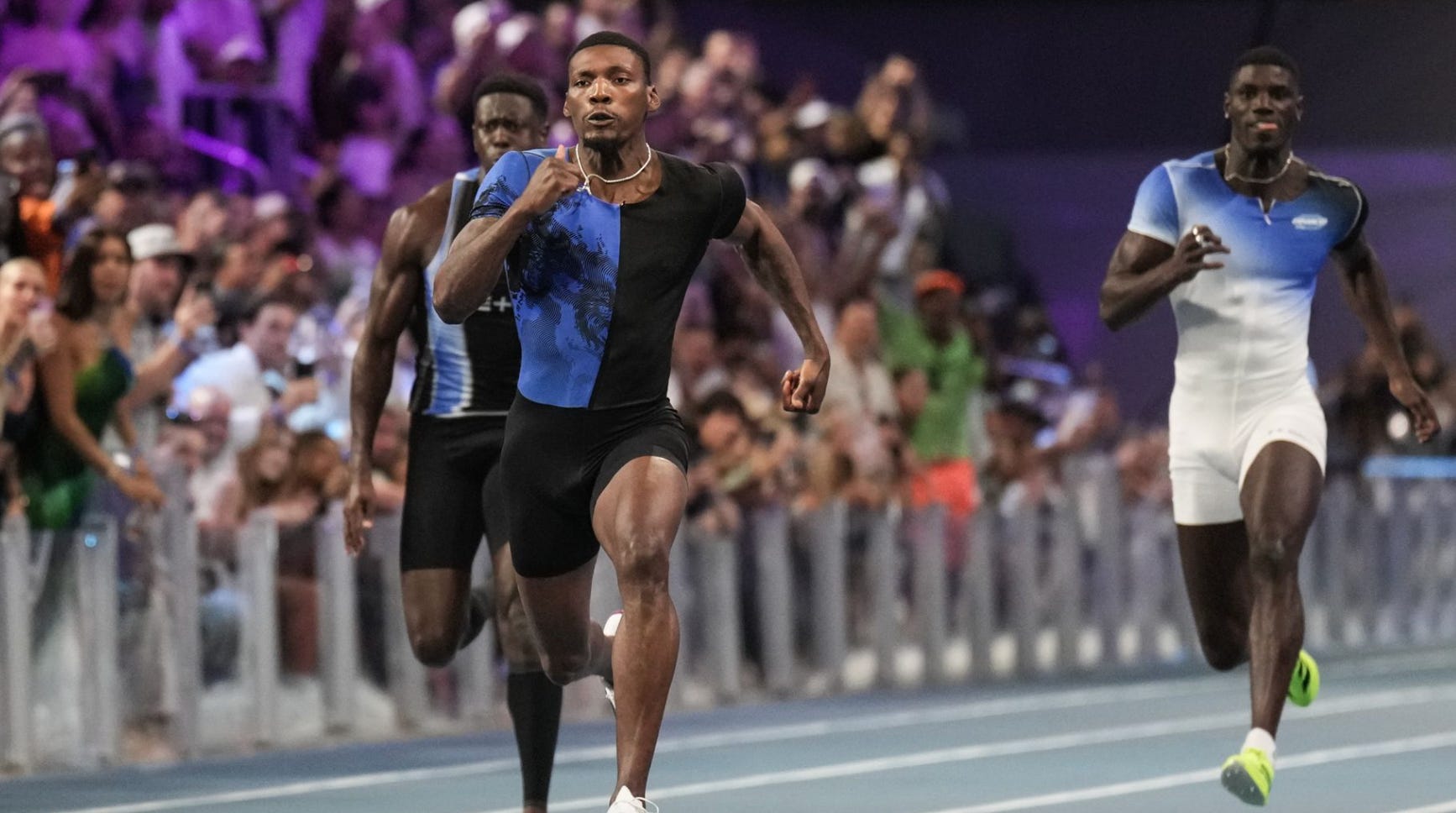
But even if they only made a small difference, the Enhanced Games had hauled in some world-class athletes. Fred Kerley, for example, who had finished second and third at the last two Olympics, was in the 100m field. He had boldly predicted that Bolt’s record was going to be “destroyed”.
And then he ran 9.97. He won the race, but that is really not that fast. In fact, it would have placed him last in the 2024 Olympic final. And he was well ahead of most of the rest of the field. Not one of them even ran a personal best. The whole thing was less a freak show and more of a damp squib. For the tech bros pushing the Games, backed by the charming Eric Trump, it was the worst possible outcome. They didn’t care if people hated them. But they wanted people to be awed by them. They wanted to preen and flex and grin like Texan tycoons, cigars and super yachts and superhuman performances from their minions. Instead, all they got was a limp handshake on a wet November morning in Dagenham (no offence to Dagenham).
The Killers, with their soaring energy, headlined the Games’ closing ceremony, but perhaps they should have got the Verve, who could have sang out with their most famous line: “Now the drugs don’t work, they just make you worse.”
***
If you want a more analytical take on it all - albeit one written before it happened, but still adding some great context - check out Steve Magness’s piece The Steroid Olympics: A sales funnel with a starting gun
No posts
Comments
Nothing yet. Say the first thing.
Sign in to join the conversation.