
Glory to Jesus Christ, y'all!
We Byzantine Catholics wrapped up Paschaltide two days ago with the Sunday of All Saints. (Unlike the Roman All Saints Day of November 1st, ours falls on the Sunday after Pentecost each year. No Hallowe'en on Saturday, though.) It is now the “After Pentecost” roughly half of the year wherein we strive to live out the graces we were given in the intense Advent through Paschaltide portion. It is a slower time, a time for thanksgiving and reflection and…implementation!
That said, let us reflectively plunge (literally) underground to consider how caverns arose through the agency of the Great Flood.
Last post, we looked at a very plausible scenario for the formation of Southwest Montana's mountains, specifically the Tobacco Root Range within which the Lewis & Clark Caverns are located.
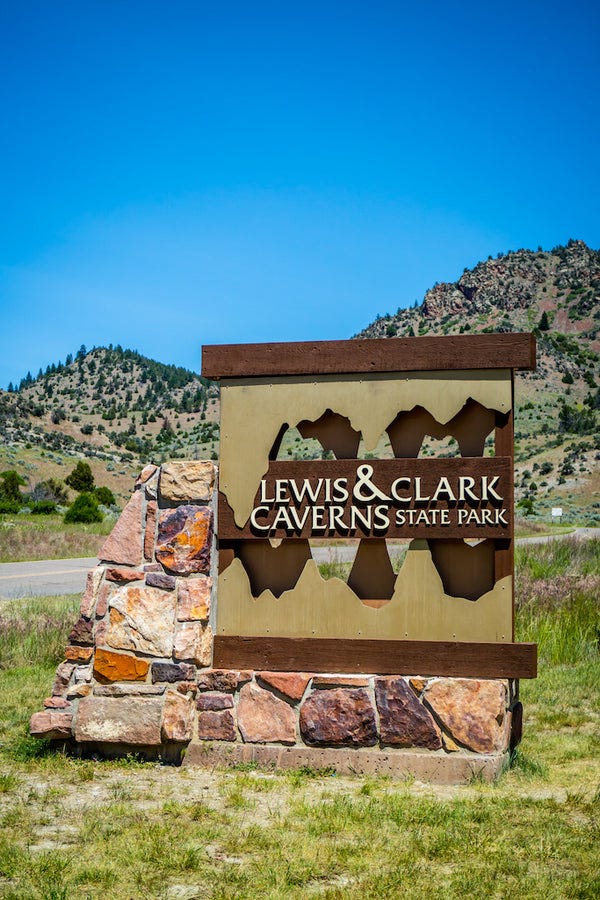
(This is at the Main Visitor Center. The Cave Visitor Center is up a long, winding road. And the Caverns’ entrances are down paths from that Center. Here's a map…
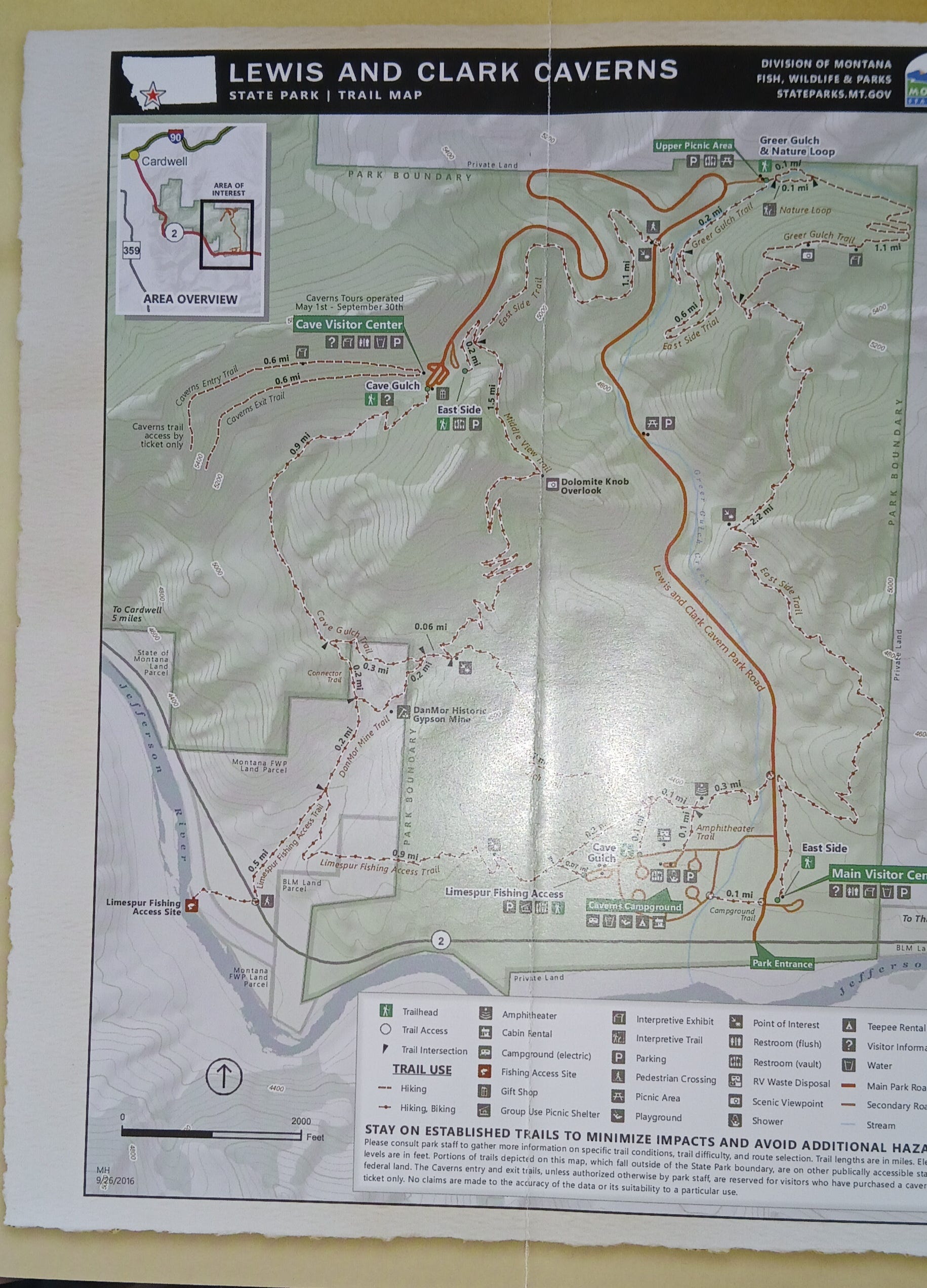
In this post, we’ll consider a plausible explanation for Great Flood-connected cavern formation, using the Caverns as an example.
Remember the video of that drive along the Jefferson River Gorge last post, with assorted cave openings and solution cavities?
(The cream-colored fuzziness in two of the photos below is the reflection off the windshield of my friend’s cowboy hat upon the dashboard. Gives things a Western “texture”, doesn't it? 😉)
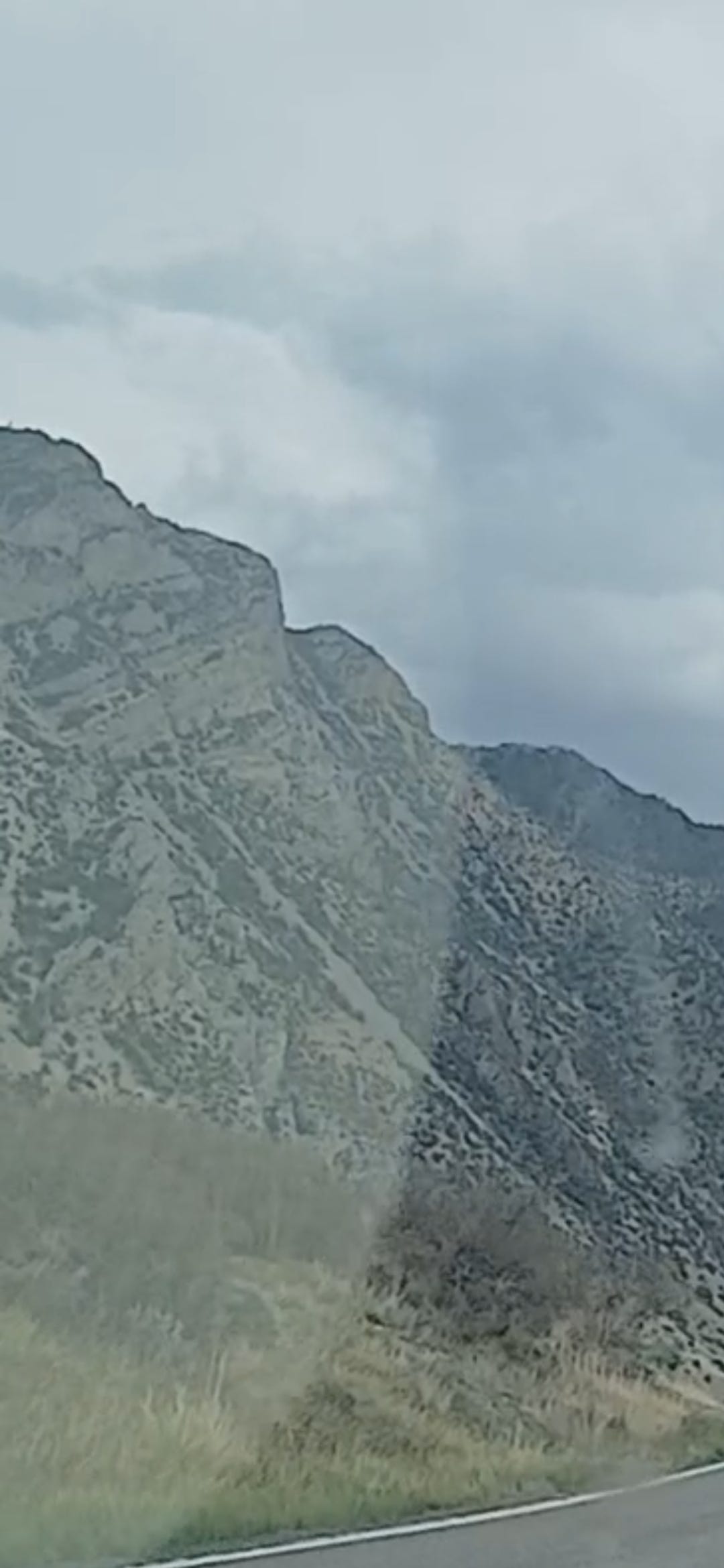
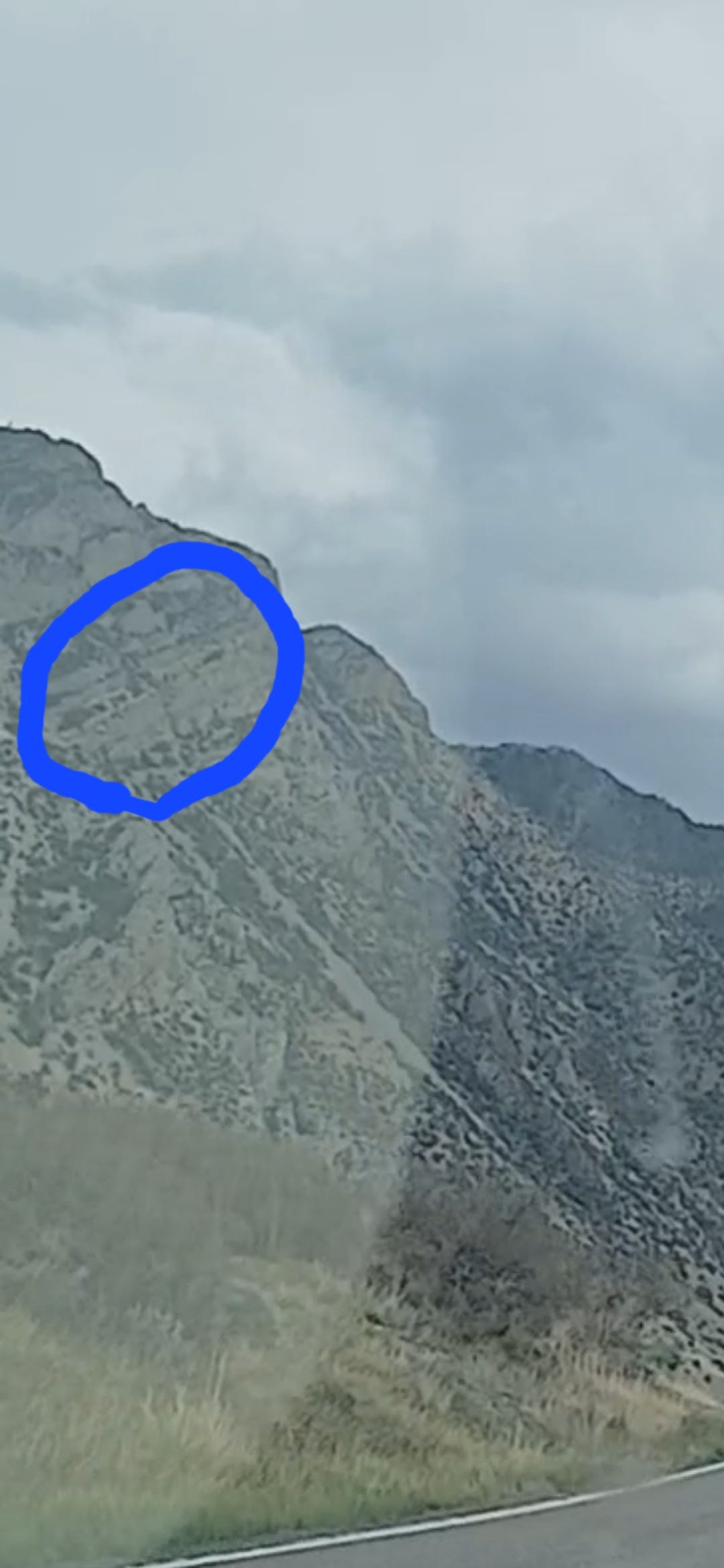
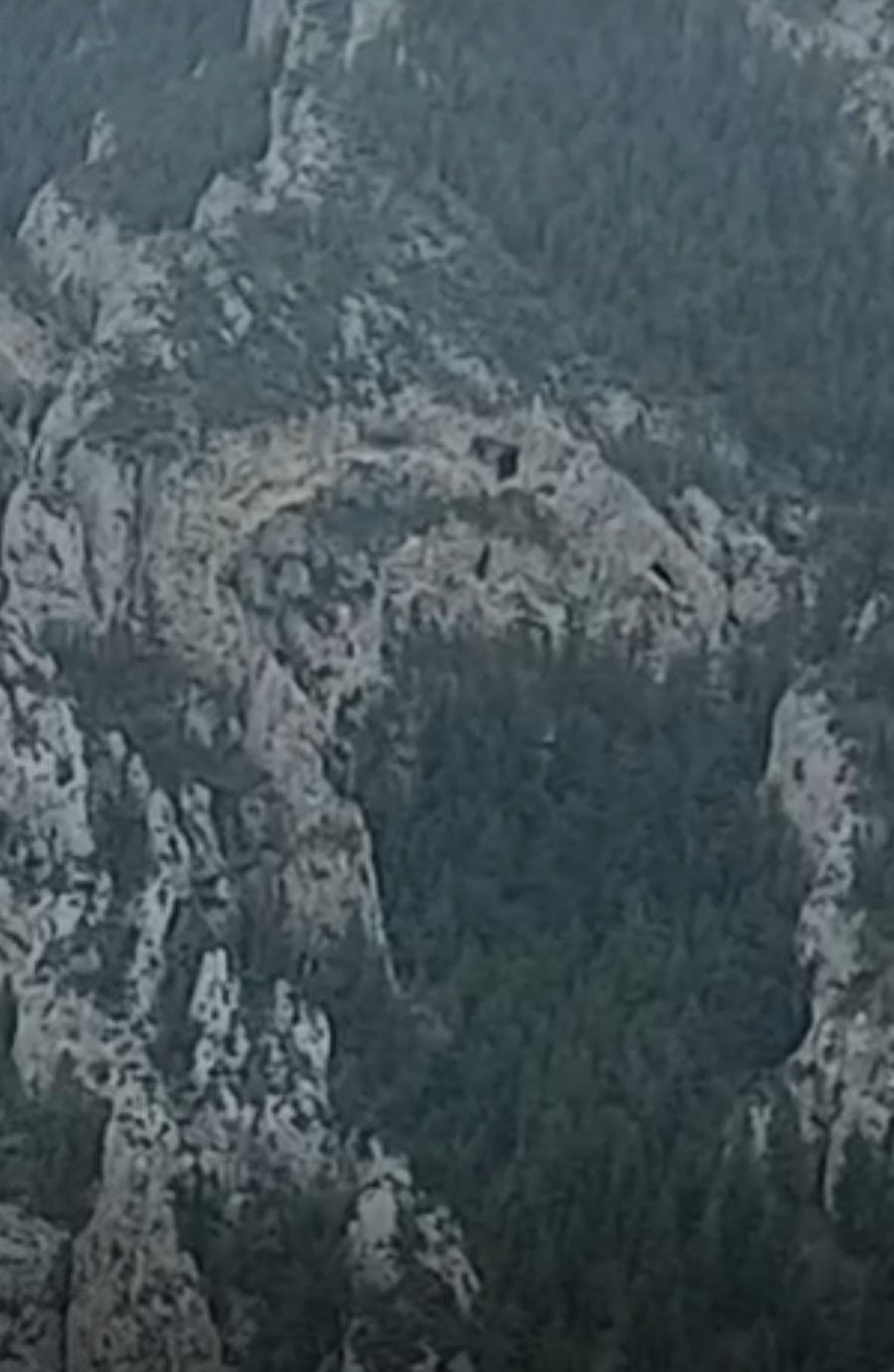
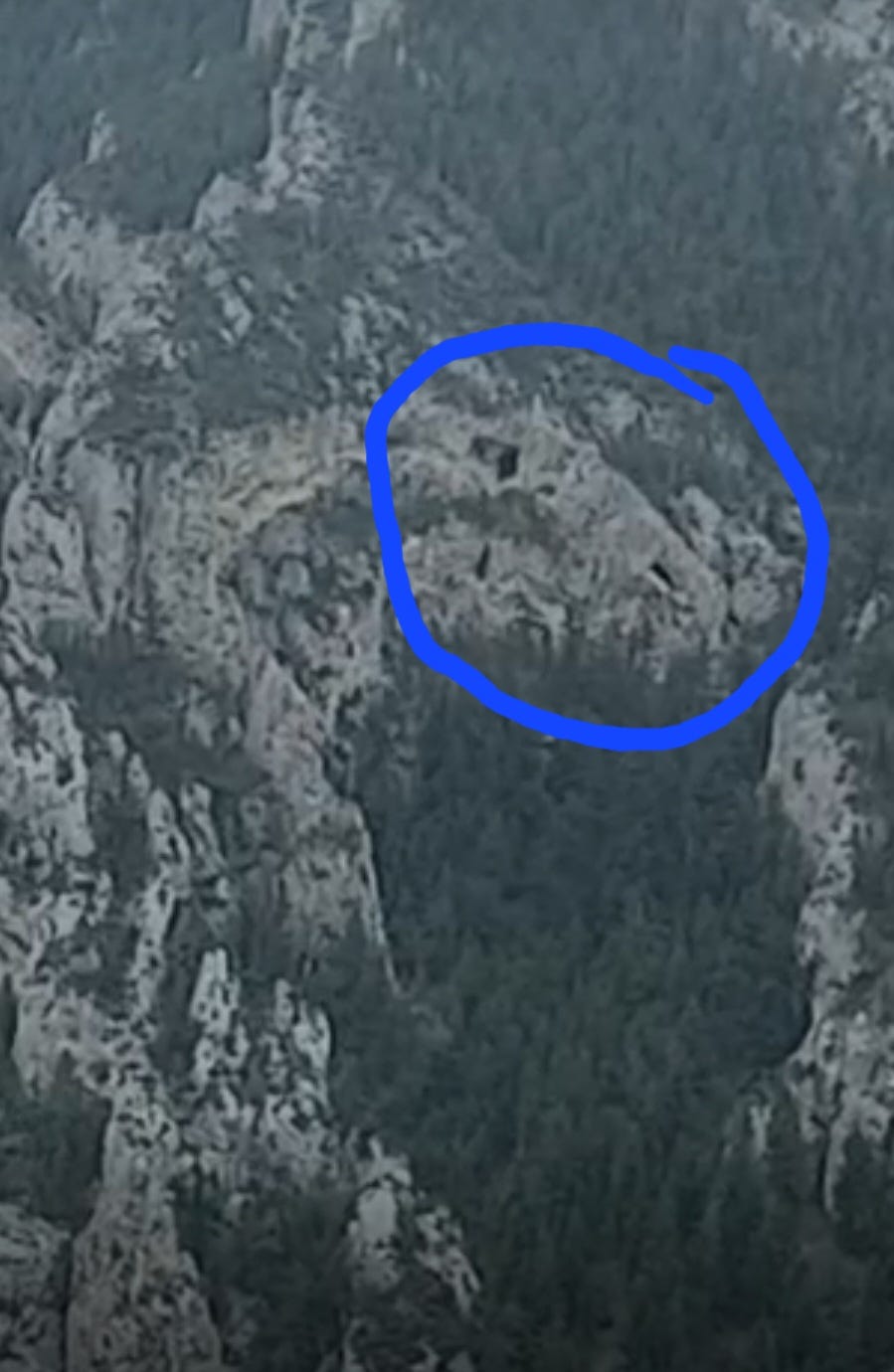
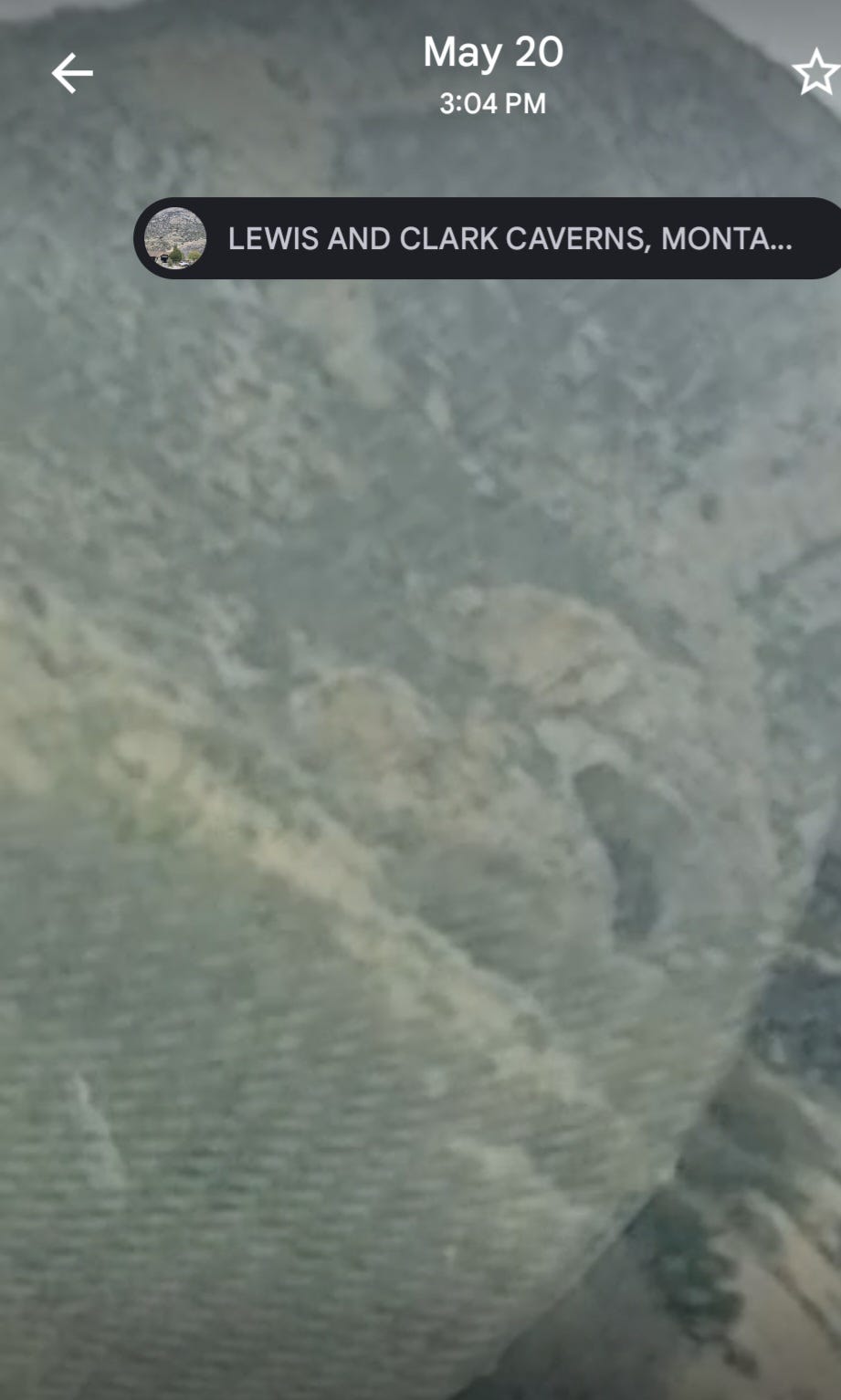
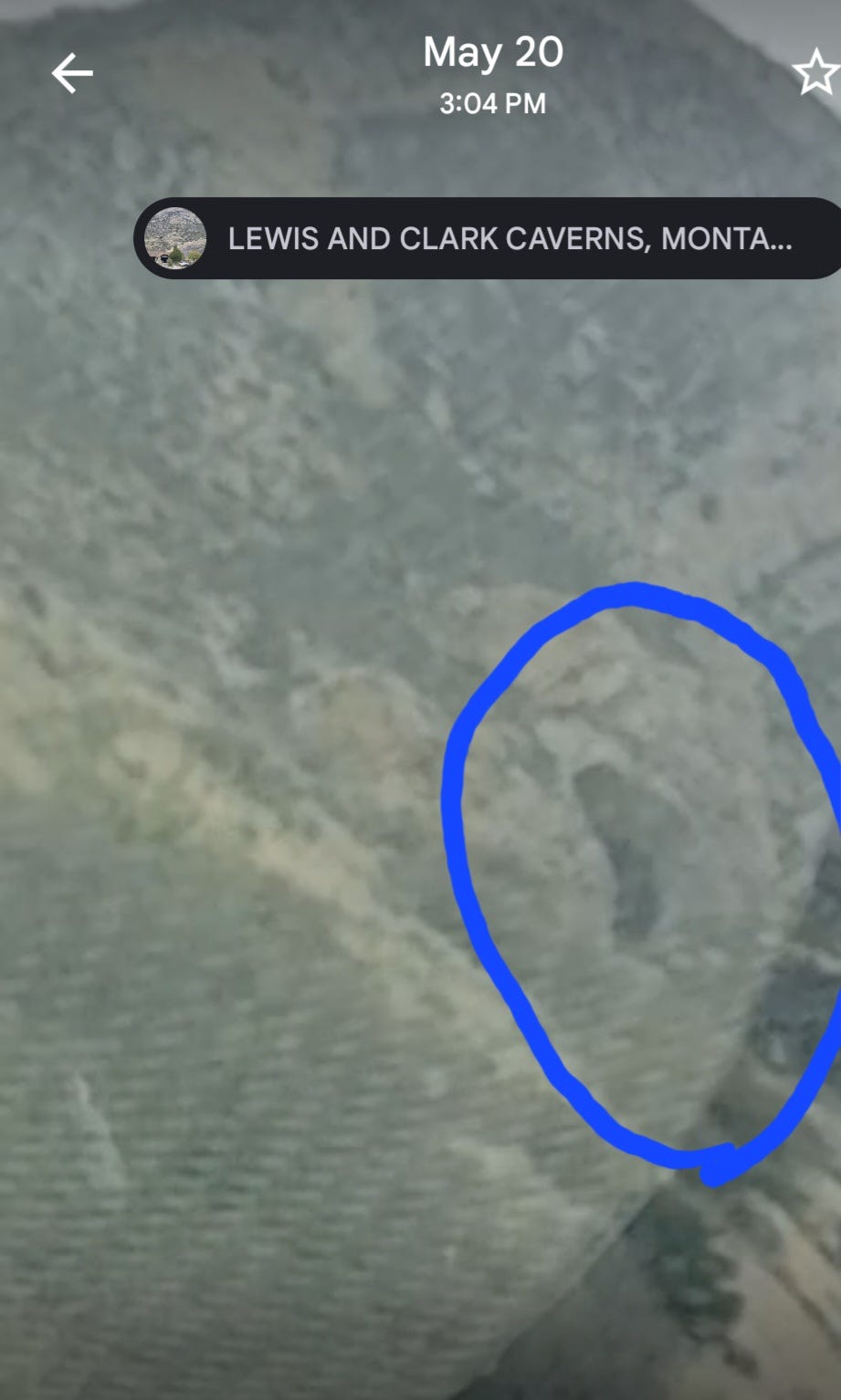
(In the last photo, the opening is about man-height or taller. In the other two photos, the trees provide scale: some of those openings are man-sized, too.)
Those openings and tunnels are found in limestone. Also in dolomite. (And, for me personally, BECKON to be explored!)
Limestone is calcium carbonate. Dolomite is calcium-magnesium carbonate. A small portion of the world's limestone was produced by aquatic organisms, mostly marine, but most of the limestone was ejected to the surface from the subterranean water chambers by the Fountains of the Great Deep during the Flood. No organism produces dolomite; it also came violently up from far below, its magnesium from the basaltic floor of the subterranean water chambers. (Basalt is an igneous rock that contains much iron and magnesium, along with the usual silicon and oxygen; granite also has silicon and oxygen…more, in fact…but has aluminum, calcium, and sodium as its main metal ions.)
Both limestone and dolomite, being carbonate compounds, dissolve in acid, especially limestone.
When the Earth was totally submerged during the Great Flood, and the continents slid, deforming strata, the strata of the Tobacco Root Range were like partially set pudding.
These strata contained much water. Some of it was acidic, patches of it. The volcanic activity during the Flood contributed to it: magmas are generally acidic. But also the decay of countless creatures killed by the Flood: decaying organic material is acidic as well.
As long as everything was submerged, the patches of acidic water dissolved the limestone that they were in. The strata of sandstone, shale (mud), etc. were not significantly affected.
When the Floodwaters started receding into the newly formed ocean basins, the water in the strata started coming out. It seeped out of the sand and mud, etc., but in the limestone (and dolomite), besides seeping, it gushed out of the cavities had dissolved: tunnels of various sizes and lengths resulted, some of their openings visible in the earlier-pictured cliffs above the Jefferson River. The receding Floodwaters scoured out the layers that had occupied the present Jefferson River Gorge, and the water still in the limestone strata of the flanking mountains gushed out, leaving air-filled tunnels.
(There are some caves in the world (I can sense homework coming!! 🙄 Ya, look ‘em up!) where one finds hard mud and animal bones in cavities and hollows of the CEILING. Apparently, decaying animals were floating in muddy water in these caves, filthy water that had rushed in after the initial gushing out, and the mud and critters remains had gotten glued to the ceiling hollows as that second water ran out! Still stuck up there today!)
The tunnels of the Lewis & Clark Caverns have been mapped, a lot of them, and are evident in this block diagram…
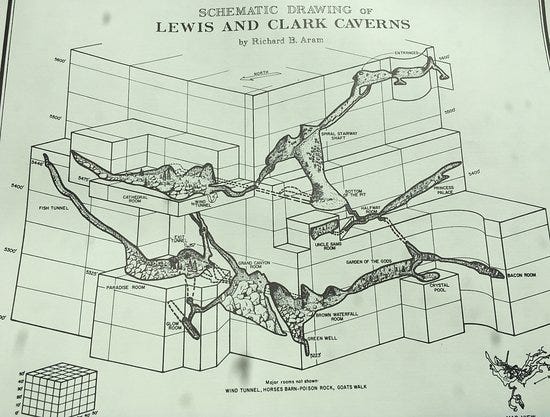
Almost random appearance.
Now, our atmosphere contains carbon dioxide. Some of it dissolves in rainwater and snowmelt to produce weak carbonic acid. That acid will dissolve limestone and keep it in solution until evaporation and/or jostling of the water expel some of the carbon dioxide forming the acid into the atmosphere, in which case some of the calcium carbonate precipitates out…i.e., forms a solid, often sticking to the nearest solid surface. (Acids from plants above, living or decaying, add to the acidity.)
A dramatic example of this is Turner Falls near Davis, Oklahoma, right off I-35, halfway between Oklahoma City and Fort Worth, Texas.
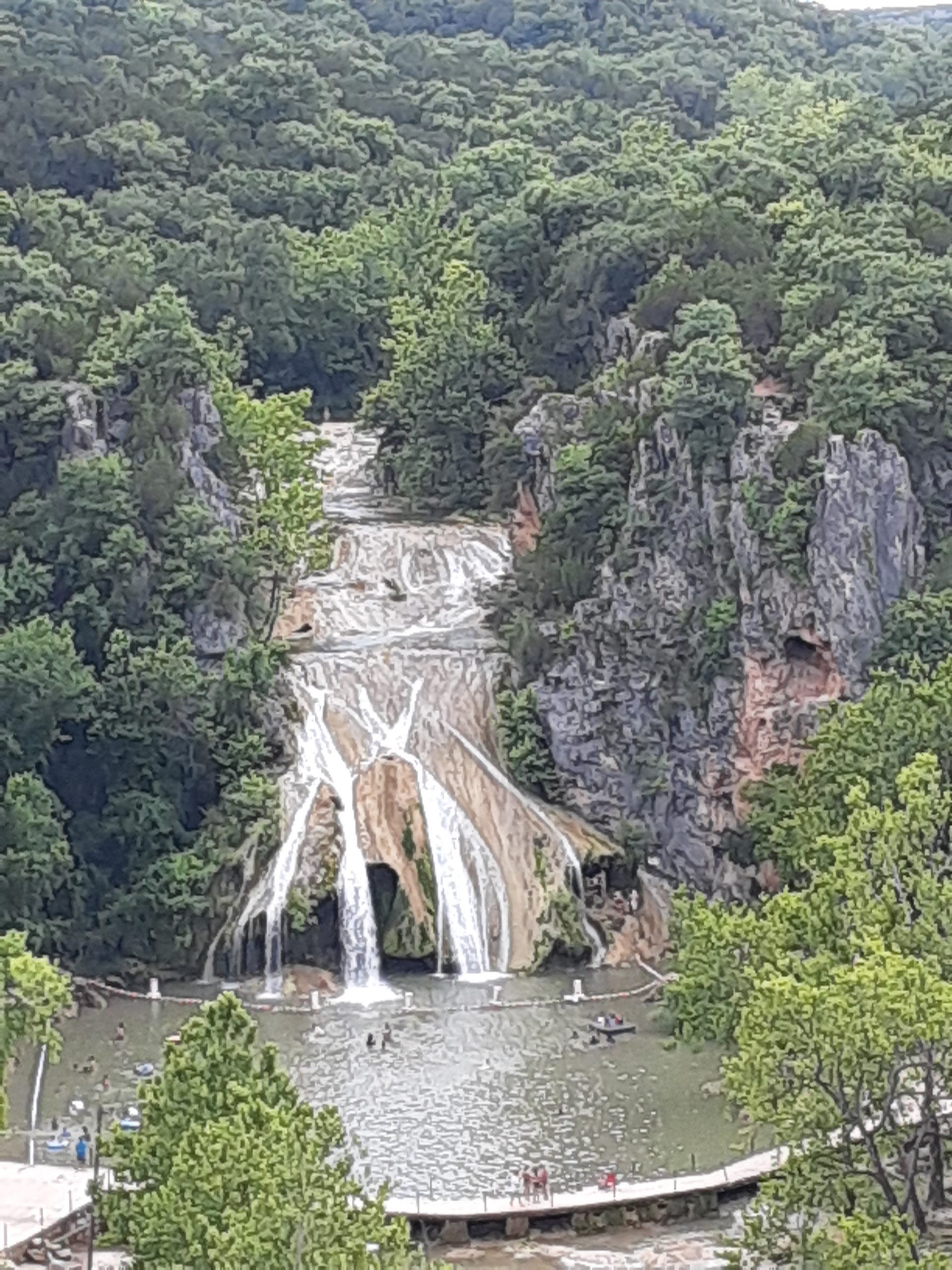
The creek runs out of limestone, and its water is rich in dissolved calcium carbonate. However, the jostling of the water in the creek bed expels carbon dioxide gas, and some of the dissolved calcium carbonate sticks to the creek bed. As can be seen from the photo, the creek bed and lip of the falls are like a waterslide, growing up and out, because of the accumulation. Better there than in your pipes at home! 😅
The Falls are like mineralizing springs and wells. Look ‘em up. (Oh no, MORE homework! 😲) Some of them are tourist attractions. You can put your teddy bear, Chauncey, in the water, and in a few weeks, his name has changed to Rocky, and instead of being comfortingly plush anymore, he's now useful for breaking windows with. You likely can change Chauncey to Rocky at Turner Falls!
Now, that mechanism works in the air-filled tunnels/caverns left behind by the Flood. Rain, snowmelt, and plant/decay acids, seeping through the limestone above a cavern, will dissolve the limestone and drip into the cavern. Evaporation and splashing will cause the calcium carbonate to precipitate out and produce…drumroll please…SPELEOTHEMS! (The technical term for cave formations. Impress your friends! 💪)
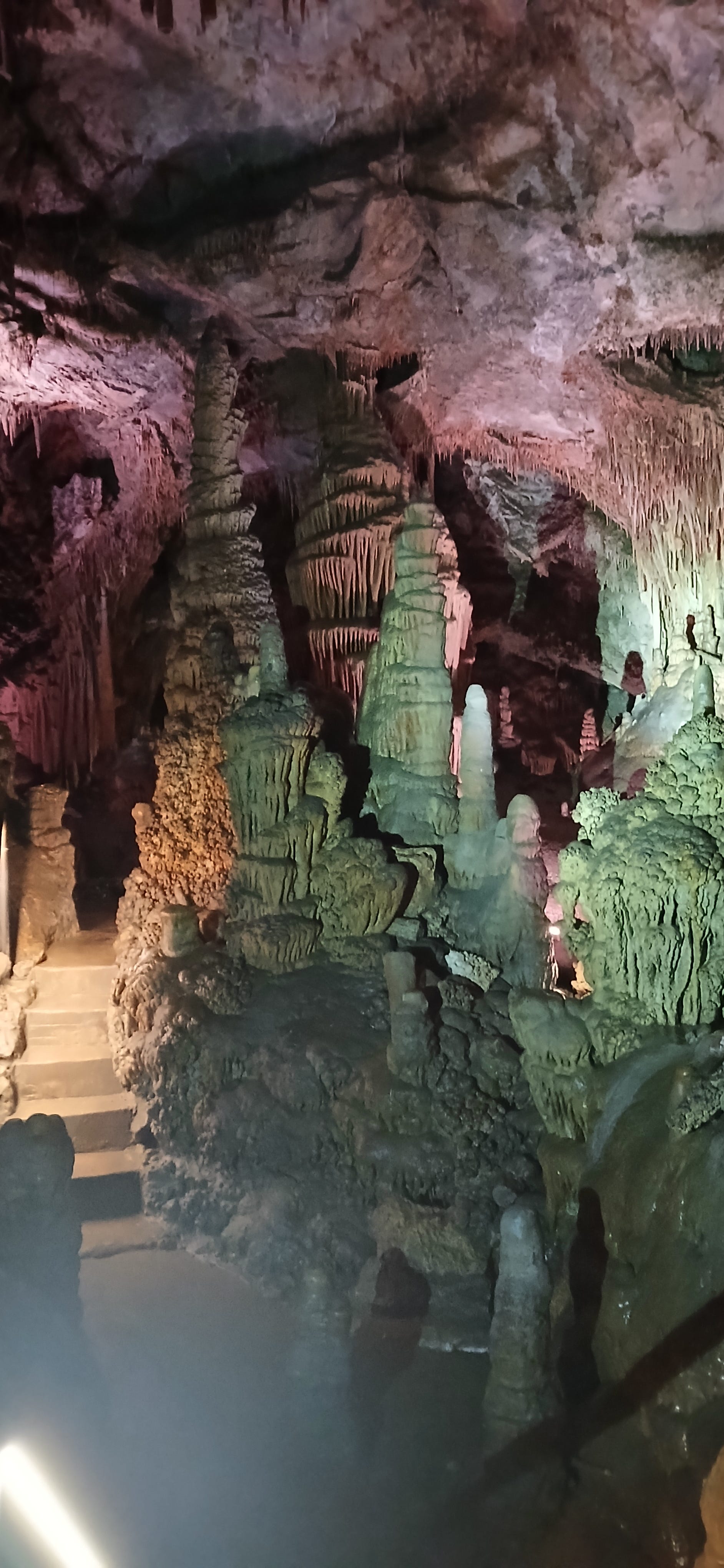
A collection of speleothems are in the opening photo. Next post, we'll consider them in detail.
Until then, Our Lady of Guadalupe, guide and protect us!
No posts
Comments
Nothing yet. Say the first thing.
Sign in to join the conversation.