
A friend of mine was recently at a conference that had nothing to do with the pursuit of longevity but somehow attracted those obsessed with it. When we met afterwards, he recounted a conversation he had there, confounded by what had just taken place.
Friend: How many supplements do you take every day?
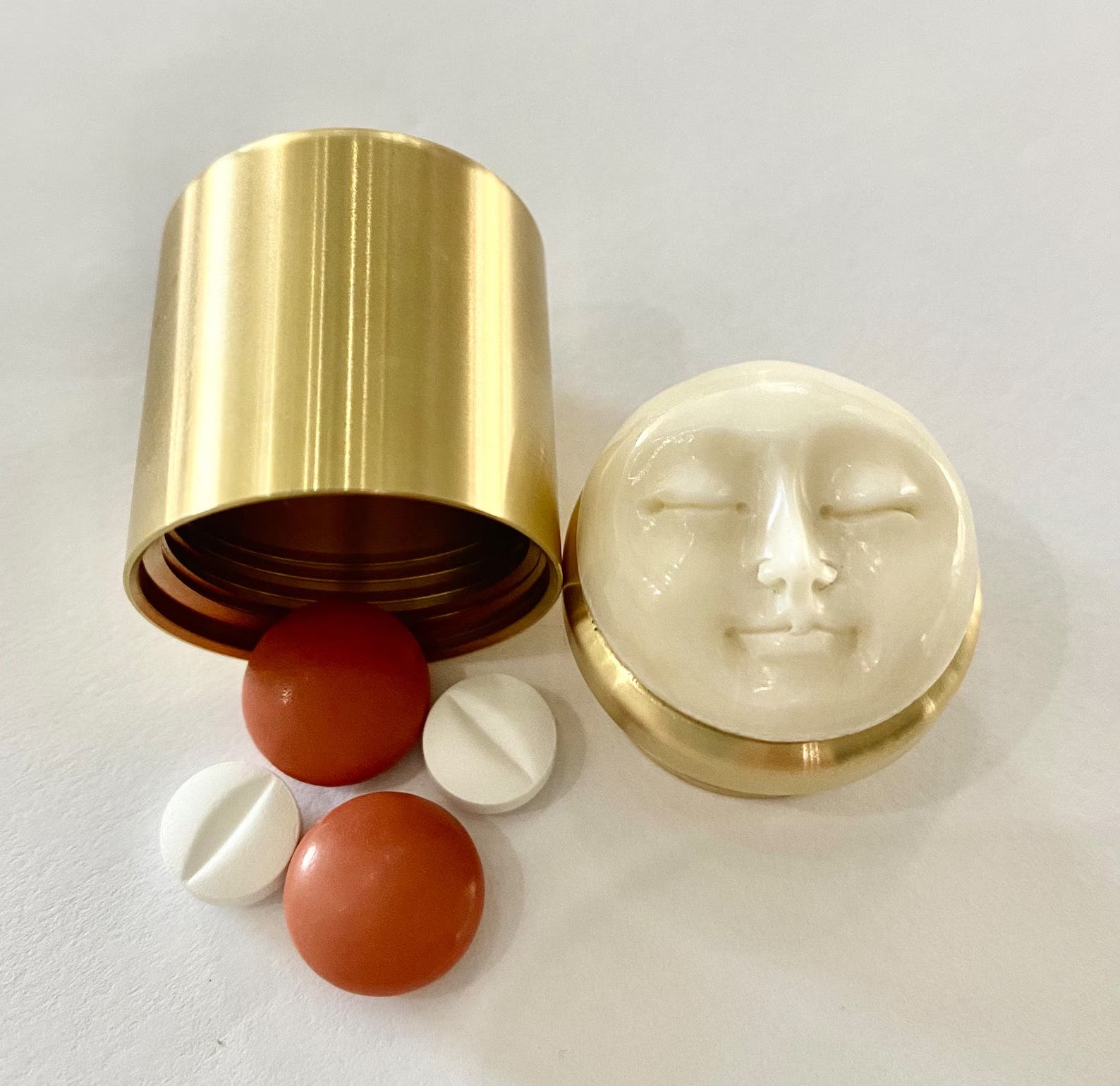
Stranger: I’ve cut down lately. Only 36 now.
A few moments later the conversation turned to death.
Stranger: You believe you’re gonna die?
Friend: Yes.
Stranger: Interesting.
The title of this essay borrows from Joan Didion’s “Slouching towards Bethlehem”, which in turn borrowed from Yeats, who imagined something monstrous moving towards Bethlehem, the birthplace of salvation, to inaugurate a new and darker age. Lately, I’ve started to wonder whether immortality itself might be one of the rough beasts of our time, dragging its endless life towards us.
The certainty we are trying to undo
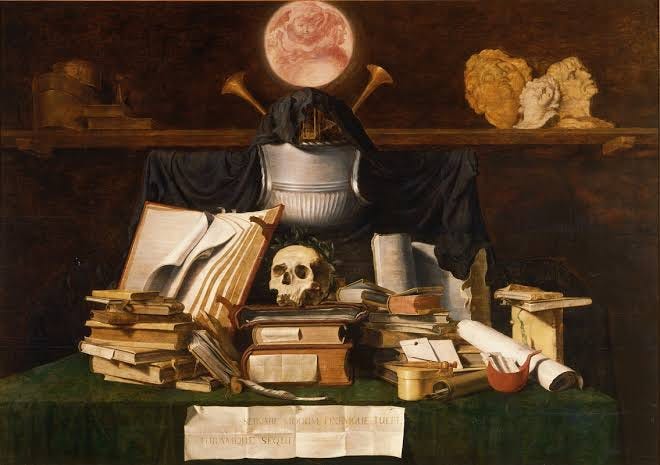
Death is the only thing that’s truly certain in life. One of the unexpected experiences of having arrived past your mid 20s is the fact that you will have seen all kinds of death, way more than you expected. An elementary school friend, an actor that accompanied your coming of age, all kinds of premature losses you weren’t prepared for. Life is as finite as it is fleeting.
We used to say that you can’t buy health, but the miracles of modern medicine have made even health slightly more purchasable. It is telling that Monaco, the country with the highest GDP per capita, also has the highest life expectancy. Time is now the only resource you can’t buy and immortality may therefore become the final luxury good.
The founding father of slouching towards immortality, Bryan Johnson, has turned his body into a full-time experiment in not dying. At the height of his Blueprint regimen, he took more than 100 pills a day, ate his final meal by 11AM and assembled a team of over 30 experts to track his biological data. He even underwent a plasma exchange with his teenage son, hoping his offspring’s youth would restore his own.
If Johnson’s project is to preserve the body indefinitely, others are already imagining immortality without one. In 2018, Sam Altman joined the waitlist for Nectome, a startup then developing a procedure that would kill a person while chemically preserving their brain, in the hope that it might one day be digitally reconstructed (essentially, a technological horcrux).
There are people measuring dozens of biomarkers with extraordinary discipline, sleeping in temperature-controlled beds, swallowing fistfuls of pills or wearing glucose monitors to go buy groceries. All in an effort not to become what every human in the last 300,000 years has always become: a body with no heartbeat, returning to earth.
Aging as a cultural nightmare
Our culture has gradually converted aging from a universal condition into a personal failure with wrinkles, hormonal decline, reduced energy, cellular damage being the primary symptoms.
The other day, I ran into one of my mother’s friends, who hadn’t seen me in several years. We hugged, and she exclaimed “you’re not aging at all, it’s not fair!” in a slightly accusatory tone. I thanked her, but walked away thinking: why should I be aging? I'\'m only 27. A few hours later, a better question arrived: why have we made aging sound like one of the worst things that can happen to a person, and especially to a woman?
Immigrants of time
A century ago, life expectancy at birth in much of the Western world hovered between 55 and 65 years. Today, it surpasses 80 across many wealthy countries. We already live much longer than our ancestors could have imagined. Reaching 80 no longer seems unusual. Ninety is impressive, but not shocking and even 95 feels less miraculous than it once did. There is nothing sinister about wanting a 60 year old to feel 40, or an 80 year old to retain the strength and mental agility of someone much younger. But longevity is a road that lengthens even as the landscape grows less recognisable. The longer we live, the further we travel from the world that we once considered our own.
To grow very old is, in some sense, to become an immigrant in time. By 80, many of the things that once made the world feel familiar may have disappeared: how people communicate, what they believe, what they wear, even the words they use. You can adapt of course, many of the older people I know move through technological change more gracefully than those half their age. But there is a reason our grandparents so often say things like “in my day” or “I hardly recognise the world anymore”, you can learn to navigate a new world without feeling at home in it.
Another strange thing about being in your late twenties today is that you can remember a world far less saturated by technology. One computer shared by the whole family, a brick phone that could call, text and play snake. In my relatively short lifetime, we have moved from that world to one in which we carry powerful computers in our pockets, rely on AI agents to reason on our behalf and watch cars drive themselves. I can only imagine how foreign the world might feel another 60 years from now.
Mortality as a gift, aging as a privilege
The optimisation paradox, which I’ve written about in my other essay, produces a strange inversion: a person can become so devoted to extending life that they gradually remove everything that makes it feel alive: spontaneity, late nights, indulgence. We want immortality to free us from death. But what of it when it arrives as endless bodily surveillance, a life organised around avoiding risk, digital replicas mistaken for continued existence and an inability to accept impermanence or loss?
Life’s limited nature is what gives its value shape. Deadlines force decisions. Finitude demands selection. Immortality sounds like freedom, but would it not erase our sense of urgency, commitment and meaning?
Immortality seems a bit like an orgasm that never ends, a plate full of delicious food that keeps refilling itself in front of you, or a joke that cracks you up so much you can never stop laughing. In the same way that absence is necessary for longing, death is not only what extinguishes life, but what allows it to burn bright.
The strange beauty of time is that, while none of us knows how much of it we will receive, it passes at the same pace for everyone. You cannot know whether you will reach the end of a year, but if you do, your year will have been exactly as long as anyone else’s. Time is unequal in what it gives us, but exacting in the equality of every hour.
I have always been puzzled by mothers who envy their daughters’ youth and beauty. They had their turn, and we will lose ours soon enough; in that sense, time is fair in a way very few things are. Of course, it’s important to note that youth itself is not distributed equally. War, illness, pandemics and the circumstances into which we are born all shape how freely we are able to experience it, as do the expectations placed on young women about when pleasure, frivolity and the pursuit of fun should give way to seriousness.
Another friend of mine always says that aging is a privilege. In a culture obsessed with extending youth, it is a difficult conviction to maintain, but perhaps one worth forcing down your own throat until it becomes an acquired taste.
The immortality that matters
My relationship with my own death has been largely peaceful, I’ve given it very little thought over the course of my life. Now that I’m thinking about it, maybe some part of me believes that if I never call its name, it won’t call mine. But I don’t really think that’s the case as I’ve always been aloof about the things people stress about which we have no control over. When I’m flying, I feel a strange sense of peace that has nothing to do with an illusion of safety. I’m much more haunted by the control we have in everyday choices, by the way all our choices stack up and compound, by the domino effect, the butterfly effect and sayings like “you’re the sum of the 5 people closest to you”, which remind us that we are the directors of the lives we end up living.
When my friend told me the story, it was not the 36 supplements that stayed with me. It was the word interesting, delivered as though belief in one’s own mortality had become an eccentric position. To me, the only attractive form of immortality is the kind Dostoevsky, Audrey Hepburn or Amy Winehouse achieved: leaving behind something that continues moving through the world after you are gone.
Should the day ever come when I am asked to choose between dying and living forever, all this conviction may abandon me and my hand may drift towards yes. I will probably revise this position many times as I move through a world increasingly hostile to aging and uniquely unforgiving of women who show it. But as things stand, I have no desire to join the slouch towards immortality. I would rather force myself to see ageing as my friend does: not as a failure, but as the privilege of still being here.
No posts
Comments
Nothing yet. Say the first thing.
Sign in to join the conversation.