
There’s a Substack post making the rounds on the topic of “Orthodox burnout” (the last I looked, it had 582 “likes,” so it has obviously struck a chord). I applaud the author for his honesty. He’s a father, a husband, and works during the week, and so he is well within his rights to dig in his heels and not push his ascetical life beyond realistic limits. A sort of “muscular Orthodoxy” (for lack of a better designation) is fashionable, especially in the U.S., among young male converts. It’s often promoted by converted twenty-, thirty-, and (occasionally) forty-something Orthodox podcasters and influencers. (I tend not to use the term “Orthobro,” being little more now than indiscriminate billingsgate, indicative of an incapacity to distinguish between converts who really are noisy and problematic and those who are merely young, painfully sincere, zealous, but callow.) That burnout is frequently a consequence, after long effort, for those who have felt pressured into adopting a much too idealistic regime of prayer, fasting, reading, church activities, and the rest — whether actually pressured from without or feeling within a drive to keep up and the guilt feelings that attend the mounting protests of one’s body and mind — is scarcely surprising.
To all this, I have one word of advice. You have probably heard it before. It’s this: “Pray as you can, not as you can’t.” It comes from the sensible ascetical theology of Abbot John Chapman (1865 - 1933), a sensible twentieth-century English representative of the sensible Benedictine tradition. Did I mention that he was sensible? Well, he was, and eminently so. And I don’t apologize for quoting a Roman Catholic writer in this instance. Even Orthodox of the “muscular” sort might benefit from becoming better acquainted with the reasonable balance found in the Benedictine tradition (and “this little rule… for beginners”). After all, St. Benedict was pre-schism, as much Orthodox as RC (there were Benedictines on Mount Athos as late as the 13th century), and Abbot Chapman’s wisdom is applicable on both sides of “the Bosphorus.”
The Pragmatic Mystic: An Orthodox Miscellany is a reader-supported publication. To receive new posts and support my work, consider becoming a free or paid subscriber.
“Pray as you can, not as you can’t” is sound ascetical advice; with it one can say “Fast as you can, not as you can’t,” “Give as you can, not as you can’t,” “Keep vigil as you can, not as you can’t,” and so on. It’s sound ascetical advice because reason and balance are congruent with discipline. A father, husband, and employee needs time to be a father, husband, and employee. He also needs to relax, to think, contemplate, exercise, do chores, maintain the car, and everything else that daily life entails (and, of course, this same sensible approach applies to women). It’s plain common sense. (Even in the monasteries under the Benedictine rule, the daily offices were kept to a comparatively moderate length because, quite sensibly, Benedict knew that monks and nuns had work to do.)
At any rate, that’s my word of advice to those complaining or worried about “burnout.” It’s okay to think through these things, adjust your time and strength as you must, and get it into your head that Christ has you well in hand, even when you’re dozing in a hammock.
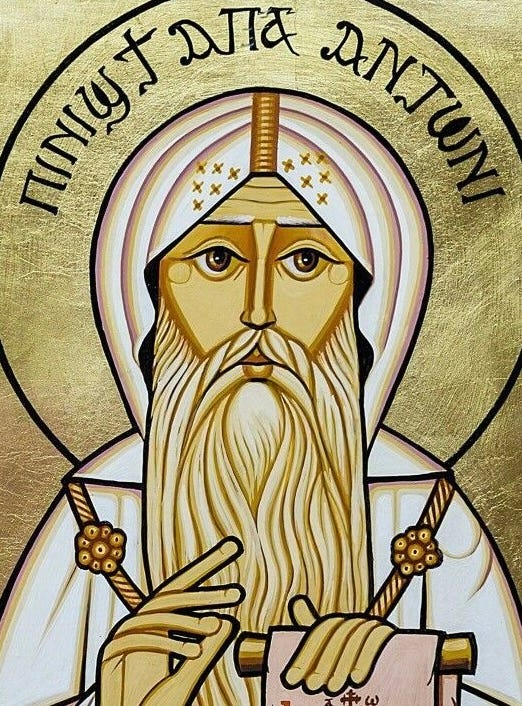
A hunter in the desert saw Abba Anthony enjoying himself with the brethren and he was shocked. Wanting to show him that it was necessary sometimes to meet the needs of the brethren, the old man said to him, "Put an arrow in your bow and shoot it." So he did. The old man then said, "Shoot another," and he did so. Then the old man said, 'Shoot yet again," and the hunter replied "If I bend my bow so much I will break it." Then the old man said to him, "It is the same with the work of God. If we stretch the brethren beyond measure they will soon break. Sometimes it is necessary to come down to meet their needs." When he heard these words the hunter was pierced by compunction and, greatly edified by the old man, he went away. As for the brethren, they went home strengthened. (Sayings of the Desert Fathers: The Alphabetical Sayings, Sayings of Abba Anthony, #13; translated by Benedicta Ward)
Speaking of St. Anthony the Great, I recently enjoyed watching this documentary, and you might too. It’s an engaging blend of artistic craftsmanship, historical investigation, and cinematic visuals. The overall question is: “What makes St. Anthony the Great ‘great’?” And the answer is both moving and spiritually satisfying. It is time well spent.
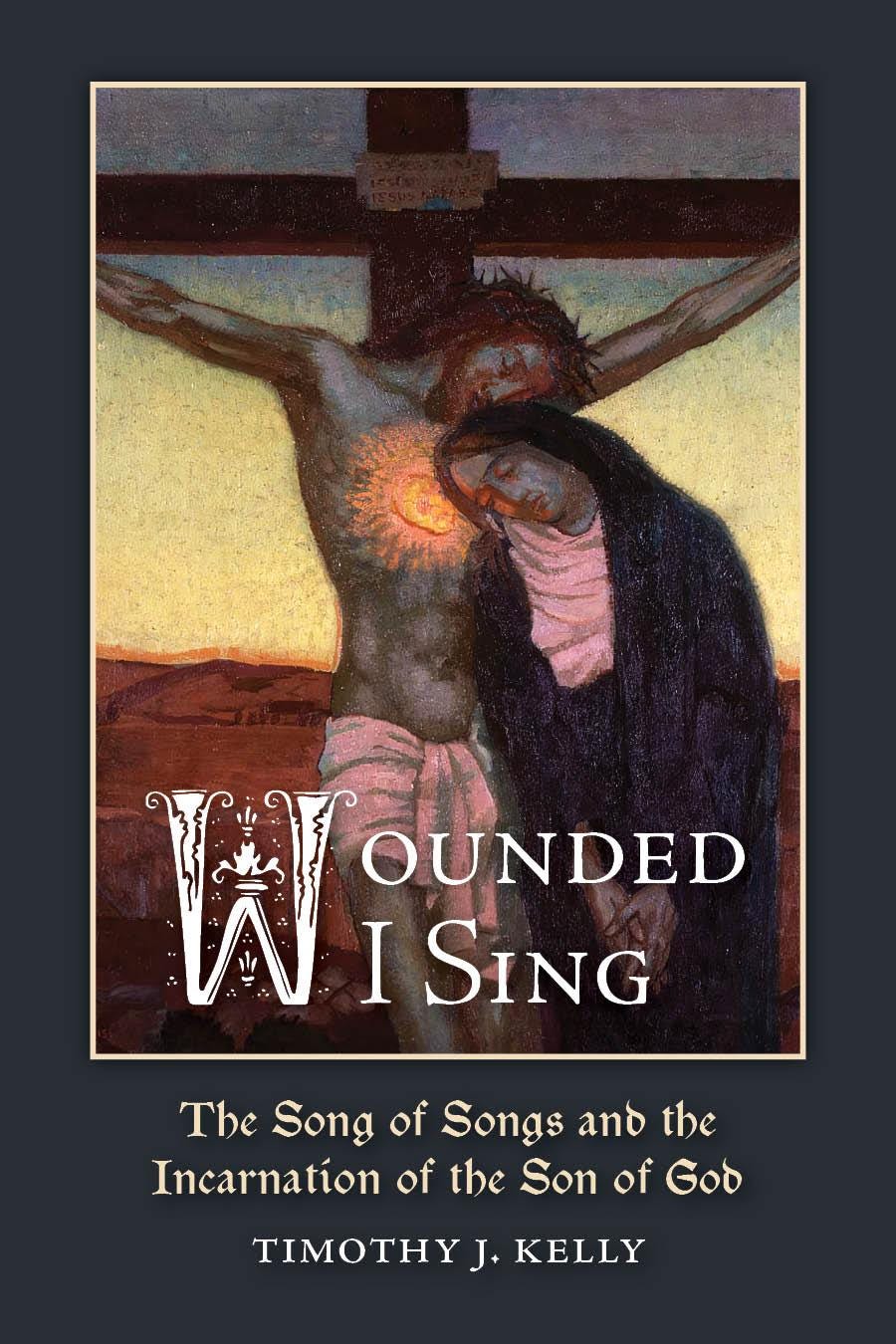
Finally, I wish to draw your attention to a soon-to-be-released book from Os Justi Press that you may wish to pre-order just as soon as you can do so. Scholar, composer, author, and publisher Dr. Peter Kwasniewski approached me with it some weeks ago to see if I would read and endorse it. And I’m appreciative that he brought me on board, because Timothy J. Kelly’s Wounded I Sing is truly a tremendous book, despite the modest size. I reproduce here, then, my full endorsement (which I suspect, given its length, will be shortened for the book’s cover):
I underline when I read. If I had previewed this superb book in hard copy, every page would, without a doubt, have been decorated with my underlining and marginal annotations (including the footnotes). This is a profoundly Catholic work, which I, as an Orthodox reader, can endorse as streaming from the common source of both our traditions. Its integration of sound biblical exegesis, patristic learning, mystical insights, citations from the best theological minds of the ages (from the Cistercian Fathers and St. Thomas to Paul Quay), and matters liturgical and sacramental reveals how internally consistent the Great Tradition is. Most importantly, it's about the divine eros and the union established eternally between our Incarnate Bridegroom and his people. This is, quite simply, a beautiful book, and Timothy J. Kelly is to be commended for giving us a text that illuminates Solomon's Song as few others in recent times have done. It deserves a place on the bookshelf next to Origen and St. Bernard.
I will be purchasing a hard copy for myself when it appears, and I plan to underline it throughout. I’ll undoubtedly purchase copies for friends, as well.
The Pragmatic Mystic: An Orthodox Miscellany is a reader-supported publication. To receive new posts and support my work, consider becoming a free or paid subscriber.
Comments
Nothing yet. Say the first thing.
Sign in to join the conversation.