
The (then) recent dot com bust, 9/11 and hanging chads were weighing on the minds of many Americans, including Jeff and Laurie Quint, at the dawn of the century. With an active seat to the state and nation’s economy as a CFO of the celebrated technology company, Involta, Jeff’s numbers mind was computing retirement probabilities.
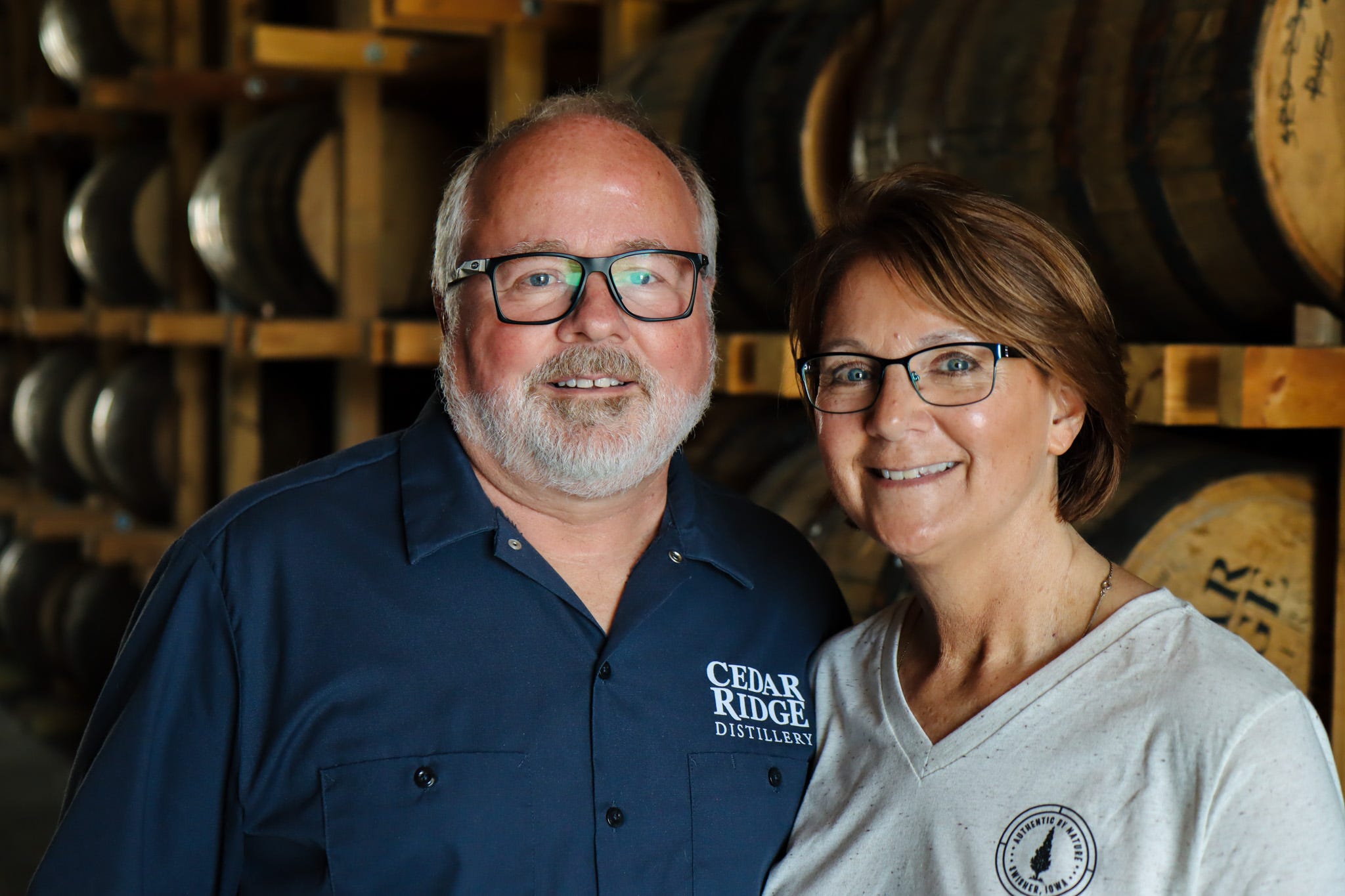
Spouses often have a way of cutting through the fluff and Laurie inquired into what he intended to do and “love” in his imagined retirement. His response foretold the future:
if I spent 60 hours a week in a distillery or winery, you know, it wouldn’t feel like work to me
Iowa Wine Growers Association reports that the Loess hills in Western Iowa was once a landscape of grape vines. Grape production grew in Iowa from the first vineyard in 1857 to sixth in the nation by 1919 (the inopportune year when Prohibition began nationally even though Iowa’s began four years prior). Production suffered through the rest of the century until early 2000s. French grapes remained the mainstay, accompanied by a handful of native American grape varieties. Jeff traces his genealogy via his great grandfather who immigrated to the US in 1881 from Wintrich, Germany. His family name lives on in the prominent winery in the Moselle wine region of his ancestral Germany-Weingut Quint.
Contemplating their past and future, The Quints focused on the lightly rolling region between Cedar Rapids and Iowa City for their vineyards and planted 5,000 initial vines in 2003. As the vines, a hybrid of classic French vinifera and native American varieties to survive the harsh winters and the region’s biology, matured, the Quints began planning their launch in 2004. That’s when realization struck about what might be more midwestern than corn as their crop instead.
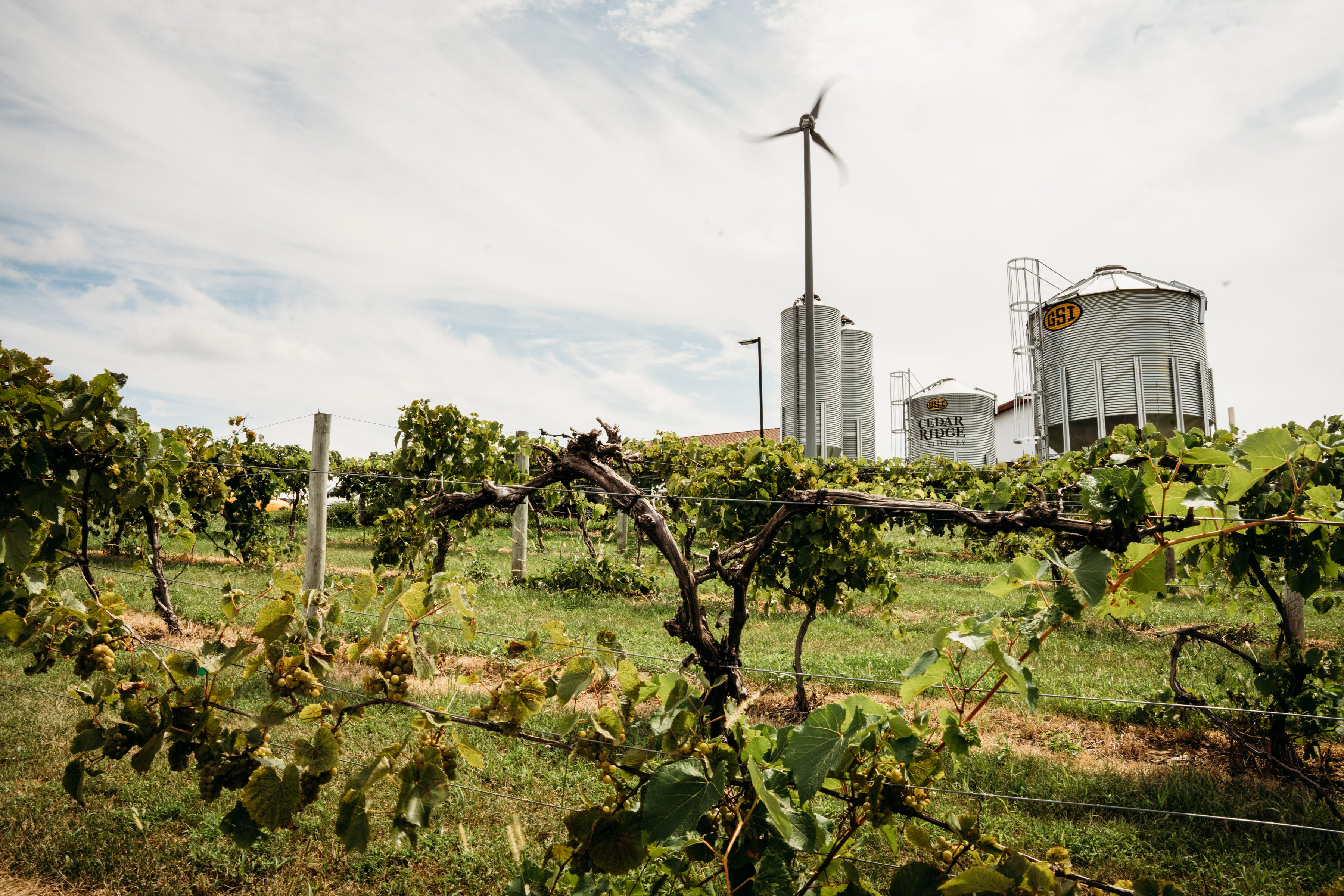
In 2004, Iowans were importing nearly $350M worth of spirits. With corn specifically, we were producing and selling $4 worth of corn, only to receive it back in form of a $40 bottle of spirit.
The early 2000s were also a resurgence of interest in American whisky after a brutal two decades where bourbon and rye industries had been decimated. The storied Michter’s trademark, for example, had sold for a mere $250 in the prior decade!
Iowa Economic Development Authority (IEDA) showed up as a valuable resource to the Quints. As distilling spirits requires a much higher level of licensing by the local, regional, state and federal authorities, IEDA’s support helped the distillery acquire their first still, establish the physical infrastructure required to begin distillation (after certification - as readers have learned from prior posts) and secure it from miscreants. In 2005, Cedar Ridge distillery launched1 as Iowa’s first distillery since prohibition.
Iowa has a distinction in prohibition. Even though farm distilleries abounded in the early days of the state with farms using locally grown wheat, rye and ultimately corn to distill spirits, the temperance movement impacted the state earlier than national rules. In Iowa, the legal sale of spirits stopped in 1916, four years before national prohibition bans2.
Did you know that prohibition actually increased criminal activity in multiple ways? As spirits were “cooked” at home, the person usually in the kitchen also applied her cooking steps to this new recipe, tasting throughout the process and ultimately developing a taste for a liquid previously largely consumed by men. Bribing law enforcement became a survival prerequisite. Smuggling spirits on the state’s backroads and highways a necessity. A fascinating fictional tale in Moonshine by Moonlight3 by Iowa author Ann Hanigan Kotz imagines how this work might have progressed in Carroll County, IA. Similarly, Wayne Curtis’ book, History of the New World in Ten Cocktails, outlines the many second-order societal impacts of prohibition in America.
Retirement is often confused by the action of stopping work. Jeff, one of the lucky few, was able to articulate it as a part of life to being able to do what he wanted to do. His new career opened in downtown Cedar Rapids in 2005 next door to Ben’s Beverage Depot, a liquor store. Iowa law then didn’t allow spirit sales directly to consumers, blend cocktails with their own spirit, or provide a tasting room.
The relationships with IEDA expanded and the company found itself lobbying for its economic interests at the state capital. Iowa’s capital becomes a flurry of activity in the first three months of the year and Jeff, unable to afford a lobbyist, showed up on his young company’s behalf. The efforts over the next TEN years led to the changes that allow the company to sell its own spirit in their distillery shop (a must visit) and blend interesting concoctions at the attached bar, restaurant and wedding venue.
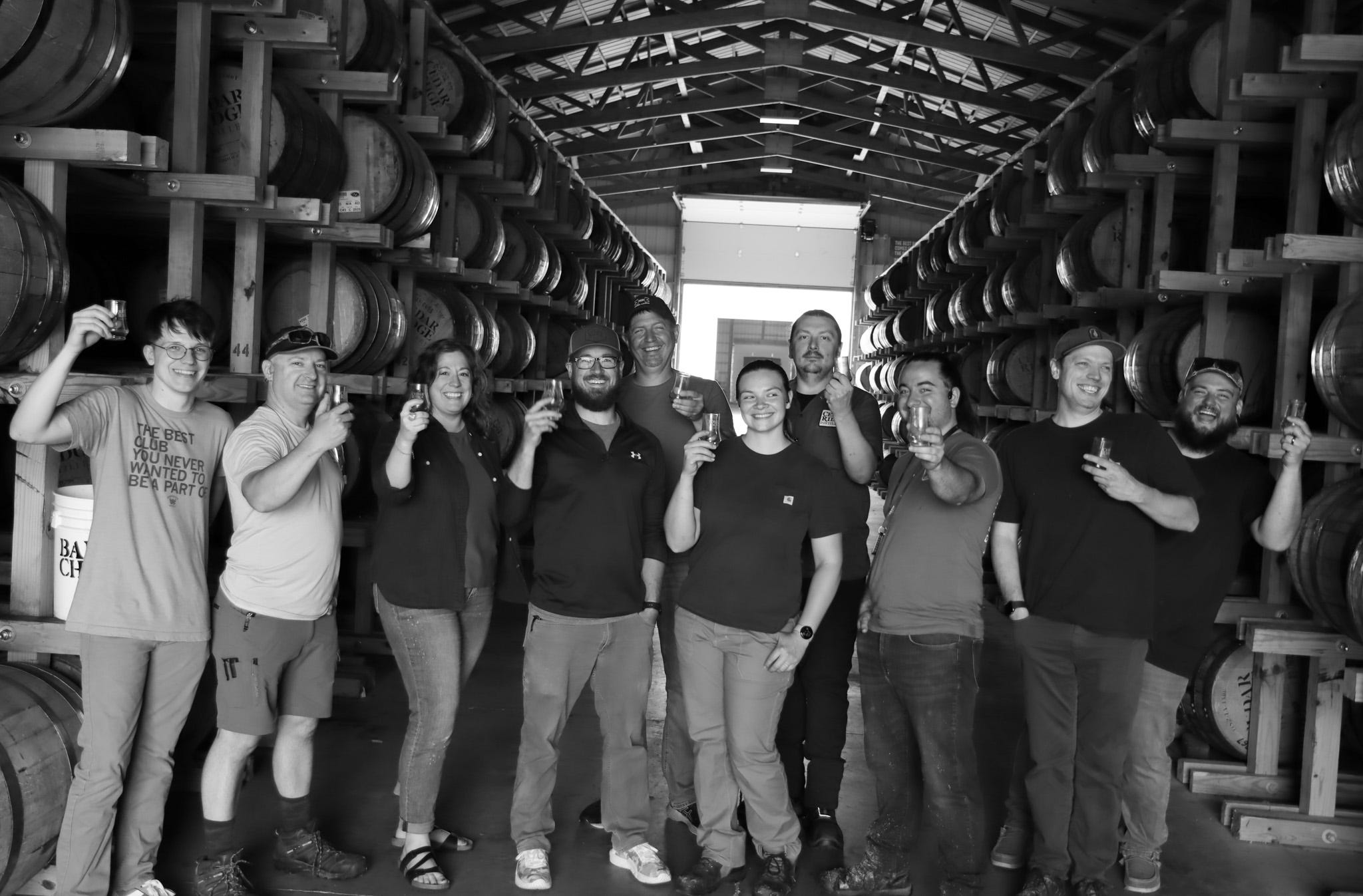
Unlike Scotch, American whiskies are consumed when they’re relatively young, often in 2 to 4-year vintages. Although aficionados today are grateful for the downturn of the 1980s and 90s when spirit aged unintentionally and only now commands significant premiums, Cedar Ridge’s early product was good and set aside for aging. Aging happens in rickhouses, warehouse-like structures designed to securely store 200- and 500-liter barrels filled with new spirit, often stacked 4- or 5-high on shelves made specially for their size and weight.


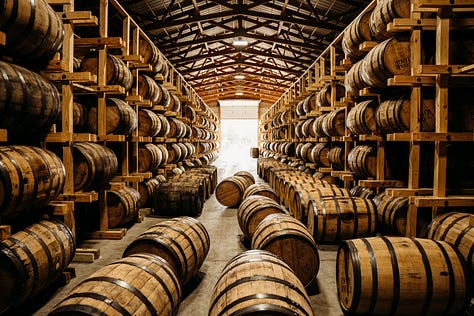
Rickhouses need to provide airflow for the angels to swoop down and collect their angel’s share, the approximately 2% of spirit that evaporates from the barrels each year. Airflow also allows the regional terroir to enter the spirit, giving the whisky its regional flavor (so, no hog lots near our favorite distilleries please). They also need to control against potential fire hazards by channeling spirits from burning barrels away from other facilities. Cedar Ridge was building a new building each year. In fact, on the cold March 2026 morning of my visit, earth moving equipment was busy working amongst the rickhouses and the main office.
Distilling and Aging whisky faces a significant challenge in its early years, no matter how wonderful the spirit. The brand must be built to be unique and recognizable, roll off the tongues of patrons in restaurants and bars, be visible in industry publications, compete against brands established over America’s 250-year history, and taste good enough to become a repeat order.
Jeff, as they built the company, remained employed in his role as CFO at Involta, a well-regarded and celebrated technology company since its launch in 2007. Involta grew significantly in the subsequent decade yet afforded Jeff sufficient time to build Cedar Ridge. By 2016, however, Cedar Ridge was no longer a side hustle and Involta was a large enterprise itself. Jeff felt it only fair to dedicate the next chapter fully to his baby and resigned.
A small business entrepreneur at heart and soul, Jeff often shares a lesson-built the business of your dreams in your spare time. If you aren’t willing to submit your spare time to your dream, you are not cut out to own and run it. A small business is like your child-until the child is securely asleep in their bed, you aren’t ready to go to bed either.
I agree! 40 hours/week on the paying job, the remaining 128 on your business.
Sermons aside, the early years in downtown Cedar Rapids were quite entrepreneurial.
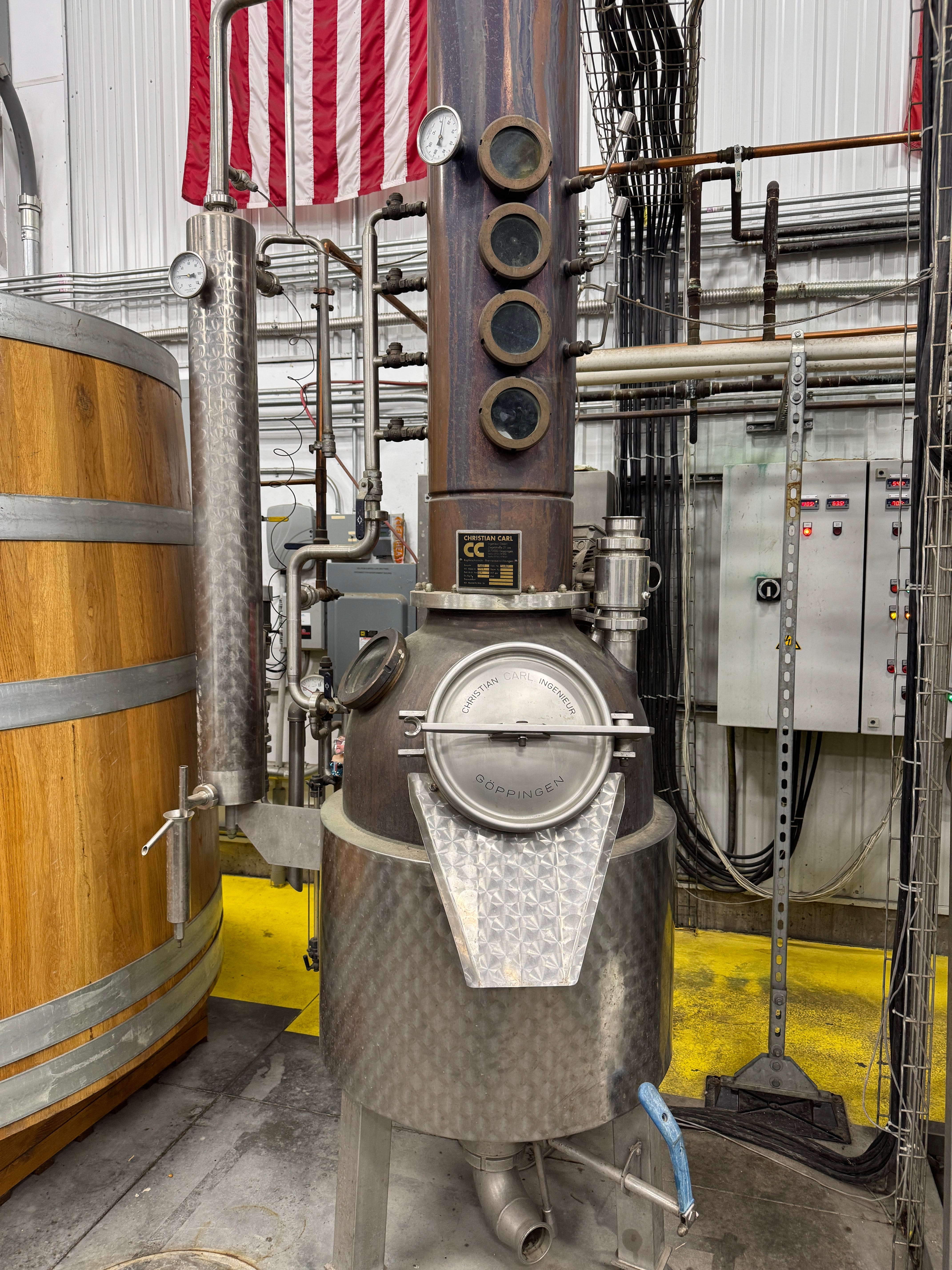
Once yeast has completed its work in the washbacks and spirit is ready to be distilled, the liquid is moved into a still and heated. Heat causes vapors to rise up the still and move through condensing coils to be converted back to liquid. This distillate arrives clear, concentrated and strong. After being separated into heads, hearts and tails, it is diluted appropriately for the targeted spirit.
Look through the porthole above - that’s spirit in the making as alcohol evaporates and is captured before water or other impurities have a chance to chase it
It is almost ready at this time to be sold as vodka. If the liquid in the still had been adjusted just so with juniper berries and other botanicals, it might be on its way to become gin. Or it can be diluted by the master distiller for oak barrels for a years-long rest in the safe environment of rickhouses to age as whisky. Naturally, the product sold by most distilleries in their earliest years, then is vodka or gin to provide early sources of revenue, to begin establishing a brand, and refine the manufacturing, operational, and distribution processes.
Cedar Ridge followed a similar trajectory, selling vodka and gin in downtown Cedar Rapids as the young whisky aged in barrels. Those early barrels, made of virgin oak at domestic cooperages and charred for the distillery’s unique recipe, allowed the spirit to obtain its character, color, taste, and identity.
The company continued to mature alongside its whisky. It set itself a BHAG (big hairy audacious goal) to become the #1 selling bottle of Bourbon in Iowa. It is a BHAG because national names roll off tongues without effort and require significant advantages in taste, price, brand recognition, mixability, availability and fandom. This BHAG was finally achieved in 2020, and Cedar Ridge remains the bestselling bourbon in Iowa six years in a row.
Consistent across Iowa distillers I’ve researched so far, Cedar Ridge also remains an entrepreneurial distillery at heart. Unwilling to stick to a safe mash bill, labeling, bottle shape or size, expressions, maturation age, partnerships or barrels used for aging, Cedar Ridge’s products have garnered attention from national competitions which have awarded gold medals and ratings in the high 90s (on a 100pt scale).

Cedar Ridge brings the familiar farm to table philosophy to its spirit. Although Iowa #2 yellow corn is widely available, and the company could grow right at the distillery, a significant portion of Cedar Ridge’s corn comes from his wife’s family farm an hour north of the distillery. Barley, rye and wheat, however, are sourced from elsewhere as the state’s primary crop has all but pushed those crops out in any appreciable quantity.
I think there is a day when local corn, rainwater, and cultivated yeast may yet find their way into the bottle. Though Jeff wouldn’t say, I have to believe that something secretly rests in one of the rickhouses, aging to compete with the hyperlocal single malt Scotches Cedar Ridge competes against.
In another family blessing, their son Murphy showed early interest in working with mom and dad as they juggled careers and a growing business. He worked with them on evenings and weekends, developing skills and mastery in the distillery operations. He wasn’t automatically offered a role upon graduation from college, however, and had to leave home to develop skills. He landed at the legendary Stranahan’s distillery, where he gained competence and experience working with a wholly different grain, rye, as he rose the ranks and won his own awards as employee of the year.
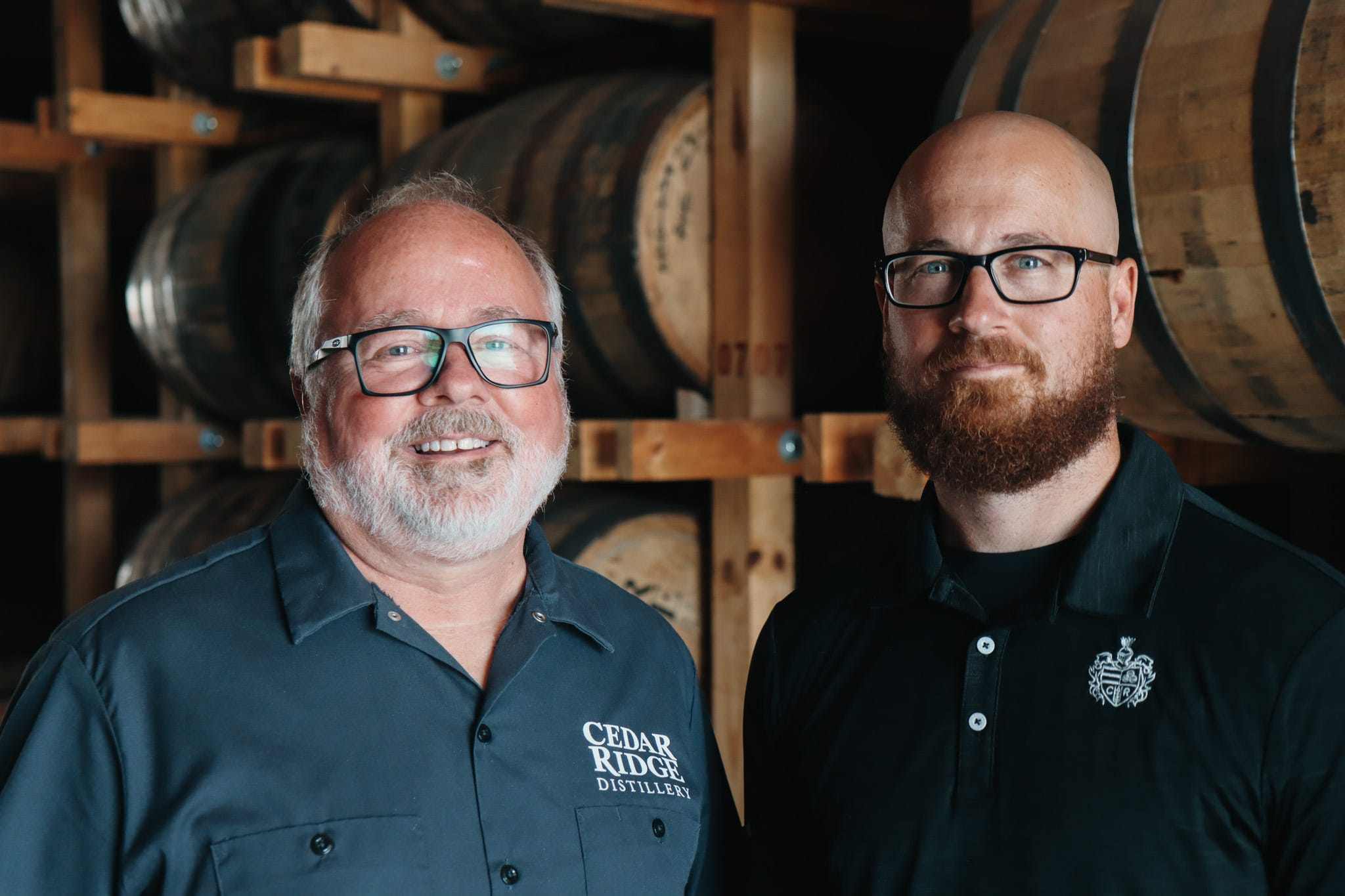
It was his experience working with the single grain, rye, that led to Cedar Ridge leaning into its single malt whisky. Jeff had developed his interest in single malts during a self-education trip to Scotland and found himself gravitating to the Balvenie double wood maturation processes. Nestled in Speyside on the picturesque banks of the river Fiddich, Balvenie is a highly regarded whisky and located a short walk from Glenfiddich distillery, home to its popular Solera cask finished single malt. Those two visits greatly inspired their work over the next decade.
Murphy remains deeply engrained in the distillery’s operations today. I was glad to have been served by Murphy during a farm to table dinner hosted by the Liberty St. kitchen restaurant in Pella last fall, where I first tasted the product of those visits to the Scottish countryside.
These are words usually associated with specific Scotch expressions but have found fans stateside as well. Single malts are whiskies produced using a single grain in the mashing process. Where Bourbon mixes a minimum 51% corn with the remainder coming from rye, wheat or other grains, a single malt uses a single grain. Much like Stranahan’s or Templeton are made with 100% rye, single malt Scotches are made with 100% barley. Given Bourbon’s status as the American spirit, American single malt spirits remain unusual across the US.
Cedar Ridge has developed its single malt expertise but chose to not stop at the single malt alone. Knowing the wine world produces spirits and ages them in barrels and butts of varying sizes, they took a part of their spirit and aged it in imported barrels to borrow the unique attributes remaining in the barrels. The result are whiskies that exhibit the deep red hues of a Port Wine finish from Portugal, the subtle yet noticeable caramels and yellows from French Sauternes, Tokaji dessert wines from Hungary, event notes of peat and tobacco from a marriage of varied oaks.
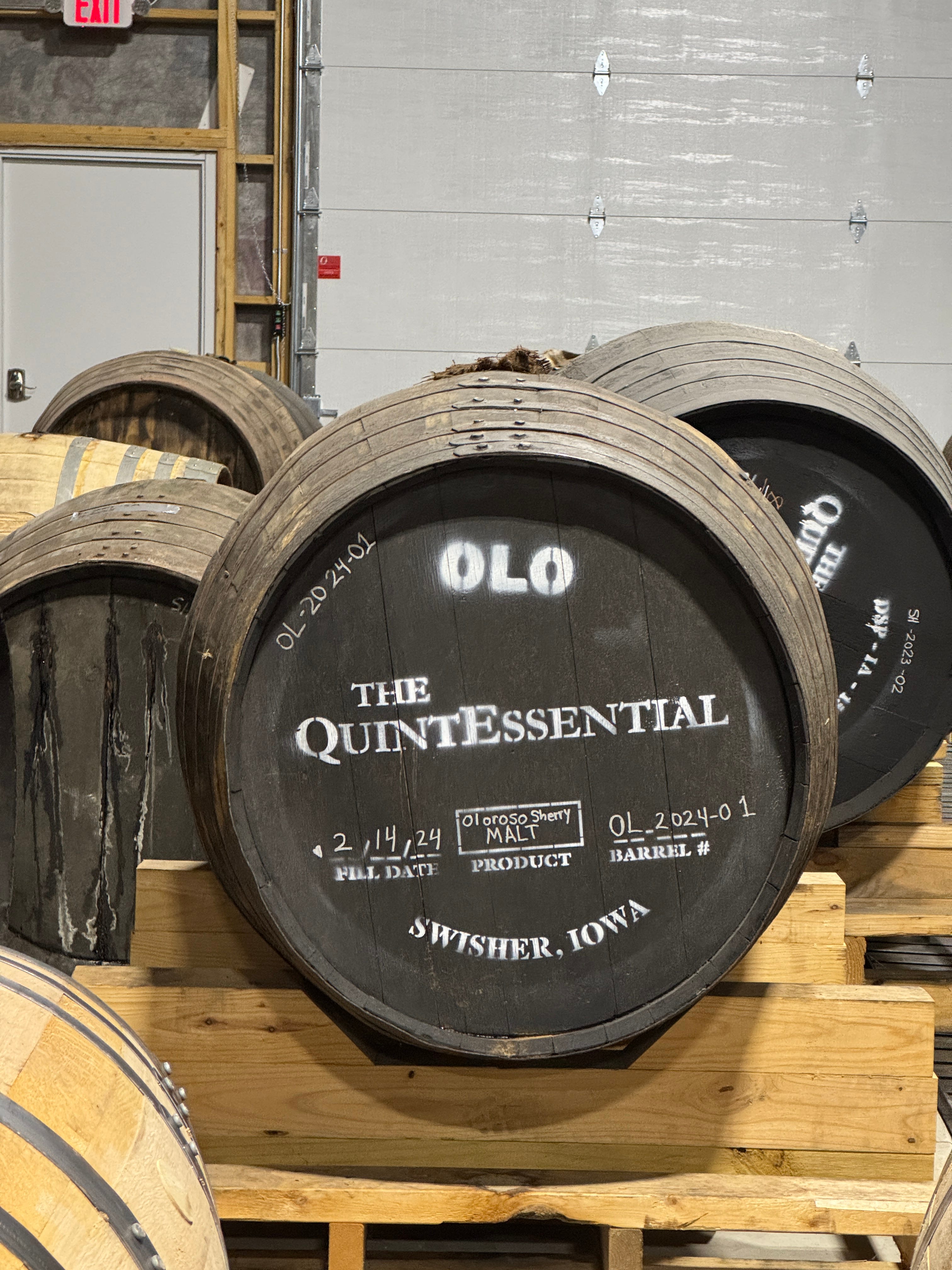
These limited releases, part a result of experimentation and part controlled by the amount of barrel capacity, are sought after by collectors and worth the nose, palate and finish.
The American spirits industry is, once again, feeling a bit of contraction. It isn’t all tariffs, however, as American tastes are undergoing change once again, young consumers choosing different beverages than their parents, cocktails circling toward clear spirits, and of course the effects of GLP1 drugs changing consumption overall. The industry that swung to significantly increasing production in the mid 2000s is now adjusting production for the market predictions. Yet, it cannot forget that it takes 4 to 8-years for a good whiskey to rest in a barrel to be ready for the consumer.
American spirits are also investing in developing export markets, markets sometimes more closed than the US. The Iowa craft distillers network continues to expand its influence in the state and across the US even as individual distillers introduce the brand to European markets just as whiskies from Japan, India and France join those from Scotland and Ireland on store shelves.
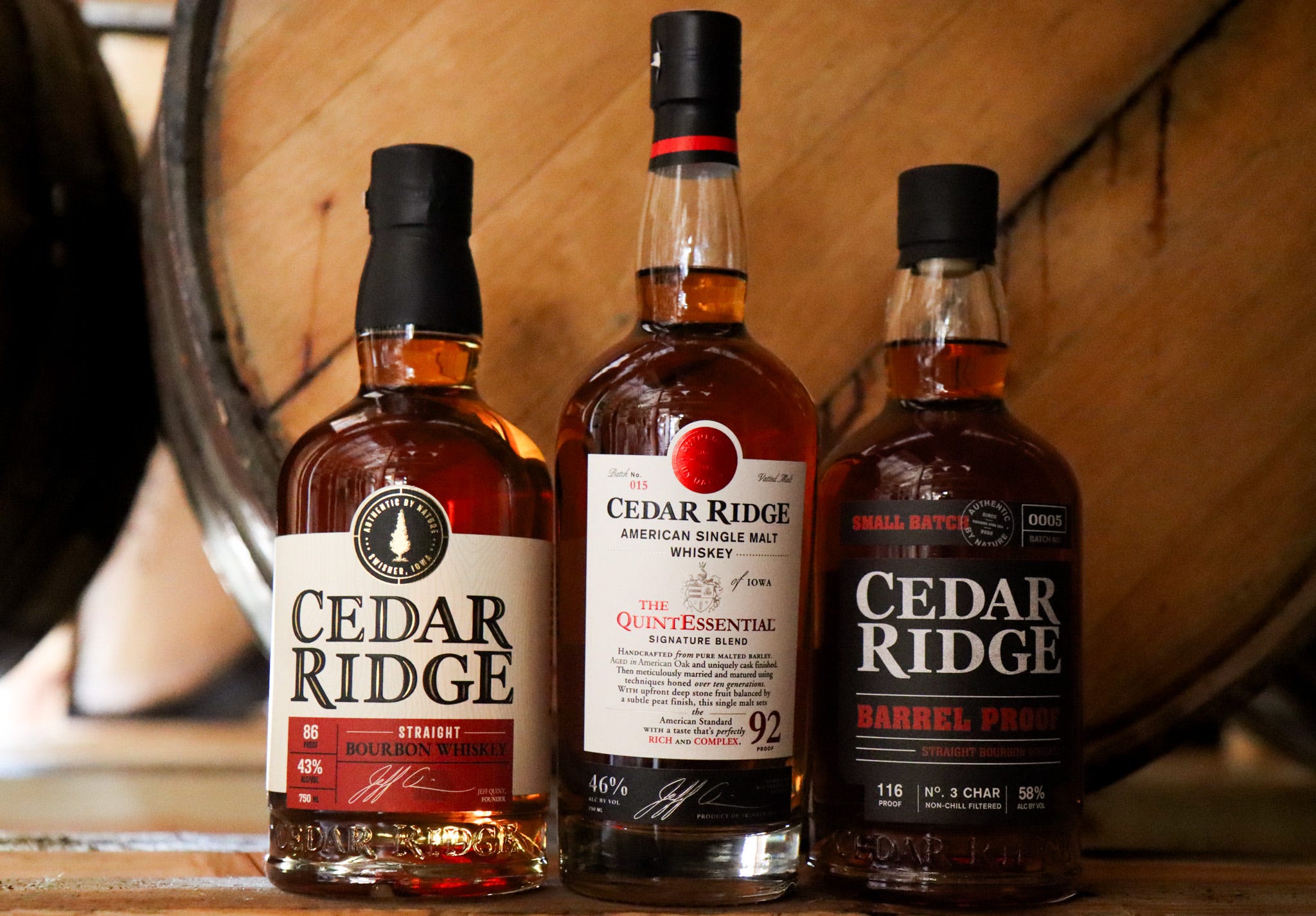
The distillery itself is a destination beyond whiskey. The spirits shop does maintain a collection of its available spirits and associated merchandise. I couldn’t resist buying my bottles of the single malt and a Glencairn glass (my preferred vessel of choice for whisk(e)y.) The restaurant serves up snacks and food and a new pizza kitchen, patio and live music ensure the rolling hills of Swisher Iowa have an additional element of entertainment and fun. A different Iowa than portrayed in most national media!
Go check it out!
Book links are Amazon affiliate links
Also, a fun, hour-long visit with Jeff Quint in his office, shop, production floor and rickhouses at Cedar Ridge Distillery in Swisher, Iowa. March 2026
No posts
Comments
Nothing yet. Say the first thing.
Sign in to join the conversation.