
Everyone I spoke to when I was first planning a trip to Marseille said one of two things about the city: that it’s dangerous, especially for women, or that it’s a great city for eaters. After three weeks in the oldest city in France, I can confirm that the latter is definitely true: Marseille’s food culture is as diverse and prismatic as the people who have sought refuge in its ports over millennia. The prejudices held against these same people, I suspect, contribute to the widespread belief in the former.
Compared to other European destinations, Marseille is admittedly a poor city, in need of economic opportunity and investments in social services and infrastructure. It’s chaotic, it’s disheveled, and it’s got less to offer tourists. Yet these are the same realities that enable Marseille’s charms: the buzzing energy of cultures remixing with one another, the reciprocity of community, and the generosity that seems to be most abundant in those who have very little to begin with. I want to go back already. Until then, here are a few meals that have stayed with me.
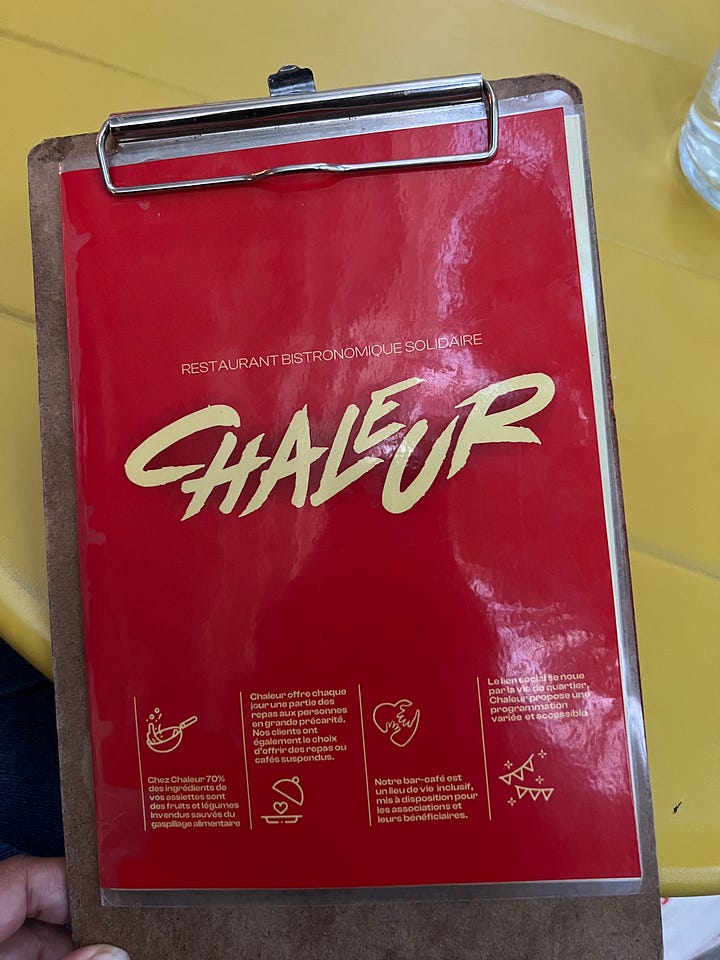
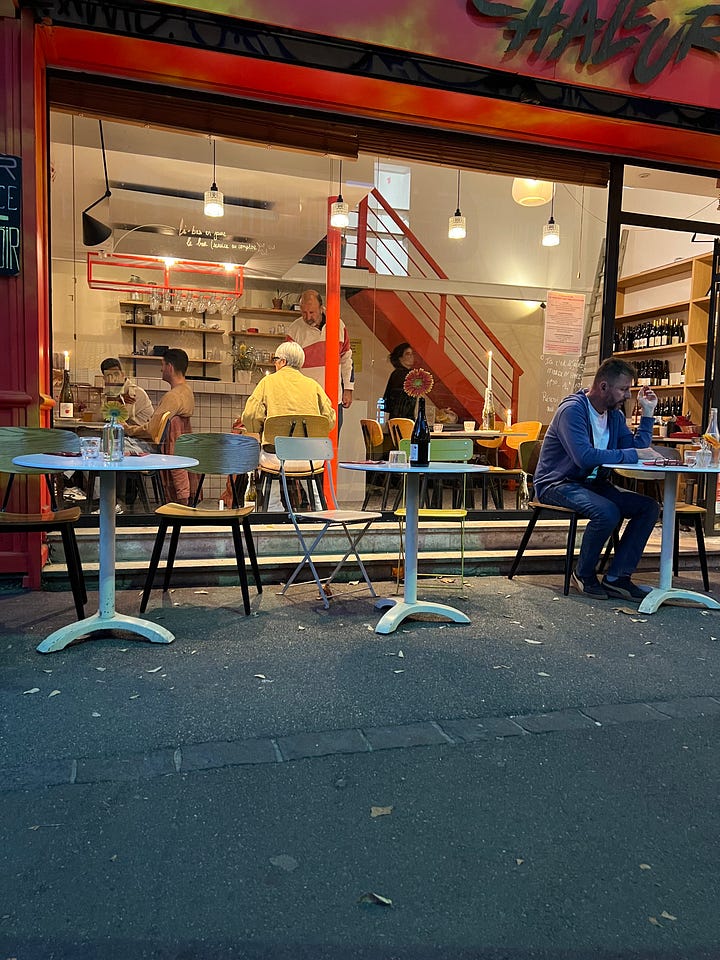
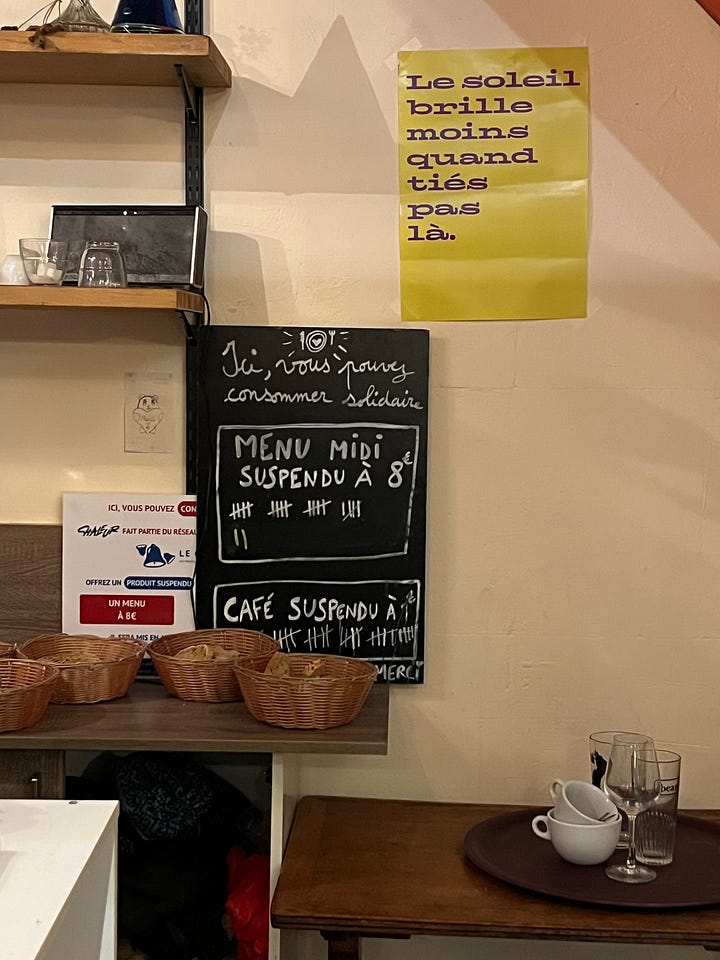
Chaleur is Marseille’s newest restaurant solidaire, part of a group of community-oriented restaurants in the city that cater to those experiencing food insecurity alongside the general public. You can order a menu à tarif suspendu, i.e. the regular menu at a discounted rate of 8€, or a coffee for 1€. Patrons are encouraged to buy a meal and pay it forward. What’s more, 70% of the ingredients used by the restaurant are unsold fruits and vegetables destined for landfill.
I found the restaurant’s mission touching, and was saddened by how novel its concept felt in my life. Restaurants everywhere do their best to manage food waste, of course, but I’ve never come across anything this intentional. All the while, food insecurity in Canada is rising: 25.5% of the country lives in a food-insecure household, while 46% of our food goes to waste. The math does itself.
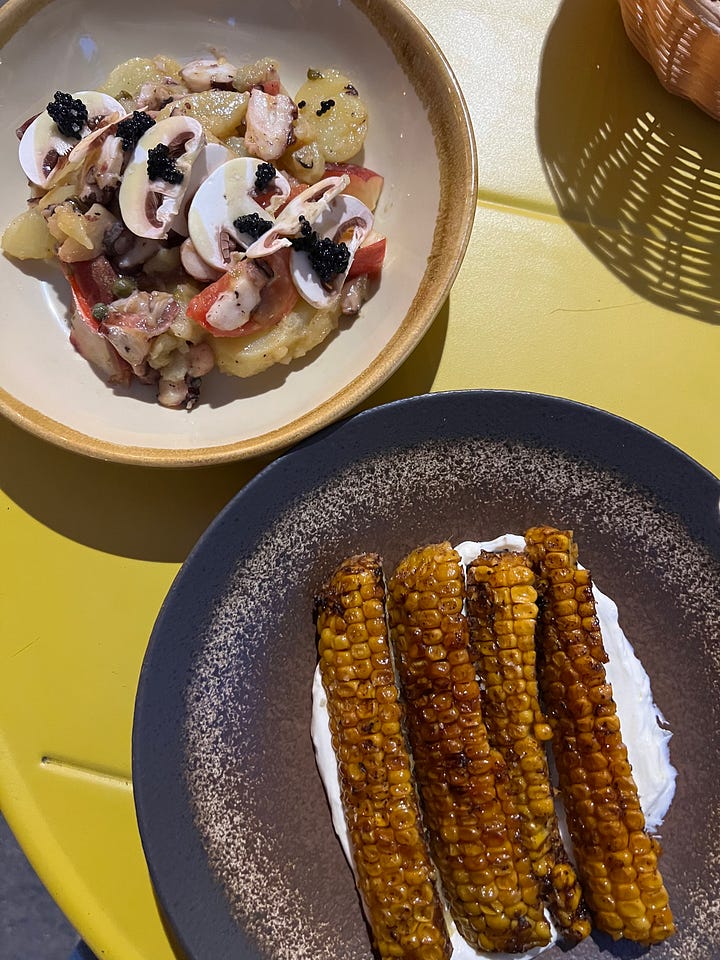
On my plate that night: octopus-potato salad with nectarines and tomatoes, zaatar corn on yogurt. A great meal. The corn was past its prime, yes, and the nectarines overripe, cut from the bruised parts and served with little concern for presentation. Still, these are tradeoffs I’d take any day.
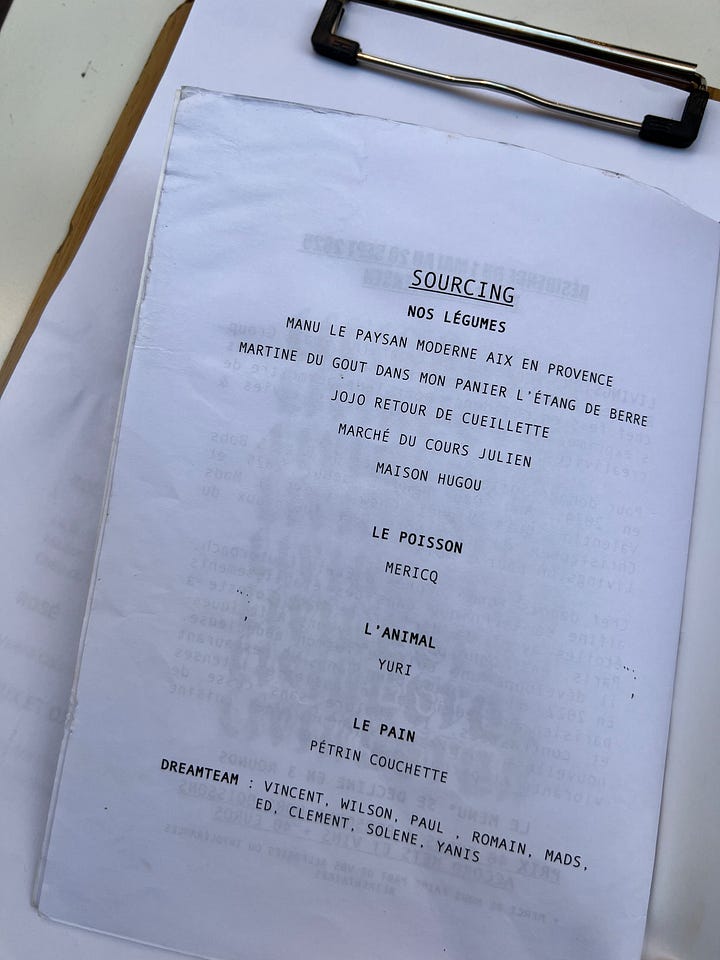
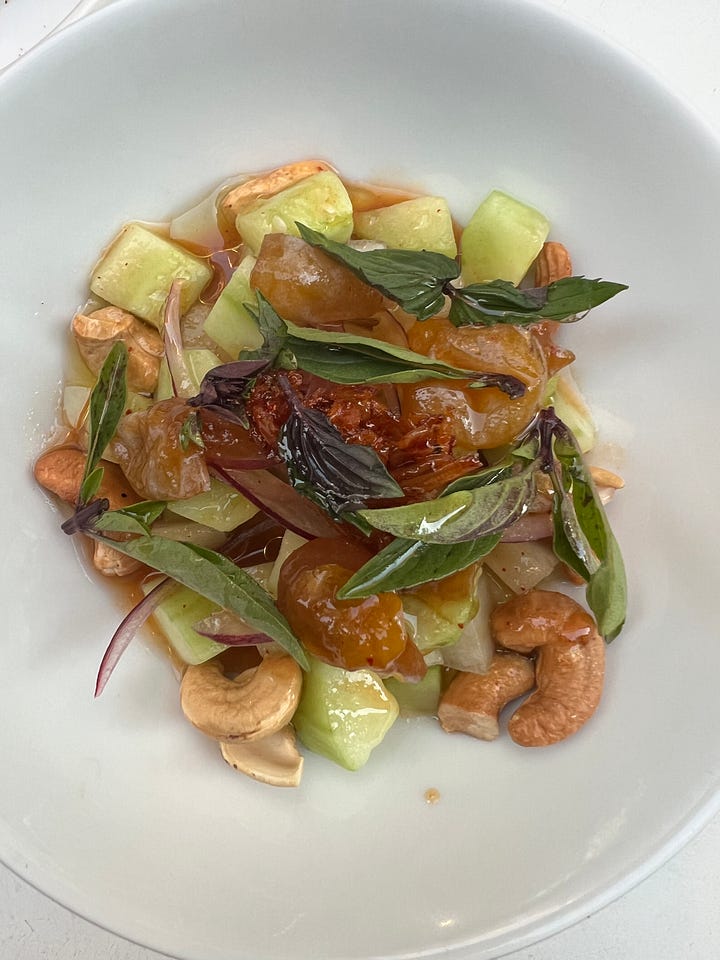
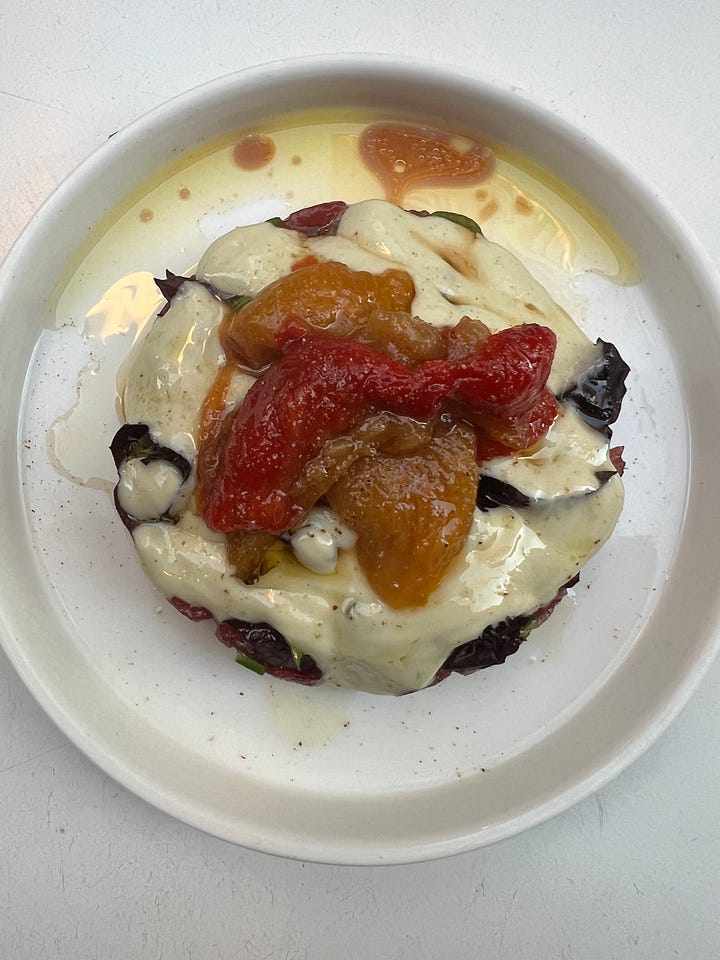
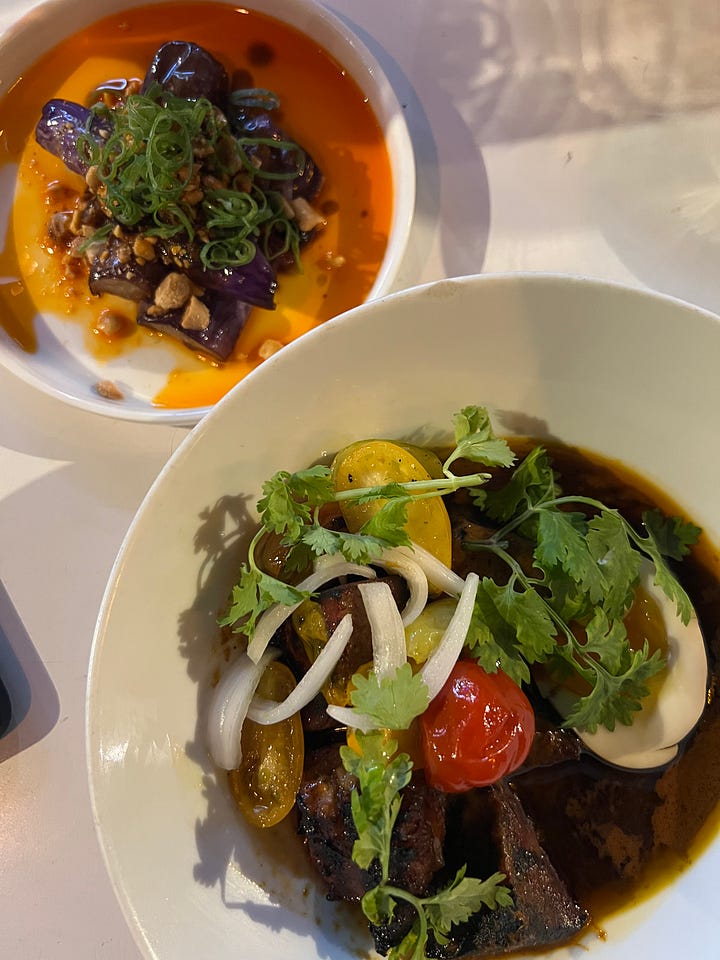
In the heart of the pulsating Cours Julien neighbourhood is a tiny, convivial restaurant called Livingston. It was founded by chef Valentin Raffali and The Small Group, a hospitality solar system that includes La Mercerie and the café/bakery Petrin Couchette. I’d walked in lured by a description of Raffali’s cooking I’d once read—poetic, think Rimbaud, which is so Tracy-bait—and found myself in a shapeshifting fine-dining wine bar with a rotating cast of chefs-in-residence. I was catching Mads Christensen (of Paris’ Mary Celeste) at the tail end of his.
I had a surprise 5-course prix-fixe menu (the price varies based on the season, between 48 and 60 Euros) with spectacular glasses of skin-contacts from Alsace. There was a cucumber and melon dish dressed in nam jim jeaw, tuna tartare blanketed by a fermented soy-based mayonnaise, a rich and wonderfully nutty beef tongue curry. The menu informed me where everything was sourced from and whose hands had shaped my food. I sat outside and watched countless people embrace in the little alley we occupied, friends and lovers and those meeting for the first time. The couple next to me had just gotten engaged. The sommelier poured them a rare sake. There it was again, that familiar rush of aliveness.
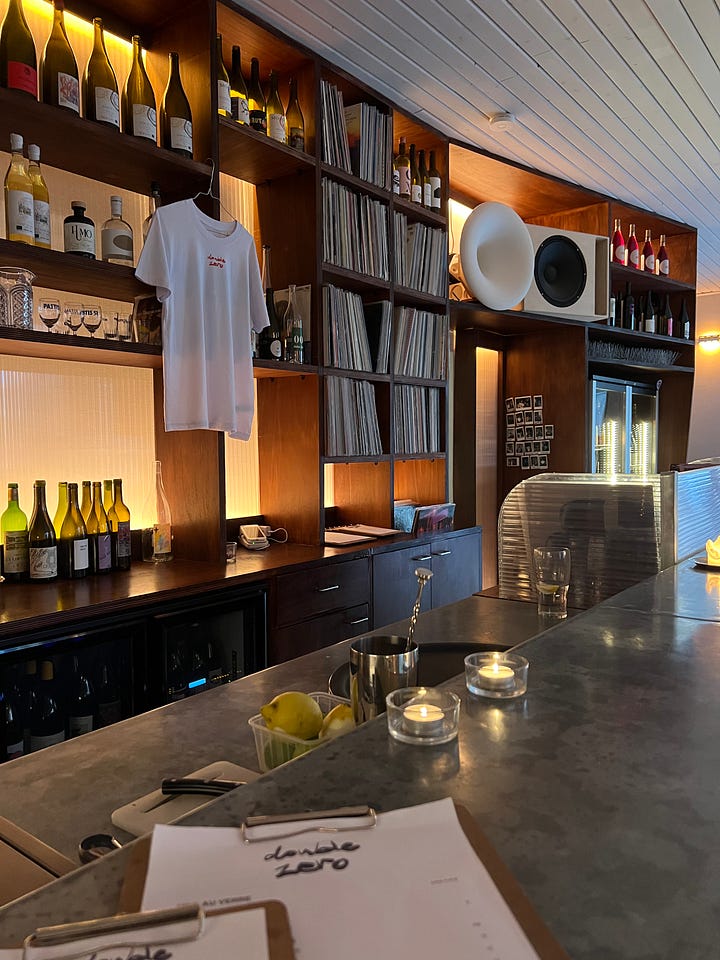
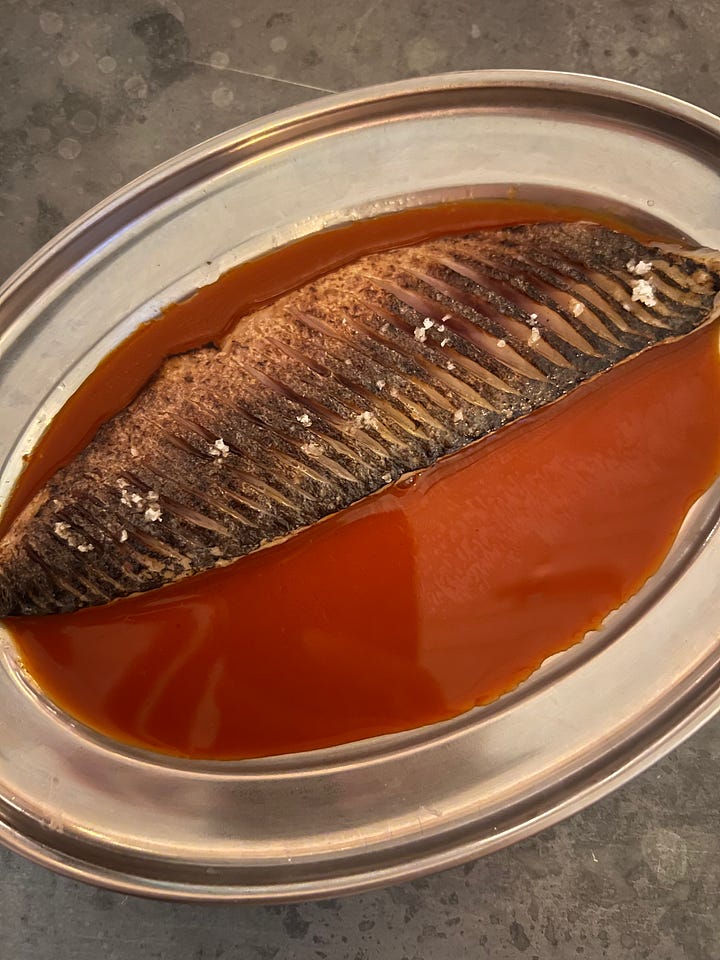
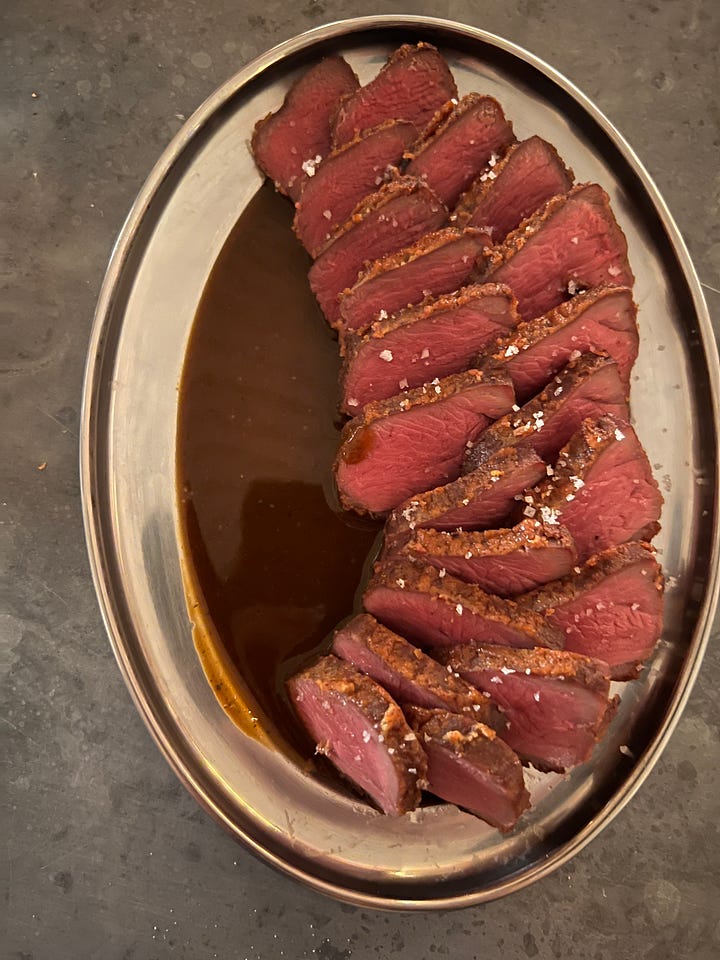

With less than a year under its belt, Camas’ Double Zero already feels like a beloved neighbourhood haunt. It’s a cozy den for audiophiles and natural wine freaks, open Sundays and Mondays while the rest of the city goes dormant. In an era of Spotify playlists and filler grub, they spin soul and jazz vinyls and serve snacks that punch above their weight, in flavour and presentation: grilled mackerel with gochujang, duck breast treated like Crying Tiger steak, tomato salad with sauce vierge and fried capers. The team told me where I should eat in the city and introduced me to Provençal aperitifs. I would happily spend every Sunday night of my life there.
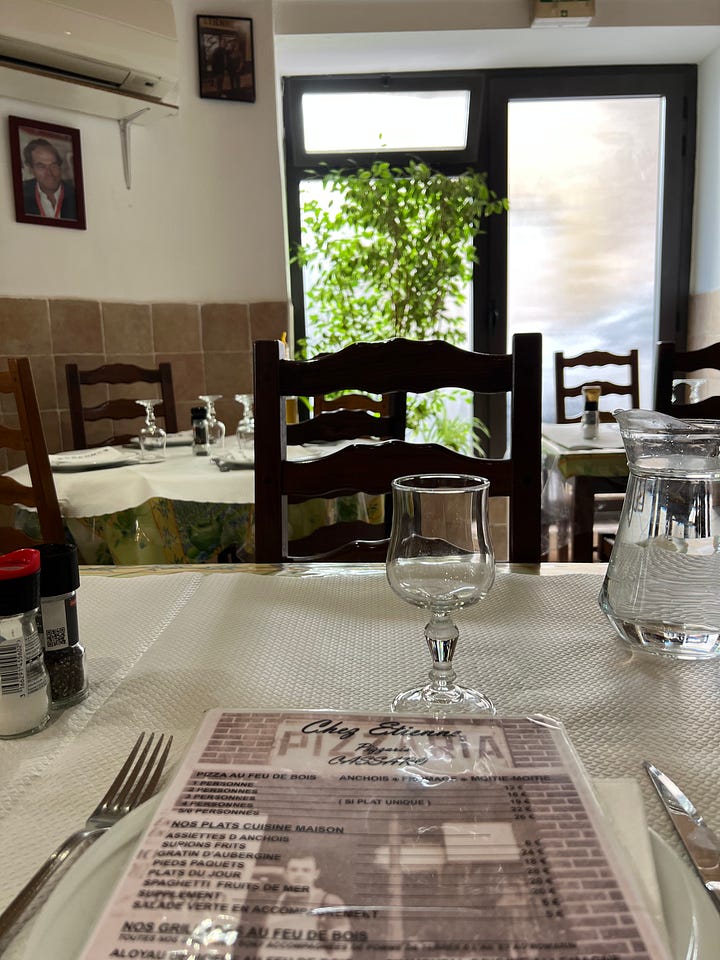
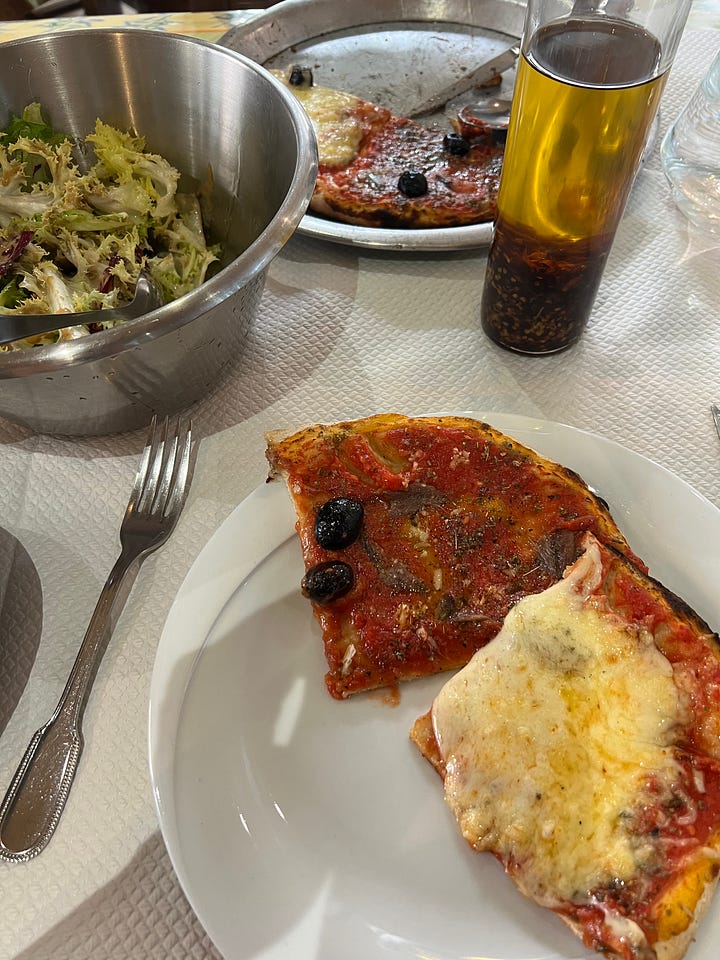
A tip from one of the guys at Double Zero, Chez Étienne is an institution in the photogenic Le Panier neighbourhood that serves one of the city’s specialties: pizza. By way of immigrants from southern Italy, of course. The classic Marseillais order, I was told, is the pizza moitié-moitié—half anchovies, half Emmental cheese. Who am I to deviate from tradition?
The place is charmingly old-fashioned: no credit cards, no website, no fuss. The tablecloth is just a big disposable napkin. The side salad comes in a stainless steel mixing bowl. Their service is both inviting and informal, like your aunt’s just fixed you a plate. You have no choice but to feel right at home.
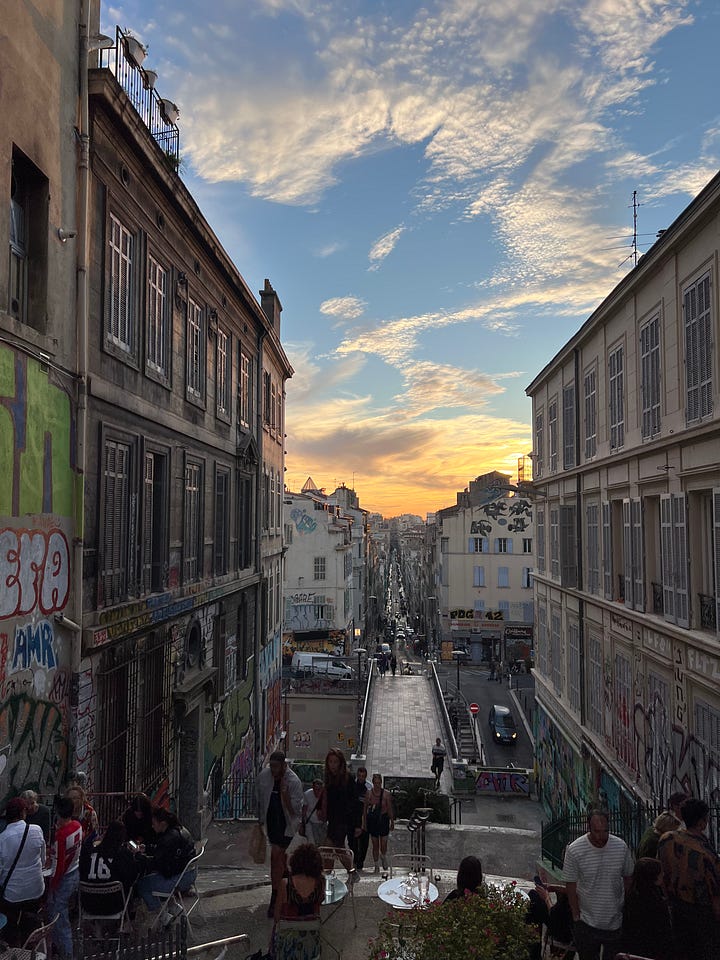
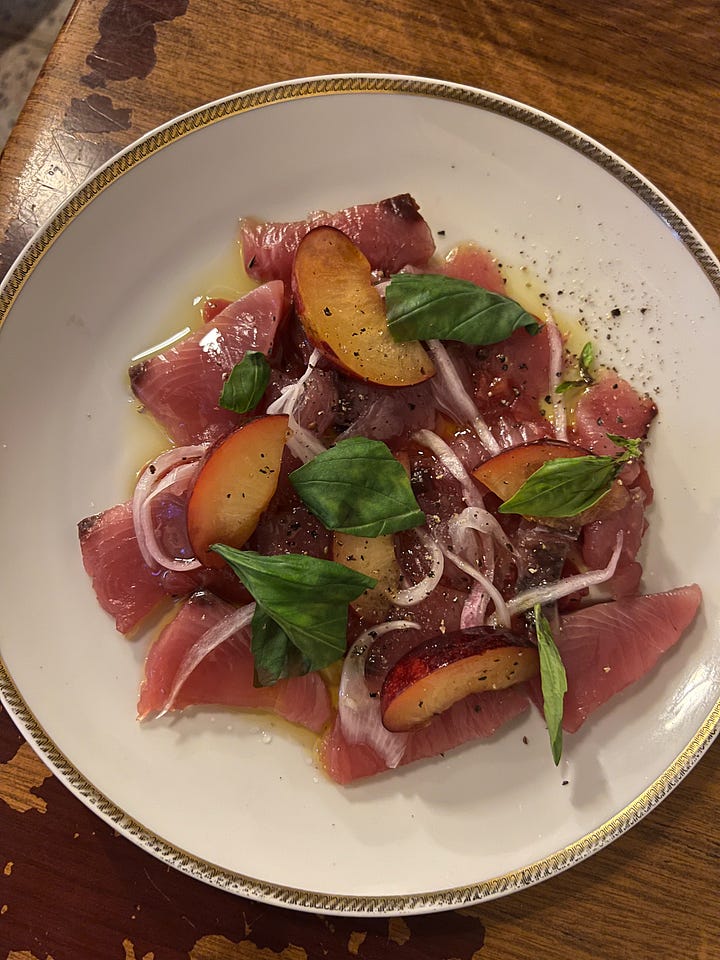
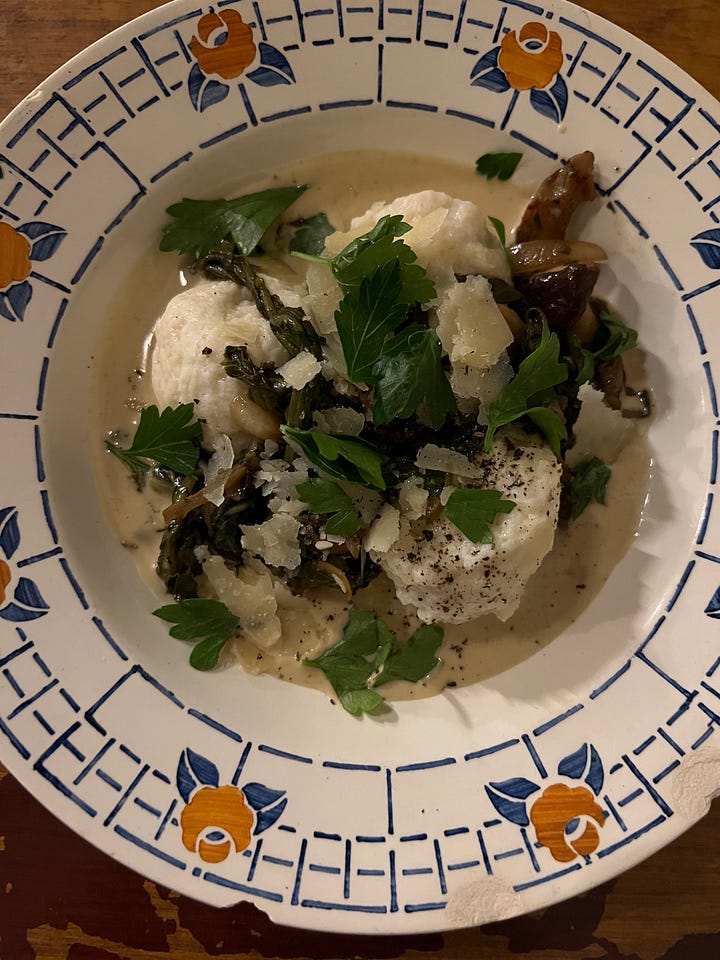
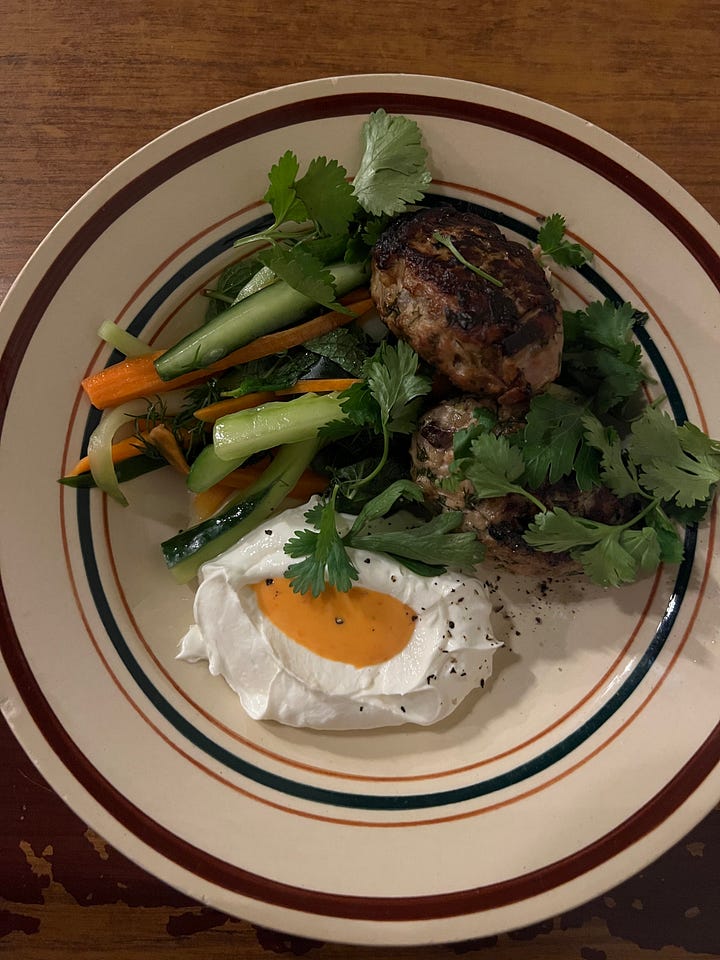
Named after the river in Zurich, where its chef Lilian Gadola is from, Limmat is a wonderful little restaurant built into the staircase that leads up to Cours Julien. At dinner service, patrons on the terrace sit facing the horizon, camouflaged among the neighbourhood’s sunset chasers. Gadola’s approach is creative and improvisational, with a menu that reconfigures itself daily around the day’s catch and the season’s vegetables. Some dishes I had the pleasure of tasting: bonito carpaccio with plums two ways (fresh and chutneyed); fish kofta reminiscent of Vietnamese meatballs, with labne and hot sauce; pillowy malfatti dumplings in a porcini cream.
I remember thinking about the meal what I now feel about Marseille as a whole: savour the moments you’re lucky enough to catch, because by tomorrow, everything will have changed.
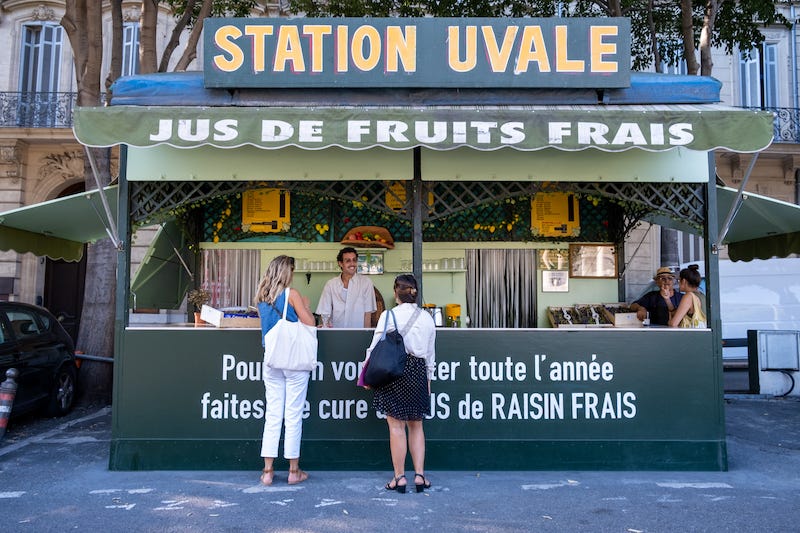
There was a time when the thirsty could walk up to one of eight stations uvales (grape juice stations) in the south of France and enjoy a glass of fresh-pressed grape juice, touted for its liver-detoxifying benefits and as a healthier alternative to wine. Today, the last station lives on in Marseille. It’s operated by a man (and fellow perfume enthusiast!) named Yannis, who took over his family’s kiosk to keep the legacy alive. The day I visited, he was pouring a fresh pressing of black muscat and Alphonse-Lavallée. It was aromatic and beautiful, with a nose of rose and gummy candy. If the name wasn’t already taken, I would have called it a corpse reviver.
With an embarrassment of luck and gratitude,
Tracy
Comments
Nothing yet. Say the first thing.
Sign in to join the conversation.