
Idle behind any vehicle in Quebec, and you’ll note the provincial motto, inscribed on the license plate: Je me souviens. I remember. For many, it is a reminder of Quebec’s unique history and heritage, a nod to the province’s ongoing efforts to preserve the language and traditions of its French colonizers. For others, the motto is associated with the political conflicts simmering within the province—Quebec’s desire for political sovereignty and the xenophobic discourse that follows staunch separatism. It is this version that I remember.
The province celebrates its fête nationale—national holiday—on June 24, also known as Saint-Jean-Baptiste. Every year, Quebec City throws a big Saint-Jean party on the Plaines d’Abraham, rich with music and food and life. I grew up going to these parties with my friends, the rare Asian face in a sea of white faces. One year, walking home from the festivities, a Québécois man stopped me and barked, Retourne chez toi! The ever-imaginative imperative to go back to where you come from. J’habite ici, I replied. I live here. His face changed as he digested my accent. Ah ben, bonne Saint-Jean!
A younger me dismissed this as a light touch of good old-fashioned racism, but the older I get, the more I see the nuances. Pride casts its own shadow, and the urge to protect occasionally takes the offensive. I don’t forgive it, but I’ve become acquainted with the root feeling. I, too, have been a loudmouthed hater because someone threatened something I love.
Earlier this month, J. and I spent a few days driving from Quebec City to Tadoussac. With almost two decades of remove, the vehemence of Québécois pride struck me anew. No culture is better at celebrating its own people, at shining a bright light on the fruits of their labour. And nowhere did I feel this more than in their restaurants—where provenance spans the province, terroir is table stakes, and regional cuisine is the only cuisine.
Online, Chez Mathilde is described as “Tadoussac’s gourmet restaurant,” as though it is the only one. It’s certainly singular, an unexpected offering from a coastal village of 800 people. Operated by chef Jean-Sébastien Sicard and his partner Mireille Perron, the restaurant opens its doors five months a year to welcome the hundreds of thousands of tourists passing through the region for a taste of its pace and a glimpse of the whales that frequent the area.
They are no strangers to constraint, and have assigned themselves a few more: a zero-waste approach in the kitchen; ingredients sourced exclusively from Quebec; the rigor and precision of a tasting menu in a town that doesn’t even have a proper grocery store. Two menus, I should say. One shaped by the land, and one by the waves.
Tadoussac is known for its waters. It’s where the fresh water of the Saguenay River converges with the brackish and seawater of the St. Lawrence estuary. The resulting currents and water densities have allowed a rich diversity of marine organisms to flourish, which is why the whales like to hang out in the region.
From its waters, we tasted sweet, briny sea snails, swaddled in a ravioli and anchored by an earthy vegetable reduction; Gaspésie snow crab, a delicacy in every sense of the word, swimming in fermented pear and cucumber juice; lobster made floral and electric by a saffron bisque—the spice is cultivated in Charlevoix, if you can believe it—and buttery by pumpkin seed oil, this time via Saguenay.

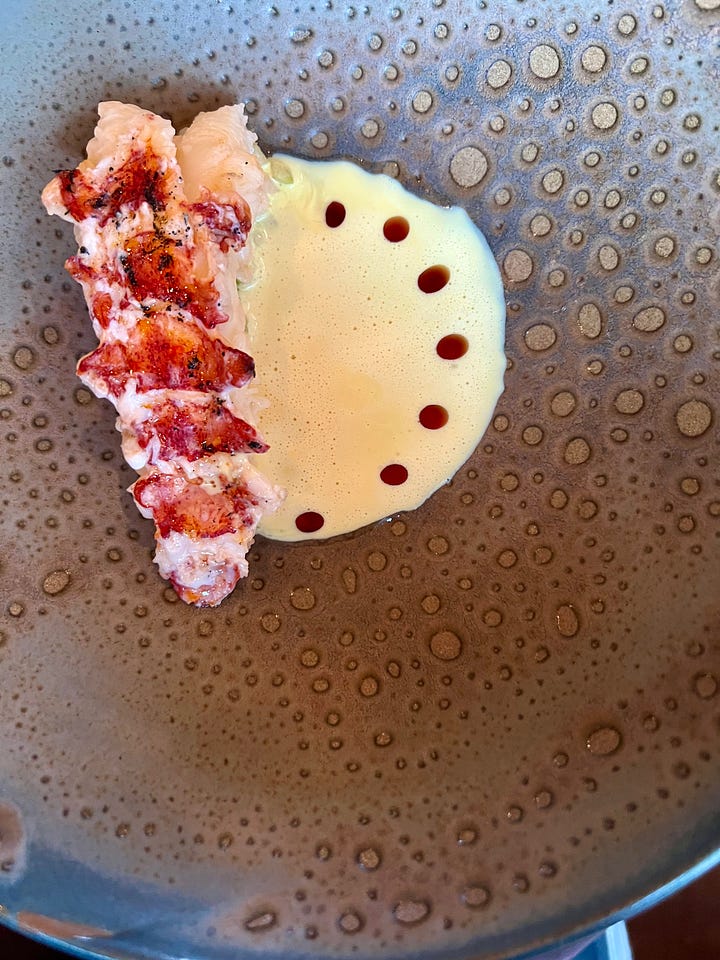
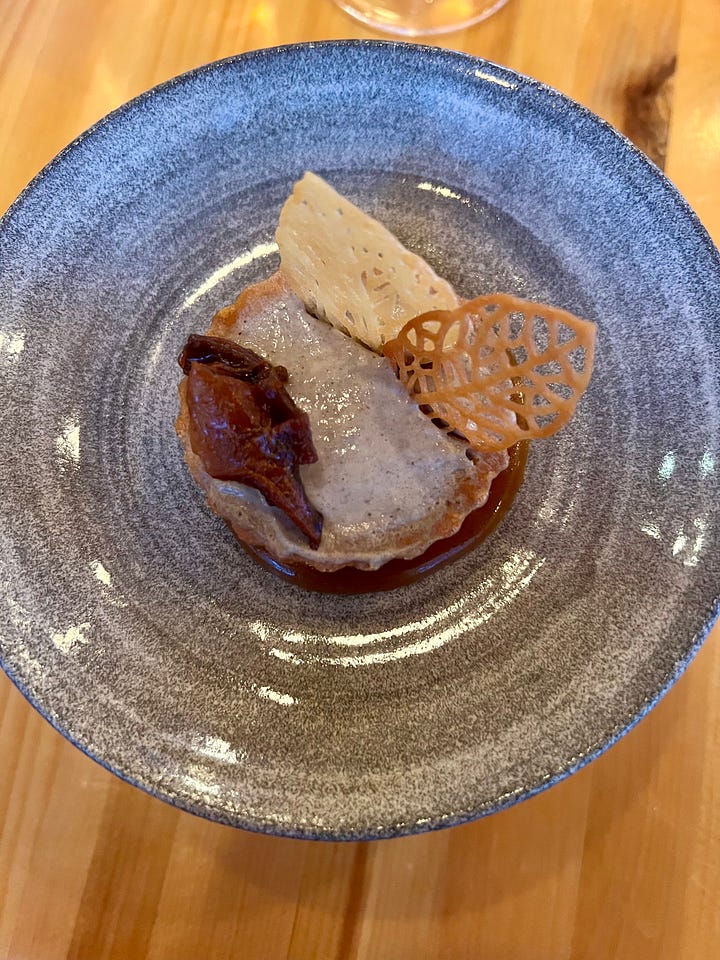
The land menu, which J. ordered and I neglected to document, was a song of game and earth: carrots, parsnips, duck, lamb, mushrooms. My brevity here reflects my sieve-like brain, not my feelings about the menu—which was consistent from surf to turf. Every dish was a mirror held up to the region, a loving showcase of how Quebec provides for itself. Fittingly, the restaurant’s website links to all of the producers and artisans they work with, so that you can fall in love, too.
There are few feelings that I find more electrifying than that of reverence, the instinct to honour and to do right by. At Chez Mathilde—and every other place we passed through on this trip—I could feel that sense of pride, radiant and vibrating, like a palpable frequency.
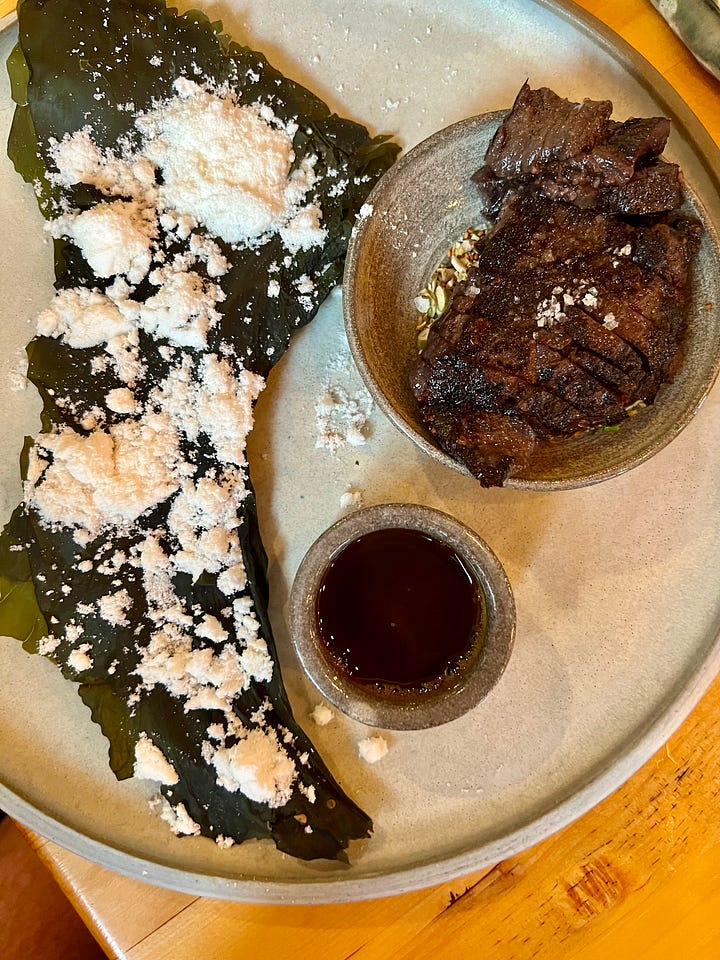
When the final savoury course came around, it made my heart stop temporarily. Seal tataki, Perron said, setting the dish down gently with a knowing smile. She told us it was conceived as an homage to the Indigenous peoples that first lived in the region, and served raw, as they would. It came with a funky duck garum, seeds and toasted koji for texture, and tapioca powder on a seaweed platter, for dipping. The tapioca had been buried in pine to absorb its coniferous sweetness, and plated to evoke the image of snow on the forest floor. My heart fluttered back to life.
Seal meat, inky in color, has the texture of filet mignon and the metallic tones of liver. It’s not a flavour that I feel compelled to seek out again. No need to—it will come to me, fully-formed, on my deathbed. “I’m a lover of products and sensations,” Sicard said in an interview, “of what makes us feel alive.” We have that in common.
Chez Mathilde
227 Rue des Pionniers
Tadoussac
No posts
Comments
Nothing yet. Say the first thing.
Sign in to join the conversation.