

Once, Victoria called next of kin across the country to ask what kind of music a man loved.
He could no longer speak for himself.
Hearing is often the last thing to go. She wanted to play it at his bedside anyway.
He was older. Rock and roll. Springsteen, maybe. Or Zeppelin. She told me once and I can’t remember which, only that the genre surprised me. Victoria’s taste runs to jazz and classical — the kind of music that breathes.
But she wasn’t playing her music.
She was playing his.
She gets to the hospital early. She stays late. When a patient dies and the body is moved through the hall for the last time — the honor walk — she is there.
Not because it’s required. Because someone should be.
She talks about neighborhood pets by name. Sometimes you’re three sentences in before you realize she’s describing a cat, not a colleague.
She volunteers at a nature park, working with raptors — hawks, falcons, birds built for killing. When I told her one of our chickens had been taken by a hawk, she went quiet.
“I hate that,” she said.
Gently. Like she was apologizing on behalf of a creature she also loved.
There are no straight lines to Victoria’s compassion.
And then the hospital asked her to draw one.

Victoria is a chaplain in a major hospital system on the West Coast. Her job is spiritual care — available to everyone, regardless of title or belief.
Neutral by definition.
A nurse strike was coming. And neutral was about to become impossible.
The first question was practical. It was the week of Ash Wednesday — one of the most significant days in the Catholic calendar. Would ashes be made available to the striking nurses?
The answer came back: no.
And just like that, neutral had an address.
Then the email arrived. Administrative tasks. Coverage reassigned to her department for the labor shortage. Her job description hadn’t changed. Her function had.
She wasn’t just a chaplain anymore.
She was being positioned.
And underneath all of it: the picket line.
The physical act of crossing it. Walking past colleagues who were taking a stand — people she had prayed with, eaten lunch with, stood beside in the worst moments of someone else’s life.
Even among the nurses, it wasn’t simple.
But the line was real. And once you cross it, everyone remembers which direction you walked.
She called me that afternoon.
Not for advice.
For something she couldn’t name yet.

I was standing near the windows, folding clothes between calls. My wife was working in another room. The house was quiet enough that I could hear what sat underneath Victoria’s voice.
Not panic. Not tears.
Something more disorienting than either.
She was looking for a formula.
I understood why. The stakes were enormous. A binary decision — cross or don’t cross — should have a binary answer. If the choice is A or B, there should be a clean case for one of them.
That’s how it works when the frame is clean.
But the frame wasn’t clean.
The problem wasn’t that Victoria couldn’t decide.
The problem was that the form was too small.
The world had given her two boxes.
She needed six chairs.
Victoria grew up in south Florida, a person of color in a white neighborhood. Once, a neighbor left a Bible at the door with a note — something like: Give this to Victoria. She’ll find a way to use it.
She still thinks about that.
She went to Wall Street. Then social work. Then, after decades of that work, back again — this time to divinity school.
Ask what she practices and she’ll tell you: “Compassion.”
Not a religion.
A practice.
Her whole life has widened toward the people who need the most and have the least voice.
And now the strike was asking her to narrow.
Pick a side. Draw a line. Are you with us or against us?
Nobody had to say those words out loud.
The architecture of the moment said it for them.
That is what I heard in her voice.
Not confusion.
Exile.
She had been knocked out of her own language by a question that didn’t have room for the way she sees.

We didn’t solve it.
We did something simpler.
We slowed down long enough to let every version of her into the room.
The administrator who shows up, follows the chain, and does what is asked.
The person who grew up knowing what a picket line means.
The nurse advocate who has built relationships with these people — eaten with them, prayed with them, stood beside them.
The patient in the bed who doesn’t know about the contract dispute and doesn’t care. They just need someone to show up.
The spiritual caregiver whose vows don’t really have a side to take.
The provider with bills to pay and a life’s work she is still responsible for protecting.
No consensus.
No clean answer.
No formula.
But something shifted.
When the binary stopped drowning everyone else out, a direction emerged.
Not a side.
A center.
Patient care.
Not consensus. Not compromise. The thing they could all actually serve.
Not a resolution of the dilemma.
The thing underneath the dilemma that every version of her could already stand behind.
The priority that had been there the whole time, buried under the noise of a forced binary.
I could hear her breathing change. The tempo of her voice slowed.
Not resolved.
Restored.
Like a signal coming back online.
She didn’t say, “That’s it.”
She said, “Let me think about that.”
Which, from Victoria, means it landed.

The old version of me would have given her the formula.
Fast. Clear. Wrong.
Not wrong because the advice would have been stupid.
Wrong because it would have replaced her discernment with mine.
And her discernment — the thing built across sixty years of paying attention — is better than any neat answer I could hand her.
In retrospect, the pattern was there from the beginning.
Victoria doesn’t play her music at the bedside.
She plays theirs.
Why would I hand her my answer when the work was to help her hear her own?
So I didn’t solve it.
I held the room open long enough for her to hear herself again.
That’s the whole move.
No trick. No model named in the conversation. No borrowed certainty.
Just enough patience for the person in front of me to find the thing her life had already been pointing toward.
This is what false binaries do — in hospitals, in boardrooms, in families.
They simplify a decision early, then force the excluded voice to return later as conflict, rework, or moral injury.
The goal isn’t to avoid choosing.
The goal is to avoid premature closure.

The world handed Victoria a form with two boxes and told her to check one.
The form wasn’t evil.
It was too small.
It couldn’t hold what she holds.
The old move is: pick the right box faster.
The better move is: widen the room until the real priority becomes legible.
Which seat is missing?
That is the question I keep coming back to.
Not because every hard decision has an easy center waiting underneath it. Some don’t.
But because the answer is very often not inside the binary we were handed.
It is underneath it.
For Victoria, it was patient care.
For you, it might be something else.
You don’t have to buy any philosophy here.
Just test whether the decision gets clearer when the missing voice gets a seat.
If someone in your life keeps circling a decision they can’t land, they probably don’t need your answer first.
They need your patience.
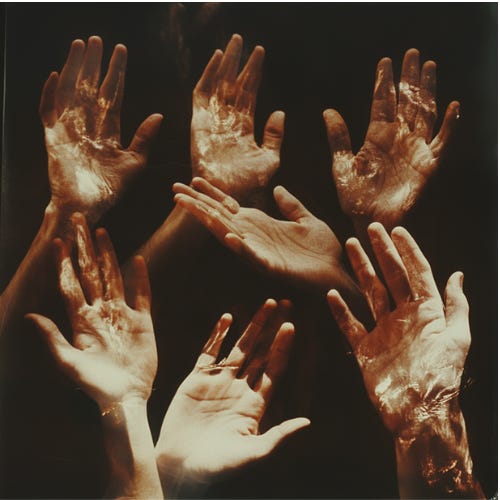
Before the next decision that feels binary, pause.
Name who’s already in the room.
The one protecting you.
The one calculating.
The one who knows what matters.
The one who feels the cost in the body.
The one you haven’t heard from yet.
Then ask:
Which seat is missing?
Not to get the answer faster.
To give the real question enough room to change shape.
This week, bring one stuck decision to one trusted person.
Before you ask for advice, ask together which voice has not been heard yet.
If you try this in a real room and something shifts, that’s how a movement starts.
Not through agreement.
Through one more room that can hear itself again.
Through people who widen the room before picking the box.
See like you’re many. Act like you’re one.
If you try it, reply and tell me what changed. I read every reply.
If this is new to you, I write about coherence — connecting the many yous so you can act as one. If you want the next essay in your inbox, subscribe.
No posts
Comments
Nothing yet. Say the first thing.
Sign in to join the conversation.