
Somewhere along the way, a place taught you what to be afraid of. You may not have noticed it was teaching.
I had just finished reading Cowboy Small when the helicopter light crossed the living room ceiling again.
The horse named Cactus. The line about red beans and coffee. The accent I had done so many times my kids expected it now.
I pulled the blackout shades, started the gentle meditation track in their room, and set the white noise machine to run after they fell asleep.
Then I came out to the living room, and the city was in the windows.
It was May 31, 2020.
The Sunday after George Floyd was killed.
Santa Monica had not invented the week.
It had received it.
By the water, people were marching for a man who should have been alive.
A few blocks inland, windows were breaking.
That distinction mattered, even inside the fear.
The retail space down the street had been broken into.
We could hear glass. Voices. Alarms.
The heavy movement of people who were not walking home.
Helicopters were part of Los Angeles life. News. Traffic.
But that evening they stopped being background.
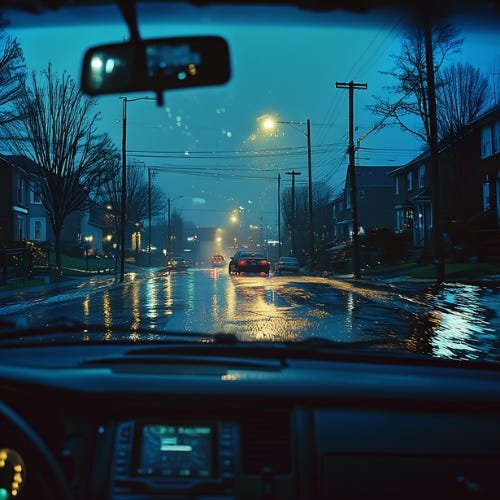
Their lights moved through our front windows in slow passes.
Light, then dark.
Light, then dark.
Across the ceiling. Across the wall. Across me on the couch.
The streets around us had been full of it for hours.
We were watching the news from our windows, not from the national outlets.
Outside, a neighbor I knew walked from his detached garage to his front door carrying a long hard case.
Asian American. In his seventies.
He did not look at anyone.
He did not hurry.
That was worse.
He moved through the helicopter light with the calm of a person who had already made his choice.
I understood the case before I let myself name it.
Shotgun.
He was arming up.
And I was lying on the couch with my phone open to a spreadsheet.
The spreadsheet had rows for everything a reasonable person is supposed to consider.
Schools. Family. Air quality. Cost of living. Proximity to nature. Airport access.
The columns were cities.
Santa Barbara. Bend. Boise. Asheville. Boulder.
We had visited the shortlist already. I had weighted the categories, scored the options, and ranked the results.
The math kept producing finalists I could not make myself move toward.
That was the part I did not know how to say.
Because the spreadsheet was not wrong.
It did what I built it to do: it could rank cities.
It had no column for dread.
I loved Los Angeles.
I still do.
But by then I was moving through it like I was always on duty.
Someone had overdosed on our porch. I had been followed home more than once. Chased in the street.
The block was wrapped in COVID hospital triage tents. Testing lines around the corner. Sidewalks emptied of everyone but the people in crisis.
The part of me that solves problems was running.
The part of me lying on the couch was running too.
Differently.
That one had been running since before the city.
They were not talking to each other.
So nothing moved.
What finally moved was the car.
Late July. Two years later.
First visit to family in Michigan since the pandemic.
Ozzy’s first time at his grandparents’ house.
The plan was a visit.
I think some part of me knew it was also a test.
The first sign came as an actual sign.
The flashing highway boards on the way out of California:
SAVE CALIFORNIA. SAVE WATER.
We passed them one final time with a relief I was not ready to admit.
I still do not know how much of that panic was the condition itself and how much was the way the condition was narrated.
My shoulders did not care about the distinction. They dropped.
Then the desert.
Arizona.
Utah turning orange and red, then brown, then suddenly green as we crossed into Colorado.
The Eagle River running fast. Snow still on the Vail peaks. The flats of eastern Colorado. The long open of Nebraska.
Somewhere in that long open, a thunderstorm caught us.
It was the first time my kids had seen lightning.
Actual lightning.
Water falling from the sky in volumes their California childhoods did not understand.
Water falling without a message board telling us what it meant.
The thunder felt, strangely, like home.
By the time we reached my parents’ house, which sits on a lake, I was no longer deciding in the clean way I had imagined decision worked.
An actual lake.
Not a reservoir. Not a managed water feature. Not something piped in from somewhere else.
A lake.
I sat on a bench and listened to the small waves touch the shore.
My kids ran barefoot in the grass with their cousins. They crossed the road to a play structure.
I watched them go.
I was not tracking the road for threats.
I was not calculating who was moving toward them.
I was not scanning the edge of the scene for the next interruption.
I was just watching my children cross a road.
Somewhere between Michigan and the drive home, Ohio entered the search.
It was close enough to family.
Cheap enough that land was possible.
Unfamiliar enough that I could not pretend I already knew what it meant.
Not the best answer.
Not the winner of the matrix.
The first place I stopped arguing.
We stayed two years in Michigan.
They were transitional in the way that years sometimes are.
Enough time to stop scanning quite so hard.
Enough time for Raffi to start a new school.
Enough time for my phone to light up one morning with a message no parent should receive.
Active shooter.
Lockdown in place.
Do not come to the school.
I came to the school.
I do not remember choosing to.
I remember the parking lot.
Police cars.
Parents standing in a silence that was not calm.
You know that silence.
Not the silence before something happens.
The silence of people who have already understood something they cannot say out loud.
A scene no parent should ever pull up to.
It was a hoax.
The kids had been drilled for active shooter scenarios since kindergarten.
They were not afraid.
The parents were.
Children have been shot in their classrooms.
Parents have received messages that were not mistakes.
The fear I carried across the country was not fake.
It had taught me something real.
It had also taught me to translate a sound before I knew where I was.
Ohio is where Amy grew up.
We bought ten acres.
The first day we stood on the property, waiting for the realtor to arrive with the keys, I had about four minutes.
To find a bathroom.
I had the old urban panic.
Find a building. Find a code. Find someone who gives permission.
Then I remembered where I was.
I was standing in a forest.
I walked twenty yards into the trees and took care of it.
Not relief.
Freedom.
The kind that does not need a manager, a lockbox, or a keycode.
The driveway is a quarter mile long, flanked by trees. A seasonal creek runs through the back.
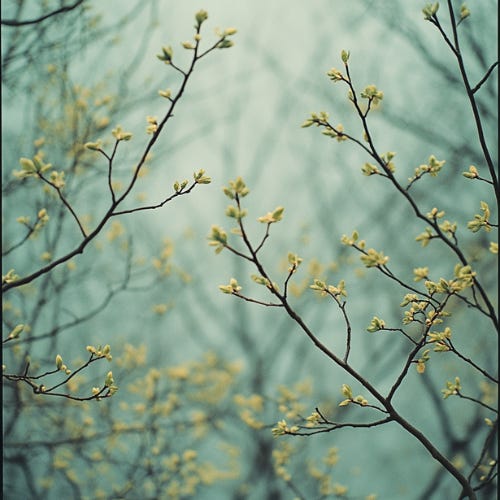
In spring, the buds almost vibrate. That bright young green that looks less like color than insistence.
Things pushing their way out of the ground.
The first nights, after the kids were down, I lay in bed.
Awake.
Stars instead of helicopters.
Actual stars.
Late June dusk that did not close the sky until almost ten.
Ohio asks something of you that Los Angeles did not.
The electricity is fragile, so you keep a generator. You learn how the house works. You know where the natural gas comes in.
You think ahead about groceries because the nearest store is twenty minutes away and the post office is in a township two over.
Convenience is not something somebody else provides.
It is something you make.
I do not want to make this prettier than it is.
Los Angeles does something Ohio does not.
It makes the world feel reachable.
The next thing is always arriving.
A person can become someone else there faster than almost anywhere I have ever been.
Ohio is not built around becoming.
It is built around what continues.
What stays.
What returns.
What you build next to people whose grandchildren may still know your grandchildren.
A place does not make you a different person.
But it changes which habits get rewarded.
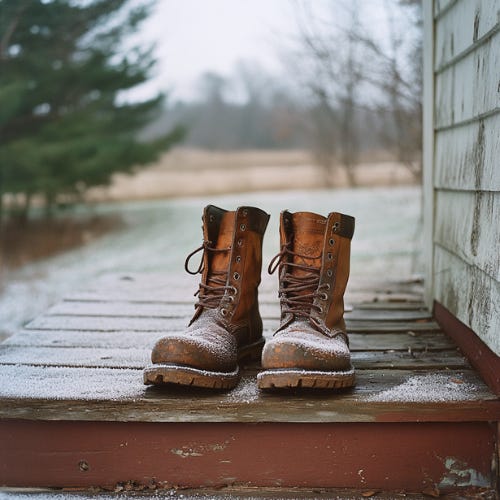
The first time I heard gunshots in Ohio, it was deer season.
I waited for sirens.
None came.
A neighbor told me, over pizza one Saturday, to get used to it.
So I did.
I started watching how people moved through the woods.
The hunters were not the people I had been taught to picture.
No one had sat me down and told me they were careless, cruel, or stupid.
It was quieter than that.
Culture had sorted them before I knew sorting was happening.
Rural. Aggressive. Backward.
The people with trucks.
The people with guns.
But the hunters around me were some of the most careful readers of land I had ever met.
They knew which deer had moved through which corridor. They knew what the creek was doing. They knew where the soil was tired.
They knew which trees were coming down and which ones were coming back.
They knew the grain of the place.
Not as an idea.
As a daily fact.
A clean shot at a wild deer began to look like one of the least hidden ways to eat animal protein.
Not every shot is clean.
Not every hunter is careful.
I know.
But I had been eating meat for years inside a system whose violence was hidden from me.
The animal in the woods was wild. It had lived outside.
It had not spent its life inside the machinery of confinement, transport, medication, and stress until it could be turned into meat somewhere no one at the table had to see.
The gunshot in the November woods was not the opposite of mercy in the simple way I had inherited.
Sometimes it was the part of the meal no one outsourced.
I am still not sure I have the standing to say that.
But I notice I said it anyway.
Fifteen years in climate and food work had trained me to recognize land knowledge when it arrived with the right nouns.
I was slower when it arrived in camouflage.
Sometime after that, on the same couch — the literal couch, the one that had moved across the country with us — I was watching a kids’ movie with the boys.
I will not name the movie.
The movie does not matter.
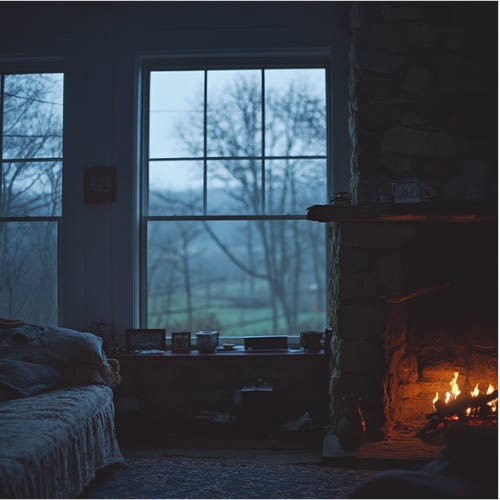
I had gotten up to adjust firewood in the fireplace.
The mantel is castle rock.
The woods were visible through the window behind me.
Opening scene.
Two kids in a pickup truck with their father.
They have just moved from a big city to a small town.
One kid looks out the window and says something like:
“Wow. There are a lot of pickups.”
The other kid says:
“Yeah. All the normal people picked up and left.”
I stopped with my hand still on the firewood.
That afternoon I had stood at school pickup.
Four-wheel drives. Flatbeds. Utility vehicles.
The kind of vehicles you drive when you actually move things, on actual land, in actual weather.
The parking lot looked exactly like the one the movie was sneering at.
A few years earlier, I might have laughed.
Or not laughed.
Maybe worse.
I might not have heard the line at all.
It would have passed through me as harmless shorthand.
A little city-kid joke. A little affectionate condescension. A little signal to the audience that we all knew who the normal people were.
But now I was inside the place the joke was about.
And from inside that place, the line did not sound affectionate.
It sounded like people congratulating themselves for not having to know the people they were describing.
Somewhere, a group of well-meaning writers had probably worked that line until it felt light.
A small character beat.
A quick laugh.
A way to show the kids felt stranded.
None of them had to imagine that the people in that parking lot might also be in the audience.
I had not just changed cities.
I had crossed into a place that heard the same sentence differently.
One ear heard a harmless joke.
The other heard itself being explained by people who had never needed to know it.
I knew the old laugh because I had laughed in other forms.
I had made the joke.
I had nodded at the clever line.
I had treated whole counties as props in my own becoming.
This is the part that still embarrasses me.
I did not become more generous because I became better.
I became more generous because the joke finally pointed at people I knew.
Some of what Los Angeles taught me was knowledge.
Some of it was injury.
Leaving did not erase either one.
It would only expose them to different sounds.
I would still be slower when wisdom arrived in camouflage.
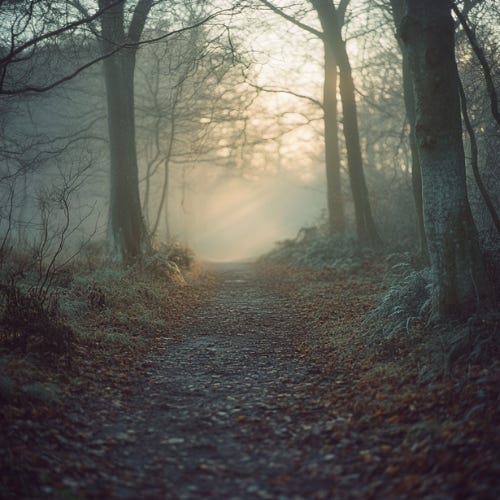
The school parking lot was real.
So was deer season.
The overdose on the porch was real.
So was the neighbor who knew the woods better than I knew any city block.
And I am not outside this.
I have mistaken my first hearing for the sound itself.
The first time I heard gunshots here, I waited for sirens.
None came.
The sound went into the trees.
The woods stayed quiet.
Somewhere nearby, a neighbor probably already knew what had happened.
Which ridge.
Which deer path.
Which season.
Which field.
I was the one who did not know where I was.
- Adam.
P.S. There is a sound somewhere in your life that you are still hearing through the ear of a place you’ve left. You may already know which one. If it came to mind while you were reading, I’d like to hear it. Just the sound. You don’t have to explain it.
No posts
Comments
Nothing yet. Say the first thing.
Sign in to join the conversation.