
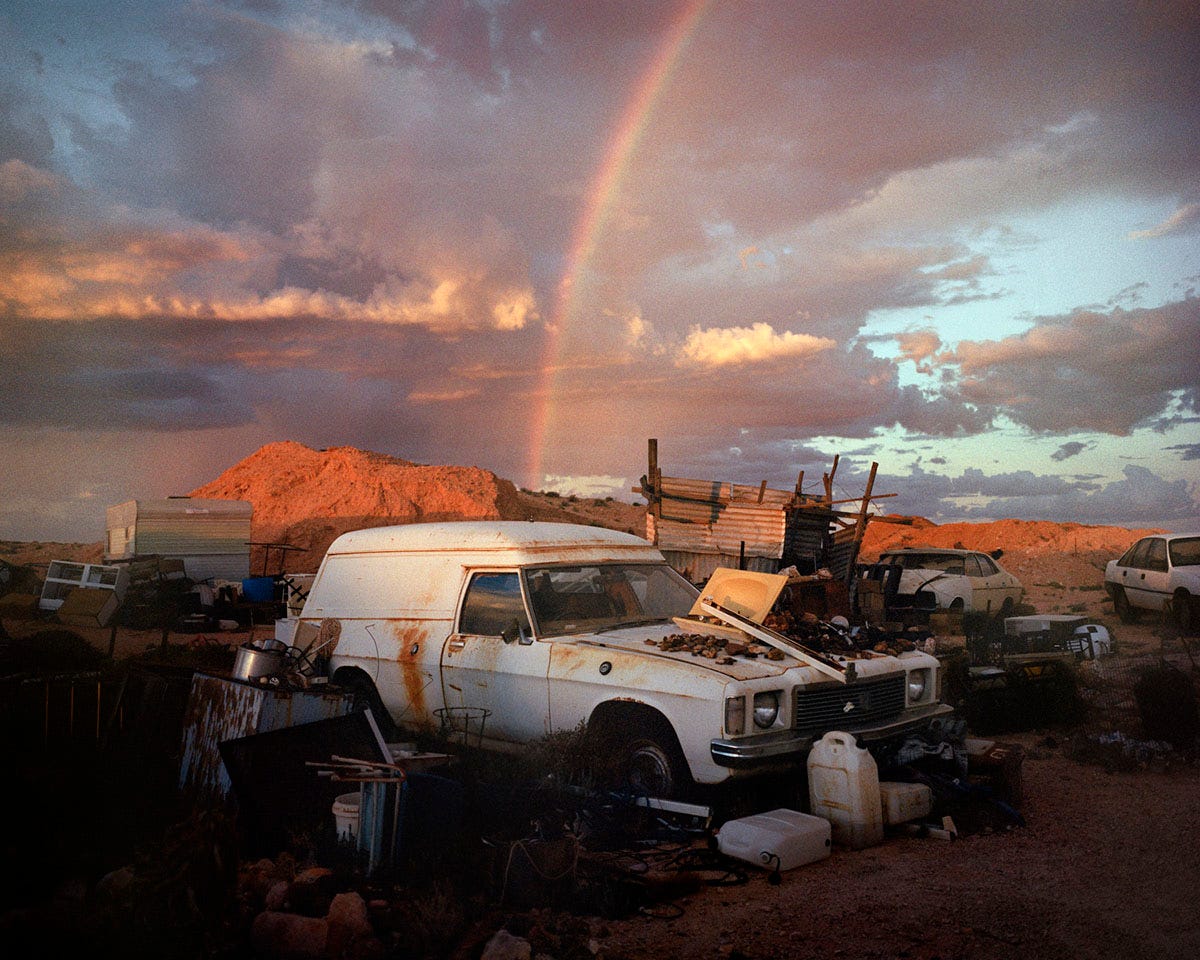
I’m often asked what equipment I use when making personal work - in particular my current project in Australia. In addition to the gear itself, let me discuss my choice to complete this work on film.
Working for weeks at a time without being able to review the photographs I've made forces me to process my experiences and meditate on a narrative over a protracted period of time. From each day to the next, instead of editing and taking stock of the photographs I make like I would working digitally, I’m responding slowly to my experience of place and time.
The process of making photos on film is a way of tricking myself into slowing down to see a person and feel a landscape. It’s a luxury compared to working on an assignment, but a luxury that allows me to make a picture less concerned with the perfect moment, and more about capturing a feeling.
My memories of the photographs I make each day become abstract and fractured; I don’t know exactly what rests on my film emulsion. I am forced to build on an imagined story as I enter new days and scenarios. I percolate and dream and become less concerned with the photography and more engaged with the experience - the image becomes a byproduct of the journey and process, and the cumulative experience informs the tone and feel of the work.
One could argue that instead of working on film I could just work digitally and not review the work, simulating the process I’ve described. But there’s an additional layer of slowing down with film - the ten frames a roll, the changing of each roll, the manual nature of metering and exposing. It makes the photography harder.
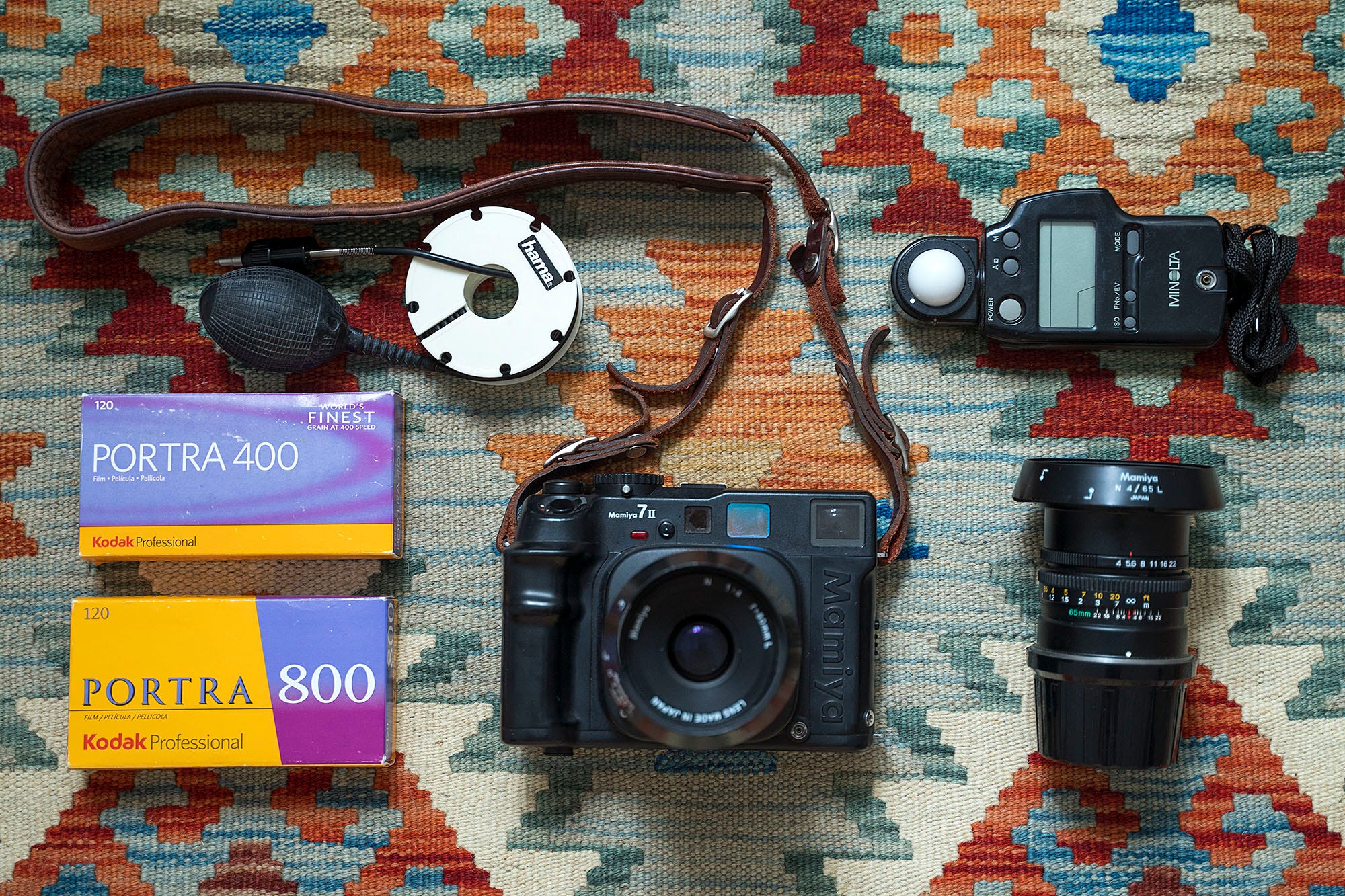
Equipment
Mamiya 7 II - Medium format 6x7 camera
Mamiya N 80mm f/4 lens
Mamiya N 65mm f/4 lens
Minolta Auto Meter IV F Light meter
Kodak Professional Portra 400 120 film
Kodak Professional Portra 800 120 film
Air Shutter Release - 20' (6 m)
The Mamiya 7 is my tool in Australia because it's light and portable. Last week I rode a motorbike for 9 hrs on a cattle muster and hung it across my torso. For the majority of my work I use an 80 mm lens because it feels like a natural viewpoint, not dramatically wider than a human field of vision. It sits somewhere between a 35mm and 50mm focal length lens of a 35mm format camera. If I need to photograph in a small interior space I sometimes use the 65 mm so I can document the entire space or person within it.
My film choice is Kodak portra. It has a warm color to it that suits the bright and warm light of the Australian bush. Many films, including Kodak, are rated by the manufacturer at a speed which isn't a true ISO/ASA rating for the maximum tonal range. In reality they are 1/3 to 1 stop slower than what the box says, so they over-expose the film by ⅓ stops - rating 400 at 320, or 800 at 640. This gives me a neg that has a higher contrast and detail.
Got any questions about this gear? Let me know in the comments.
No posts
Comments
Nothing yet. Say the first thing.
Sign in to join the conversation.