
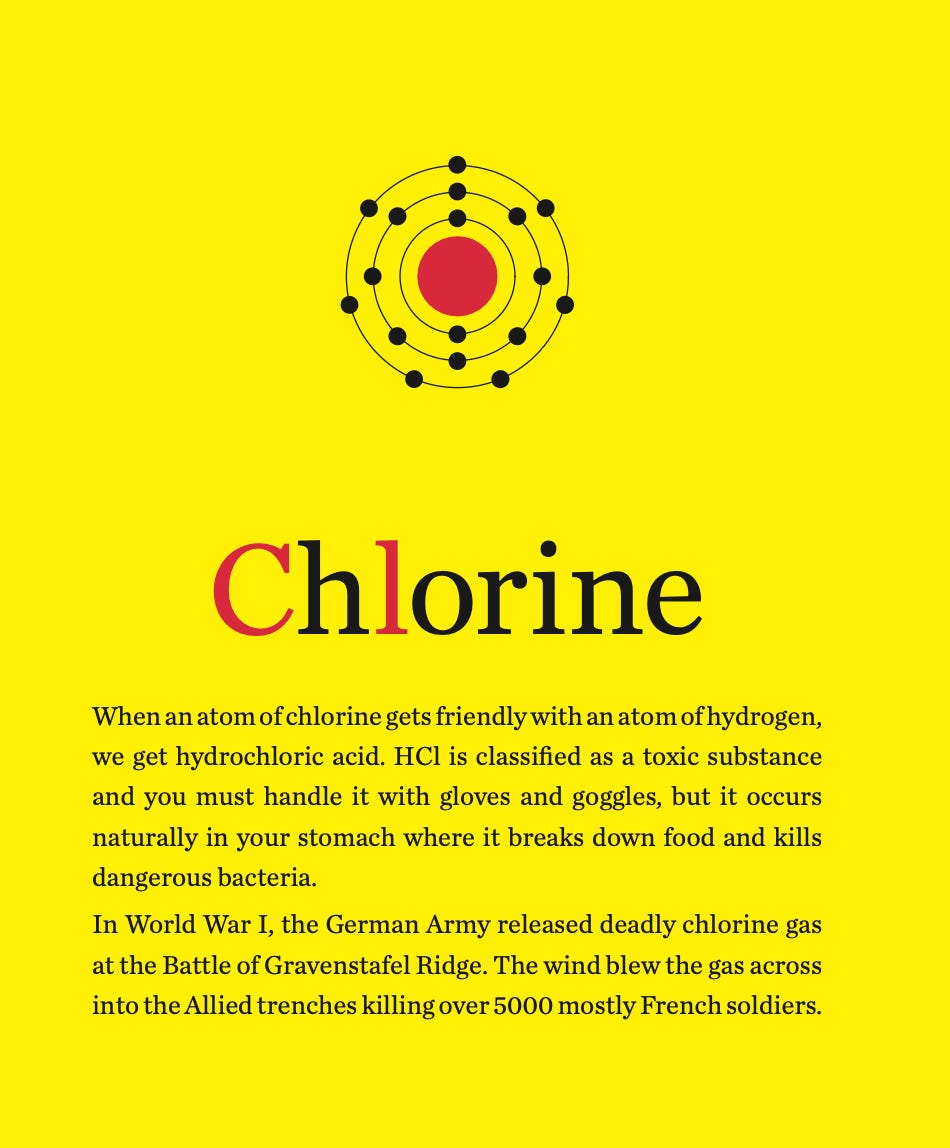
Chlorine sits one column from the right-hand edge of the periodic table, and that position explains almost everything it does. A chlorine atom out there is just one electron short of a full, settled outer shell, and, as such, it will do nearly anything to fill ‘er up.
That hunger is why a lungful of chlorine is so dangerous. Pure chlorine is a pale green-yellow gas that chokes and burns. When it hits the moisture in your eyes, throat or lungs it reacts instantly, forming acids that burn and damage tissue on contact.
Chlorine, meet our mate sodium from a few weeks back. Good old Na has a single spare electron it’s desperate to offload. You two are meant for each other.
Before you can say ‘the element wants a wife’ the violent green gas and the soft, explosive metal come together and cancel each other out into something you shake onto hot chips: table salt. Swallow either alone and you’d be in hospital or worse. Bolt them together and they don’t just become harmless, they take fried food to the next level of mouth-bliss.
That same electron hunger makes chlorine one of medicine’s quiet giants. In water, in forms such as hypochlorite, it kills the bacteria behind cholera, typhoid and dysentery. Chlorinating drinking water is reckoned among the great public-health advances of the last century.
The same trick keeps pools safe, but here’s a quick life hack. That sharp poolside smell isn’t the chlorine itself. It’s chloramines: pungent eye-stinging compounds formed when pool-cleaning chlorine meets the sweat and urine swimmers bring in with them. The stronger the whiff, the dirtier, not cleaner, the water.
The same gas was the first lethal chemical weapon used at scale. On 22 April 1915, at Ypres in WWI, Germany deployed chlorine under the supervision of chemist Fritz Haber. A complex character, Haber was also the man whose nitrogen-fixing work would go on to feed billions. Surely one of science’s most uncomfortable double legacies.
Most of chlorine’s modern life is quieter: PVC, bleach, plastics and solvents. Earlier chlorinated refrigerants tore holes in the ozone layer and lingered in the environment for decades, prompting one of the biggest rethinks industrial chemistry has ever had.
All in a day’s work for an element that could just as easily kill you as help season your chips.
Last Elemental we got down and stinky with sulfur.
Next week it’s argon time.
No posts
Comments
Nothing yet. Say the first thing.
Sign in to join the conversation.