
When talking about leadership, there are few better places to reference than World War 2. And as coaches, we should be drawing inspiration from everywhere, other industries, history, other sports, it doesn’t matter. So today will be one part leadership, one part history lesson.
May 28, 1940. The British War Cabinet. Lord Halifax had a case. The army was trapped at Dunkirk, France was collapsing, and a negotiated peace through Mussolini was, he argued, the responsible path. Churchill heard him out. Then he refused.
He didn’t just push back in the cabinet room. He went around Halifax entirely, calling a meeting of the full outer cabinet and told them plainly where he stood. He said he had considered whether it was his duty to enter negotiations with “That Man.” He said it would mean becoming a slave state. Then he told them: “If this long island story of ours is to end, let it end only when each of us lies choking in his own blood upon the ground.”
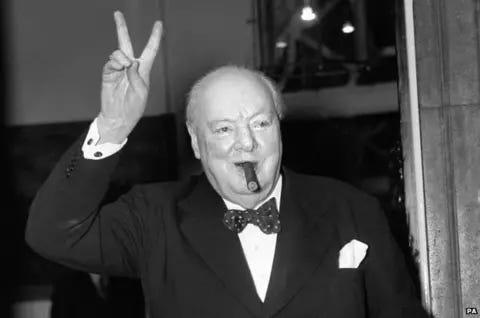
His colleagues cheered. They were with him to a man.
What the cabinet needed that afternoon wasn’t inspiration. It was someone willing to say the thing most of the room was hoping would dissolve on its own, and say it with conviction.
This is a leadership skill you can develop. It has nothing to do with being naturally bold or built for confrontation. It’s a practiced willingness to step into the conversation the room has quietly agreed to avoid.
The coaches who develop this skill tend to have rooms that trust them. The ones who don’t tend to have rooms that are polite in the wrong moments.
When I ask coaches where they lose their nerve, the answers come quickly.
The star performer who’s been underdelivering but is too valuable to upset. The staff meeting where one person dominates and everyone else goes quiet. The assistant who’s technically excellent but eroding the culture, and nobody will name it because they’ve been there too long.
The avoidance is rarely cowardice. It’s something quieter. An accumulated sense that harmony in the room is more manageable than whatever comes after the honest conversation. And that logic isn’t entirely wrong. Hard conversations are uncomfortable. They create friction. Sometimes they go badly.
What they almost never do is make things worse than silence does.
The people you lead are watching. They notice when something should have been said and wasn’t. They see the standard that got quietly lowered. They feel the moment the leader blinked. Over time, they adjust their own behavior to match the standard they actually observe, not the one written in the team handbook.
Avoiding the hard conversation isn’t neutral. It teaches the room something, and rarely what you intended.
By early 1944, Rommel had made up his mind about how to defend Normandy. He wanted the Panzer divisions at the coast to stop the Allies at the waterline before Allied air power could pin the armor inland. His counterpart, Geyr von Schweppenburg, commander of Armored Group West, disagreed completely. Hold the Panzers in reserve near Paris, strike in concentrated force once the direction of the landing was confirmed.
On March 19, 1944, Rommel went to Hitler’s Eagle’s Nest at Obersalzberg to make his case. He tried to broaden the conversation beyond tactics, to speak about what Germany was actually facing. Hitler slammed his fist on the table and ordered him to stick to military matters. Rommel pushed back twice. He was dismissed from Hitler’s presence.
Hitler’s solution was a compromise that satisfied no one. He split the Panzer divisions between Army Group B and OKW reserve, keeping the most powerful divisions under his personal control, requiring his direct authorization before they could move. On June 6, when the landings began, Hitler was asleep. His staff didn’t wake him for hours. By the time the armored divisions were released, Allied air power and the delay had made a coordinated counterattack impossible. The beach defense was overwhelmed. Rommel’s assessment proved correct in almost every detail.
The point is not that saying the right thing guarantees the outcome. It doesn’t. What it does is ensure the leader has done the actual job. Leaders need to communicate clearly what they see, hold the standard publicly, go on record before the moment of decision rather than after.
Leaders who say what needs to be said sometimes get overruled. Leaders who don’t say it don’t get overruled. They get managed. And their rooms learn to manage them back.
Think about the last time you stayed quiet when you shouldn’t have.
What was the real cost of that silence to the people in the room with you?
Churchill said what the room was hoping he wouldn’t.
Rommel told Hitler he was wrong, twice, to his face.
Neither one was thanked for it.
The leaders your people remember are the ones who said the thing.
The question is whether you’re building that habit or avoiding it.
Until next week,
Caleb Cousens
No posts
Comments
Nothing yet. Say the first thing.
Sign in to join the conversation.