
Las Améяicas Weekly Business Brief is a collection of the most important events from the past week as reported by select open-source media platforms and governments in the Améяicas.
Do not miss the latest publications on Barbershop Whispers…Russia
If you are not a subscriber to Barbershop Whispers...Las Améяicas, subscribe below:
Economics & Privatization: The 24 July U.S. Section 301 tariffs sort LatAm into 10% and 12.5% bands, handing Argentina (10%, 2,212 zero-duty lines) a competitive edge while Brazil absorbs cumulative rates up to 37.5% on ~US$10.8bn of exports.
Energy & Minerals: Venezuela’s oil-asset price discovery has begun — a Miami blank-check vehicle put a US$400mn pre-money value on KEO Energy’s PetroUrdaneta stake — but ~US$13bn in unaccounted PDVSA-linked funds keeps the energy-sector reopening opaque and license-contingent.
Foreign Investments: The 23 July designation of the Port of Mariel terminal under E.O. 14404 triggered Singapore’s PSA International to scrub Cuba from its website and Meliá’s Portuguese unit to exit, accelerating foreign-operator flight from Cuban infrastructure.
Domestic Politics: President-elect De la Espriella enters his 7 August inauguration without congressional control after a Petro-Uribe alliance elected Uribista Honorio Henríquez Senate president 56-45, diluting his tax-reform and hydrocarbons agenda.
External Powers & Geopolitics: Nicaragua’s Daniel Ortega formally moved to abolish elections, cementing dynastic rule and virtually guaranteeing expanded U.S. sanctions atop the country’s 18% reciprocal tariff and existing gold-sector measures.
The US administration’s new Section 301 forced-labor tariffs of 10–12.5% took effect 24 July 2026 across roughly 60 trading partners, covering ~99% of U.S. imports, and sorted Latin America into two bands with material competitiveness consequences.
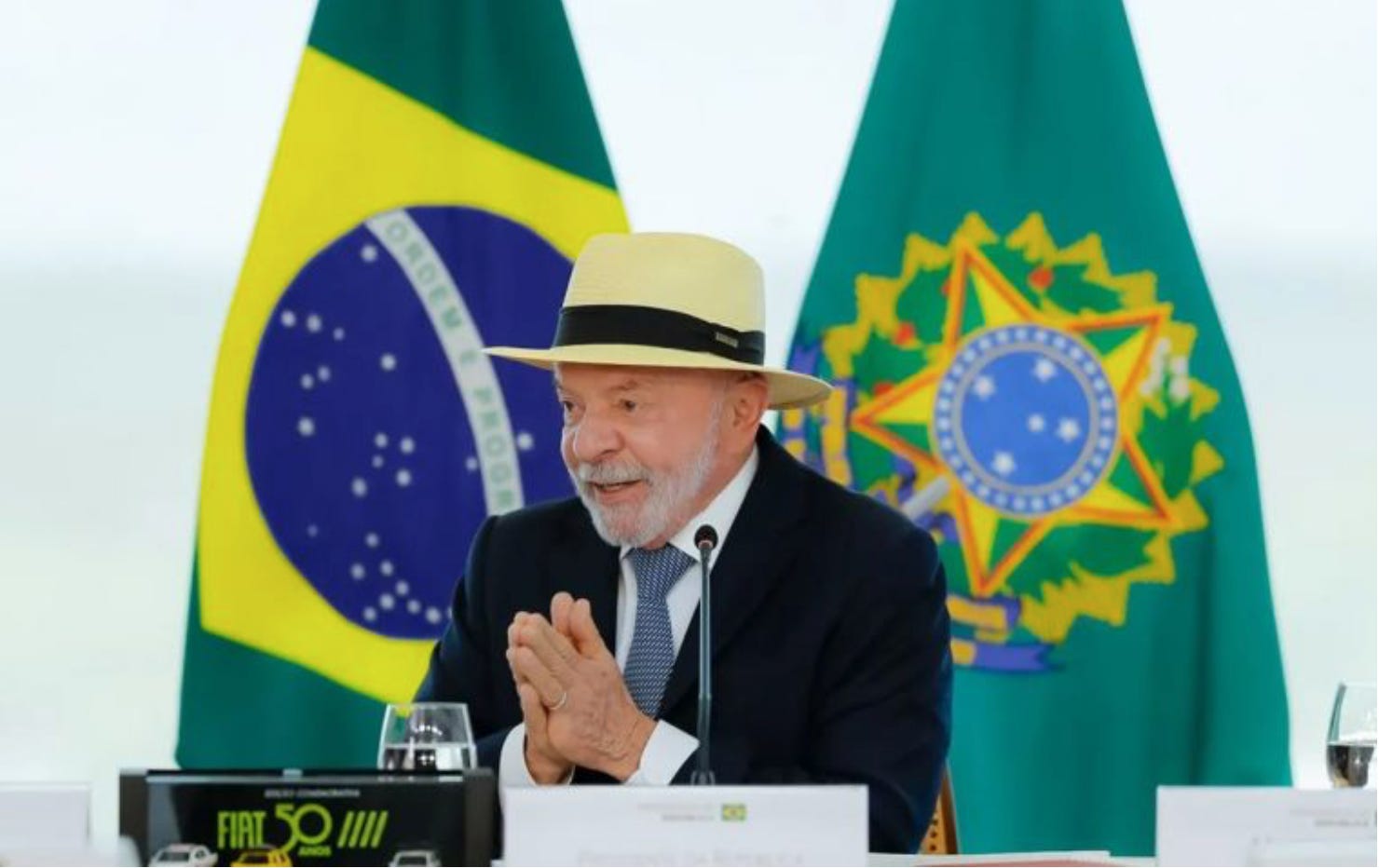
Brazil faces the sharpest shock: the 12.5% duty stacks atop a prior 25% surcharge, bringing the cumulative rate to 37.5% on 3,985 products. The CNI industry confederation estimates that 48.7% of Brazil’s US-bound exports (~US$10.8bn) now carry additional levies — affecting aluminum, cotton, electronics, lithium batteries, and footwear, though beef, coffee, orange juice, and aircraft remain exempt.
Argentina, by contrast, was placed in the lowest 10% band and expanded its zero-duty lines to 2,212 under the February ARTI framework, leaving Milei’s exporters 2.5 points ahead of those in Brazil, Chile, Colombia and Peru.
Uruguay landed in the top 12.5% band for lacking an explicit forced-labor import ban, creating a clear policy-arbitrage incentive to legislate down to 10%. Oil, gas, fertilizer and USMCA-compliant goods are exempt and the new rates do not stack with existing 50% steel/aluminum sectoral duties.
Expect a wave of forced-labor import bans across the 12.5% cohort (Uruguay, Colombia) as the fastest tariff-reduction lever, while Brazil’s threatened WTO challenge and reciprocity measures add a trade-war premium to the real and Brazilian industrials (Embraer ERJ insulated by the aircraft exemption; commodity names shielded) ahead of October elections — Argentine exporters and the peso are the relative winners.
Key Takeaways
US tariffs appear to be driven by the US President’s personal relationships with LATAM leaders rather than economics. Watch for accelerated market diversification toward the EU, China, and India, as is happening with Canada.
Sources: MercoPress
For the first time since the 1976 nationalization, a Venezuelan oil-production asset has been priced: on 15 July, a Miami blank-check vehicle, Lionheart Holdings, signed a non-binding LOI to combine with KEO Energy — whose principal asset is an indirect interest in the PetroUrdaneta Project in the Maracaibo Basin, producing ~1,300 bpd — at a preliminary US$400mn pre-money enterprise value.
Comments
Nothing yet. Say the first thing.
Sign in to join the conversation.