
Las Améяicas Weekly Business Brief is a collection of the most important events from the past week as reported by select open-source media platforms and governments in the Améяicas.
Do not miss the latest publications on Barbershop Whispers…Russia
Chingis Khan Heir Whispers in the Tsar’s Ear
If you are not a subscriber to Barbershop Whispers...Las Améяicas:
The Week’s Key Takeaways
Economics & Privatization: On 31 July 2026, Argentina’s Milei sent his BCRA charter overhaul, which bans all state financing, to the Chamber of Deputies, an IMF-endorsed signal for sovereign credit and the peso.
Energy & Minerals: The IMF instructed Guyana to fast-track the resolution of ExxonMobil cost-oil audit disputes, highlighting fiscal and governance implications for the region’s largest deepwater play.
Foreign Investments: A UK Commercial Court entered a quantified judgment of £18.1 million against Banco Nacional de Cuba in the CRF I creditor case, setting an enforcement precedent for Cuban sovereign-debt holders.
Domestic Politics: Colombia’s president-elect, Abelardo De La Espriella, prepares to take office on 7 August 2026, inheriting a 30.2 trillion-peso budget deficit from the outgoing Petro government.
External Powers & Geopolitics: US-brokered Venezuela political transition talks formally launched by phone on 1 August 2026, while face-to-face talks have been pushed out to the following week.
This Week’s Five
Economics & Privatization
◆ LEAD STORY OF THE WEEK
Argentina’s Milei Sends BCRA Charter Overhaul Banning State Financing to Congress (YPF) [High]
On July 31, 2026, President Javier Milei sent his bill to rewrite the charter of the Banco Central de la República de Argentina (BCRA) to the Chamber of Deputies, formally entering the parliamentary record and heading to committee, with the government targeting passage in August.
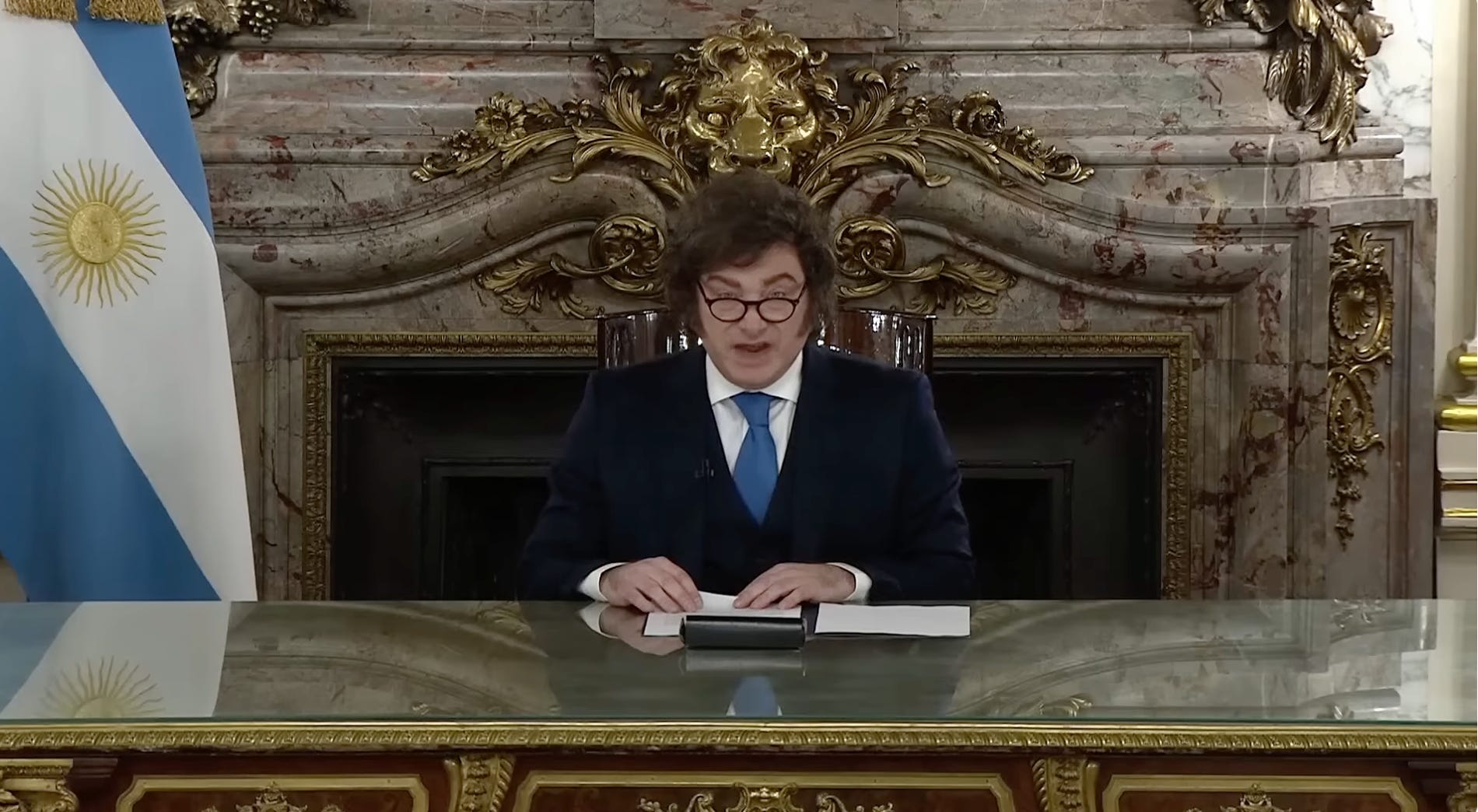
The reform restores a single mandate to preserve the currency’s value, categorically bans BCRA financing of the state at the national, provincial, and municipal levels, eliminates non-transferable Treasury letters, and requires a two-thirds congressional majority to remove bank leadership. Milei described it in a nationwide broadcast as the most important structural reform in 91 years, and the IMF has publicly backed it as a step toward Argentina regaining access to international markets.
Key Takeaways
The forward-looking trigger is the timing of the committee’s August passage: clean approval would be bullish for Argentine sovereign spreads and the peso, while dilution or delay would reprice the reform’s credibility.
Sources: Parlamentario.com – Casa Rosada – Official Announcement (Video)
Comments
Nothing yet. Say the first thing.
Sign in to join the conversation.