
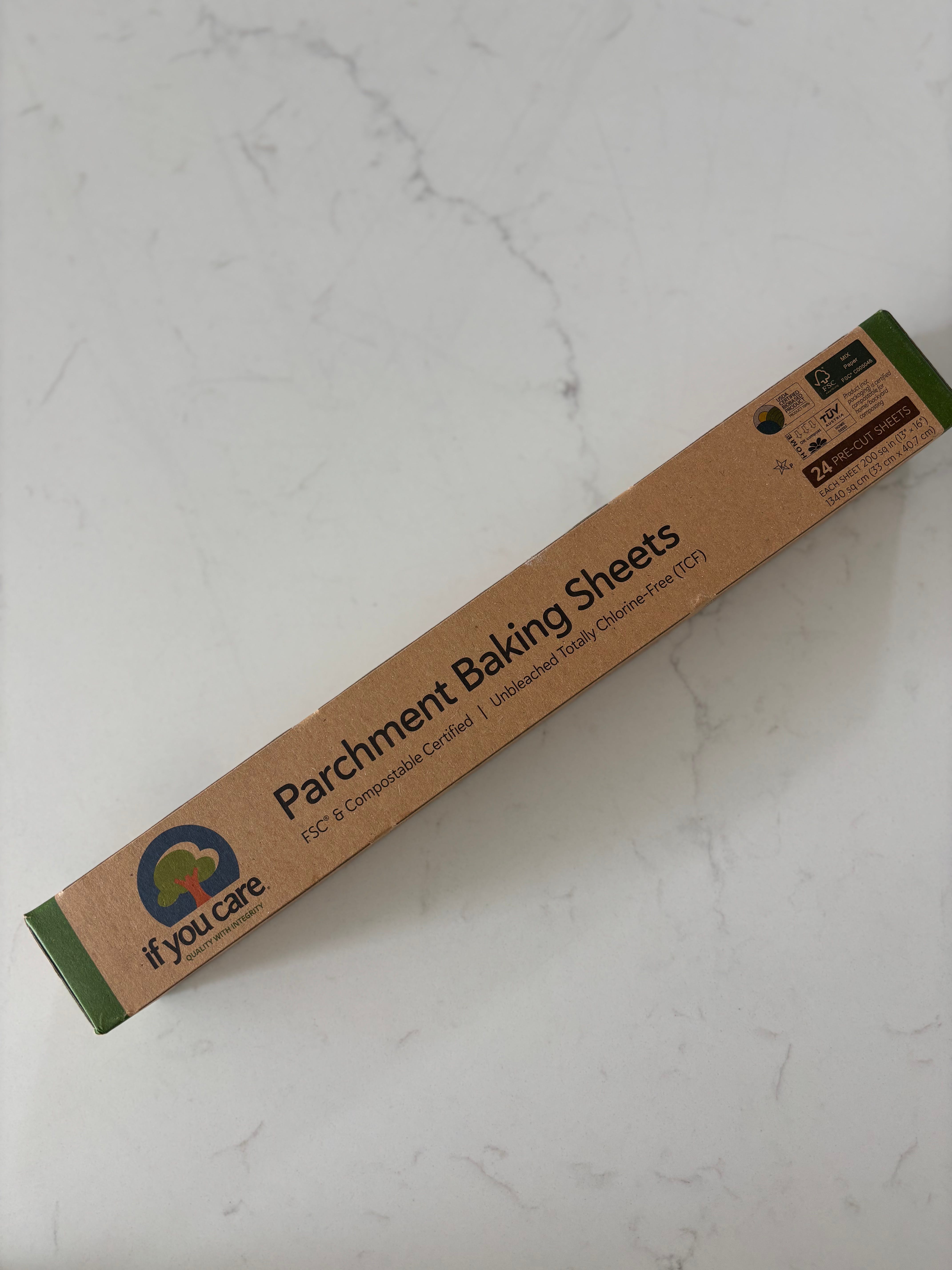
There’s a roll of parchment paper in my pantry at all times. Always. It’s one of those things that once you understand why, you can’t go back.
For years I used aluminum foil like most people do—roasting vegetables, baking chicken, lining pans. It felt practical. It felt normal. Then I learned something that changed that pretty quickly: at high temperatures, aluminum can start to leach into your food. And it gets worse when you add salt or acid—think lemon, tomatoes, vinegar—which are things I cook with constantly. The idea of that going into food I was carefully sourcing and preparing didn’t sit right with me.
So I made the switch to parchment. And honestly, I never looked back.
Why parchment is better for baking:
Nothing sticks. Cleanup is a dream. Your cookies slide right off, your roasted vegetables get that perfect caramelization without losing half of them to the pan, and your baked goods come out cleaner every single time. A side note: I do try to use non-bleached parchment—it’s worth getting!
One important note though—and I say this from experience: be careful using parchment under the broiler. It will catch fire. I’m not being dramatic. If I do need to broil something, I either put the food directly on the baking sheet, or use parchment and watch VERY carefully (lol).
But here’s where it gets really good—storage.
Most people don’t think about parchment beyond the oven, but it’s become one of my favorite food storage tools. Three reasons:
It keeps food from getting soggy. Layering parchment on the bottom of your container, then adding food on top (any food!), keeps things from turning into a sad, wet pile in your container.
It keeps food from sticking together. Proteins, doughs, cheese slices, you name it. Parchment between layers means everything comes apart cleanly when you need it.
And the presentation is just beautiful. There’s something about wrapping food in parchment that makes it feel intentional and cared for—whether it’s going in your fridge, a lunchbox, or on a cheese board.
It’s a small swap. But small swaps done consistently are how you build a kitchen that actually works for you.
No posts
Comments
Nothing yet. Say the first thing.
Sign in to join the conversation.