
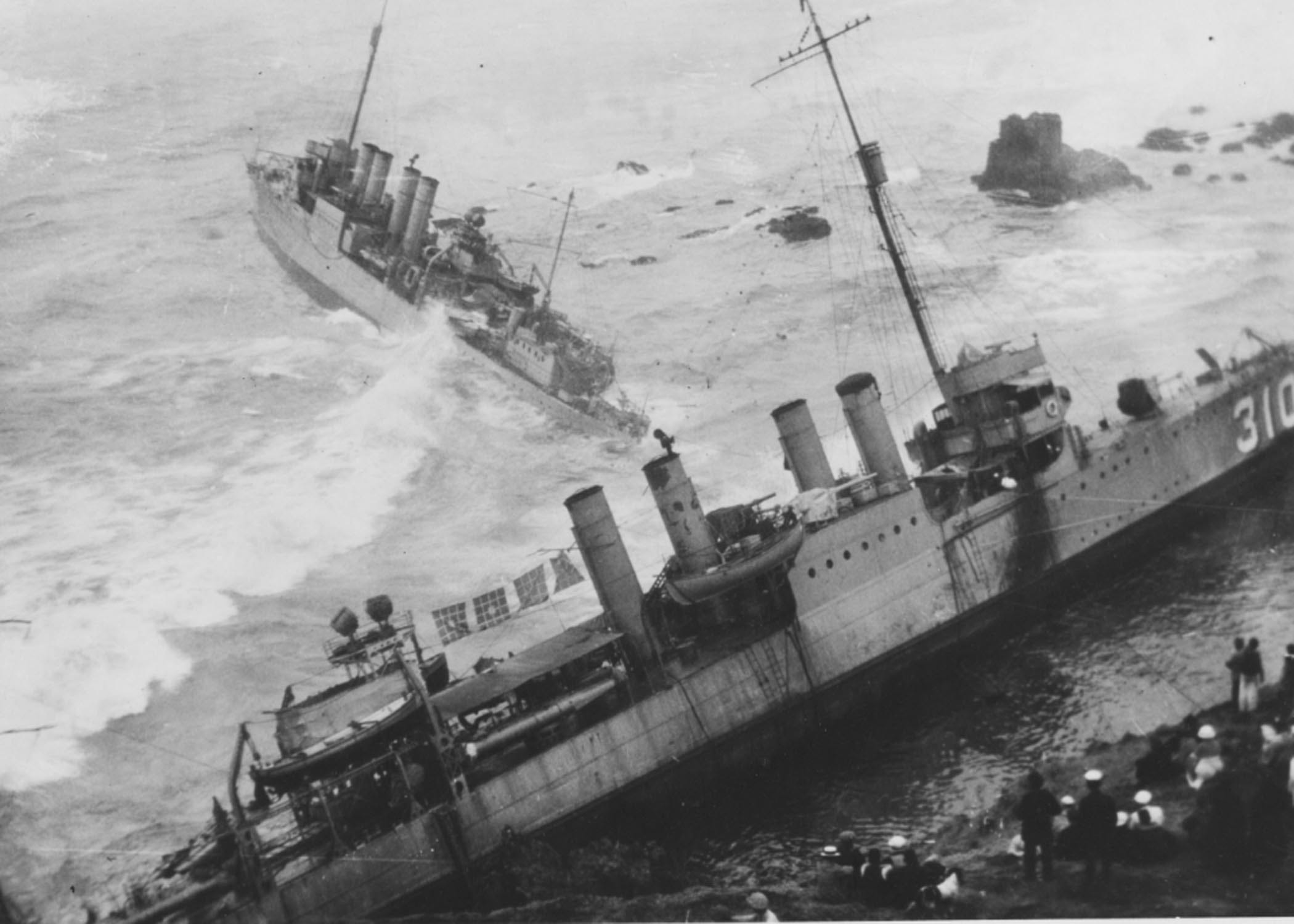
At sea, some decisions leave no room for forgiveness. When a destroyer squadron commander orders his ships to make 20 knots in thick fog while hugging the coast, a simple miscalculation can lead to disaster. But when human and technical errors pile up, catastrophe is no longer merely possible—it becomes inevitable.
There is a tide in the affairs of men,
Which, taken at the flood, leads on to fortune;
Omitted, all the voyage of their life
Is bound in shallows and in miseries.
On such a full sea are we now afloat,
And we must take the current when it serves,
Or lose our ventures…
—William Shakespeare, Julius Caesar (Act IV, Scene 3)
Along the California coast, summer was slowly giving way to autumn. Aboard the warships anchored in San Francisco Bay, many sailors welcomed the change: the previous three months had been a relentless cycle of sea time, and the coming bad season promised rest. The formations of the U.S. Battle Fleet1 had not been idle—especially Destroyer Squadron 11 (DESRON 11), one of its two destroyer squadrons. From February to April, the group’s 19 ships took part in the U.S. Navy’s first Fleet Problem, a large-scale air–sea wargame conducted off Panama. They then carried out torpedo exercises off San Diego, before escorting Battle Division 4 to Seattle in late June. In early September, the destroyers covered roughly half the return trip toward San Diego— their home port—and called at San Francisco.
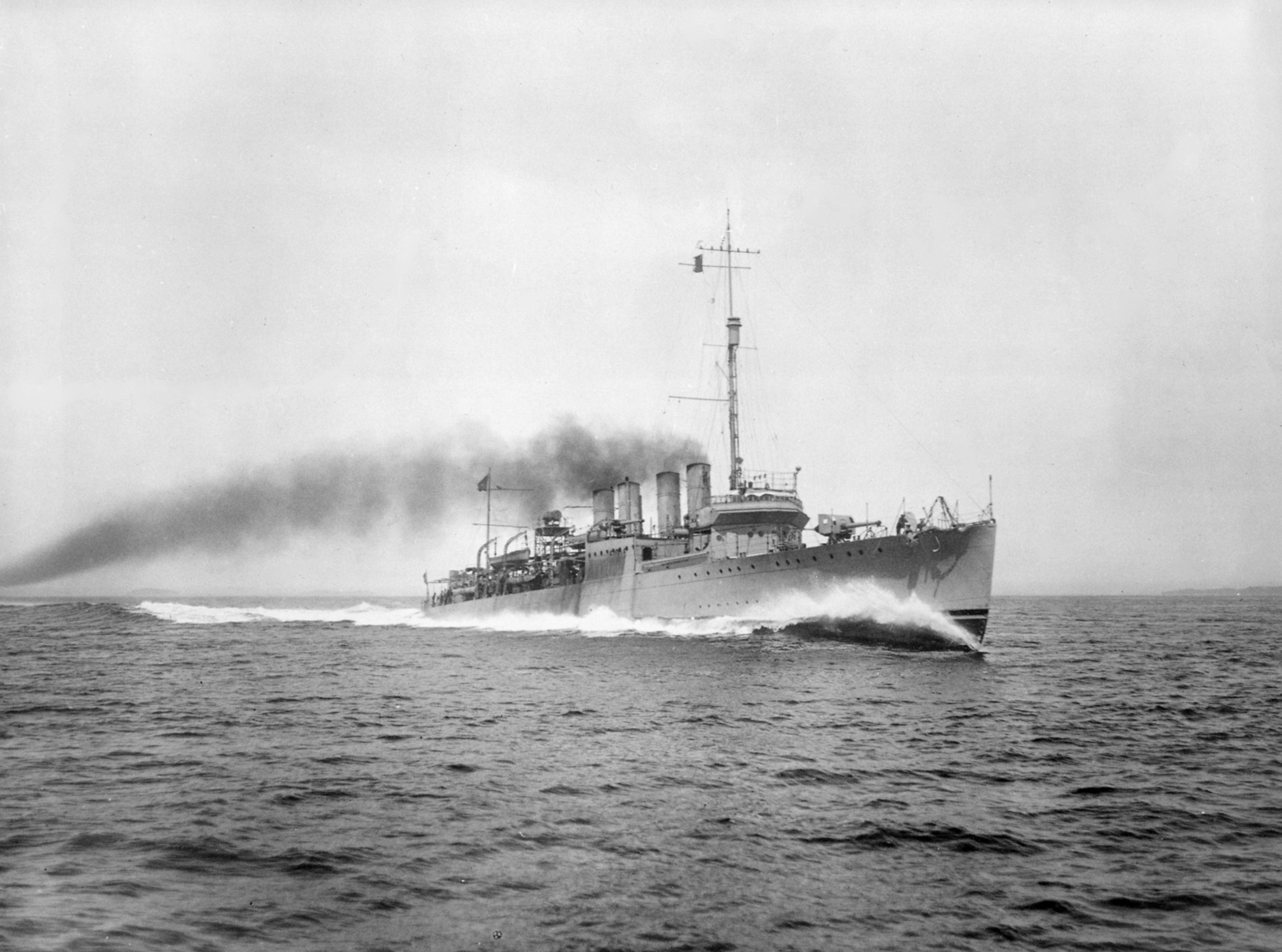
DESRON 11 consisted of recent destroyers, commissioned between 1918 and 1920 and belonging to the Clemson class, designed for anti-submarine warfare. Recognisable by their four funnels, these ships—95.8 m (about 314 ft) long and displacing around 1,300 t (about 1,280 long tons / 1,430 short tons) in fighting trim—were in practice employed mainly as fleet escorts thanks to a high top speed (32, even 35 knots). Unfortunately, crews rarely had the chance to push the machinery that hard: budget constraints required commanders to economise on fuel, and thus to steam at reduced speeds—around 15 knots for direct transits between ports, for example.
Since July 1922, the squadron had been commanded by Captain Edward H. Watson, an experienced officer of nearly fifty, a veteran of the Spanish–American War and the Great War, and a recipient of the Navy Cross. He had already commanded many ships (a repair ship, two battleships, and a gunboat), but his July 1922 appointment to DESRON 11 brought a new responsibility: commanding an entire flotilla. Yet the squadron was both new and undermanned, with budget constraints directly affecting crew complements. A Clemson-class destroyer could theoretically carry up to 131 officers and men, but in September DESRON 11 was short by nearly a third. USS Delphy, on which Watson flew his broad pennant, began the year with only about half its authorised crew. In short, over recent months the commander’s main task had been to train his men and turn the squadron into an effective unit—no easy matter. During the summer, one of his ships had collided with another unit of the Battle Fleet, an accident that always casts a poor light on the rest of the group—and on its commander.
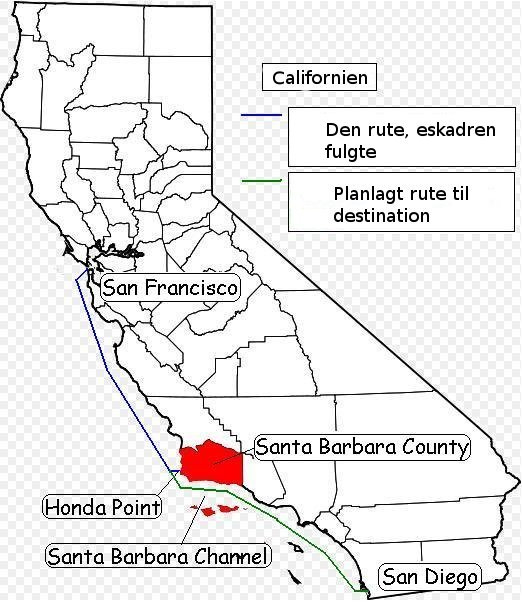
On the afternoon of 7 September, Watson convened his commanding officers. The final leg down to San Diego was on the agenda, and he wanted to use the cruise to build his flotilla’s experience. The destroyers would have to follow the California coast to Point Conception, then alter course to port and take the Santa Barbara Channel, thereby avoiding the Channel Islands scattered along the shoreline off Los Angeles. At 15 knots in fair weather, there was nothing especially complicated about it.
But Rear Admiral Sumner E. W. Kittelle, commander of the Battle Fleet’s two destroyer squadrons, had just passed on welcome news: the Navy had entered a new fiscal year, meaning penny-pinching would ease for a while. With fuel no longer a concern, a cruising speed of 20 knots was now permitted. Watson took this as more than permission—if not an order, then a strongly implied expectation. After the unfortunate collision earlier that summer, he was keen to restore his reputation, and he saw a chance to show zeal by setting a record passage. To keep the group at 20 knots, Watson would even detach three destroyers that could not maintain the pace due to mechanical issues.
Another item concerned communications protocol. His ships were equipped with a modern radio-navigation aid that allowed reception of signals from shore-based radio beacons (radio “ranges”) transmitting from known positions. In theory, receiving signals from two different stations allowed a ship to obtain bearings more easily and accurately than by optical triangulation. In practice, Southern California at that time was covered by only a single beacon, so the information was incomplete. Traffic in the area was also heavy, and the beacon station was swamped by calls from civilian and naval vessels. Watson therefore decided that only the lead destroyer—his own—would communicate with the beacon; the others would simply follow his track. They could communicate among themselves by radio, but not on the beacon’s frequency.
On 8 September at 07:00, fifteen destroyers sailed from San Francisco in company with DESRON 12. Watson ordered his units in Squadron Cruising Formation No. 5: three columns abreast, with the leader ahead in the centre. The two squadrons stood offshore and soon began short-range combat exercises.
11:00 - the formations separated and proceeded on their respective routes. Aboard Delphy, her commanding officer, Commander Hunter, and his navigator, Lieutenant Blodgett, quickly noticed that the gyrocompass had failed. They therefore had to rely on the magnetic compass alone—without realising that it was not especially reliable. Their bearings were in fact off by two degrees: acceptable in the abstract, but soon to have serious consequences.
11:30 - navigators visually sighted the lighthouse at Pigeon Point at about two nautical miles (about 2.3 mi). The destroyers were now making 20 knots.
14:15 - Hunter contacted the radio beacon for a fix and realised that the position computed by the station differed significantly from his own estimate. Was he closer to shore than he believed? A quarter of an hour later, the destroyers passed abeam of Point Sur lighthouse—but without seeing it, though the men could sense land nearby from the tell-tale coastal haze. Hunter corrected course; nevertheless, a visual check was needed. Blodgett suggested closing the coast to identify the next seamark2 properly (Point Piedras Blancas lighthouse). Hunter refused—perhaps because it would have forced him to reduce speed. He was an experienced navigator and knew these waters well; his calculations, he believed, would be enough to bring the destroyers safely into the Santa Barbara Channel. Then the weather worsened and the sea built, tossing the destroyers. It was not dangerous, but this “liquid obstacle” distorted the calculation of the ships’ speed3—and therefore their position. Add the current and the wind, and by early afternoon Hunter was overestimating speed by about two knots (21 instead of 19). Faced with a commander so confident, Lieutenant Blodgett had little influence. Watson was therefore the only man who might have pushed his subordinate toward caution—yet Watson had launched into an engrossing discussion with a diplomat acquaintance he had taken aboard in San Francisco.
For four long hours, the destroyer column pressed on without Hunter judging it necessary to contact the Arguello Point beacon again to refine his position. The commander of DESRON 12, following the same track far behind, would do so three times—and reduced speed to 15 knots. During the afternoon, USS John Francis Burnes (DD-299) developed boiler trouble and had to slow. Wanting to keep 20 knots, Watson authorised her to leave the flotilla and proceed to San Diego independently at reduced speed.
16:27 - Watson also ordered the remaining fourteen destroyers into a single column (Squadron Cruising Formation No. 18) . Delphy led the four other ships of her division (DESDIV 33), followed by the nine destroyers of DESDIV 31 and DESDIV 32.
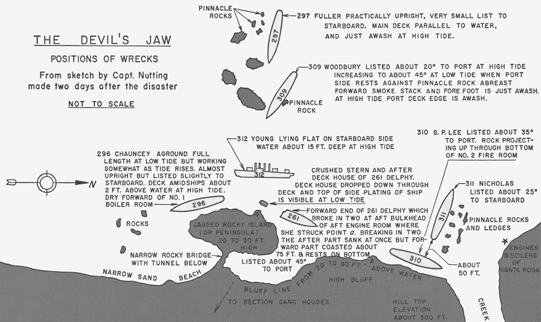
Destroyer Division 33 (5 ships): Delphy (DD-261), S. P. Lee (DD-310), Young (DD-312), Woodbury (DD-309), Nicholas (DD-311);
Destroyer Division 31 (5 ships): Farragut (DD-300), Fuller (DD-297), Percival (DD-298), Somers (DD-301), Chauncey (DD-296);
Destroyer Division 32 (4 ships): Kennedy (DD-306), Paul Hamilton (DD-307), Stoddert (DD-302), Thompson (DD-305).
Overcast skies and mist prevented sextant fixes, and without anyone realising it, the squadron was edging closer and closer to the coast. One piece of equipment might have warned of the danger: the depth sounder measuring water under the keel could have alerted Delphy’s bridge that the 50-fathom line (about 300 ft / 90 m)—the boundary between deep water and shoals—was near. But the device could only function at speeds below 20 knots. A solution would have been to ask John Francis Burnes, which had just left the flotilla, to pass her own soundings—yet neither Hunter nor Watson felt it necessary.
19:00 - however, Delphy sent a request to the radio beacon, but the station—overloaded—did not reply immediately.
Within the column, commanding officers began to grow uneasy. They had made their own navigation calculations, and their results did not match Hunter’s. One of them raised the issue with Watson by radio; in doing so he occupied the squadron frequency at the very moment the radio beacon tried to contact Delphy with its fix—which therefore never reached its intended recipient.
20:00 - Watson radioed Admiral Kittelle to report his position. Procedure called for Kittelle to verify the information, but for such a routine passage he did not—removing one of the last remaining safeguards.
Around the same time, the commanding officer of USS Stoddert—perhaps at Lieutenant Blodgett’s prompting, as he had disagreed with Hunter from the start—asked the radio station for his position twice (at 20:11 and 20:32). Watson now believed he was abreast of Point Arguello, but the fix showed he was still well to the north—and closer to shore than expected. The information was passed to the commander, who refused to believe it and demanded confirmation. Messages continued back and forth with the beacon until 20:39, but Hunter chose to disregard them. He was in fact so convinced he had rounded Point Arguello that he now worried about the proximity of San Miguel Island: if the column was to enter the Santa Barbara Channel, it would soon have to turn to port to avoid the first of the Channel Islands (in reality about 33 nautical miles—around 38 mi—south of Point Arguello). His anxiety was heightened by the afternoon’s distress call from the mixed cargo ship Cuba, which had accidentally grounded on reefs off the island’s west coast. A brief discussion followed between Watson, Hunter, and Blodgett. Despite Blodgett’s pleas for caution, Watson believed he should reach the channel entrance by 21:00, and he ordered that at that time the column would make an almost right-angle turn to port, maintaining 20 knots. He then returned to his cabin to resume his conversation with his guest, while DESRON 11 continued on its fatal course.
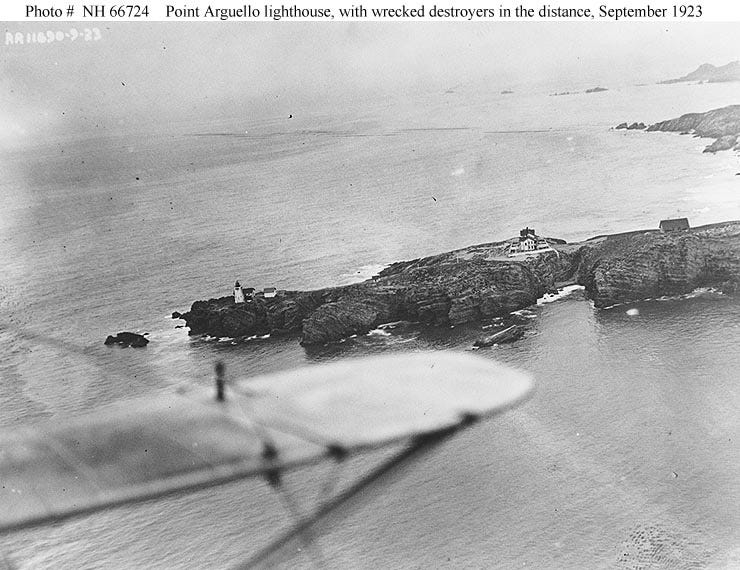
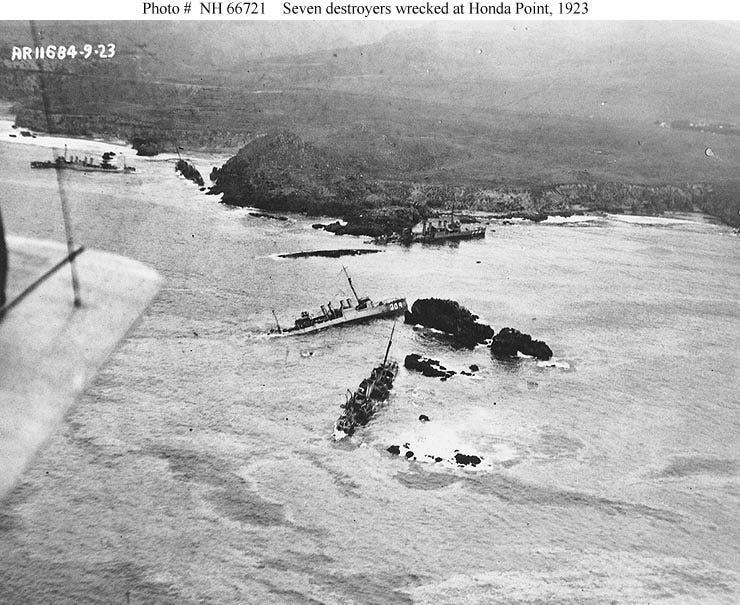
20:58 - Hunter received one last message from the Arguello Point station placing him three nautical miles (about 3.5 mi) north of the station and only half a nautical mile (about 0.6 mi) from shore. It seemed so improbable that he dismissed it. He should not have: the channel entrance was notorious for dangerous currents and strong winds—hazards mariners had feared since the sixteenth century. Spanish explorers called this stretch of coastline the Devil’s Jaw. North of Point Arguello lay another rocky promontory, Honda Point. Fringed with reefs, it was even nicknamed Point Pedernales (“Flint Point”) by locals, so jagged was its relief.
Thanks for reading! This post is public so feel free to share it.
21:00 - Hunter put Delphy’s helm over and turned 95° to port. The rest of the squadron—strangely not warned in advance of the course change—was momentarily surprised, but S. P. Lee quickly fell into Delphy’s wake, less than 300 m (about 330 yd) astern, followed closely by Young. Soon, thirteen destroyers in single file turned 95° at 20 knots—following their leader straight toward the coast, straight toward Honda Point. Two minutes later, they saw him vanish into the mist. After that, events unfolded with brutal speed.
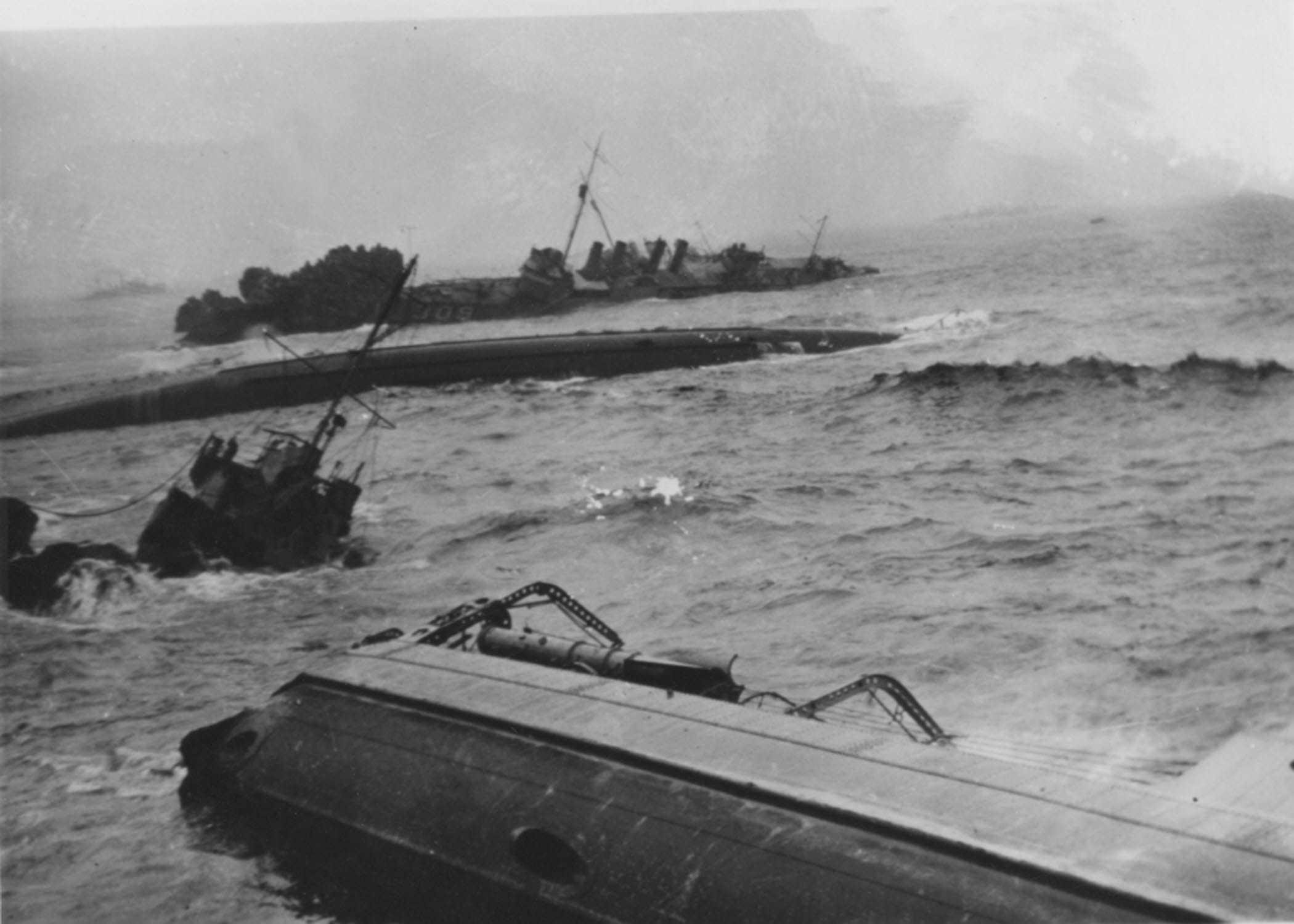
21:04 - USS Young literally impaled herself on a submerged reef only a few dozen metres from the rocky shore. At 20 knots, the impact was appalling: the destroyer stopped dead, several sailors were thrown into the sea, and a large breach opened on the starboard side. So much water poured in that the ship capsized in under two minutes.
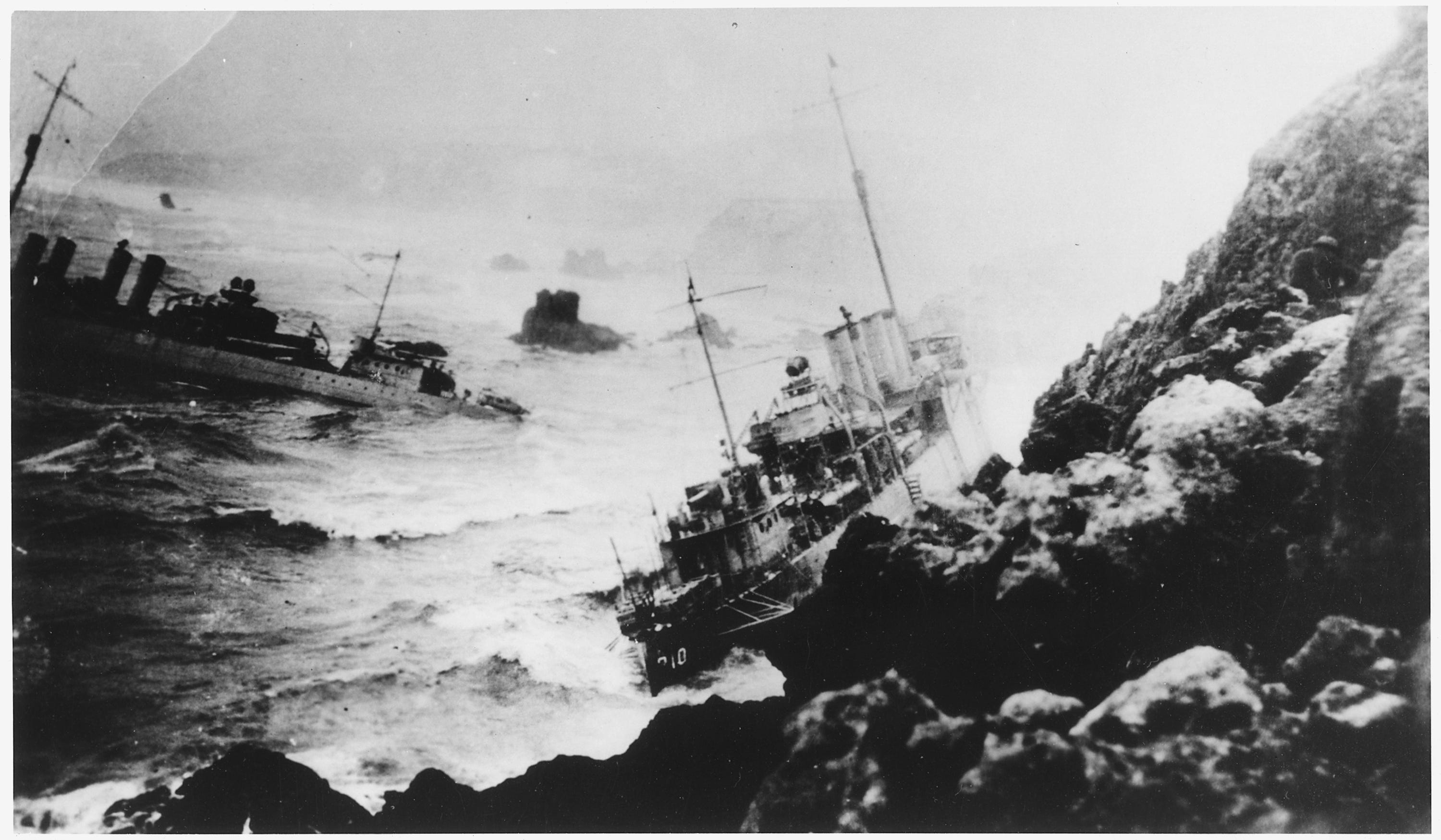
21:05 - USS Delphy ran aground so violently off Honda Point that she broke in two at the engine room. The stern section was swallowed immediately. Arriving just behind, USS S. P. Lee had only enough time to stop and put her helm hard to port to avoid collision. She in turn grounded on the rocks. Her hull was ripped open by reefs on the starboard side, and she came to rest less than 10 m (about 33 ft) from the cliff with a 35° list.
21:06 - Aboard Delphy, shock gave way to disbelief. Hunter believed he had struck San Miguel Island, and Watson hurriedly began sending warning messages to the other destroyers. He ordered them to turn immediately 90° to port to reach the Santa Barbara Channel, which he now believed lay farther north than expected. It was already too late for USS Woodbury and USS Nicholas. The former tried to avoid the shore by turning to starboard, but smashed head-on into exposed rocks less than 200 m (about 220 yd) off Honda Point. The latter turned to port, but could not prevent the inevitable: driven by current and surf despite every effort by her commanding officer, she grounded not far from S. P. Lee, though much less violently.
The entirety of DESDIV 33 had thus thrown itself onto the coast—but the disaster was not yet over. Moments later, DESDIV 31 arrived at full speed upon the scene. The lead ship, USS Farragut, grasped the situation and stopped immediately. She even went astern to avoid being set in by the current. In doing so, she collided with the destroyer behind her, USS Fuller. Sheering aside, Fuller struck reefs head-on, and the impact wrecked her machinery. Damaged but still afloat, Farragut cleared the danger zone with USS Percival and USS Somers, which had also avoided the worst4. There would be one final victim, USS Chauncey, near the rear of the same division. As she tried to slow by every means possible, the surf drove her so forcefully against Young that the port propeller of the overturned wreck tore into Chauncey’s hull at the engine room, causing an immediate, total loss of power. Without propulsion, the destroyer was doomed, and she grounded a few metres south of Honda Point.
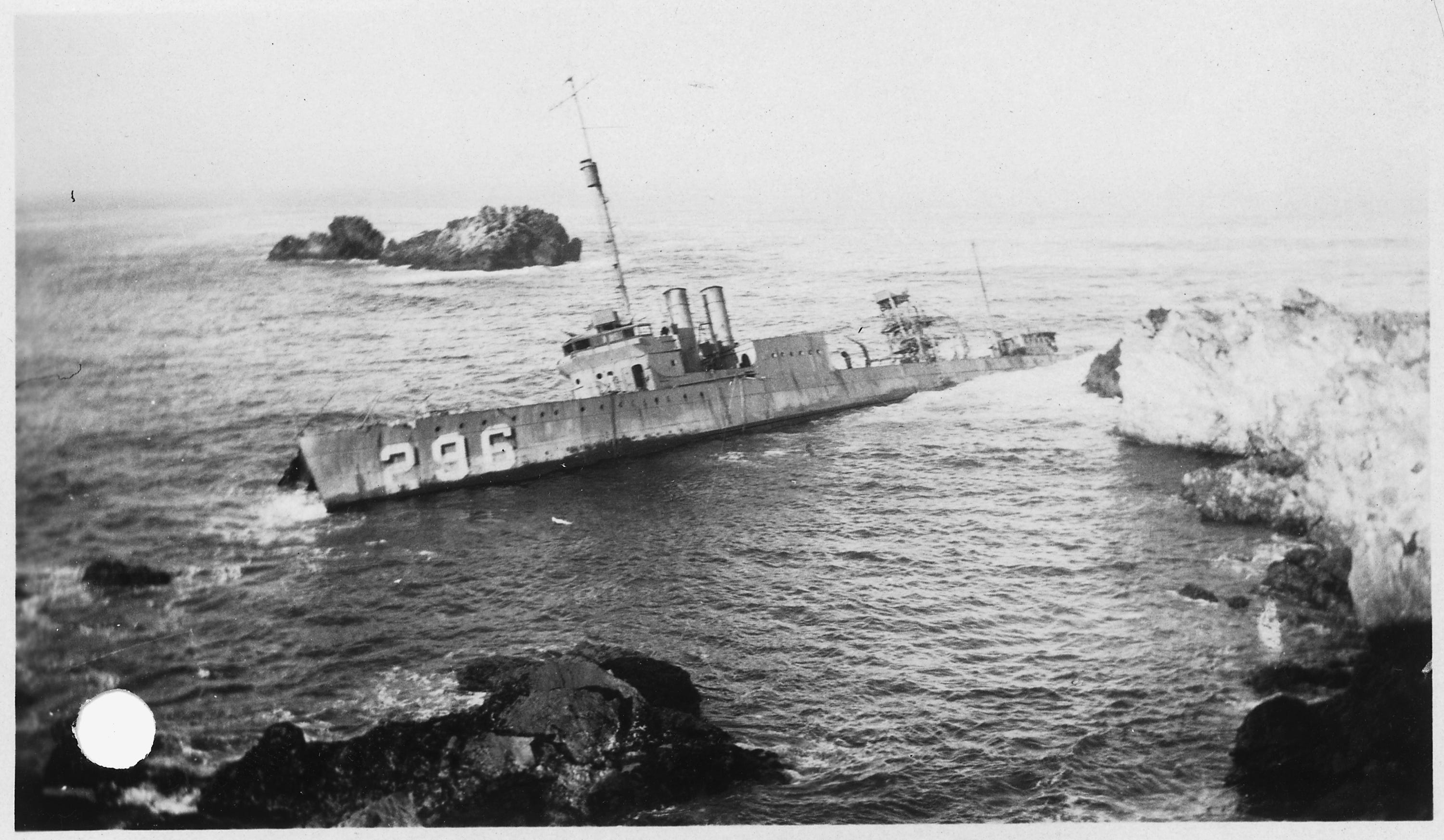
The commanding officers of DESDIV 32 had been far more prudent. In recent hours they had followed by radio the exchanges between Delphy and the Arguello station, and decided to let the rest of the column pull ahead once they saw the other destroyers disappear into the mist. It was a wise decision: when USS Kennedy took soundings, she found only seven fathoms (about 42 ft or 13 m) under her keel and ordered her formation to stop. None of the four ships of DESDIV 32 suffered any damage.
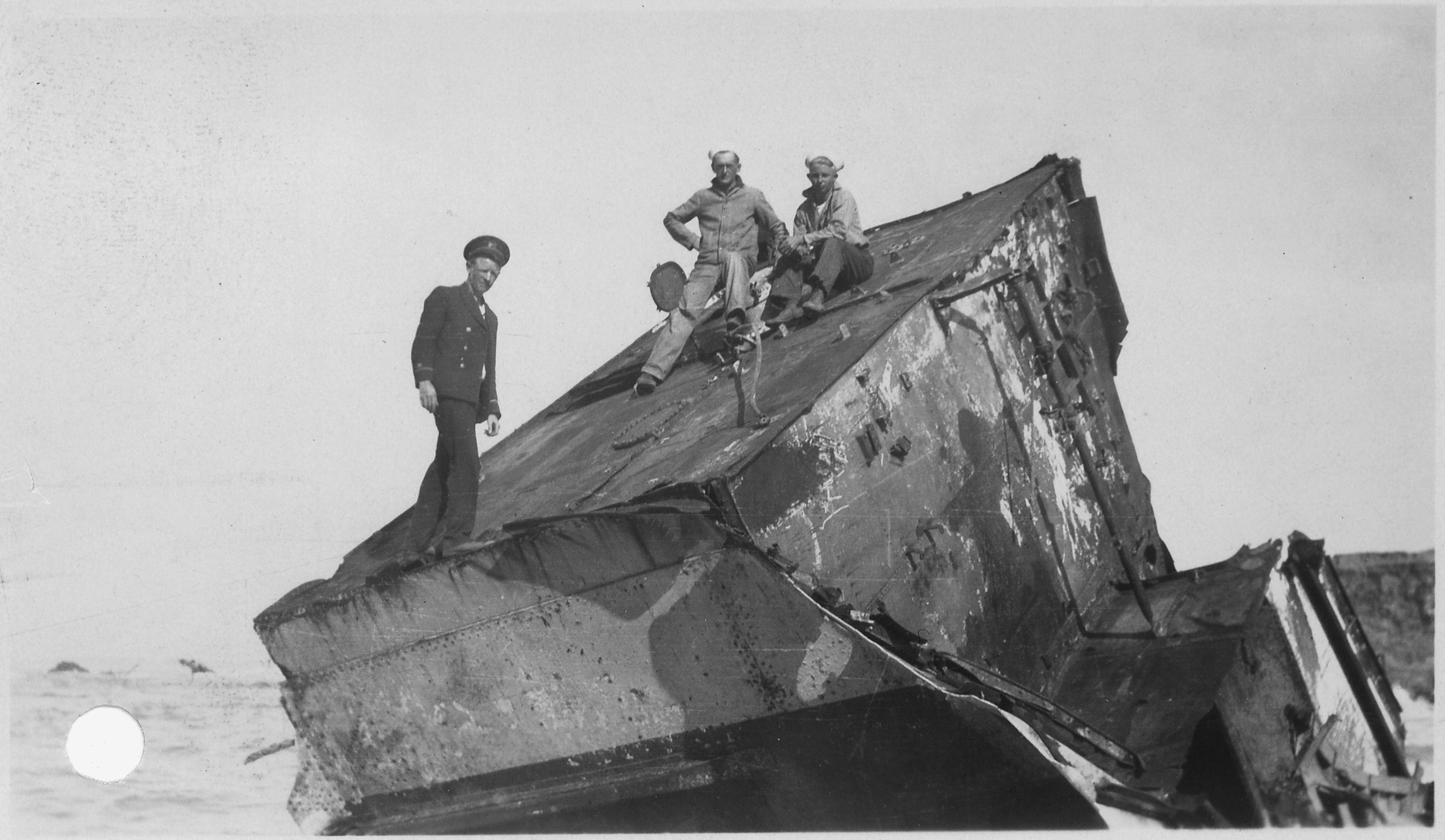
With seven destroyers totally wrecked, 23 dead (3 on Delphy and 20 on Young) and many wounded, the Honda Point disaster caused a sensation. It was the U.S. Navy’s greatest peacetime loss of ships—a catastrophe equivalent, financially, to an outright loss of $13 million (roughly $180 million in today’s dollars). The Navy quickly mounted salvage efforts to recover anything that could be saved (weapons, ammunition, papers, instruments, tools, and so on). Deemed beyond recovery, the wrecks were scrapped.
Eleven officers appeared before courts-martial: the seven commanding officers who lost their ships; the commanders of DESDIV 33 and DESDIV 31; and the squadron commander and navigator Blodgett. In November, Watson, Hunter, and Roesch (of Nicholas) were found guilty of serious faults, ending any chance of promotion for the remainder of their careers. Watson, moreover, did nothing to soften the verdict—taking full responsibility for the catastrophe. The other officers were acquitted.
Meanwhile, voices rose to denounce the “real” culprit: a tsunami supposedly generated by the massive earthquake that devastated the Kantō region—from Yokohama to Tokyo—on 1 September. Having killed more than 105,000 people on the far side of the Pacific, it was said to have caused such major oceanographic disturbances that DESRON 11 was still suffering their effects a week later… Such was the thesis advanced by some commentators, who—in an era of fervent isolationism—were quick to point to an “foreign” danger, moreover one originating in Japan, to protect the Navy’s honour.
The U.S. Navy’s “Pacific” component established from 1922.
A fixed, easily identifiable landmark used for maritime navigation.
This calculation is based on propeller revolutions per minute. In heavy seas, the stern of a pitching destroyer regularly rises out of the water between waves; with the screws partly in air, they spin faster than when fully submerged—without actually increasing the ship’s speed through the water.
A rock did scrape Somers’ hull, but the damage was minor.
Comments
Nothing yet. Say the first thing.
Sign in to join the conversation.