
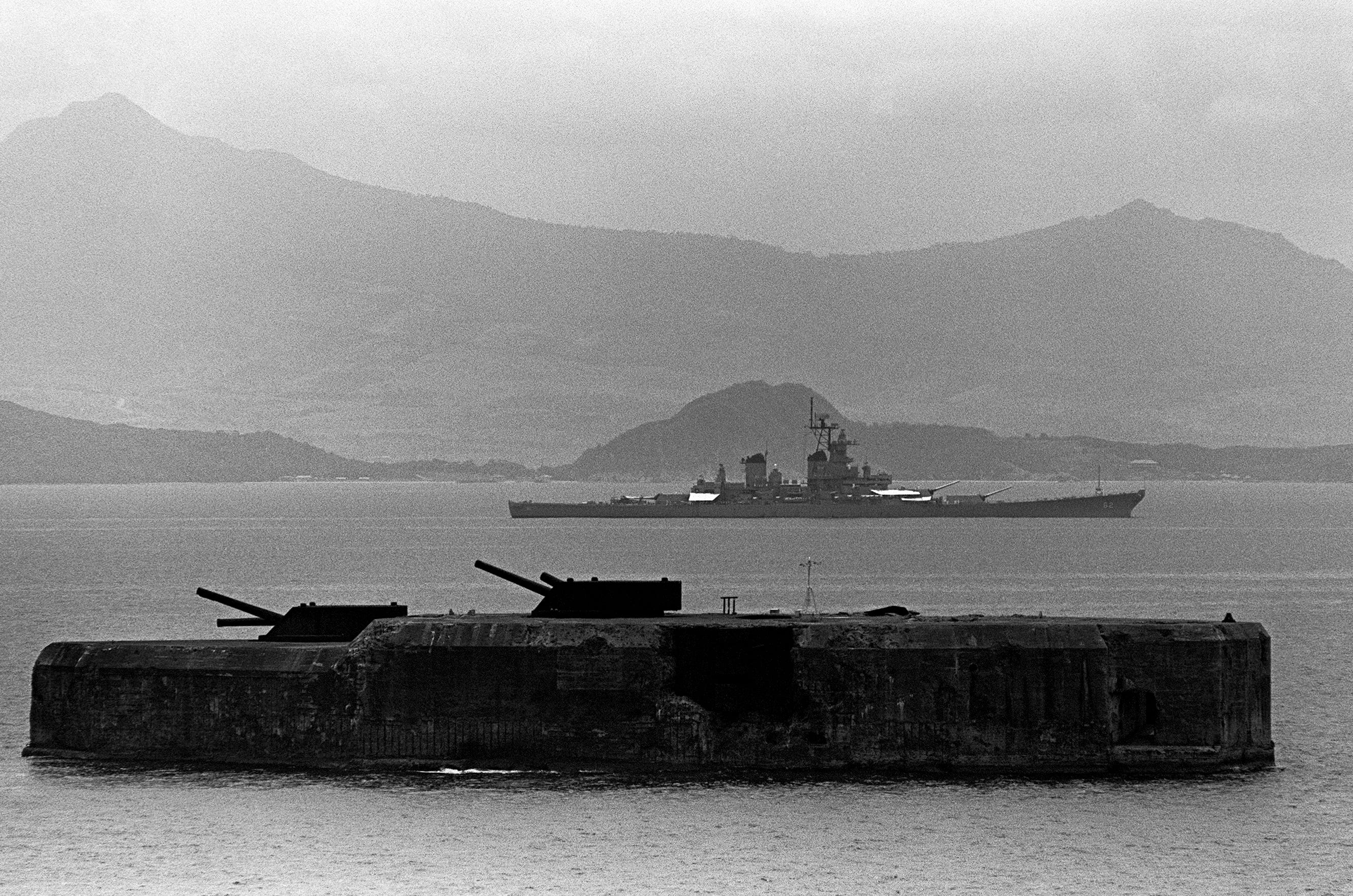
To protect Manila Bay, of which they had become the new masters, the Americans hesitated in the early twentieth century between building a coastal battery and constructing a floating island. The first option proved ineffective and the second too costly, so they turned to an alternative solution: building a concrete battleship.
In 1898, Spain ceded its Philippine colony to the United States for $20 million, and Washington turned it into a protectorate. Until 1902, the Americans fought to crush any desire for independence in the archipelago, at the cost of thousands of lives, and transformed Manila into a modern port to develop their commercial exchanges with Asia. A strategic hub for the regional economy, the Philippine capital received coastal defences commensurate with its importance, especially as the naval base at Cavite housed the U.S. Navy’s Asiatic Fleet.
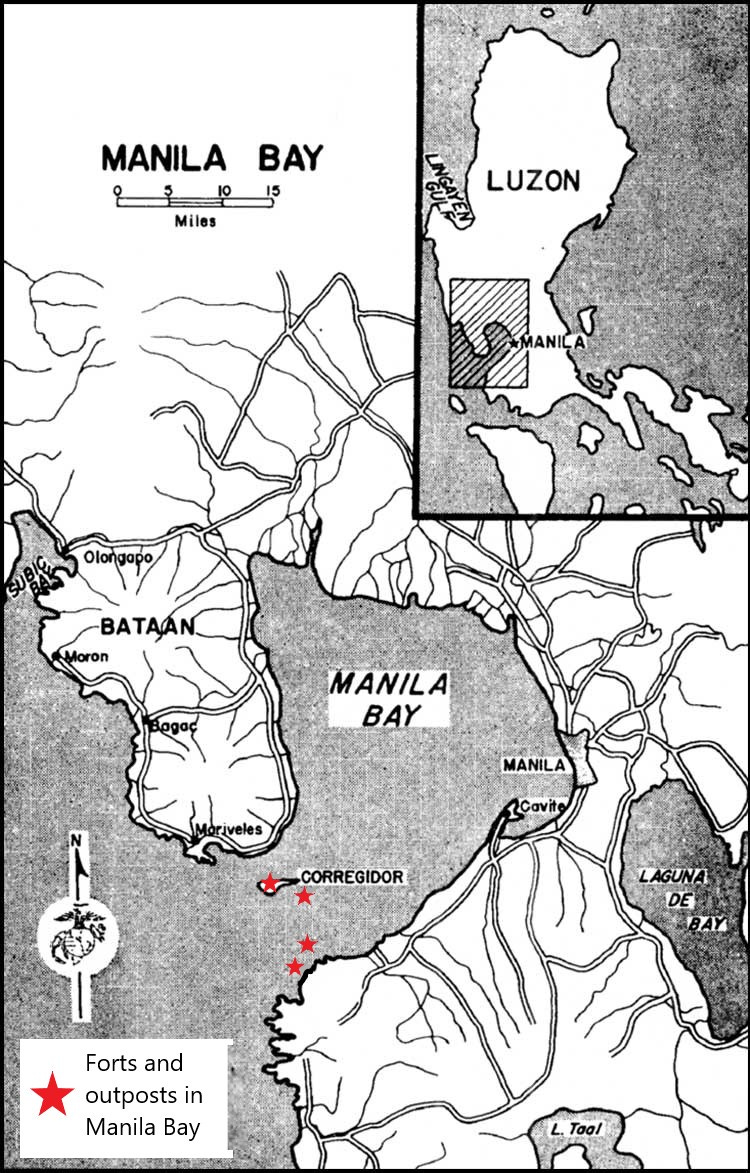
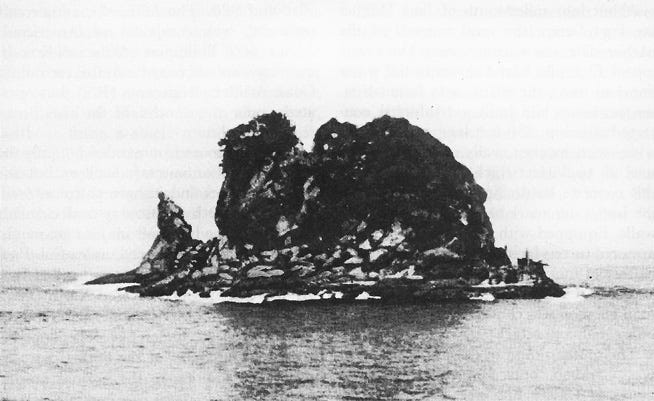
In 1908, Manila’s new masters even considered building an artificial island to complete the network of three fortified islands (Carabao, Caballo, and Corregidor) guarding the entrance to the bay. At night or in bad weather, the great distance between Corregidor’s northern batteries and Carabao’s southern batteries might allow an enemy ship to slip through undetected. Experience spoke here: on the night of 30 April 1898, a small American war fleet had passed in just this way between Corregidor and El Fraile, right under the noses of the Spanish defences, securing control of the entire bay within a few hours. In July, 1st Lieutenant Kingman, a military engineer posted to Manila, proposed a simpler and less costly alternative: the complete fortification of El Fraile (“the Friar”), a rocky island measuring 105 m by 45 m (about 350 ft by 150 ft), advantageously located southeast of Corregidor and only a few nautical miles from the channel. Until then, it had been used to store moored mines.
Kingman put forward the original idea of levelling the islet, then raising an entirely concrete structure on it, with walls 9 m (about 30 ft) thick, supporting two cast-steel turrets, each armed with two 304,8 mm (12-inch) guns. In short, he wanted to turn El Fraile into a concrete battleship. His project was rejected, but the idea took hold. In February 1909, the War Department asked for Kingman’s plans to be reworked so that the fort would receive four 355,6 mm (14-inch) guns in two armoured turrets, along with 152,4 mm (6-inch) casemate batteries to protect the minefields laid nearby, and four Barr & Stroud rangefinders.
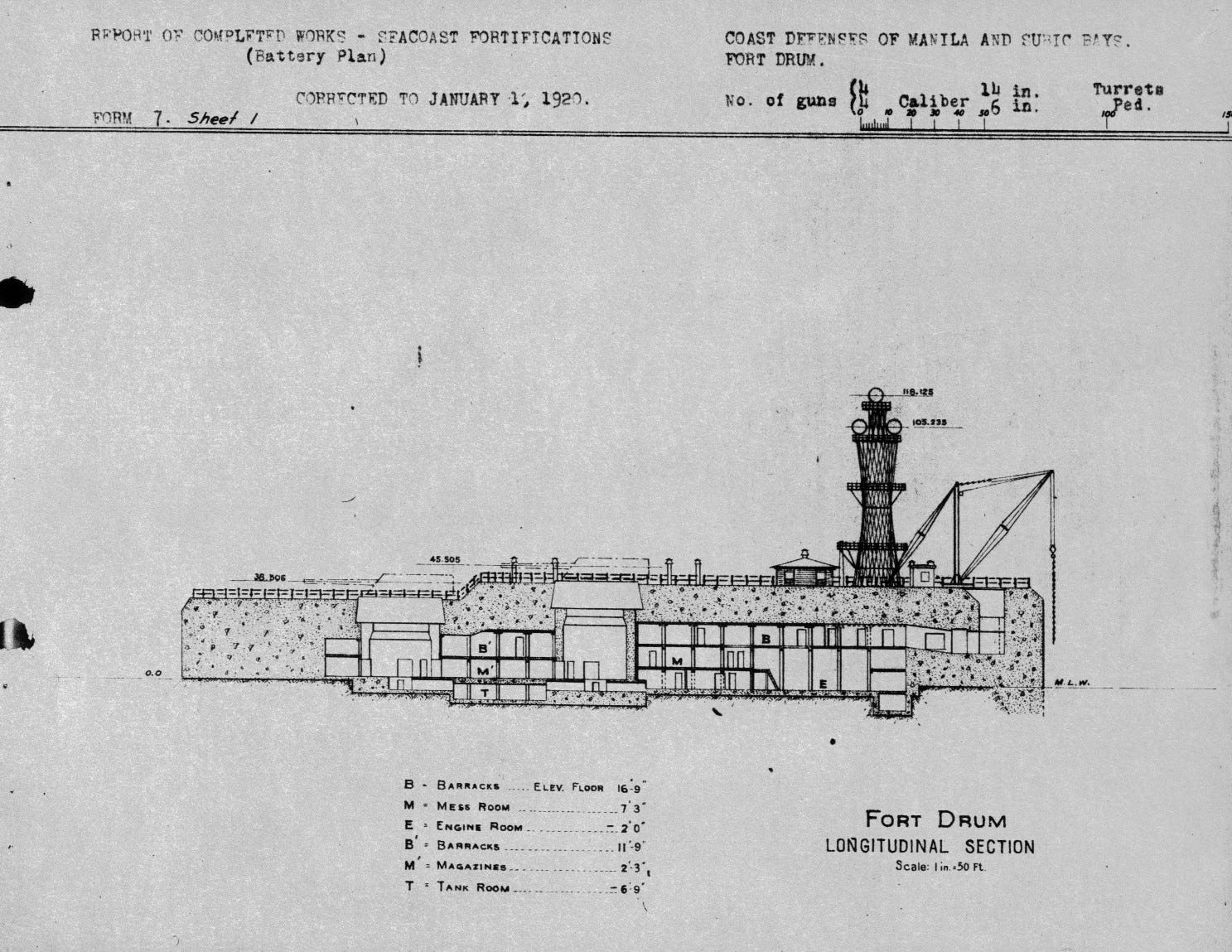
Numerous studies were carried out until 1910 to decide the fort’s external shape (elliptical), the thickness of its walls (at least 7,6 m, or about 25 ft), the size of its garrison (up to 300 men if necessary), and the position of its turrets (on two stepped levels, the lower one 12 m above sea level at high tide). The fort’s equipment was impressive, but necessary if it was to live self-sufficiently during a siege: more than 2,800 m² of floor area (about 30,100 sq ft) and more than 1,600 m² of interior space (about 17,200 sq ft) spread over three levels, with barracks, a hospital, powder and shell magazines, a power plant, mess rooms, casemates, water and fuel reserves, a radio station, offices, cold rooms, and even a distillation unit for desalinating seawater. All this equipment was then standard across the defences of Manila Bay, as the other islands also had their own road networks, and in some cases even narrow-gauge railways. Work to level El Fraile began in April 1909 and would last nine long years, costing American taxpayers more than $239 million in earthworks, reinforced concrete, and steel. Fort Drum1 was then also called USS Drum by passengers aboard ships arriving in Manila, so much did it resemble a warship: its two turrets, actually Batteries William T. Marshall and John M. Wilson, were completed by a 27 m (about 90 ft) cage mast, typical of American battleships of the period.
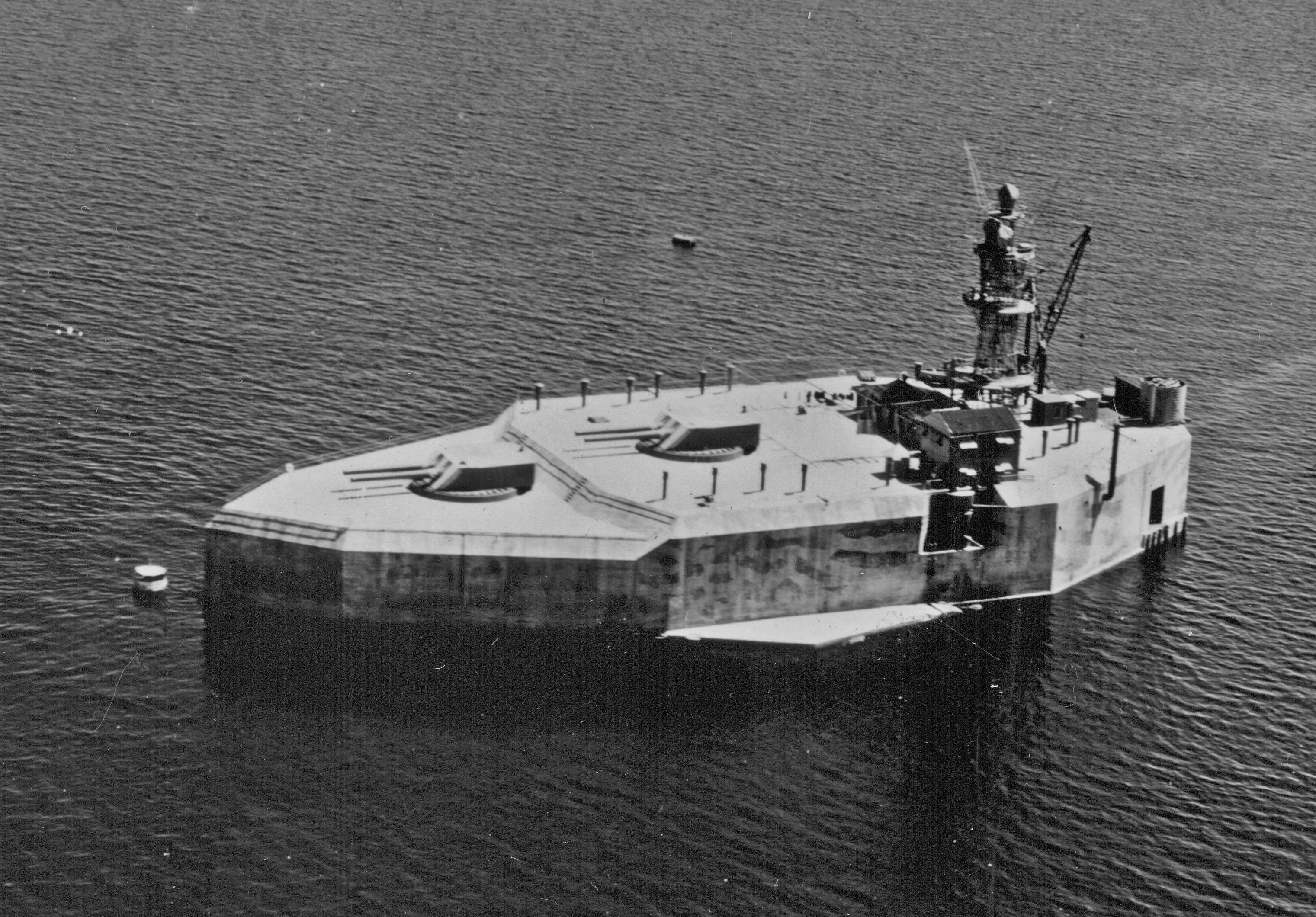
By 1918, the fort was unique. Its main armament consisted of four 355,6 mm (14-inch) M1909 guns, 40 calibres long, specially designed and able to fire 755 kg (1,700 lb) shells to more than 17,5 km (about 11 miles). They were installed as they would have been on a battleship, with turret wells, ammunition hoists, and armoured shields more than 45 cm (about 18 in) thick on the front and 15 cm (about 6 in) on the sides. Four 152,4 mm (6-inch) guns formed Batteries Roberts and McRae, while the anti-aircraft defence consisted of only three 76.2 mm (3-inch) guns, grouped in Batteries Exeter and Hoyle.
Modern when it was conceived, Fort Drum was nevertheless no longer so by the 1920s, because the First World War had brought a succession of innovations in artillery and telecommunications. In 1918, Battery E of the 59th Coast Artillery Regiment took possession of the site. Unfortunately, the reduction in military budgets - a direct consequence of the armistice in Europe - then the restrictions imposed by the Washington Naval Treaty of 1922 prevented it from firing even a single training round before 1923. In 1929, the Great Depression took over and blocked any modernisation of the fort’s weapons or equipment. By the 1930s, moreover, the main guns of a capital ship no longer ranged roughly 17,000 m (about 18,600 yd / 10.6 miles), but 27,000 m (about 29,500 yd / 16.8 miles). Finally, in 1934, Congress decided to grant the Filipinos independence within ten years: there was therefore no longer any question of modernising a fort that would soon no longer be American.
For the garrison, guarding a fort where time seemed to have stopped years earlier was hardly the most motivating duty. Training was drastically limited for cost reasons, and a badminton court appeared on the “deck” near the upper turret.
Thanks for reading! This post is public so feel free to share it.
At the end of the 1930s, Japanese-American relations cooled considerably, and the Philippines suddenly regained the strategic and military value that the US Army and Navy had “forgotten.” Fort Drum’s garrison was immediately brought up to strength, its food and ammunition reserves were stocked for six months, and training resumed. In July 1941, minefields were laid to defend the entire bay, and the four coastal artillery regiments in the Manila sector were placed on a war footing.
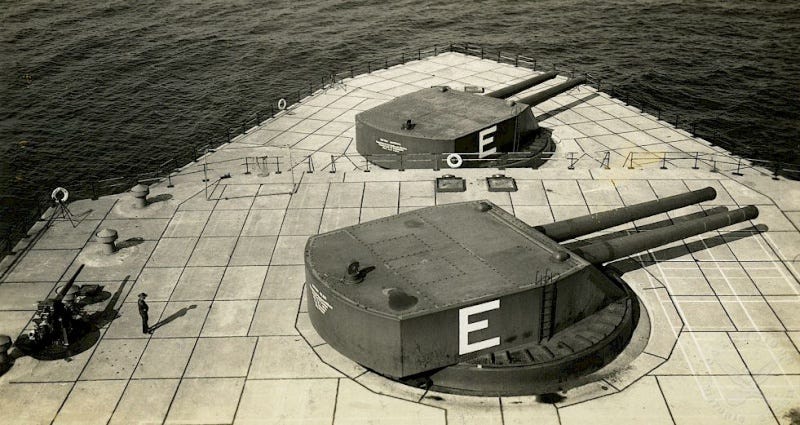
The attack on Pearl Harbor in December shook the entire American strategy in the Pacific. Struck at the centre of their positions, the United States could no longer reach the Philippines, now in the front line and forced to fight alone against the Japanese. On Fort Drum, tension rose another notch. The peacetime barracks installed on the superstructure were demolished and thrown overboard to clear the decks. The “crew” now numbered 250 men and officers, confined within the various concrete levels and emerging only to try to shoot down Japanese aircraft flying over the bay. By late December 1941, the Japanese Army was at the gates of Manila, but the Imperial fleet was careful not to force the bay entrance, which was too well defended. In early January 1942, the fort received an additional gun, a 76.2 mm (3-inch) M1903 on a pedestal mount, to cover a blind spot caused by the position of the cage mast at the rear of the superstructure. It went into action as early as 13 January to repel a Japanese craft coming from Cavite.
On 6 February, Japanese pressure increased on the besieged islet, which was targeted by 105 mm (4.1-inch) howitzers. It received around a hundred shells without major damage and replied as best it could, with no apparent effect. From that day onward, it was bombarded in alternation with Corregidor or Forts Frank and Hughes.
On 15 March, a 240 mm (9.4-inch) shell pierced the casemate of Battery Roberts, knocking out one anti-aircraft gun and one 152 mm (6-inch) gun, and causing light casualties. On 5 May, the 355 mm (14-inch) guns thundered against Japanese amphibious forces assaulting Corregidor, but could not prevent its capture the following day. Still largely operational, with only five wounded, Fort Drum was forced to surrender. It had received more than a thousand shells, which had rendered the cage mast and anti-aircraft guns unusable, but had not damaged the 355 mm (14-inch) turrets, which were still firing only minutes before the white flag was finally raised.
Before surrendering, the garrison flooded the powder reserves with seawater, destroyed numerous pieces of equipment, and set fire to the turrets. The Japanese would get nothing useful out of Fort Drum, which was still not operational in 1945.
By February 1945, the U.S. 6th Army was at the gates of Manila, a city the Japanese were defending house by house. The sky and sea, however, belonged to the Americans, who were surprised to discover that a small Japanese garrison occupied El Fraile. Sixty-five men of the Imperial Navy had indeed been ordered to hold the islet to the last cartridge. Deprived of heavy weapons, Fort Drum was not a real threat to the American forces gradually clearing the bay’s shoreline and the capital. In March, however, it was decided not to wait any longer and to eliminate the last pockets of resistance - the islands of El Fraile, Caballo, and Carabao - which might threaten maritime traffic.
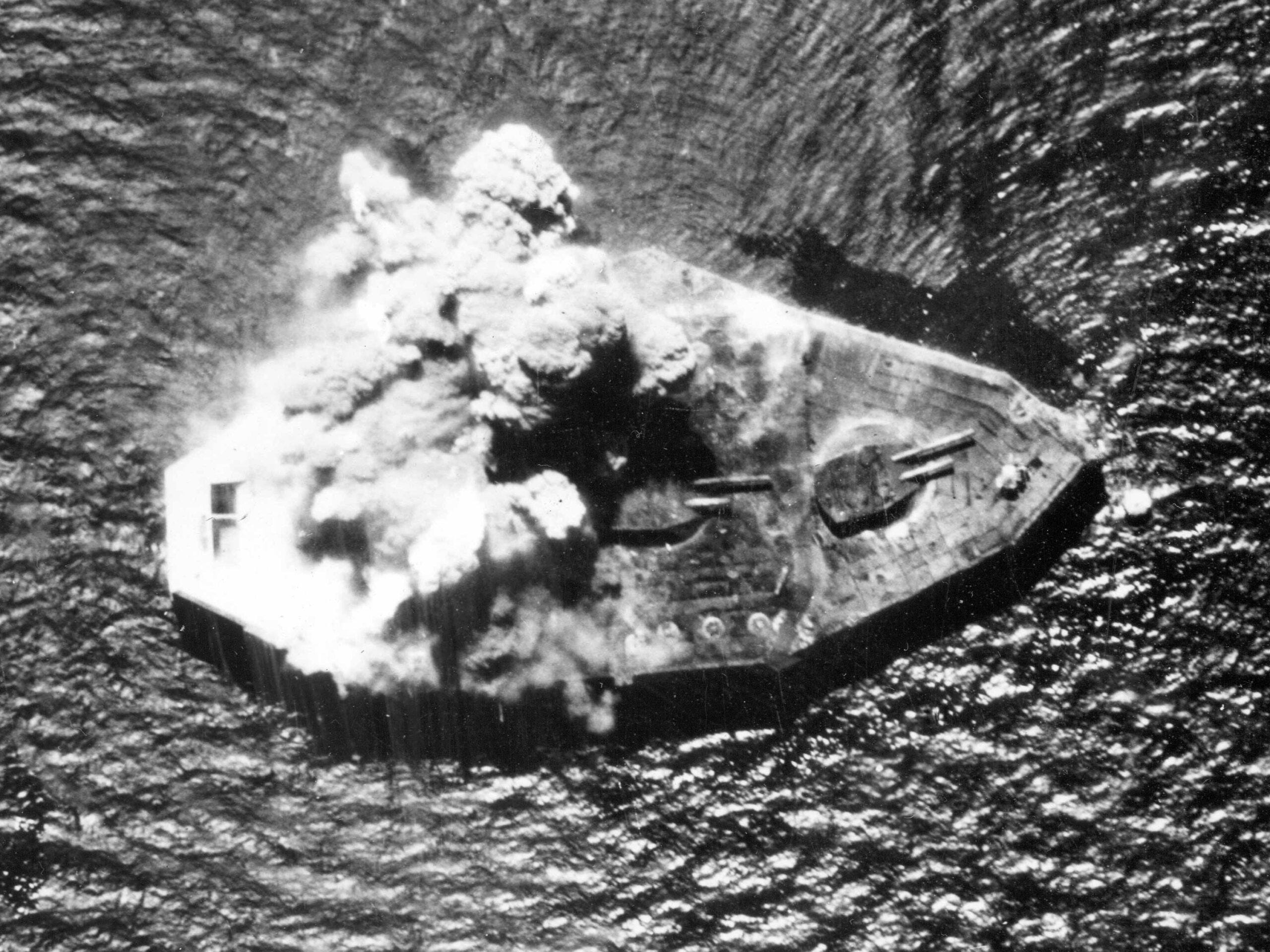
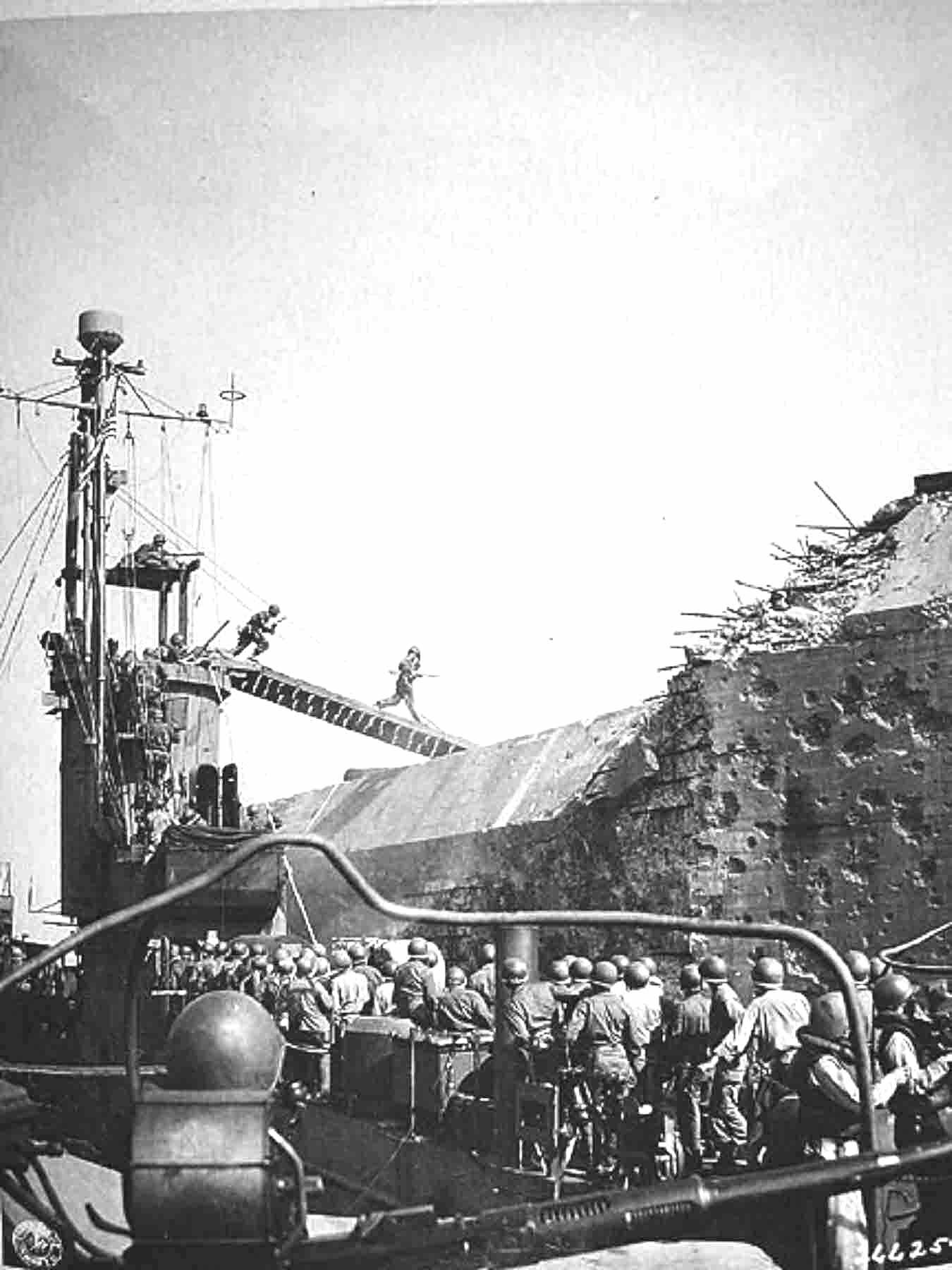
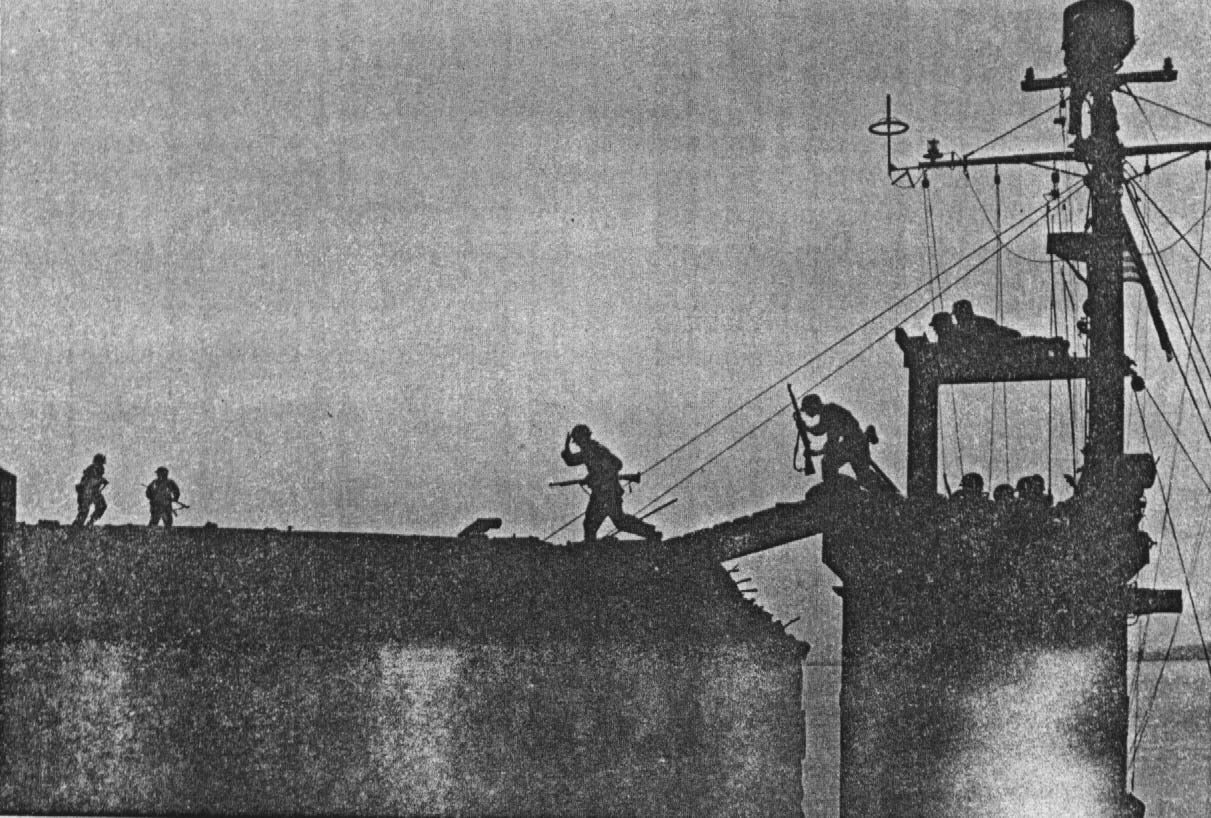
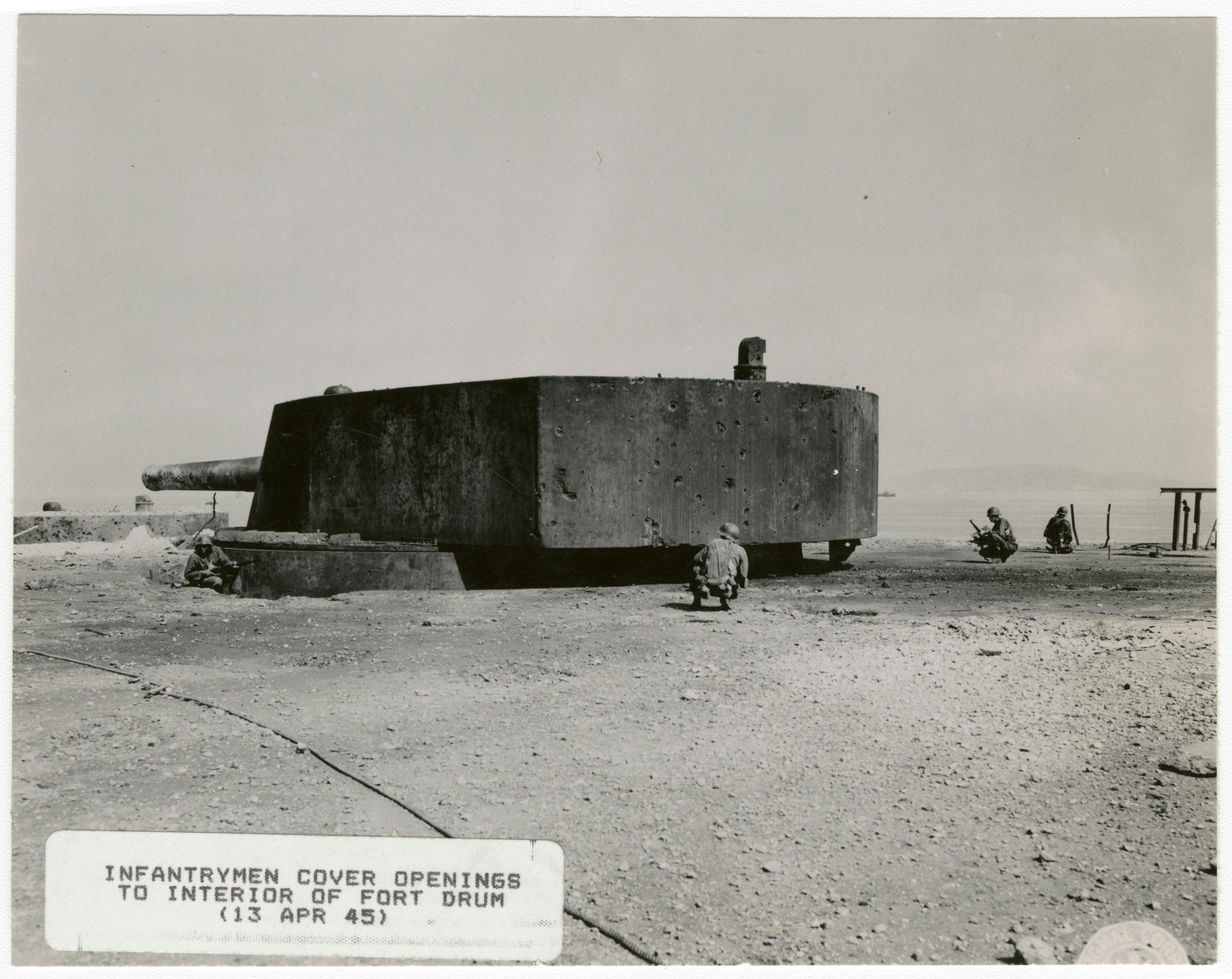
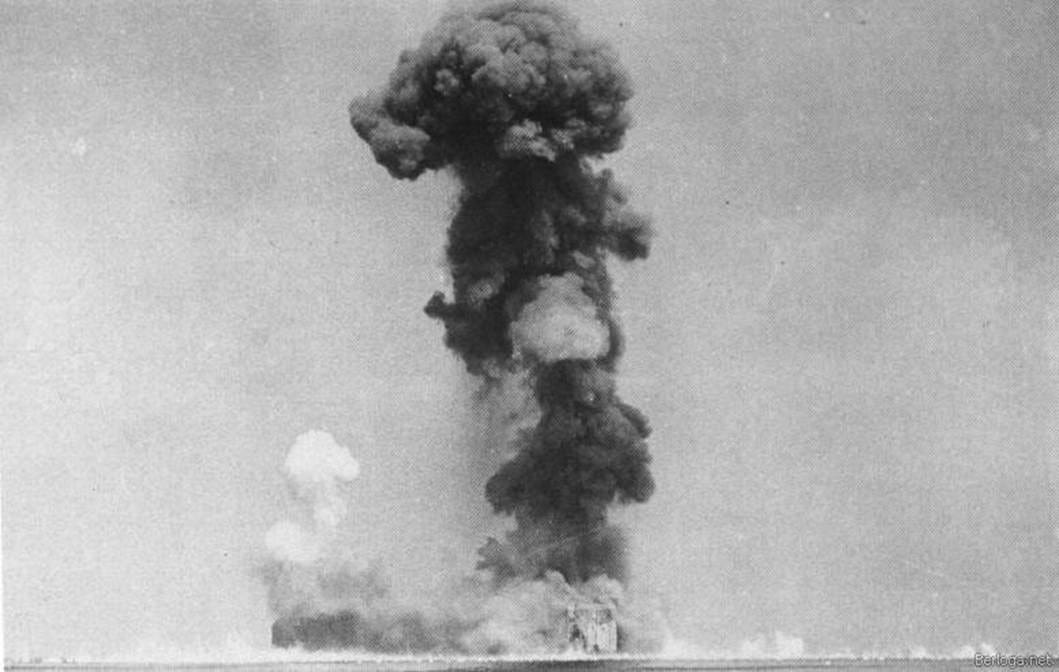
American naval and air bombardments had proved just as ineffective as Japanese bombardments in 1942, so the U.S. Army preferred to repeat the method used to retake Caballo. On 13 April 1945, it sent an infantry company aboard an LSM2 to secure Fort Drum’s superstructure and block its openings. Once the “deck” had been secured, an engineer team unrolled a long hose, inserted one end into a ventilation opening, and started a pump that forced more than 11,000 litres (about 3000 U.S. gallons) of an inflammable gasoline mixture into the fort. Ignition was carried out once the entire detachment had returned aboard. From the outside the result was not immediately obvious, but inside it was devastating: ammunition exploded, destroying part of the “deck.” The Japanese garrison was, of course, annihilated in an instant, and flames and smoke made any visit impossible for two weeks.
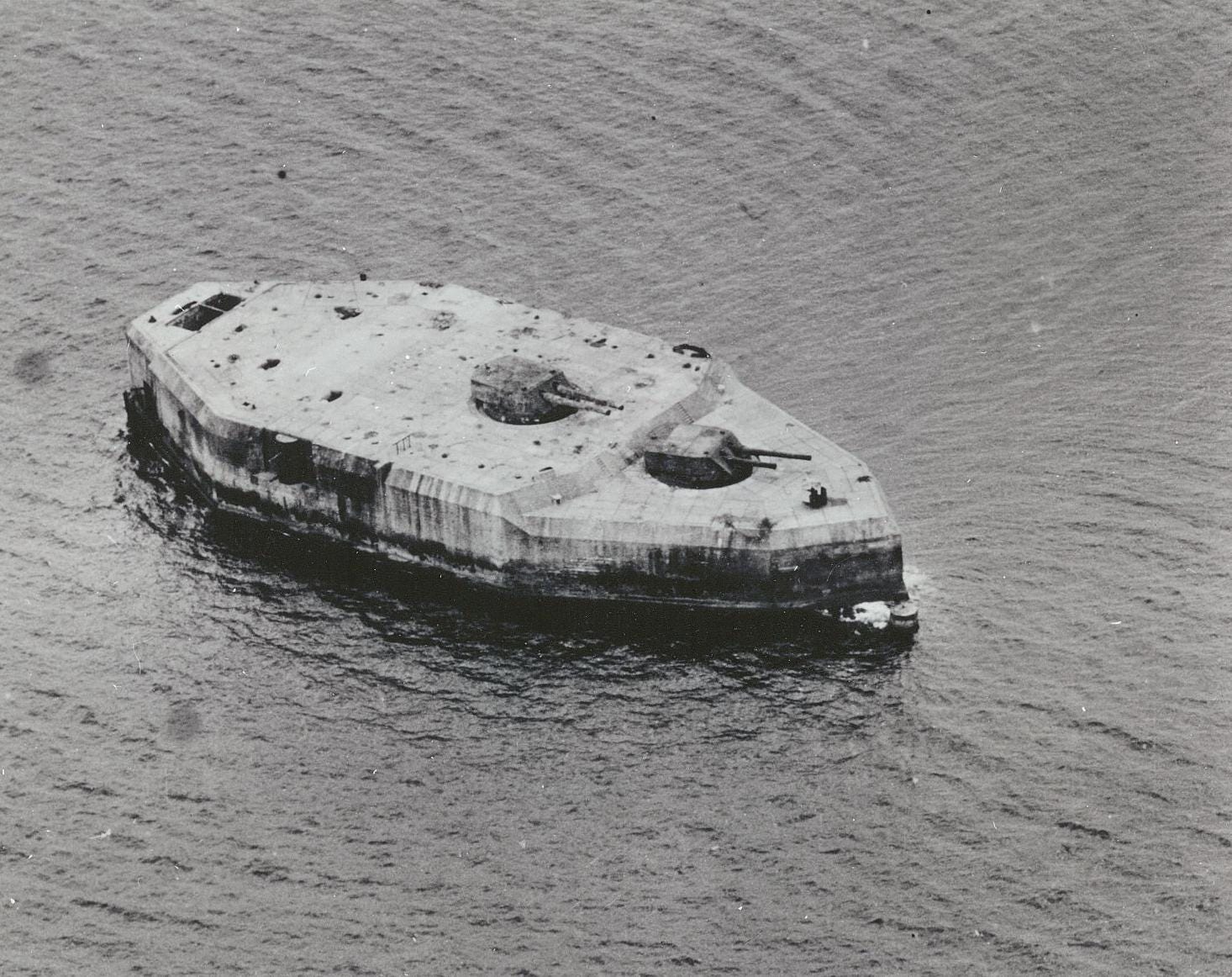
Today, Fort Drum’s silhouette still greets ships arriving in Manila. Its turrets and four 355 mm (14-inch) guns remain in place, but the concrete battleship is now nothing more than an inoffensive, abandoned wreck.
Named in honour of General Richard Drum, a war hero who died in October 1919.
Comments
Nothing yet. Say the first thing.
Sign in to join the conversation.