
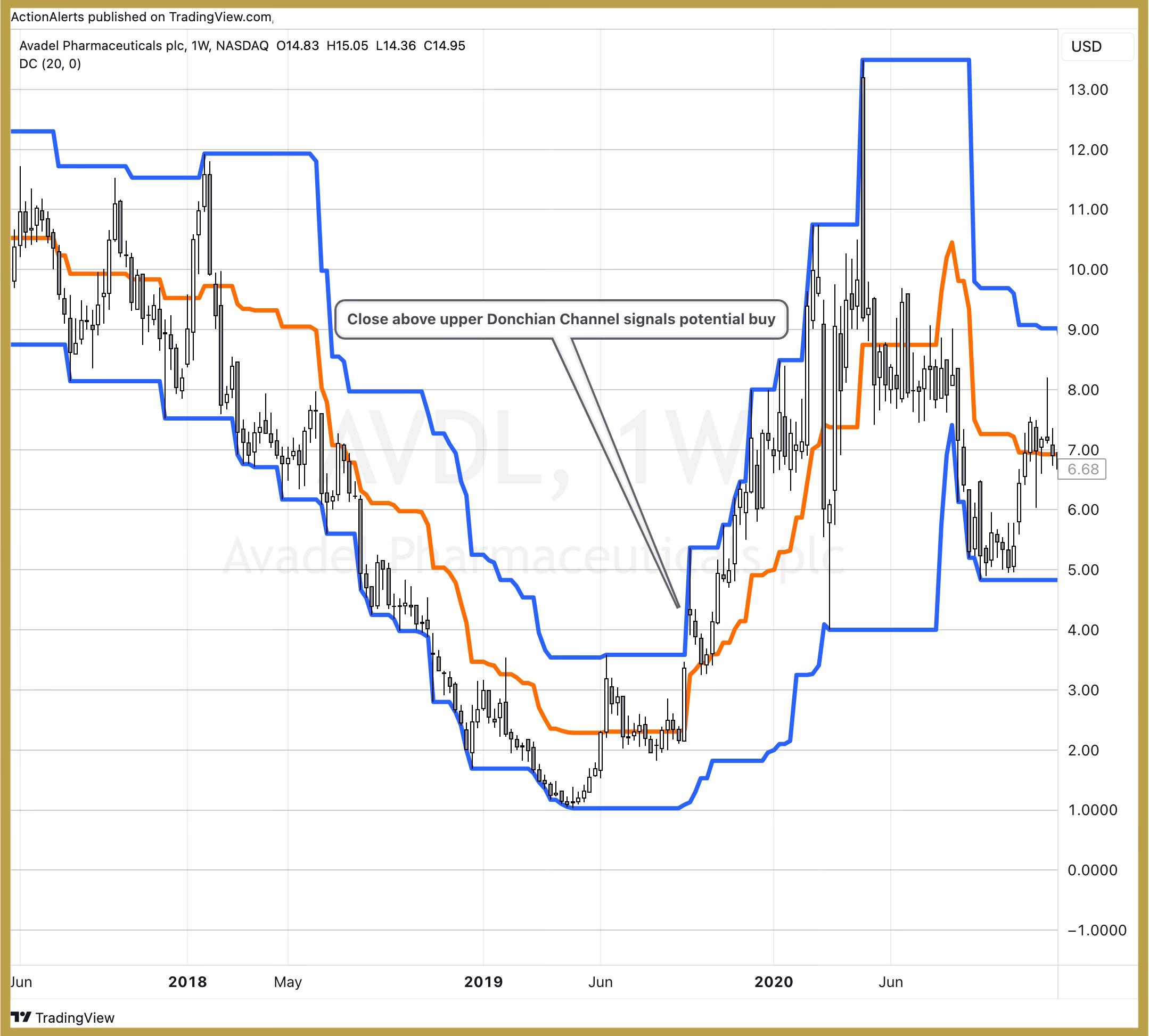
Richard Donchian, a pioneer in the field of technical analysis, introduced the financial world to the Donchian Channels indicator, a powerful tool for identifying strategic entry and exit points in stock trading.
In this article, we delve into the origins of the Donchian Channels, understand their underlying principles, and uncover the significant advantages they offer to traders seeking to navigate the complexities of the stock market.
The Donchian Legacy
Richard Donchian, born in 1905, made substantial contributions to the field of technical analysis.
As the founder of the first managed futures fund in 1949, Donchian's innovative approach to trading laid the groundwork for modern trend-following strategies.
His legacy endures through the enduring effectiveness of the Donchian Channels indicator, a key component of his trading philosophy.
The Donchian Channels indicator is a trend-following tool designed to identify potential buying and selling opportunities in the financial markets.
Comprising three lines – an upper channel, a lower channel, and a middle channel – this indicator captures price volatility and establishes clear boundaries for market trends.
Construction of the 3 Donchian Channels
Upper Channel: Calculated by finding the highest high within a specified lookback period. Represents the upper boundary of price volatility.
Lower Channel: Determined by identifying the lowest low within the same lookback period. Represents the lower boundary of price volatility.
Middle Channel: Positioned at the midpoint between the upper and lower channels. Reflects the average of the highest high and lowest low.
The width of the channels is dynamic, adjusting to market volatility. In periods of increased volatility, the channels widen, while they narrow during less volatile phases.
Advantages of the Donchian Channels Indicator
1. Identification of Trends: The Donchian Channels excel in identifying trends in the market.
Traders can easily visualise whether an asset is in an uptrend, downtrend, or a consolidation phase by observing the relative position of the price within the channels.
2. Clear Entry and Exit Signals: The upper and lower channels serve as clear signals for potential entry and exit points.
A breakout above the upper channel signals a potential buying opportunity, while a breakdown below the lower channel indicates a potential selling opportunity.
3. Volatility Measurement: By dynamically adjusting to market volatility, the Donchian Channels provide a quantitative measure of price volatility.
This feature allows traders to adapt their strategies based on the prevailing market conditions.
4. Trend Confirmation: The Donchian Channels confirm the strength of a trend.
In an uptrend, the price tends to hug the upper channel, while in a downtrend, it gravitates towards the lower channel. This confirmation enhances the reliability of trend analysis.
5. Risk Management: Richard Donchian emphasized the importance of risk management in trading.
The channels' upper and lower boundaries facilitate the setting of stop-loss orders, enabling traders to manage risk effectively.
6. Adaptability to Different Timeframes: Whether a trader is engaged in short-term or long-term trading, the Donchian Channels indicator proves versatile.
It can be applied to various timeframes, accommodating the preferences and objectives of different traders.
7. Application in Diverse Markets: The Donchian Channels are not limited to a specific asset class.
They can be applied to stocks, commodities, currencies, and other financial instruments, making them a versatile tool for traders across diverse markets.
Implementing the Donchian Channels Strategy
To leverage the advantages of the Donchian Channels indicator, traders follow a systematic approach:
Identify Trend Direction: Determine whether the asset is in an uptrend, downtrend, or a consolidation phase by analyzing the relative position of the price within the Donchian Channels.
Look for Breakouts: Monitor for breakouts above the upper channel as potential buying signals or breakdowns below the lower channel as potential selling signals.
Confirm with Volume Analysis: Enhance the reliability of signals by confirming breakouts or breakdowns with volume analysis. A surge in volume accompanying a breakout or breakdown adds credibility to the signal.
Set Clear Stop-Loss and Take-Profit Levels: Utilize the upper and lower channels to set clear stop-loss and take-profit levels, aligning with risk management principles.
Richard Donchian's pioneering work in technical analysis continues to shape the way traders approach the markets.
The Donchian Channels indicator, with its emphasis on trend identification, clear signals, and adaptability, stands as a testament to his innovative legacy.
As traders navigate the dynamic landscape of the stock market, the Donchian Channels offer a reliable compass for identifying trends and making informed decisions.
Mastering the art of trend-following with this powerful indicator can open new avenues for success in the ever-evolving world of stock trading.
Get alerted when stocks are triggered by a Donchian Channels buy signal:
Subscribe to receive a link to my private ActionAlerts Telegram channel and never miss a potentially profitable stock move:work.
Comments
Nothing yet. Say the first thing.
Sign in to join the conversation.