

Q1 2026 Portfolio Results
In Q1 2026, the AIA Portfolio was up 11.65% versus -4.81% for the S&P 500.
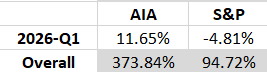
The AIA Dividend Portfolio was up 18.87% versus -4.815 for the S&P 500.

Both portfolios outperformed the market in the first quarter of 2026. Since inception, both portfolios have outperformed the overall market by a tremendous margin.
As subscribers already know, we were already positioned in many energy-themed companies, and although we did not foresee the war with Iran, the portfolio is benefiting from our heavy energy exposure.
*Note: Past performance is no guarantee of future results.
Actionable Intelligence Alert is a reader-supported publication. To receive access to the model portfolios discussed above, please subscribe using this link.
Commentary
The West’s Brezhnev Moment
Here is an uncomfortable thought.
The danger to the West is not that America or Europe wakes up tomorrow as some gray, Soviet rerun. That is a cartoon analysis. The real danger is more subtle and more plausible: that parts of the democratic West are drifting into a Brezhnev-like condition.
A system that still talks in the language of legitimacy, mission, and moral superiority even as belief in it quietly drains away. A 2026 report from V-Dem warns of democratic backsliding even in some traditionally stable democracies, and Freedom House says global freedom declined for the 20th consecutive year in 2025.
The Soviet lesson
Brezhnev’s Soviet Union did not fail because it ran out of slogans. It failed because the slogans stopped matching reality. Khrushchev had promised movement toward communism; Brezhnev downgraded the ambition to “developed socialism”, essentially an admission that the regime was no longer getting where it had promised to go.
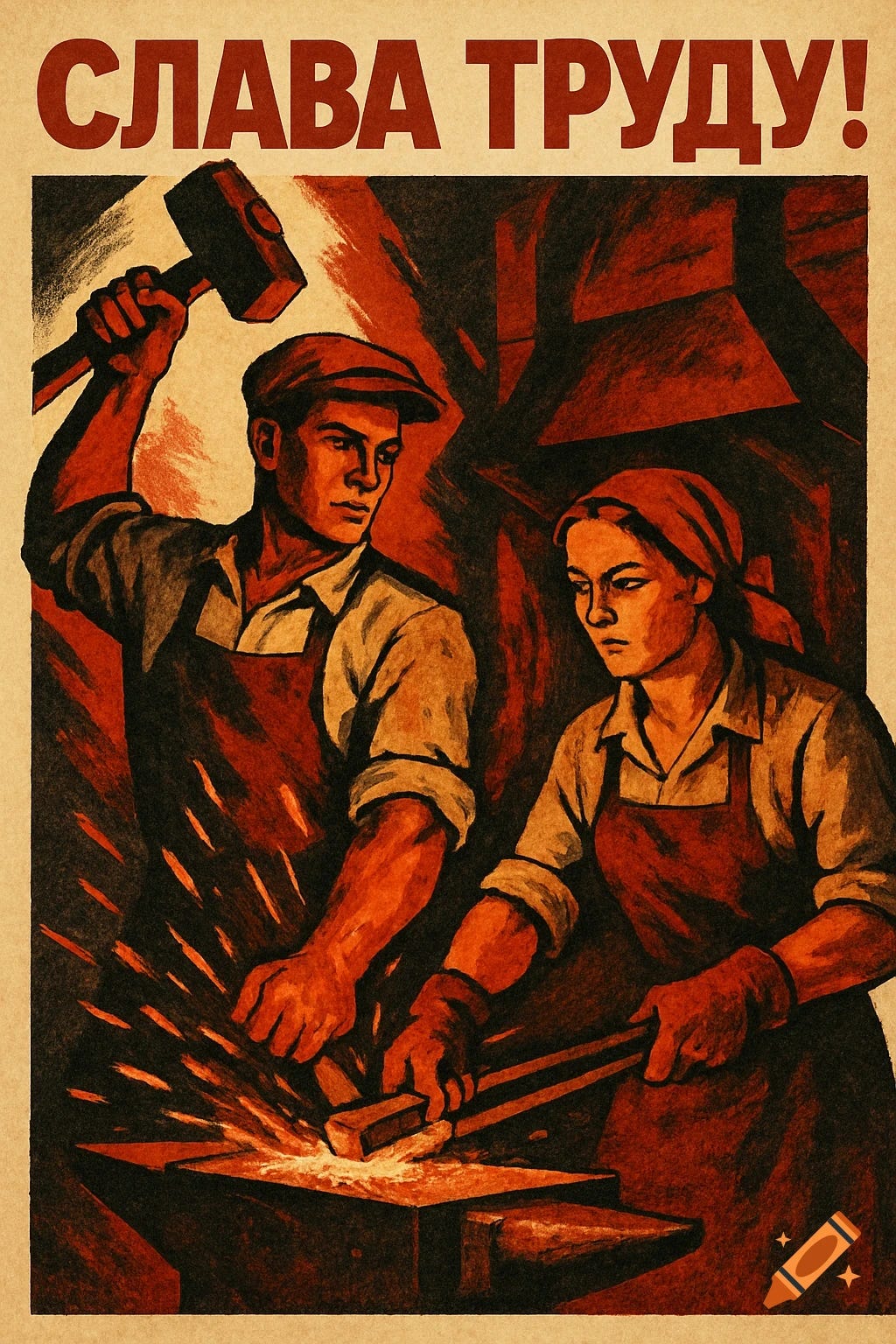
History also notes that the oil bonanza of the era was largely wasted, foreign technology was poorly used, and innovation was resisted. That is what late-stage decay looks like. The rhetoric stays lofty while the operating system hardens into bureaucracy, caution, and drift.
And then there was the regime’s central lie. The Soviet state claimed to rule in the name of equality and the worker. In practice, it produced a protected caste. The reality for the ruling nomenklatura is blunt. The ruling elite enjoyed comfortable apartments, special medical care, access to vacation facilities, educational advantages, consumer goods, and other privileges unavailable to ordinary citizens. A system that preached equality reproduced hierarchy under bureaucratic cover.
The Western contradiction
Now look at the West.
The West’s legitimating story is different. It is not equality through socialism. It is democracy, meritocracy, representation, and the rule of law. But every regime lives or dies by whether people experience those ideals as real. And that is where the trouble starts.
OECD survey data from 2023 show that only 30% of respondents across member countries believed the political system lets people like them have a say in what the government does, while 53% said it does not.
Pew found that across 31 countries surveyed in spring 2024, a median 54% were dissatisfied with how democracy was working. In the United States, more than eight in ten said elected officials do not care what people like them think.
That does not make the West “Soviet.” It does, however, point to a similar kind of legitimacy erosion. The institutions remain; elections still happen, and courts still operate. Newspapers still publish, but millions of citizens increasingly feel that the system is formally responsive and substantively insulated.
Democratic in ritual, managerial in practice. That is the kind of gap a political order can survive for years. It is also the kind of gap that hollows out public loyalty from the inside.
The economic lie
There is an economic version of the same problem.
The Soviet Union said equality, and delivered privilege.
The modern West says meritocracy, but increasingly risks delivering inheritance. OECD data show a stark gap in educational attainment by family background. Across the OECD in 2023, only 26% of young adults from less educated families attained a tertiary education, compared with 70% from highly educated families.
Meanwhile, the IMF has found that weakening productivity growth in advanced economies has been driven in large part by slower total factor productivity growth and by worse allocation of capital and labor. A system that sells itself as open, mobile, and meritocratic cannot indefinitely survive the popular impression that the ladders are getting narrower while the insiders keep winning.
That is the Western version of the Brezhnev contradiction. Not central planning. Not one-party rule and certainly not gulags. Something more familiar to anyone living in an aging liberal order is a growing distance between the story elites tell about the system and the reality many citizens experience inside it.
The pressure on restraints
Then there is the question of restraint.
Late Soviet rule kept the language of legality while subordinating law to power. Western democracies are still far freer and far more pluralistic than the USSR ever was. But the direction of travel is not encouraging.
Freedom House says elected leaders in democracies are increasingly trying to undermine checks on their power, focusing on the media, anticorruption authorities, and the courts.
The World Justice Project found that 68% of countries declined in the rule of law in 2025, with core safeguards against executive overreach weakening again. Reporters Without Borders says 2025 marked a historic first, the global state of press freedom fell into a “difficult situation.”
This is how systems age and eventually fail. Not through invasion, bankruptcy, or even through electoral defeat. They age when the gap between what they say and what they are gets too wide to ignore.
Brezhnev’s Soviet Union kept the liturgy but lost the belief. The risk in the West is a softer version of the same disease: a democratic order that still talks like a democracy while steadily losing the capacity to feel like one to the people living inside it.
The bottom line
No, the West is not becoming the Soviet Union. That is too cartoonish to be useful. But parts of it may be becoming something uncomfortably Brezhnevian; more procedural than persuasive, more managerial than representative, more dependent on ceremony because genuine confidence is fading.
The Soviet system survived in that state for years. But it survived as something brittle, a regime living off institutional inertia and moral capital it was no longer replenishing.
That is the real warning. Not a communist resurrection. Stagnation of belief and decay behind the ceremony. A ruling order still speaking with confidence in ideals it is embodying less convincingly by the year.
This is how I am thinking about the Western liberal democracies going forward. This is what I mean when I say the West is in decline.
It was fortuitous that while writing this month’s commentary, I was interviewed by Jeremy, who writes the “HyperNormalTimes & In The Company of Mavericks” Substack. We discussed this exact subject during the interview. You can check out his write-up and the interview at this link.
We are living, John argues, in the Brezhnev era of the Western liberal order. Not a sudden collapse. Not a fiery implosion. A long, grinding stagnation. A hollowing out. A civilisation going through the motions while the foundations quietly rot.
And yes, he’s now aware that this Substack you are reading is called HyperNormalTimes. Since our chat, he has gone to check out Adam Curtis’s work, who popularised the term with his hard-hitting BBC documentary HyperNormalisation (yes, really, the BBC).
I was not aware of the term hypernormalisation, but I am now.
From Wikipedia:
The word hypernormalisation was coined by Alexei Yurchak, a professor of anthropology who was born in Leningrad and later went to teach at the University of California, Berkeley.
He introduced the word in his book Everything Was Forever, Until It Was No More: The Last Soviet Generation (2006), which describes paradoxes of Soviet life during the 1970s and 1980s.
He says everyone in the Soviet Union knew the system was failing, but no one could imagine any alternative to the status quo, and politicians and citizens alike were resigned to maintaining the pretense of a functioning society.
Over time, the mass delusion became a self-fulfilling prophecy, with everyone accepting it as the new norm rather than pretend, an effect Yurchak termed hypernormalisation. It has since gained further resonance in the U.S. social media era in 2025.
One of my main themes is the West's continued decline. The war in Iran may be the point of no return for the long-held US image of omnipotent military power and the ability of the US to get other countries to bow to its will.
Its hegemony, US Dollar supremacy/reserve status, and the ability to control much of the world's resources hinge on the perception that the US is the boss. What of the flower has lost its bloom?
The question we need to concern ourselves with is what does this mean for the AIA Portfolio? Let’s dive in and find out.
Actionable Intelligence Alert is a reader-supported publication. To receive new posts and support my work, consider becoming a free or paid subscriber.
Comments
Nothing yet. Say the first thing.
Sign in to join the conversation.