

Quick Overview
🕒 Reading Time: 4 Minutes
🎯 Target Audience: Product developers, designers, marketers, and innovation teams
In the competitive world of consumer products, innovation doesn't always follow the expected path. Sometimes, the most compelling ideas emerge when creative thinking meets cutting-edge technology—and that's exactly what happened recently with a fascinating product development journey I witnessed.
AI is revolutionizing how we approach product design, serving as a creative thought partner that accelerates the journey from basic concepts to artistic innovations. For companies willing to embrace these new tools, the reward is clear: faster innovation cycles and the ability to redirect saved time toward deeper creative exploration. This case study demonstrates how one team did just that, offering valuable lessons for anyone looking to enhance their creative processes.
When "Good Enough" Isn't Good Enough
An art supply manufacturer was developing a new line of customizable plant pots as part of their products collection. The initial concept? A basic, undecorated pot that customers could decorate themselves. Functional? Yes. Revolutionary? Not quite.
But someone on the product team saw an opportunity for something far more engaging. Instead of offering just another blank canvas, why not transform the object itself into a piece of art? A sculptural form that was already visually compelling before any customization even began.
This is where artificial intelligence entered the picture, serving as both muse and creative collaborator.
AI as a Creative Thought Partner
Instead of sketching ideas from scratch or relying solely on traditional design methods, the team turned to AI image generation to rapidly explore concepts. Rather than viewing AI as just a tool, they embraced it as a creative thought partner in the ideation process. The journey started with a simple prompt:
"Make an image of a Qee Bear that has a graffiti design and a mohawk of wheat grass."
(For those unfamiliar, Qee Bears belong to a category of collectible designer toys known for their highly stylized forms and customizable surfaces. These figures have been embraced by artists and brands alike, serving as miniature canvases for bold, creative expression).
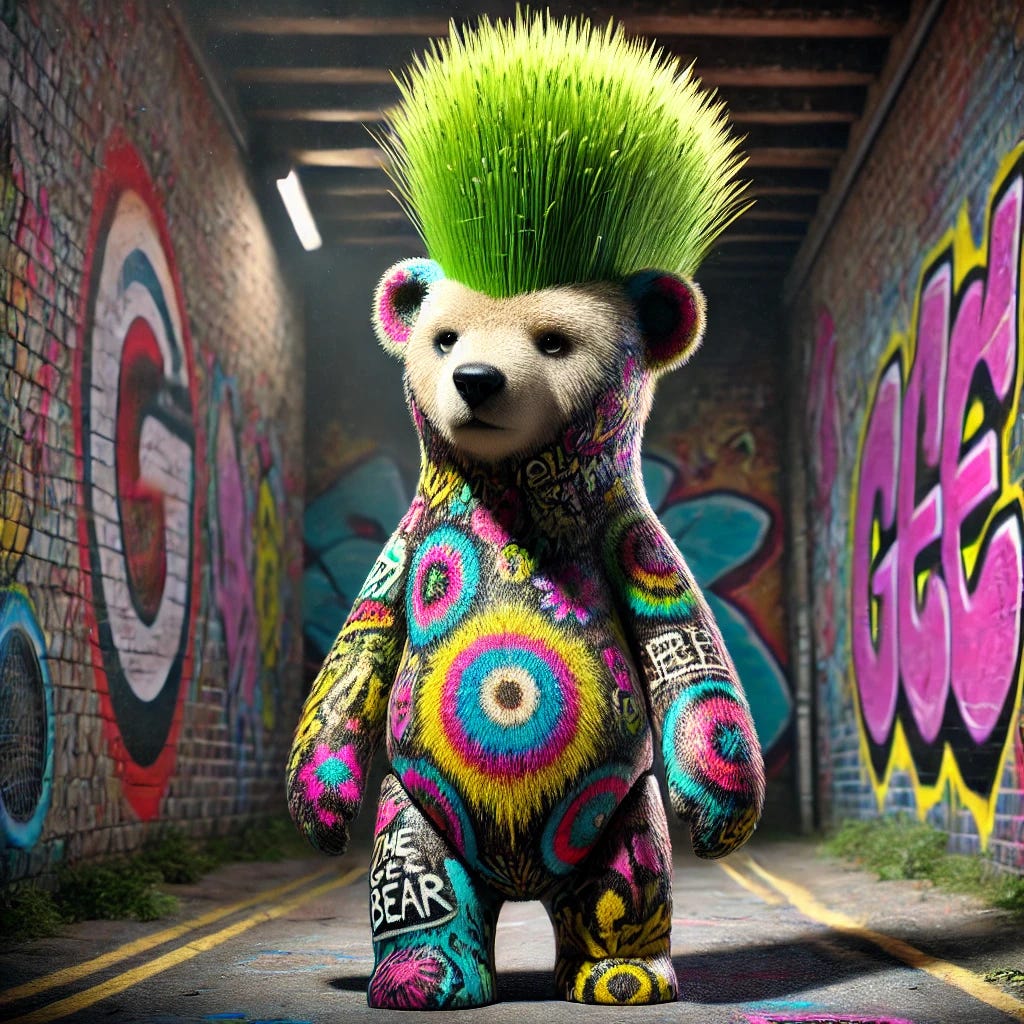
The initial results showed promise, but needed refinement. The team continued to iterate:
"Can you make it less realistic and without a face?"
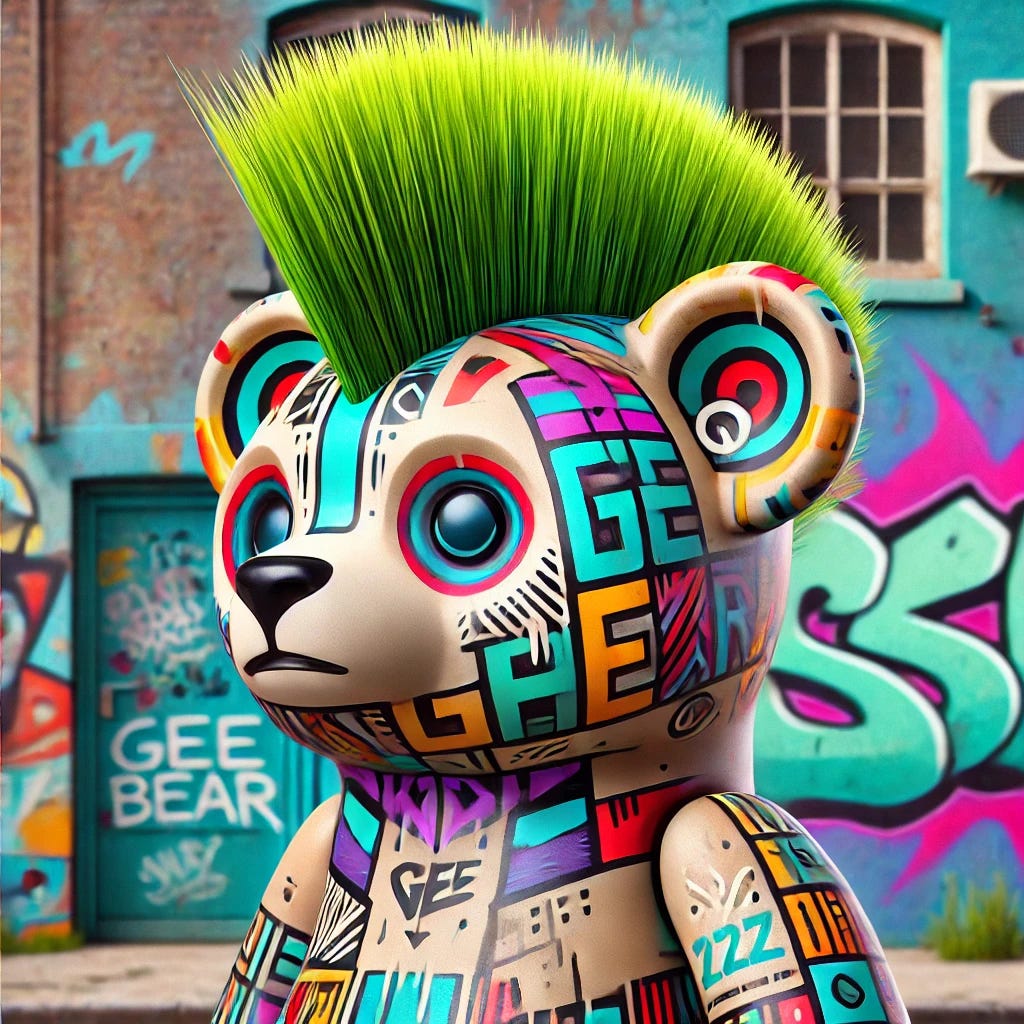
"Can you do the same with a Qee bear?"
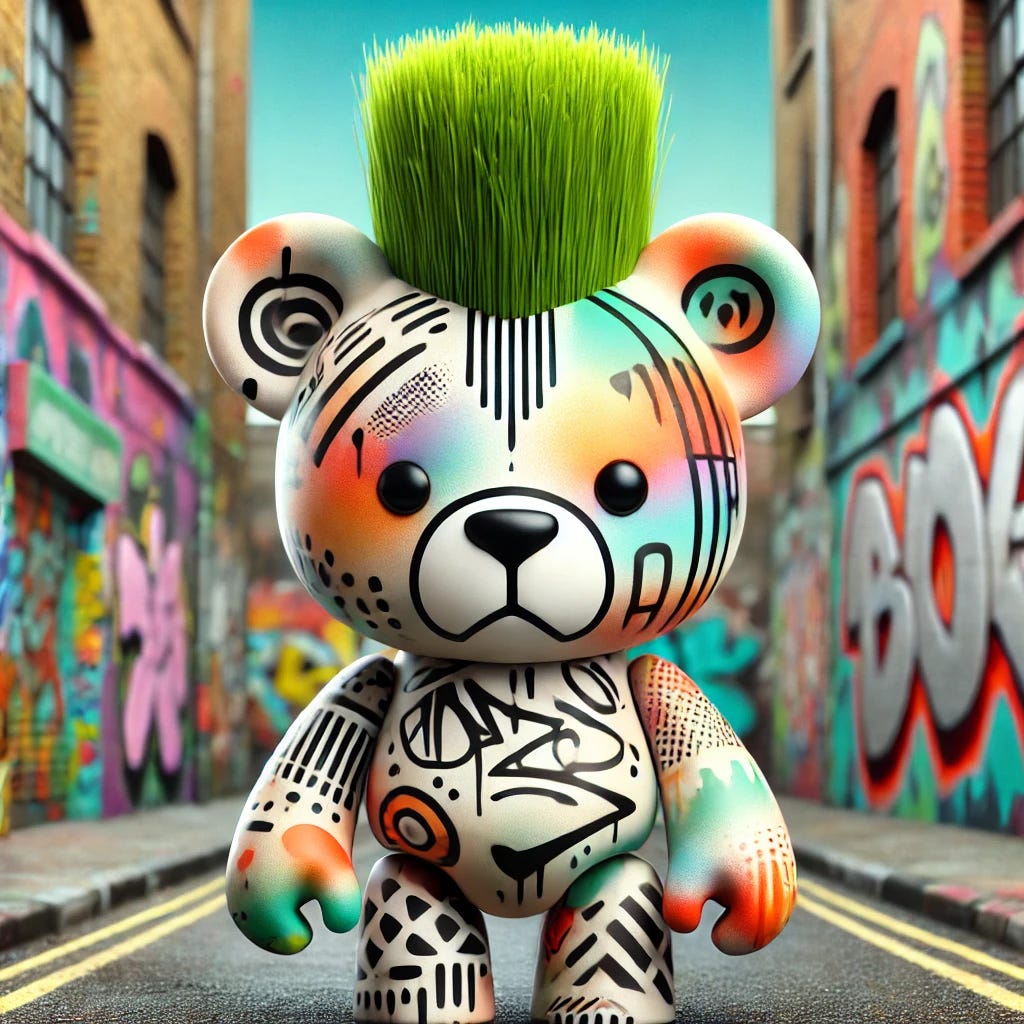
Each prompt built upon the last, with the AI generating new variations that the team could evaluate instantly. What would have taken days or weeks with traditional sketching and rendering was accomplished in minutes.
Expanding the Collection with AI-Generated Concepts
With the initial concept validated, the team expanded the line by applying the same aesthetic to different animal forms:
"Cool! Can you do the same and make a cat, rhino and elephant?"
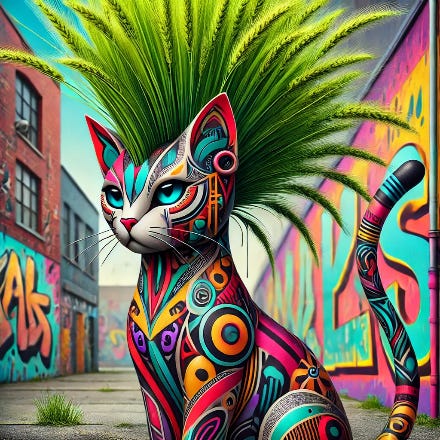
They did not specify “similar to Qee Bear” and, as you can see, the results were of more realistic-looking animals. The team edited their prompt: "Can you give the cat, rhino and elephant a similar body shape to the Qee bear?"
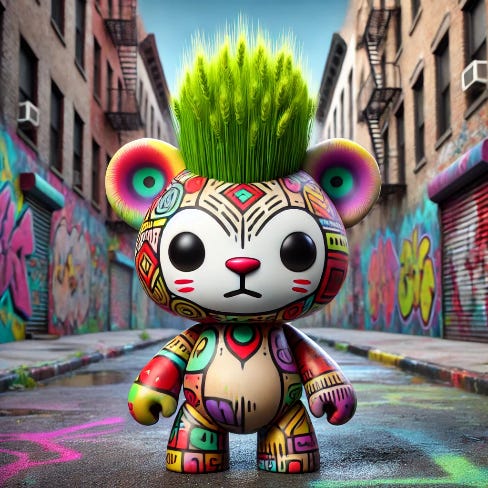
The result was a cohesive collection of stylized, graffiti-covered animal planters with wheatgrass mohawks—each maintaining the compact, rounded form of Qee Bears while offering unique character variations.
Why This Matters for Creative Product Development
This approach to product ideation illustrates several key advantages of integrating AI into the creative process:
Rapid Iteration: The team moved from concept to variations in minutes rather than days, freeing up valuable time for deeper creative thinking.
Expanded Creative Possibilities: AI suggested combinations and aesthetic details that might not have emerged in traditional brainstorming, serving as a true thought partner in the ideation process.
Visual Communication: Having concrete visuals made it easier to align stakeholders around the vision without expensive prototyping.
Risk Reduction: By quickly visualizing many options, the team could identify the strongest concepts before investing in physical production.
Time for Innovation: Perhaps most importantly, the time saved through AI-assisted ideation was reinvested into refining the strongest concepts and exploring even more innovative variations.
Beyond a Single Product
What's particularly interesting is how this approach is being incorporated into broader product strategy. By leveraging AI for creative ideation, companies are able to:
Prototype faster and more cost-effectively
Explore unconventional ideas that might seem too risky without visualization
Challenge industry norms and differentiate their offerings
Bridge the gap between marketing vision and product reality
Create products that inspire creativity and customer engagement
The goal isn't to replace human creativity—it's to enhance it. AI serves as a powerful thought partner that helps product developers and marketers push boundaries and discover new possibilities that would take much longer to uncover using traditional methods alone.
The Future of AI-Assisted Product Development
As AI tools become more sophisticated and accessible, we'll likely see more companies across industries adopting similar approaches. The most innovative products won't just come from good ideas—they'll emerge from the right questions asked with the right tools at hand.
In this case, the question was: "What if plant pots weren't just containers, but artistic statements in their own right?" And with AI as a creative partner, the answer was both surprising and compelling.
Companies that embrace these technologies are uniquely positioned to benefit from AI-assisted design. They can use AI not just to develop products faster, but as a thought partner that challenges assumptions and opens new creative pathways. The time saved from routine visualization and iteration can be redirected toward deeper innovation, market research, and refining the emotional connection between products and customers.
The next time you're developing a new product, consider how AI might help you push beyond the obvious solutions. By treating AI as a collaborative thought partner rather than just a production tool, you might just find yourself creating something that doesn't just serve a function—but creates genuine delight and connection.
Heather Lambert-Shemo is a marketing and innovation executive known for driving
transformational growth through strategic insights and AI-driven solutions. She helps
organizations harness AI for growth, efficiency, and competitive advantage. Heather
excels at aligning stakeholders and leading cross-functional teams, empowering them to deliver impactful results and navigate the complexities of AI adoption with clarity and confidence.
SUBSCRIBE TO ACTIONABLE AI WEEKLY
Actionable AI Weekly is a reader-supported publication. To receive new posts and support our work, consider becoming a free or paid subscriber.
Comments
Nothing yet. Say the first thing.
Sign in to join the conversation.