
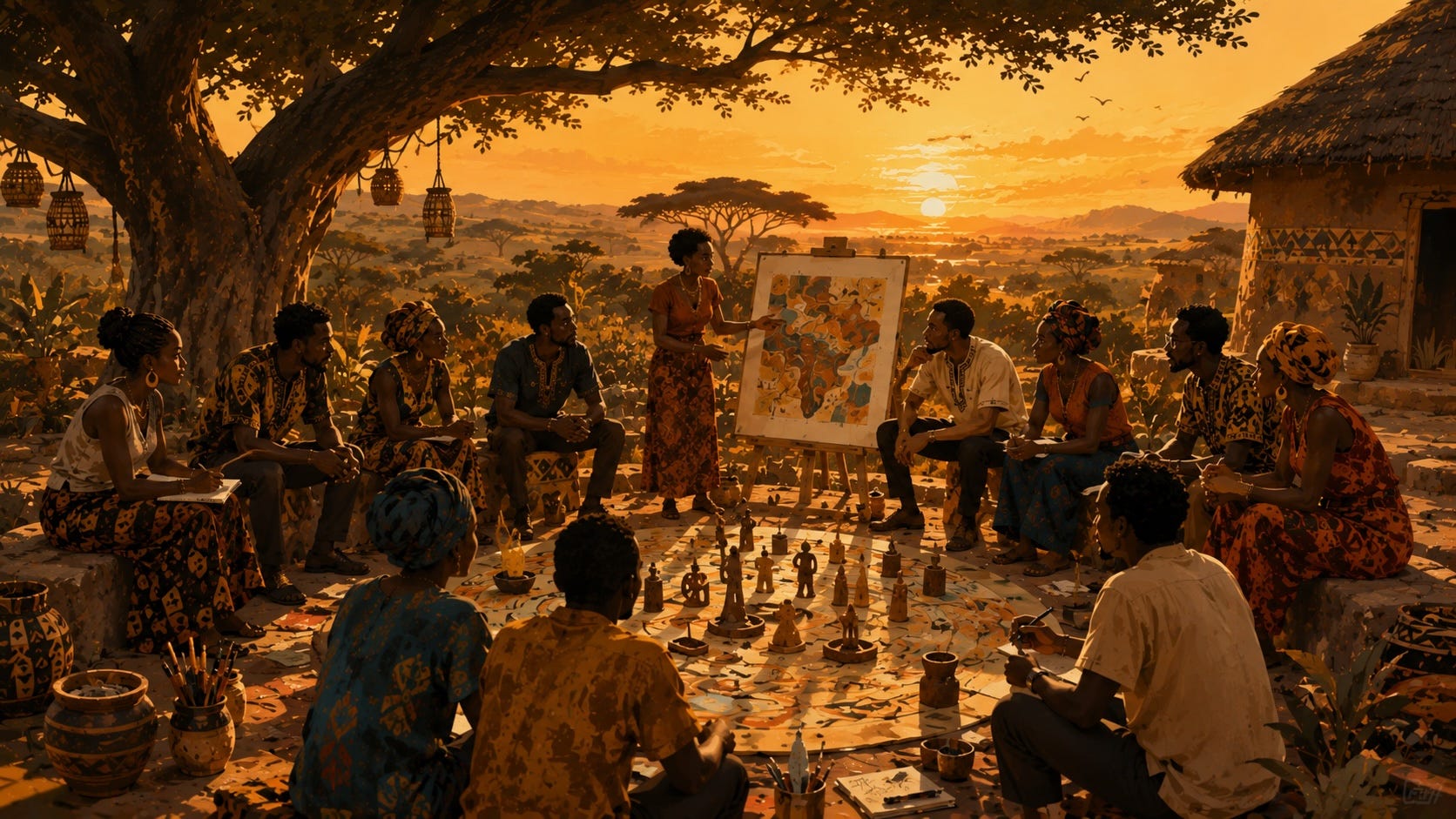
Many organisations say they want innovation. They ask employees to think differently, solve complex problems and generate bold new ideas. Yet, often without realising it, they create environments where people quickly learn that playing safe is the wiser option. Ideas are criticised before they are explored, mistakes are remembered longer than successes, and questioning established thinking is quietly discouraged. Under these conditions, creativity does not disappear because people lack imagination. It disappears because they lack permission.
The organisations that consistently innovate understand that creativity is not primarily a process. It is a culture. Before people use creative thinking tools effectively, they need an environment where curiosity is welcomed, experimentation is encouraged and different perspectives are genuinely valued. Creativity flourishes where people feel safe enough to think, brave enough to contribute and confident enough to learn.
Creative problem solving therefore extends far beyond teaching techniques or facilitating workshops. It requires leaders to create conditions where creativity becomes part of everyday work rather than an occasional event. When culture supports creative thinking, innovation stops being dependent on exceptional individuals and becomes a shared way of working.
Why a Culture of Creativity Matters
Culture shapes behaviour long before strategy does.
People naturally adapt to the unwritten rules of their environment. They quickly learn what earns recognition, what attracts criticism and what behaviours are quietly discouraged. If people are rewarded for avoiding mistakes, they will avoid risks. If they are rewarded only for certainty, they will hesitate to ask difficult questions. If efficiency is valued above exploration, creativity gradually gives way to routine.
This is why many organisations struggle with innovation despite investing heavily in creative thinking programmes. They teach people how to generate ideas while unintentionally maintaining cultures that discourage people from sharing them.
Culture always wins.
A creative workshop may inspire people for a day.
A creative culture shapes how they think every day.
The organisations that adapt most successfully to uncertainty are not necessarily those with the smartest people. They are those that consistently create environments where smart people are willing to think openly, challenge assumptions and explore possibilities together.
That willingness becomes one of the most valuable assets an organisation can possess.
Creativity Is a Human Environment Before It Is a Business Process
Creativity is often presented as a collection of methods, frameworks and brainstorming techniques.
These tools are valuable.
They are not enough.
People rarely produce their most original thinking because they have learned another creativity technique. They produce it because they feel safe enough to explore ideas without immediate judgement, curious enough to investigate unfamiliar possibilities and motivated enough to improve something that matters.
Creative thinking is fundamentally human.
It grows through trust.
It develops through relationships.
It flourishes in environments where people experience respect, encouragement and meaningful challenge.
This is why leadership plays such an important role.
Leaders do not create creativity directly.
They create the conditions in which creativity becomes possible.
What Does a Culture of Creativity Look Like?
A culture of creativity is one in which people consistently think beyond the obvious, collaborate across differences and actively seek better ways of solving problems.
It is characterised not by constant excitement but by everyday habits.
People ask thoughtful questions.
Ideas are explored before they are evaluated.
Different perspectives are welcomed.
Learning is valued alongside performance.
Experiments are encouraged.
Constructive disagreement is respected.
People share ownership for improving the organisation rather than waiting for instructions.
Creativity becomes everyone’s responsibility rather than belonging to a specialist department.
Over time, these behaviours become normal.
Innovation stops feeling exceptional.
It becomes simply how work is done.
Psychological Safety: The Foundation of Creative Thinking
No culture of creativity can exist without psychological safety.
Psychological safety is the shared belief that people can contribute ideas, ask questions, admit uncertainty and acknowledge mistakes without fear of embarrassment, punishment or exclusion.
This does not mean lowering standards.
It means separating the evaluation of ideas from the judgement of people.
When psychological safety exists, people become willing to:
Suggest unconventional ideas.
Admit they do not know something.
Challenge assumptions respectfully.
Share early-stage thinking.
Learn openly from mistakes.
Ask for help when needed.
Without psychological safety, people naturally protect themselves.
They stay quiet.
They agree too quickly.
They avoid risks.
They contribute only ideas they already know will be accepted.
The result is not simply fewer ideas.
It is less learning, less innovation and less adaptability.
Safety does not eliminate challenge.
It makes meaningful challenge possible.
Curiosity: The Engine That Keeps Creativity Alive
Curiosity is the habit of wanting to understand before wanting to conclude.
Creative cultures deliberately nurture this mindset.
Instead of rushing towards answers, curious organisations spend time asking better questions.
They wonder:
What are we missing?
Why does this problem exist?
What assumptions are shaping our thinking?
What can we learn from another industry?
What would our customers tell us if we listened more carefully?
Curiosity slows judgement long enough for insight to emerge.
It prevents organisations from becoming trapped by familiar assumptions.
Perhaps most importantly, curiosity remains valuable even when existing solutions appear successful.
It keeps organisations learning before circumstances force them to change.
Experimentation: Turning Ideas into Learning
Ideas become valuable only when they encounter reality.
Creative cultures therefore encourage thoughtful experimentation rather than endless discussion.
Experimentation reduces fear because it replaces perfection with learning.
Instead of asking whether an idea is guaranteed to succeed, teams ask:
“What is the smallest experiment that could teach us something useful?”
Small experiments produce rapid feedback.
Successful experiments become larger initiatives.
Unsuccessful experiments generate valuable knowledge.
Both outcomes strengthen creative capability.
Organisations that experiment frequently become increasingly confident navigating uncertainty because they learn continuously instead of waiting for certainty before acting.
Leadership Behaviours Shape Creative Cultures
Culture reflects what leaders consistently model.
Employees pay far more attention to everyday behaviour than official values displayed on office walls.
If leaders ask for feedback but become defensive when receiving it, curiosity declines.
If leaders encourage innovation but punish intelligent mistakes, experimentation quickly disappears.
Creative leaders demonstrate behaviours such as:
Listening with genuine interest.
Asking thoughtful questions before giving answers.
Inviting diverse opinions.
Acknowledging uncertainty.
Celebrating learning as well as achievement.
Recognising thoughtful experimentation.
Remaining curious themselves.
Leadership is less about having all the answers.
It is about creating more people who are capable of finding them.
When leaders model curiosity, humility and learning, those behaviours gradually spread throughout the organisation.
Shared Ownership Creates Lasting Innovation
Innovation becomes sustainable when everyone feels responsible for improving the organisation.
Shared ownership replaces passive compliance with active contribution.
Instead of assuming improvement belongs to senior leadership, employees begin asking:
“What can I improve?”
“How can we make this easier?”
“What opportunity are we overlooking?”
This sense of ownership transforms creativity.
People stop waiting for permission.
They begin noticing opportunities, suggesting improvements and collaborating across boundaries.
The organisation becomes more adaptable because creativity is distributed rather than concentrated.
Innovation is no longer dependent on a few exceptionally creative individuals.
It becomes part of the collective intelligence of the organisation.
How to Build a Culture of Creativity in Practice
Creating a culture of creativity requires consistent leadership and deliberate organisational habits. The following strategies help turn creative thinking into an everyday way of working.
1. Build Psychological Safety Every Day
Encourage open dialogue, respectful disagreement and thoughtful questions.
Respond to mistakes with curiosity before judgement. Separate learning conversations from performance conversations so people feel safe enough to contribute honestly.
2. Reward Curiosity as Well as Results
Recognise people who ask insightful questions, explore different perspectives and investigate new possibilities.
Celebrate learning behaviours alongside measurable outcomes so curiosity becomes part of organisational success.
3. Make Experimentation Routine
Encourage teams to test ideas through small, manageable experiments rather than waiting for perfect solutions.
Create simple processes for capturing what each experiment teaches, regardless of the outcome.
4. Develop Leaders as Creative Coaches
Train leaders to ask better questions, facilitate reflection and encourage independent thinking rather than providing immediate answers.
Leadership should expand other people’s thinking rather than replacing it.
5. Encourage Cross-Functional Collaboration
Bring together people with different backgrounds, expertise and experiences to solve shared challenges.
Diverse perspectives increase the likelihood of discovering innovative solutions that no single team would have developed alone.
6. Create Visible Opportunities for Contribution
Establish regular forums where employees can share observations, suggest improvements and discuss emerging opportunities.
When ideas are genuinely considered and acted upon, participation grows naturally.
7. Reinforce Creative Behaviours Consistently
Recognise collaboration, thoughtful risk-taking, reflective learning and constructive challenge in performance conversations, recognition programmes and leadership development.
People repeat the behaviours organisations consistently value.
What Becomes Possible When Creativity Becomes Part of the Culture?
When creativity becomes embedded in organisational culture, innovation ceases to depend on isolated events or a small group of highly creative individuals. Instead, it emerges naturally through everyday conversations, collaborative problem-solving and continuous learning.
People become more confident sharing ideas because trust replaces fear. Teams solve problems more effectively because diverse perspectives are welcomed rather than resisted. Leaders spend less time directing solutions and more time developing the thinking of others. The organisation adapts more quickly because curiosity, experimentation and learning have become normal ways of working.
Perhaps most importantly, people experience greater purpose and engagement. They recognise that their ideas matter, their contributions influence meaningful change and they have a genuine role in shaping the organisation’s future.
This creates a workplace where creativity is no longer viewed as an occasional initiative. It becomes a defining characteristic of how people think, collaborate and grow together.
A culture of creativity cannot be built through slogans, innovation campaigns or occasional brainstorming sessions. It is created through thousands of everyday interactions that either encourage or discourage people from thinking differently.
Leaders build these cultures by creating psychological safety, nurturing curiosity, encouraging thoughtful experimentation, modelling learning behaviours and sharing ownership for innovation across the organisation. Over time, these practices transform creativity from an individual skill into a collective capability that strengthens every aspect of organisational life.
The most innovative organisations are not those with the most creative people. They are those that have learned how to create environments where ordinary people feel confident enough to do extraordinary thinking. In an increasingly uncertain world, that may be the greatest competitive advantage of all.
Join us at ACRE30, Africa’s Premier Creativity and Creative Thinking Conference in 2026 at Klein Kariba, South Africa! https://acreconference.com
Comments
Nothing yet. Say the first thing.
Sign in to join the conversation.