
There’s an art to pissing people off, a fact that’s often ignored by those eager to get a rise out of their targets. Terms like “cheap” or “empty” provocation imply a value to the act of provoking others, and more often than not those wanting to provoke prefer the path of least resistance for themselves, an overreliance on shock value that tends to come at the expense of punching down on others. It doesn’t take long to spot these kinds of bankrupt efforts, and despite the intentions of lazy provocateurs their methods make it easy to dismiss them.
Two new releases in October, Todd Rohal’s Fuck My Son! and Radu Jude’s Dracula, “troll” audiences in their own respective ways. Rohal’s film falls into the cheap category, a disappointment after Uncle Kent 2, his previous feature from 2015. A sequel to Joe Swanberg’s 2011 drama, Uncle Kent 2 opens with Swanberg giving Uncle Kent star Kent Osborne permission to make a sequel after he pitches the idea of one. It was a simple joke (make the most unnecessary sequel ever) that Osborne and Rohal took to the furthest extremes, using the pointlessness of the film’s existence to run wild with absurd ideas and crass jokes while poking fun at the film industry’s obsession with turning every idea into intellectual property.
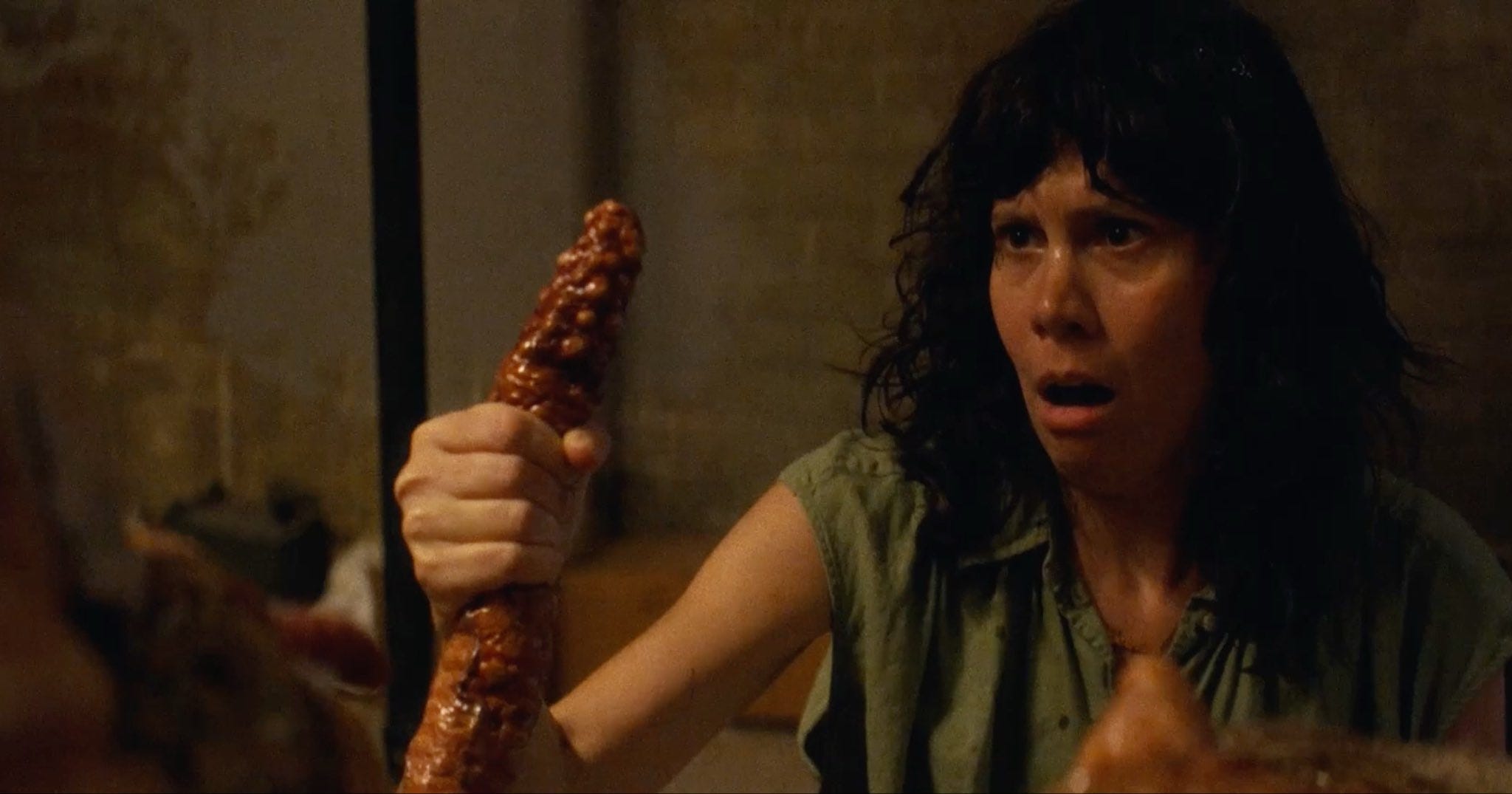
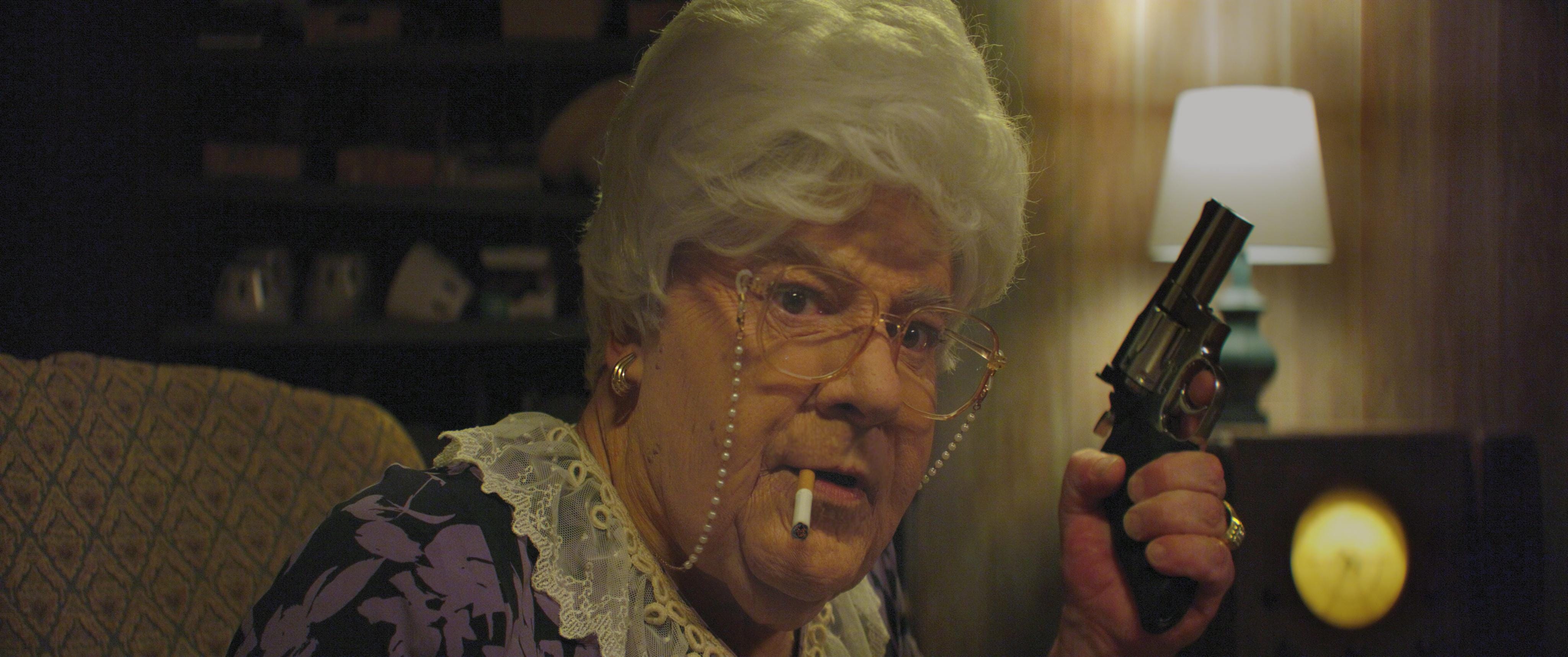
Fuck My Son! doesn’t have anything to play against, other than simplistic notions of decency. Robert Longstreet plays Vermina, an elderly woman who kidnaps a single mom (Tipper Newton) and her young daughter (Kynzie Colmery), locking them up in the basement of her secluded farmhouse. Vermina has no use for the little girl outside of torturing her to force her mom to do one thing: have sex with Vermina’s son (Steve Little), a mutated mass of oozing, babbling flesh that looks like a genetic experiment gone wrong.
With the introduction of the son, Rohal’s film turns into a series of gross out moments around the logistics of arousing and fucking someone (or, depending on how you see it, something) with a nightmare-inducing reproductive system. There’s some fun in seeing all the ways Rohal and his committed cast try to be as disgusting as possible, until the realization sets in that Fuck My Son! offers nothing else. Rohal indulges in one juvenile sight gag after another, a supposed exercise in depravity whose premise is too untethered from reality to make any of what it throws in viewers’ faces stick.
The only person guaranteed to get enjoyment out of Fuck My Son! is Rohal, who gleefully stretches the limits of his film in his chaotic finale’s multiple endings, as if he’s giggling at the thought of subjecting people to his work. But Rohal doesn’t let anyone else in on the joke. Towards the end of the film, as I looked around the room at my screening to witness dozens of bored, stone cold faces, feeling the spirit of the sunk cost fallacy among us, the cheapness of Rohal’s film and its antics were plain to see. Fuck My Son! is a misguided middle finger, so unclear in terms of who it’s pointed at that you can only assume it’s meant for anyone who bothered to sit through it.
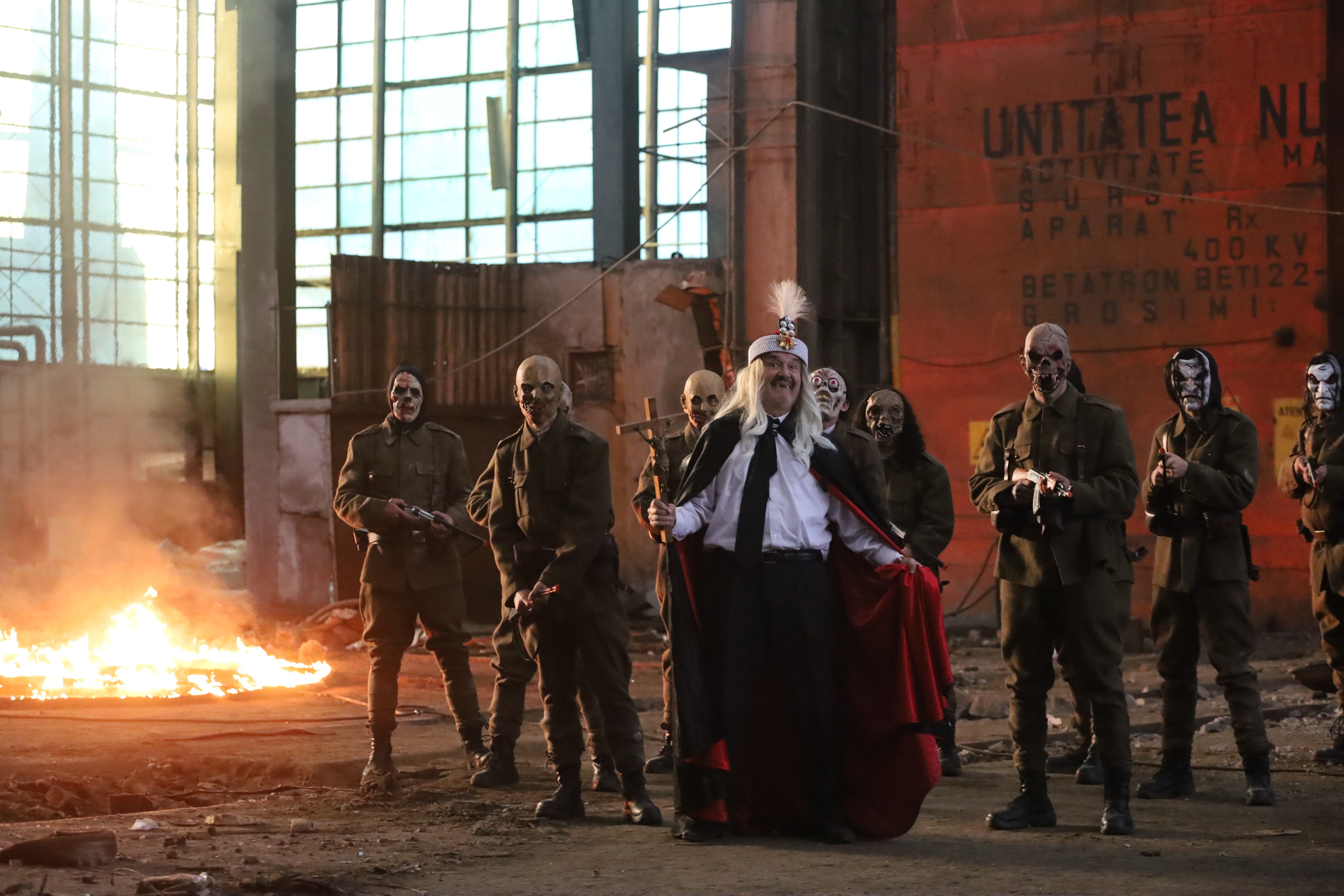
You don’t have to look far to see confirmation of how Rohal bungled his film, as he’s spoken to the press about the backlash Fuck My Son! received over his film’s use of AI in several scenes. He defends it by saying the use was intentional, that it was meant to parody right wing corporations who would use AI themselves, a context Rohal doesn’t provide in his film. The backlash and criticisms Rohal received haven’t been a problem for Radu Jude’s new film Dracula, whose use of artificial intelligence is more blatant than Rohal’s. Jude opens his film with garish, AI generated images of Dracula repeating the phrase “I am Vlad the Impaler Dracula, you can all suck my cock.” That’s followed by the introduction of a young man (Adonis Tanta) who explains he’s supposed to direct a Dracula movie but, with no ideas on how to make it, he’s relying on AI to help him. Over a dozen different variations on Dracula follow, including a musical, a silent film, an adaptation of a Romanian vampire novel, and more.
Once Jude establishes that we’re watching the results of a hack filmmaker workshopping terrible ideas into a messy compilation, he creates a space where he can be as bad as he wants. Shot on iPhones and around the same time as his other 2025 feature Kontinental ‘25, Dracula provokes viewers with its crudeness and sheer volume, expecting people to put up with 170 minutes of proudly “lazy” filmmaking. But Jude isn’t being vulgar for the sake of it. He understands that coarseness works better as a response, and in this case he’s rejecting cinematic norms around structure, plot, and competence, to name a few. If someone sees that as confrontational, that’s on them more than it is on Jude.
Despite its real and artificial appearances, Dracula is inviting and funny, as long as you’re willing to accept Jude’s terms. He plays within the accessible format of genre, usually horror and comedy, while throwing in some indulgences in bad taste. A direct line could be drawn between Jude’s film and works by David Wain and Michael Showalter, like Wet Hot American Summer and Stella Shorts, their collection of short films with Michael Ian Black from the comedy trio Stella. Wain and Showalter’s writing has an awareness of cliches and tropes so common in narrative film they’ve become rote, the kind of busywork like exposition and plausibility that are so often repeated it’s easy to forget they’re arbitrary.
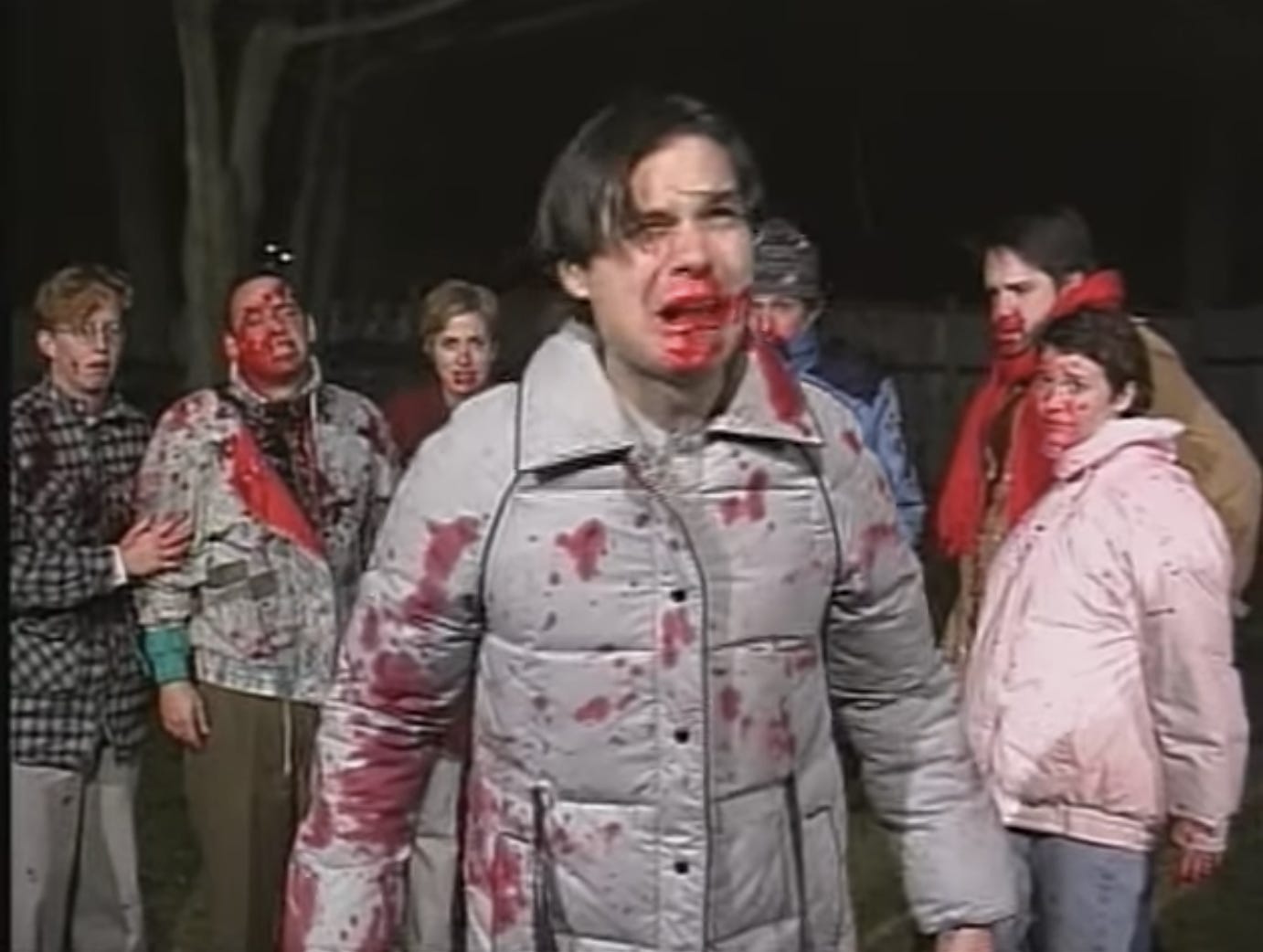
Stella Shorts, which were produced as part of Stella’s comedy shows in the late 1990s and early 2000s, were shot on cheap digital video cameras with no budget, and were usually full of cameos from the trio’s celebrity friends like Paul Rudd and Bradley Cooper. Most shorts had a basic setup, with some directly based on films like The Big Chill or Die Hard, and used that foundation to do whatever absurd, anarchic things they desired, whether it was impromptu orgies (Wain, Showalter, and Black said they would often end their shorts with everyone having sex if they couldn’t come up with a better conclusion) or using a dildo as a prop. By the time Dracula introduces a chapter about a “cock farmer” who picks dildos off stalks in a field, it was difficult to avoid seeing a connection between the two projects.
Like Wain and Showalter, Jude’s playing within the boundaries of cliches and conventions acts on the assumption that these things are malleable but not worth breaking. For as much as films like Wet Hot American Summer or Wain/Showalter’s romcom spoof They Came Together poke fun at their respective genres, they still follow the overall structure and resolutions expected of these kinds of films. Dracula isn’t as laser focused in terms of its targets. Jude’s recent films take an open arms approach that reflects how the internet and social media flattens our access to information, so watching Dracula requires a constant state of awareness given the high and low brow references constantly thrown around. But Jude’s skewering of various subjects, like AI, capitalist greed, and far right politics, work toward reinforcing the need for subversiveness and artistry in cinema those aforementioned forces want to suppress. Dracula may have a sloppy appearance but don’t be fooled; there’s more thought and purpose in its provocations than it lets on at first glance, which makes its shenanigans harder to disregard.
Todd Rohal’s Fuck My Son! is currently touring cinemas across North America via self-distribution. You can find out where it’s playing here. Radu Jude’s Dracula is out now in Canada via Films We Like and the US via 1-2 Special. You can find out where it’s playing in Canada here and the US here.
No posts
Comments
Nothing yet. Say the first thing.
Sign in to join the conversation.