

Last year’s Berlinale was the last edition for artistic director Carlo Chatrian, who previously directed the Locarno festival between 2012 and 2018. Chatrian’s exit was not his choice, and the decision to force him out was met with pushback from hundreds of filmmakers. The common assumption was that Chatrian and his team’s selections were too esoteric for an event that demanded the kind of star wattage and prestige seen at Cannes or Venice. In other words: art was bad for business.
The drama around Chatrian’s time at Berlin coming to an end is an easy example to point to of high profile film festivals catering to market interests rather than artistic ones. Locarno’s continued commitment to prioritize the latter makes its programming feel like a relief within today’s festival circuit. This year’s International Competition, which includes Ben Rivers, Fabrice Aragno, Dane Komljen, and Radu Jude to name a few, contains a mix of titles whose willingness to make bold, risky choices means they’d likely get rejected or chucked into a sidebar anywhere else. It’s nice to see there’s still a place for these films that can provide a deserving platform for them, even if these kinds of spaces continue to shrink with each passing year.
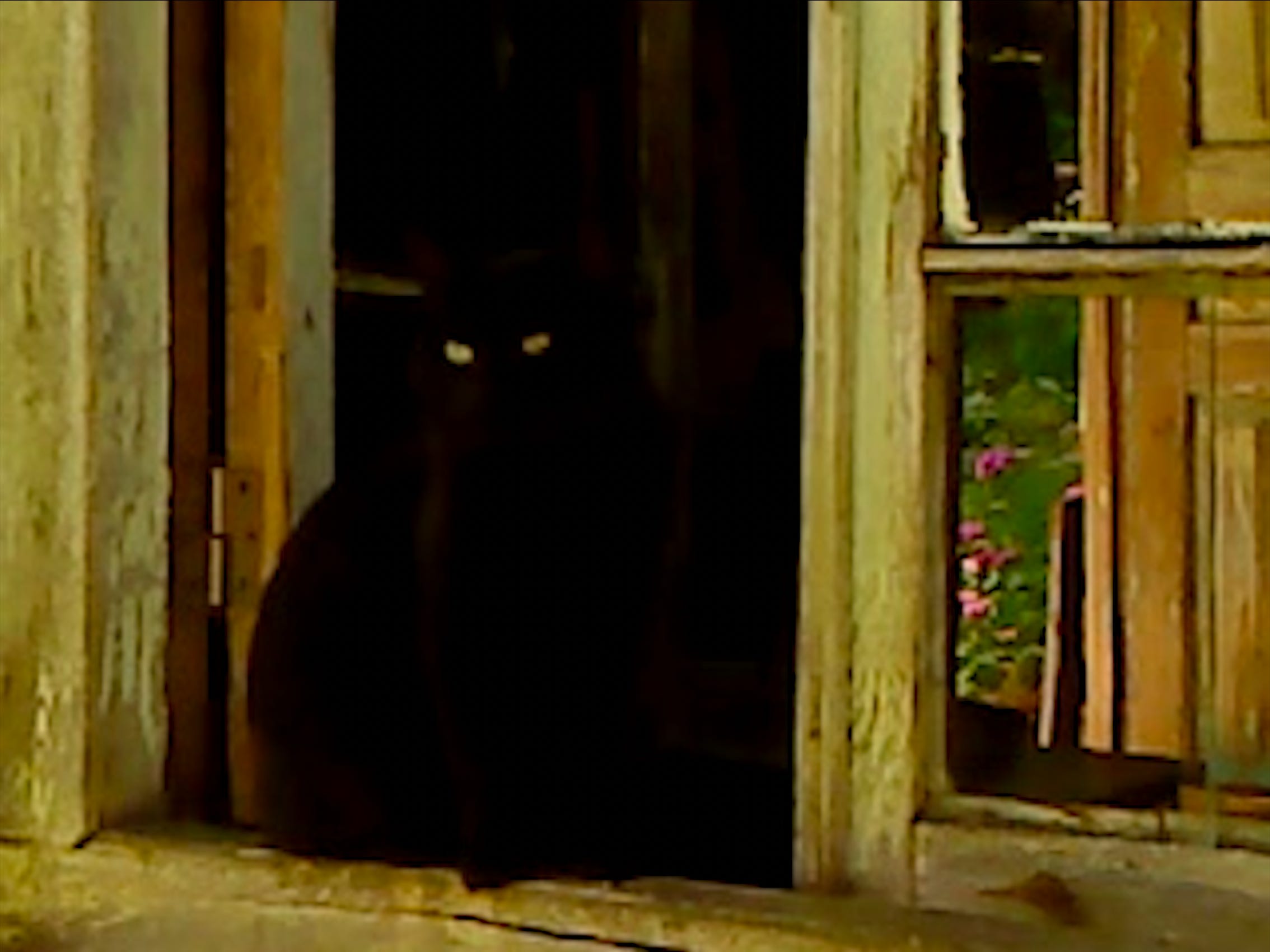
The most obvious example of bold and risky filmmaking from this year’s competition would be Alexandre Koberidze’s Dry Leaf, which he filmed on the same 2000s cell phone he used on his 2017 debut Let the Summer Never Come Again. That means a low resolution with images that call more attention to the pixels making up each frame than what’s actually in them. The film sets up a narrative hook in its opening minutes when Irakli (David Koberidze) receives a letter from his recently missing daughter Lisa demanding he not look for her. Irakli ignores Lisa’s request and reaches out to her friend Levani (Otar Nijaradze), and the two drive around the countryside looking for her after they find out she’s supposed to work on a project photographing soccer fields in Georgian villages.
The film’s narrator establishes that Levani, like other people “in the film’s reality,” is invisible, and much of Dry Leaf shows Irakli interacting with no one else on screen. That choice might come across as a touch of whimsy, but it ties right into the degraded, near-abstract quality of Koberidze’s images. By design, Dry Leaf invites viewers to imagine parts of scenes for themselves, while the camera demands a constant state of adjusting one’s perception to figure out exactly what’s on screen from one shot to the next. In his own friendly way, Koberidze uses brute force to make viewers actively engage with what they’re watching.
That demand can get taxing, especially with most of the three hour runtime dedicated to montages of various stops along Irakli and Levani’s journey. That pattern can get repetitive once the initial appeal of Koberidze’s form wears off. But for every lull in Dry Leaf, there’s a stunning shot or moment right around the corner to keep the film engaging. There’s a constant unpredictability to the perceived flaws and outdated qualities of Koberidze’s camera, and the episodic structure allows the film to maintain an openness that can push the film in any direction at a moment’s notice. That alone makes Dry Leaf one of the year’s most vital films.
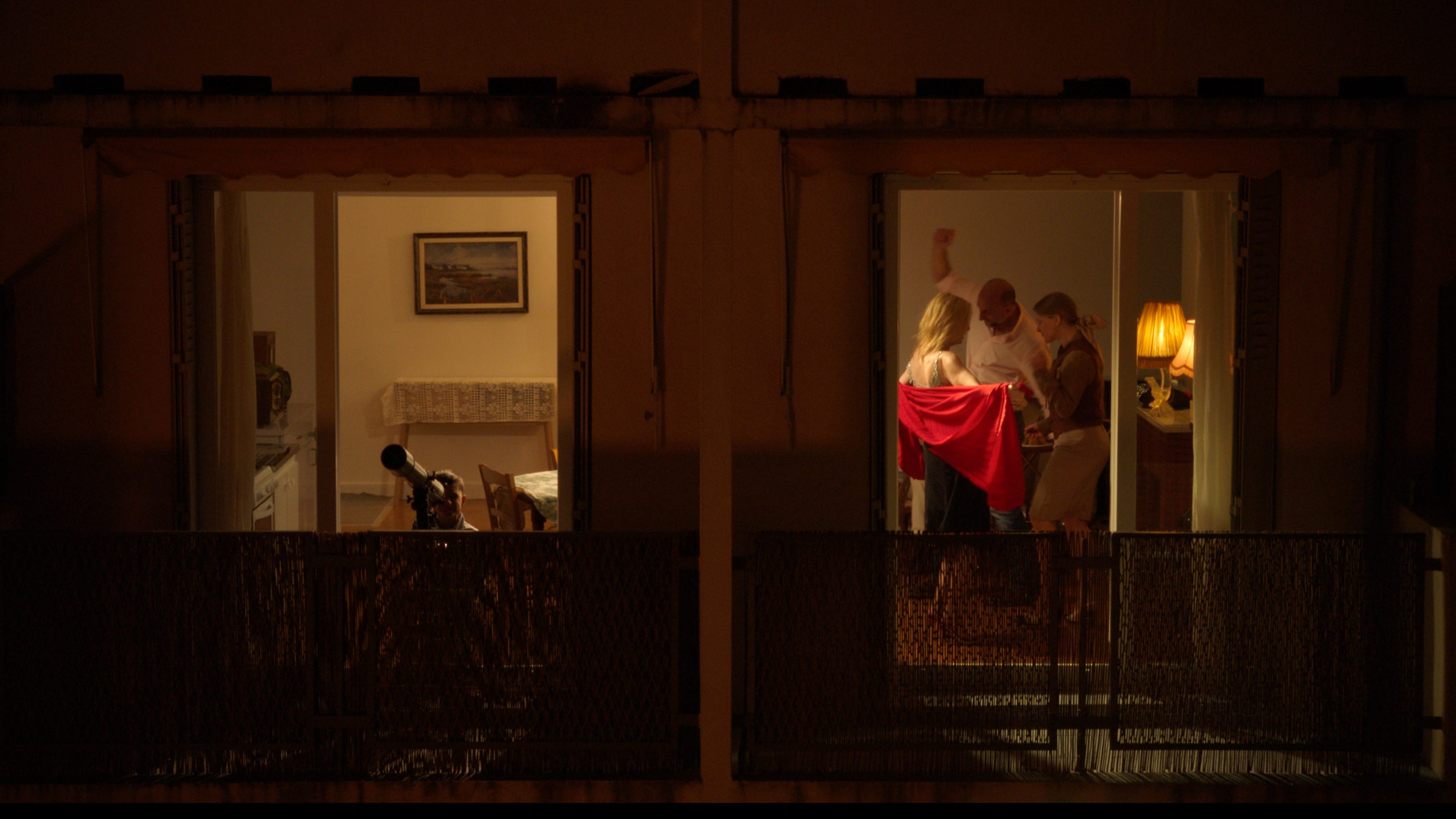
One of the other highlights in this year’s programme is Jérôme Reybaud’s A Balcony in Limoges, which played in the festival’s Cineasti del presente competition for first and second features. In a brief 70 minutes, Reybaud pointedly calls out the societal impasse we’ve reached in recent years, making it one of the best examples of a new film tackling our contemporary malaise.
The film follows two women, former high school classmates who cross paths in their fifties: Eugénie (Anne-Lise Heimburger), a single mother off work due to an injury, and Gladys (Fabienne Babe), who lives out of her car and works odd jobs during the day to fund her clubbing at night. Eugénie acts as a good, loyal citizen, following orders and doing charity work on the side; Gladys has abandoned societal norms and requirements, having no bank account, throwing away her ID, and showing pure disdain for politics.
Eugénie befriends Gladys in the hopes of helping her reform her ways, a set-up that would feel right at home among the feel-good dramedy dreck that France loves to churn out year after year. But Reybaud’s direction calls attention to the flaws in both women’s outlooks, from Gladys’ destructive nature hurting those around her to Eugénie’s compassion masking her need for others to conform. There’s little interest in psychologizing either of them as they represent two end results of economic, social, and political systems that have reached a point of exhaustion; one person desperately clings on to the old ways while the other tries to rebelliously flee them.
The film stays close to Eugénie and Gladys but maintains a distance, which ties into the false sense of privacy provided by the balcony in the title (the film’s narrator is Eugénie’s neighbour who lives directly across from her, an incomplete perspective that Reybaud’s direction mimics). A Balcony in Limoges simply observes the clash between these two women, both of them unable to see any alternative way forward under the status quo, and in its own, deadpan way, lets the inevitable play out. It’s a bleak and funny film, and its provocative final act is sure to give people enough cover to dismiss its incisiveness rather than engage with it.
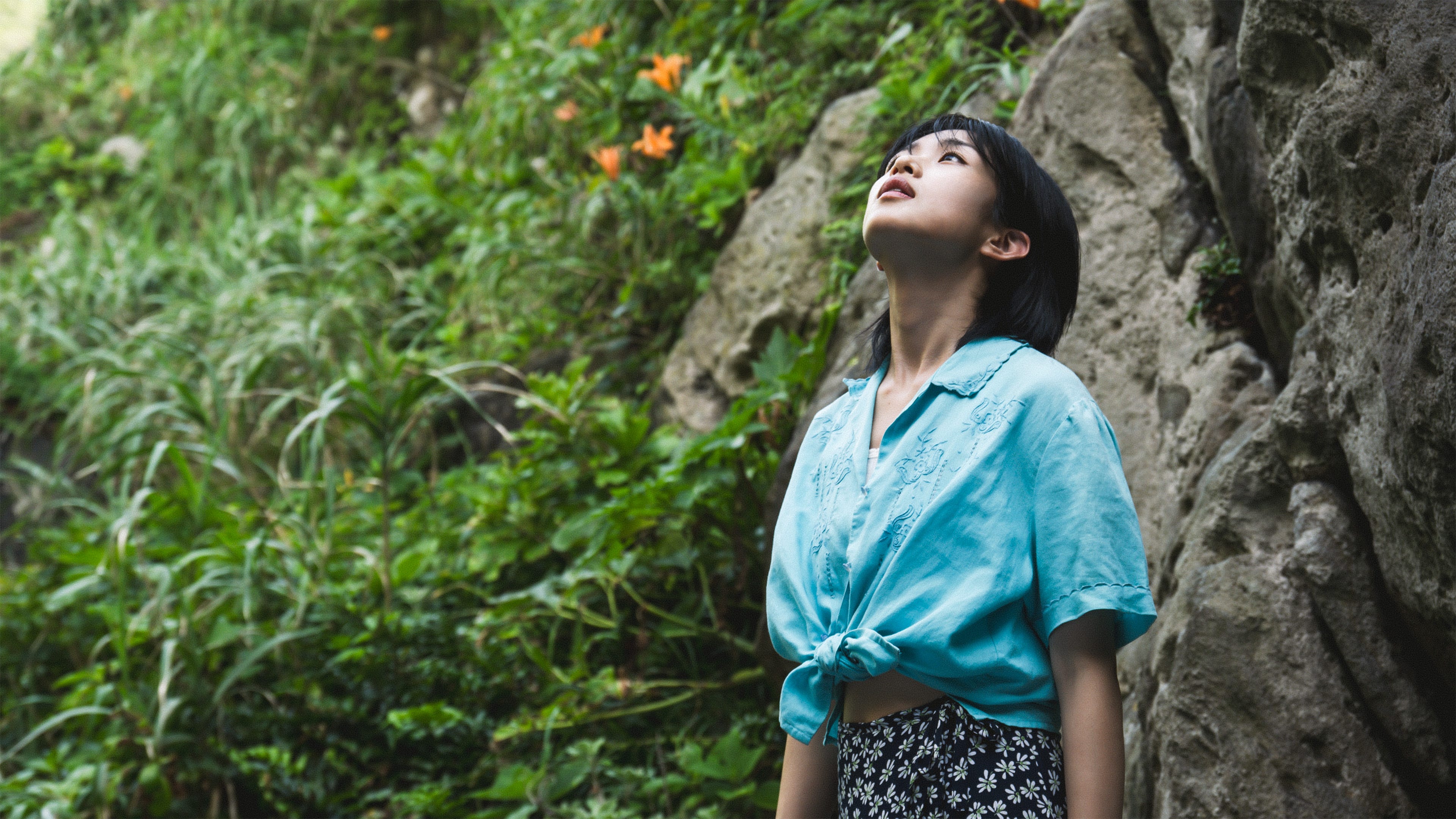
The festival jury headed by Rithy Panh awarded the Golden Leopard to Sho Miyake’s Two Seasons, Two Strangers, a perfectly fine film whose win felt a little disappointing given the more adventurous and formally daring titles in this year’s competition. Split into two parts, the film takes place through the perspective of Li (Shim Eun-kyung), a screenwriter who finds herself in a rut. The first section shows her most recent film, a drama set in a seaside town where a teenage boy and girl meet and quickly connect over their isolation and melancholy. The second part switches back to Li in wintertime, who impulsively travels to a rural village with the hope that her sojourn will solve her creative block. When she arrives and discovers that all of the hotels in town are full, she winds up at an old guesthouse run by a man named Benzo (Shinichi Tsutsumi).
Miyake’s formal chops fare better than his writing, which is why the first half’s contemplative and evocative film within the film hits a better tonal balance than Li’s winter trip. Using long shots that has the island and surrounding ocean dwarf the two alienated teens, Miyake lets the juxtaposition of the gorgeous visuals and pensive characters do most of the work, which includes two of the film’s best sequences: a conversation in one take as the sun goes down, and an ocean swim during a rainstorm that looks like the waves might overtake the camera at any second.
The winter section with Li takes a meta turn, and with it a more literal and obvious film emerges from her strained interactions with Benzo. The intended parallels with the first half are immediate, and once Benzo tells Li he prefers “to see dramas with humour” and that a good film is based on how it depicts “human sadness,” it doesn’t take long to guess where the film will go next. An impromptu, late-night trip to add spontaneity leads to revelations about Benzo’s past, all of it portrayed in a neat fashion meant to achieve a tonal balance between funny and somber. This isn’t exactly a revelatory aim, and the finality of Li’s arc with regards to solving her inability to create a new story is less satisfying than the more open-ended and affecting moments earlier in the film.
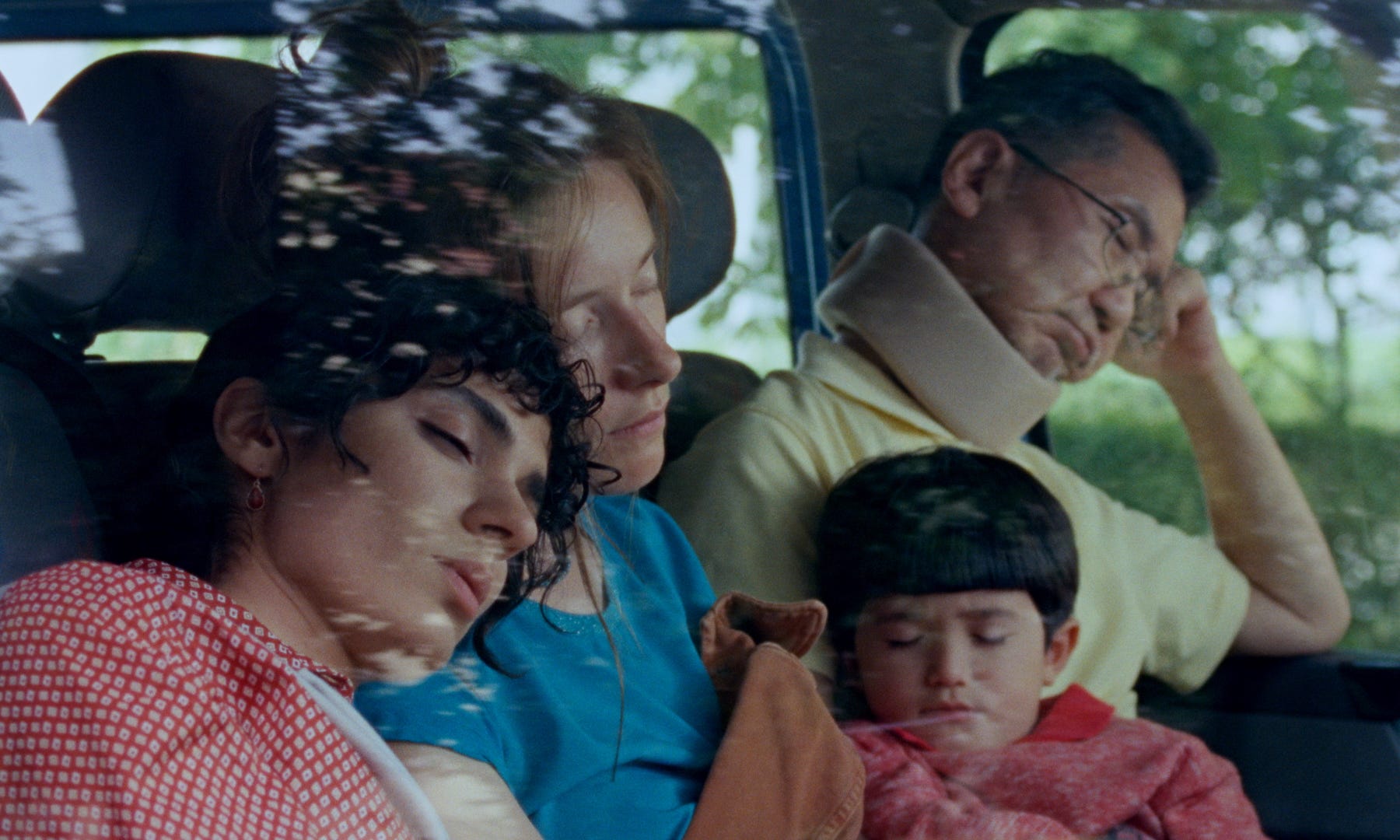
Another solid film from this year’s competition is Julian Radlmaier’s Phantoms of July, which slowly but surely won me over thanks to its pleasantly surprising final act. Set in the east German town of Sangerhausen, the story unfolds across four chapters, with the first taking place centuries earlier. Lotte (Paula Schindler) works as a lowly servant to a rich family, but when she falls in love with a poor man who wants them to run off to France, their defiant act of love comes with terrible consequences. The rest of the film takes place in the present, first with Ursula (Clara Schwinning), who works multiple jobs to make ends meet. When a trio of musicians from Berlin visit town to perform at a concert, Ursula falls head over heels for one of them with deliberate echoes of Lotte’s doomed romance.
Radlmaier doesn’t leave much to work with in terms of story, laying out the core theme of yearning early on in the film along with how the upper class imposes the circumstances for yearning on the lower classes. Beyond the strong cinematography by Faraz Fesharaki, Phantoms of July turns into a game of spotting the various symbols and references, like the use of cherries for desire or how Ursula’s plot modernizes Lotte’s chapter. Things take a more interesting turn with the introduction of Neda (Maral Keshavarz), an Iranian immigrant who hopes to become an influencer as the town’s racist, anti-immigrant attitude makes it impossible for her to find steady work. She gets her own bit of longing in the form of a local street sweeper she swears is someone she knew from Tehran. Or maybe it’s nothing more than a ghost haunting Neda’s dreams.
The shift into a more fantastical realm in the fourth chapter, where Lotte, Ursula, and Neda’s stories intertwine, also has the film take on a lighter and more confident tone. That could be due to Radlmaier taking a more active role with his messaging, swapping out the echoes and parallels between past and present with direct, intersecting lines. The film’s final exchange takes a deliberate step back to add some necessary perspective to Ursula and Neda’s plights, and how their situations represent part of a cycle that’s been in motion for much longer than they’ve been around. Radlmaier’s use of the medium’s ability to collapse time and space is hopeful; if division and bigotry make it hard to have solidarity with each other today, maybe we need to find it in the past.
Thanks for reading Acquired Cinema! Subscribe for free to receive new posts and support my work.
Comments
Nothing yet. Say the first thing.
Sign in to join the conversation.