
On April 22, 1970, roughly 20 million Americans—one in every ten people in the country—took to the streets. They weren’t protesting a war. They weren’t rallying for a candidate. They were demanding something much simpler:
Clean air.
Clean water.
A healthy place to live.
The air in many cities was literally making people sick. Rivers were so polluted they caught fire. Oil spills blackened coastlines. Americans looked around and decided enough was enough.
What happened next should give all of us hope.
Within months, the federal government created the Environmental Protection Agency (EPA). The Clean Air Act became law. Soon after came the Clean Water Act and the Endangered Species Act—landmark legislation that still protects Americans today.
And here’s the part that surprises most people:
This wasn’t a partisan victory.
The first Earth Day was deliberately organized as a bipartisan movement. Democratic Senator Gaylord Nelson partnered with Republican Congressman Pete McCloskey because they understood something that’s easy to forget today: the environment belongs to everyone.
The votes tell the story.
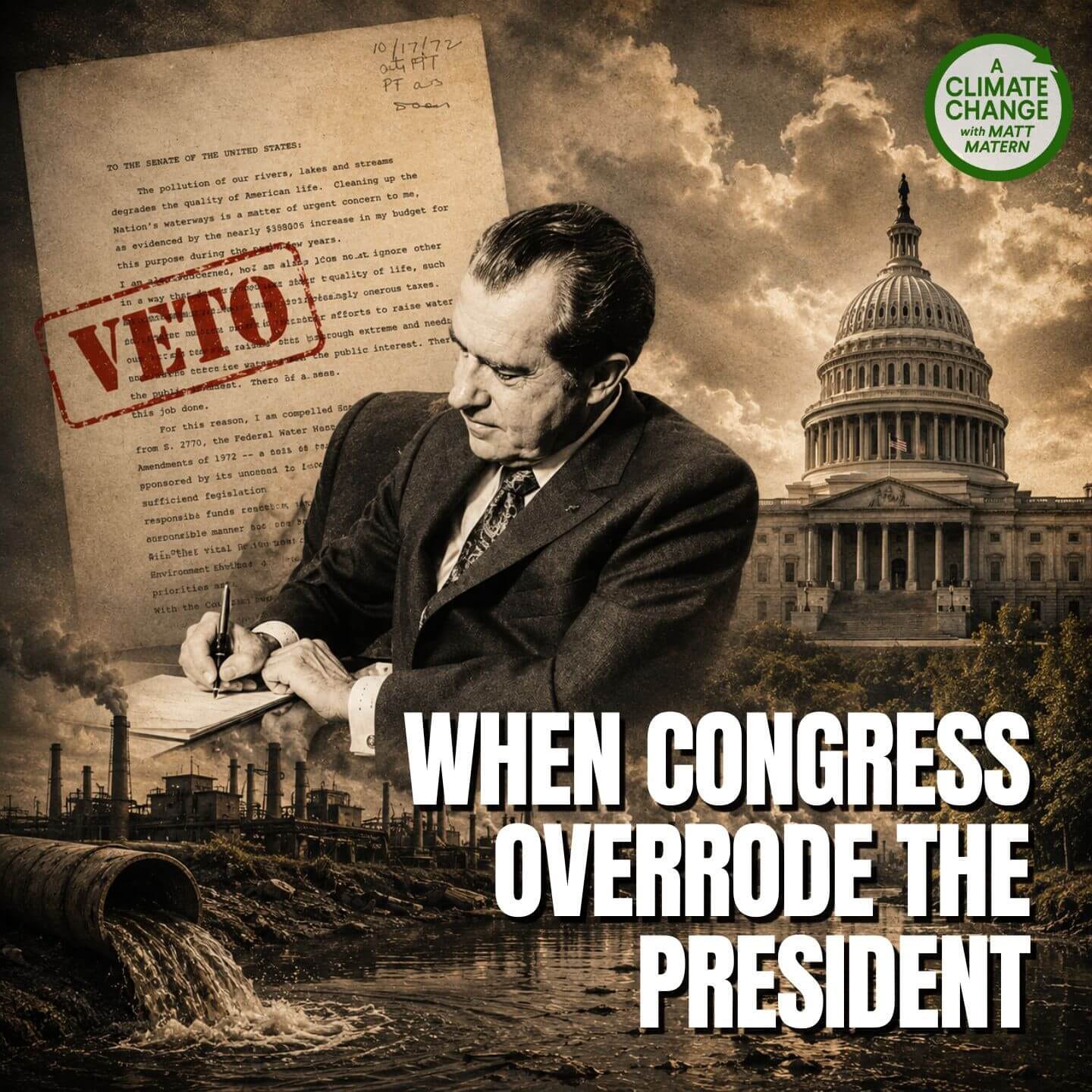
The Clean Air Act passed the House 374–1. The Senate vote was unanimous. The Clean Water Act passed with overwhelming support from both parties. When President Richard Nixon vetoed it over cost concerns, members of his own party joined Democrats to override him. More than 100 Republicans voted against their president because they believed clean water mattered more than party loyalty.
Pause and think about that for a moment.
Can you imagine any major issue today passing Congress by a vote of 374–1?
Most of us can’t.
Yet just over fifty years ago, environmental protection was one of the few things Americans almost universally agreed upon. The idea that we shouldn’t poison our air, water, and communities wasn’t considered liberal or conservative—it was simply common sense.
Over time, environmental issues became tangled in broader political battles over regulation, economics, energy, and climate change. What was once common ground slowly became another front in America’s culture wars.
But history reminds us that division isn’t inevitable.
The story of the first Earth Day isn’t really about legislation. It’s about what happens when ordinary people decide something matters enough to act.
Those 20 million Americans didn’t have social media. They didn’t have perfect political alignment. They didn’t even have a president who was personally passionate about their cause. What they had was numbers, persistence, and a belief that public pressure could move institutions.
They were right.
The most powerful takeaway from the first Earth Day may be that change doesn’t require unanimity—it requires enough people willing to show up.
Clean air isn’t Republican.
Clean water isn’t Democratic.
Healthy communities aren’t partisan.
They’re American.
As we approach America’s 250th anniversary, perhaps the most useful question isn’t whether we can recreate the politics of 1970. It’s whether we can rediscover the shared values that made those politics possible.
Because if one in ten Americans could come together and transform the country in two years, maybe the common ground isn’t gone.
Maybe it’s just waiting to be uncovered again.
What issue today do you think could still bring Americans together across political lines? Share your thoughts in the comments. Check out the full episode now.
No posts
Comments
Nothing yet. Say the first thing.
Sign in to join the conversation.