
Through sharing creative works with people, I’ve noticed an interesting trend in terms of what characters tend to “click” with people, the ones I hear people mentioning to me. It’s probably the most pronounced with the two video games I’ve done, and it’s the side characters that show up, usually the chapter bosses or sub-bosses.
In many ways, though, I think I get it. You don’t have very long with those particular characters, and so the impetus is to leave a strong impression on the player (or reader, or watcher) with those characters. They’re allowed to sometimes be a bit more one-dimensional, reducible to a couple of character traits that you can isolate. It’s harder (ideally) to explain what works about the leads, but those side characters can be surface level and more fun, for lack of a better word.
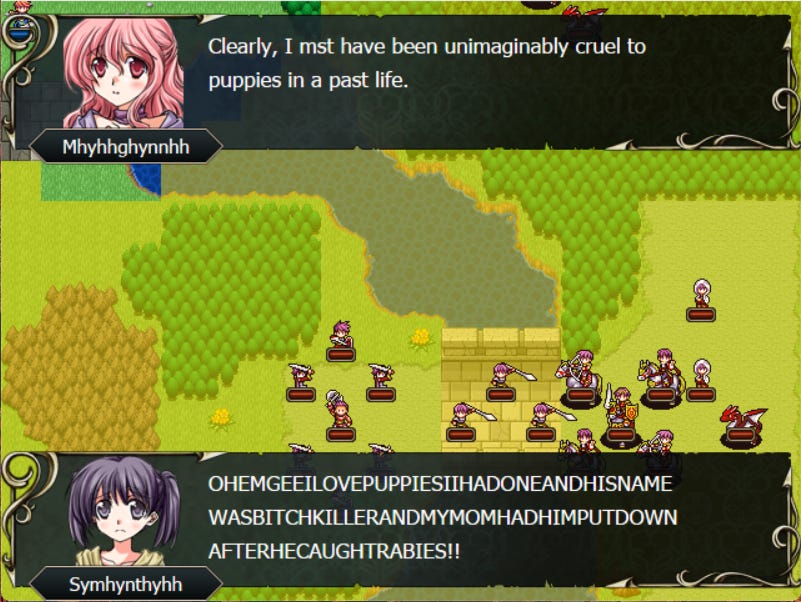
When it came to my games, the characters that showed up for (usually) just a single map only have that long to leave an impression, so there isn’t room to have deeper explorations and evaluations of their psyche and their motivations. Characters who show up a bit more often have the chance to be explored, but you ideally want everyone to leave an impact to a point.
I won’t say that I’m an expert in writing those single one-shot characters, but I do think I can make them acceptably well, and here are a couple of points that I’ve found work for me when writing that side character.
You don’t have long with them, and you need to make every moment with them count. My goal with them is to have a clear personality and some kind of “quirk” that makes them stand out amidst a sea of characters.
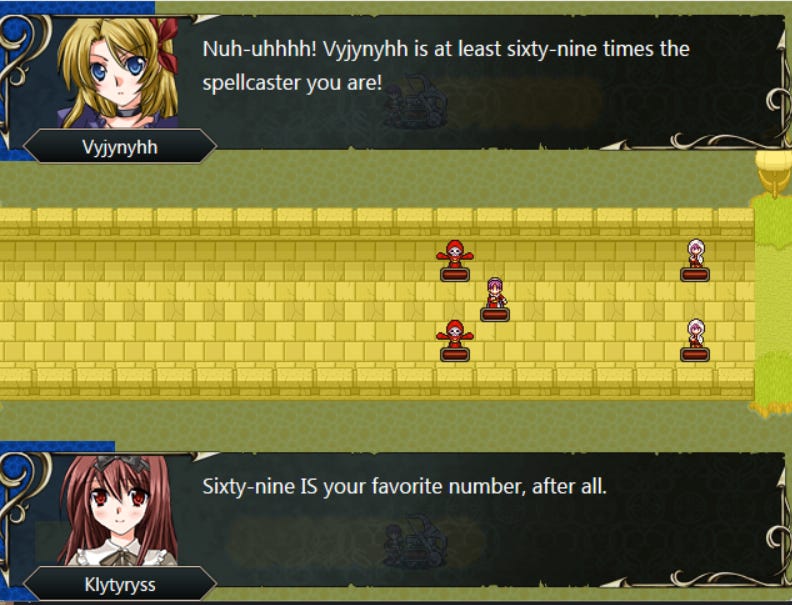
One pairing I’ve always liked are the “red and blue” ones, diametric opposites who hate each other. The two characters above came about from the idea of pairing an excitable and very aggressive personality with one that was more reserved, measured, and haughty. Contrasting styles definitely create a bit of a clash and a bit of intrigue, and them hating each other lets them shine.
Of course, you can do the opposite and lean into a trope I like to call “two people, one brain cell”, where you have a pairing who almost literally shares a single brain cell.
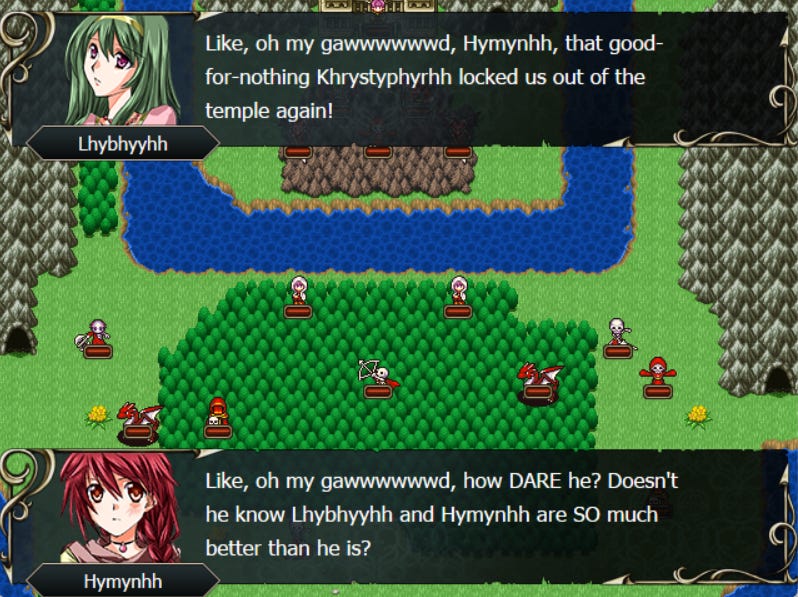
I like to mix it up a bit and keep pairings from all being the same. If people know exactly what to expect, it gets stale and tiring, and a bored reader (or consumer) is the one who’s likely to bounce off.
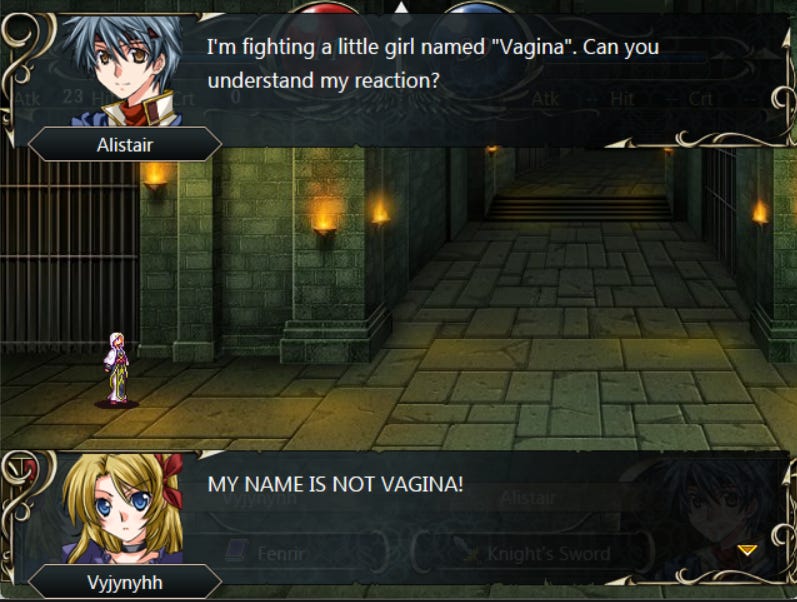
Again, I don’t have long with these characters, so I need to set the stakes immediately. A clear personality defect, simple and uncomplicated. Sometimes that winds up landing really well…in particular, the characters of Lhybhyyhh and Hymynhh were liked enough to inspire them to make a comeback in my second game.
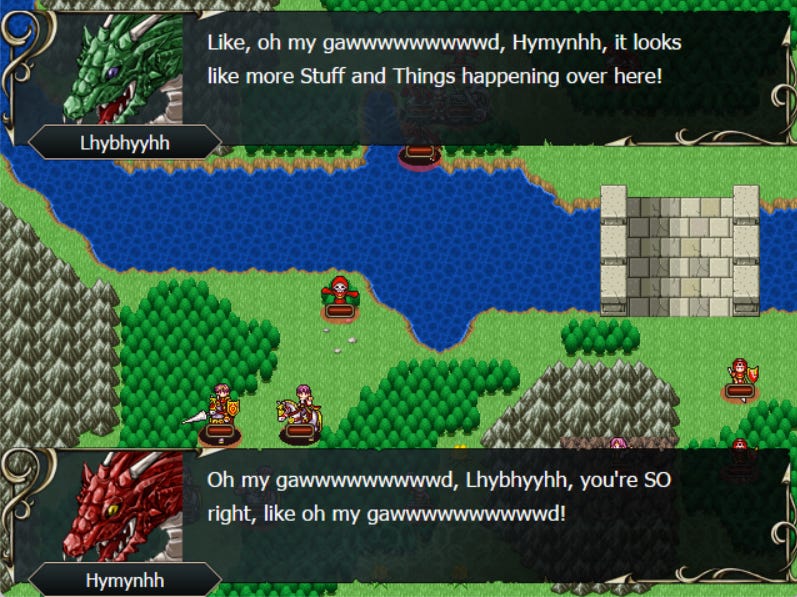
That being said, as great as a character might be in theory, they’ll inevitably not work if you just have them in their own bubble, doing their own thing and not interacting. There needs to be some popping of that bubble, interactions with the absurd characters that give them the feeling that they’re not just a mannequin repeating the same thing over and over.
I think it might be trickier to pin down why, but if you leave the characters to just be absurd and not have any sort of “foil” to their absurdity, it doesn’t work. Reactions of others to those characters is what makes them work as those “side characters”.
Side characters are like a bit of spice. Added deliberately and carefully, it can be elevating. But if you add it poorly or excessively, without a clear strategy for such a thing, you’re going to probe more annoying and exhausting than entertaining.
I will say that this was mostly talking about video games, since I find it’s easier to create game characters to fill a single-scene wonder sort of role. Also, a single scene might actually be closer to an hour in the games I make, with plenty of opportunities to add more color with dialogue and quips.
Side characters are always good to have, since they add more color and make the world feel more lived-in. But there are definitely ways they can derail things, so make sure you write them with intent and clarity.
No posts
Comments
Nothing yet. Say the first thing.
Sign in to join the conversation.