
Schenectady, NY (July 30) — Traveling for the work of the Church, I spent a few days in Schenectady, New York. A few things about the city immediately caught my attention.
First, the number of unhoused neighbors was remarkably low. In the city center, where I would have expected the greatest concentration, I encountered perhaps a dozen people. Maybe I’ve become a bit jaded after living in Los Angeles, where the unhoused population is estimated at around 75,000, the population of a small city. Or perhaps the answer lies, at least in part, in the second thing that stood out: adaptive reuse.
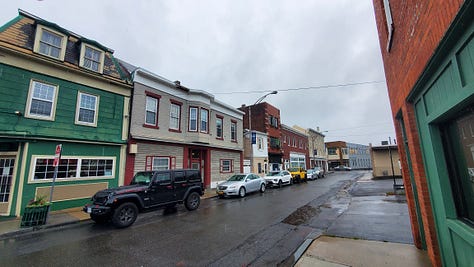
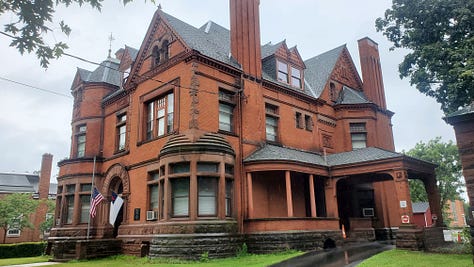
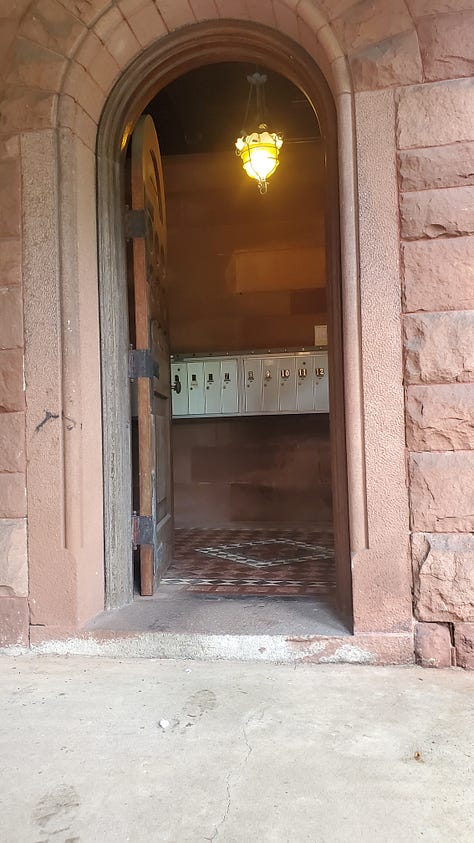
Despite the rain, I took a walk through the city. Time and again, I found older buildings that had been thoughtfully repurposed to meet today’s needs. Many former single-family homes had been converted into multifamily housing. Even more remarkable was a former Presbyterian church parsonage that had been transformed from housing for one minister and family into twelve affordable apartments.
I spoke with a resident as he was leaving. The units range from studios to one-bedroom apartments, with even a two-bedroom family unit. Only two of the studios share a bathroom. Every other unit has its own bathroom, and all but four include a kitchen or kitchenette. He told me he pays about one-quarter of his net income, which comes primarily from public benefits supplemented by some gig work.
To top it off, several former General Electric and Edison buildings have been converted into mixed-use developments, with retail, medical offices, and community services on the ground floor and a mix of affordable and market-rate housing above. Schenectady earned its nickname, the "Electric City," as the birthplace of General Electric, and there are countless large industrial buildings from that bygone era. The city encourages developers and property owners to adapt those buildings to serve the community in new ways.
Regions like Southern California can take a lesson or two from Schenectady’s commitment to adaptive reuse. New construction was so rare that it stood out. Older buildings are rehabilitated and updated to meet the needs of the community.
And it was remarkable: people being housed, properties being used rather than demolished, and a city's history preserved through its resilience.
Comments
Nothing yet. Say the first thing.
Sign in to join the conversation.