
The first four modules stayed largely within the immune system. What acemannan is. What system it works with. The cascade it triggers. The principle of modulation that distinguishes it from a conventional immune stimulant. That ground needed to be covered first, because the immune system is where acemannan’s best-documented mechanisms live.
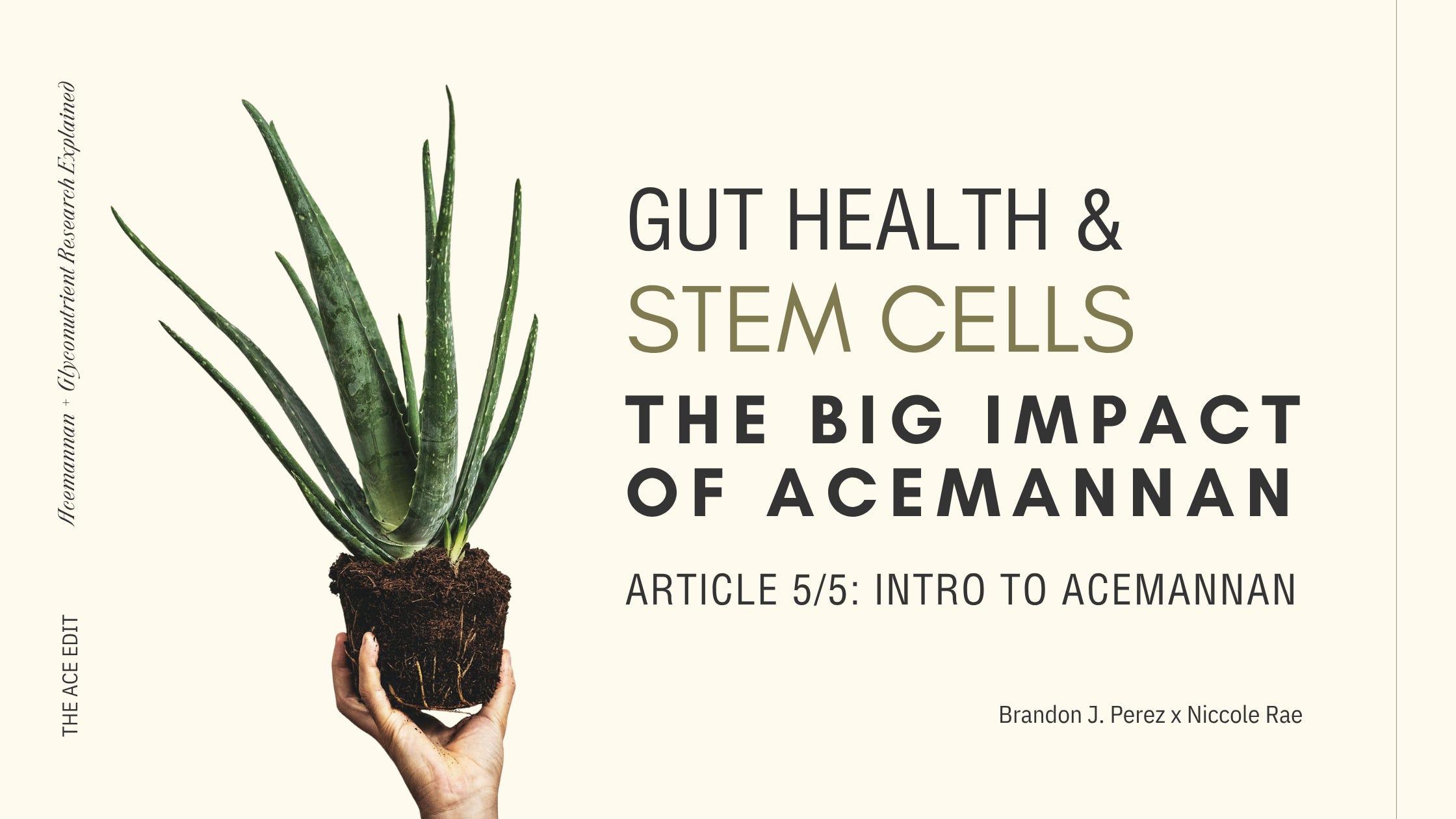
Module 5 is where the picture gets larger.
Acemannan is not only an immune compound. The research shows it working at multiple levels of the body simultaneously: at the cellular source where immune cells are generated, in the oxidative stress systems that protect and repair cells, in the gut environment that determines how well nutrition is absorbed, in the tissue repair processes that drive physical recovery, and in the microcirculation that delivers oxygen and nutrients to where healing actually needs to happen.
None of these functions are separate from each other. They are interconnected, and acemannan supports the conditions that allow all of them to work better at the same time. That is what makes it genuinely unusual as a compound. It does not do one thing. It supports the integrated system the body already is.
Modules 2 and 3 covered macrophages extensively: the frontline tissue-resident cells that patrol for threats, engulf invaders, release cytokines to coordinate the immune response, and bridge innate immunity to the adaptive response. Acemannan activates macrophages. That much is well established in the research.
What Module 5 adds is what happens further upstream.
Every macrophage in the body traces its origin to a stem cell in the bone marrow. Macrophages are not permanent fixtures. They have a lifespan, and the body must continuously generate new ones to replace them. The quality of that generative process determines the long-term health of the entire innate immune system. If stem cell activity is sluggish or insufficient, the supply of new macrophages is compromised, and the immune system’s capacity to monitor and respond degrades over time.
Acemannan has been shown to increase stem cell production by 300 to 400 percent. That number warrants sitting with. It is not a modest enhancement of an existing process. It is a substantial amplification of the body’s capacity to generate the raw material from which macrophages, and all other immune cells, are built. Acemannan does not only wake up the cells you already have. It supports the production of the next generation of those cells.
Definition: Stem Cells Undifferentiated cells with the capacity to divide and develop into specialized cell types. In the immune context, hematopoietic stem cells in the bone marrow are the origin point for all blood and immune cells, including macrophages, T-cells, B-cells, and NK cells. The health and activity level of the stem cell population in the bone marrow determines the long-term supply of immune cells available to the body.
Definition: Bone Marrow The soft tissue inside bones where blood and immune cell production takes place. Bone marrow contains hematopoietic stem cells that continuously divide and differentiate into red blood cells, white blood cells, and platelets. This production process is called hematopoiesis. Acemannan has been shown to support and stimulate this activity.
Stem cell activity is the input. Hematopoiesis is the output.
Definition: Hematopoiesis From the Greek ‘haima’ (blood) and ‘poiesis’ (making). The biological process by which bone marrow produces all blood cells: red blood cells that carry oxygen, white blood cells that drive immune defense, and platelets that enable clotting. Hematopoiesis is a continuous process. Every day the body produces hundreds of billions of new blood cells to replace those that have completed their lifespan.
Red blood cells carry oxygen to every tissue in the body. White blood cells are the immune system’s active agents: macrophages, T-cells, B-cells, NK cells, dendritic cells. Platelets stop bleeding when tissue is damaged. All of these are born in the bone marrow through hematopoiesis, and all depend on a healthy, active stem cell population.
By supporting stem cell proliferation, acemannan supports hematopoiesis. That means a steadier, more robust supply of the cells that carry oxygen, coordinate immune defense, and drive tissue repair. In populations where bone marrow activity has been compromised, whether through illness, radiation exposure, severe malnutrition, or aging, this capacity to support blood cell generation from the ground up has measurable consequences. Peng et al.’s work on aloe polysaccharides and hematopoietic recovery in irradiated subjects documents this effect directly.
Glutathione is referred to in research literature as the master antioxidant. That description reflects its scope. Every cell in the body uses glutathione as a primary defense against oxidative stress, a primary tool for detoxification, and a primary resource for cellular repair. Its presence or absence at the cellular level has consequences for how well virtually every physiological process functions.
Definition: Glutathione A tripeptide molecule made from three amino acids: glutamate, cysteine, and glycine. It is produced endogenously, meaning the body makes it rather than obtaining it from food. Glutathione neutralizes free radicals, supports liver detoxification, regenerates other antioxidants including vitamins C and E, and plays a central role in immune cell function. Low glutathione is associated with accelerated aging, chronic illness, and impaired immune response.
Definition: Oxidative Stress An imbalance between free radical production and the body’s ability to neutralize free radicals with antioxidants. Free radicals are unstable molecules that damage cells, proteins, and DNA when they accumulate. Oxidative stress is a feature of chronic illness, aging, environmental toxin exposure, and systemic inflammation. Glutathione is the body’s primary endogenous antioxidant defense against it.
Many supplements on the market deliver glutathione directly. The problem with that approach is that orally supplemented glutathione is largely broken down in the digestive tract before it reaches the cells that need it. Even when delivered intravenously, the effect is temporary. Once supplementation stops, the body returns to producing only as much glutathione as it was producing before. And there is evidence that relying on an outside supply can actually reduce the body’s own production over time, because the upstream signaling that drives endogenous synthesis responds to perceived need.
Acemannan takes a different path. Rather than supplying glutathione from the outside, it supports the body’s own capacity to produce it. The effect is not a temporary spike but a sustained enhancement of an endogenous process. The body’s glutathione production remains under its own regulatory control, working in response to actual cellular conditions rather than being substituted by an external source. Research by Surjushe et al. and Hamman documents the antioxidant effects and glutathione-related pathways influenced by aloe polysaccharides.
The gut microbiome is an ecosystem. Trillions of microorganisms, hundreds of species, living in the gastrointestinal tract and influencing digestion, immunity, neurotransmitter production, and systemic inflammation simultaneously. The health of that ecosystem depends on what feeds it.
Definition: Microbiome The collective community of microorganisms living in and on the body, particularly in the gastrointestinal tract. A healthy gut microbiome is diverse, with beneficial bacterial species in appropriate balance. It supports digestion, produces vitamins, regulates immune activity through the gut-associated lymphoid tissue (GALT), and influences mood and neurological function through the gut-brain axis. Dysbiosis, or imbalance in the microbiome, is associated with a wide range of health conditions.
Definition: Prebiotic A non-digestible compound that selectively feeds beneficial microorganisms in the gut. Unlike probiotics, which introduce bacteria from outside, prebiotics nourish the bacteria already present. Acemannan functions as a prebiotic: its polysaccharide structure passes through the upper digestive tract undigested and becomes available as a fuel source for beneficial microbes in the colon. Research by Sanz et al. has documented acemannan’s prebiotic fermentation potential.
The distinction between prebiotic and probiotic matters practically, and not only in biochemical terms. Probiotic supplements introduce specific bacterial strains from outside the body. For many people in many contexts, that works reasonably well. For others, it does not. Probiotic strains are not interchangeable. Different strains produce different effects, and for people with specific sensitivities, such as histamine intolerance, certain probiotic strains can trigger significant adverse reactions. Hundreds of probiotic strains exist, and unless you know precisely which ones your system tolerates, introducing them is not without risk.
Acemannan’s prebiotic approach sidesteps that problem entirely. Rather than introducing bacteria, it feeds the microbes already present in the gut, supporting the existing ecosystem to become more robust and diverse. When paired with a varied whole-food diet that naturally provides a range of prebiotic fibers, acemannan contributes to a gut environment that can sustain itself rather than depending on continuous outside intervention.
The term intestinal permeability, often called leaky gut, describes a condition in which the lining of the small intestine develops small gaps that allow partially digested food particles, toxins, and bacteria to pass into the bloodstream. The resulting immune response to those particles drives systemic inflammation and can trigger food sensitivities, autoimmune activity, and a range of symptoms that appear disconnected from the gut but trace back to it.
Definition: Intestinal Permeability (Leaky Gut) A condition in which the tight junctions between cells lining the intestinal wall become compromised, allowing substances that should remain in the gut to pass into systemic circulation. The immune system responds to these substances as foreign invaders, producing inflammation. Chronic intestinal permeability is associated with autoimmune conditions, food sensitivities, systemic inflammation, and neurological symptoms. Restoration of the gut lining is an immune-driven process.
Probiotics, when well-chosen, can reduce the inflammatory load on the gut and improve the mucosal environment. What they cannot do is repair the structural integrity of the lining itself. That repair process is immune-mediated. It requires immune cells to arrive at the mucosal surface, assess the damage, and coordinate the cellular rebuilding of tight junctions and epithelial tissue.
This is where acemannan’s role in gut health is distinct from what most gut-support products offer. By supporting mucosal immune function and dendritic cell activity at the gut surface, acemannan supports the active repair process rather than just improving the surrounding conditions. The research by Langmead et al., a randomized controlled trial examining aloe vera gel in ulcerative colitis, and Tanaka et al.’s work on mucosal protection document this capacity for structural gut lining support.
Healing at the tissue level depends on delivery. Oxygen, nutrients, immune cells, and repair signals all need to reach the site of damage or stress. Blood carries these resources through the cardiovascular system, but the final delivery into individual tissues happens through the microcirculation: the smallest capillaries and vessels that extend into cells and tissues throughout the body.
Definition: Microcirculation The network of the smallest blood vessels in the body: capillaries, arterioles, and venules. Microcirculation is responsible for the actual exchange of oxygen, nutrients, and waste products between blood and individual cells and tissues. When microcirculation is impaired, even adequate levels of circulating nutrients cannot reach the cells that need them, and metabolic waste builds up in tissues. Supporting microcirculation is a meaningful component of cellular health and recovery.
Acemannan has been shown to improve microcirculation and support tissue repair at the cellular level. Davis et al.’s work on acemannan and wound healing, and Chithra et al.’s documentation of aloe’s influence on collagen formation in healing wounds, both reflect this capacity. The mechanism involves acemannan’s effect on fibroblast activity: fibroblasts are the cells responsible for producing collagen and other structural proteins that give repaired tissue its structural integrity.
Definition: Fibroblasts Cells found in connective tissue that produce collagen, elastin, and other structural proteins. They are central to the wound healing process, rebuilding tissue structure after injury. Acemannan has been shown to support fibroblast activity, contributing to the quality and speed of tissue repair.
The practical consequence is that resources can get where they need to go more efficiently, waste products are cleared more effectively, and the body’s own repair capacity can express itself at a higher level. For anyone recovering from injury, illness, or surgery, or simply trying to maintain tissue health over time, microcirculatory support is not a peripheral benefit. It is foundational to whether cellular-level healing actually happens.
Everything covered in this module, stem cell support, hematopoiesis, glutathione production, prebiotic gut support, barrier repair, improved microcirculation, converges in what is arguably acemannan’s most consequential real-world role: amplifying the value of the nutrition the body receives.
Acemannan supports more efficient digestion of food, improved extraction of vitamins and minerals from what is eaten, more effective transport of those nutrients across the gut wall, and better cellular uptake and utilization once they are in circulation. It does not add nutrients. It improves the infrastructure that determines whether nutrients are actually used.
Definition: Nutritional Amplification The capacity of acemannan to improve the body’s ability to absorb and utilize the nutrients it receives. This operates through multiple pathways: better digestive function, improved gut barrier transport, enhanced cellular uptake via microcirculation, and a healthier gut microbiome environment that supports nutrient metabolism. The result is that the same quantity of food or supplementation produces more benefit when acemannan is present.
This is why acemannan has been central to humanitarian nutrition programs for decades. In populations facing severe malnutrition, the problem is rarely only the absence of food. The gut and immune infrastructure is so compromised by chronic deficiency and infection that even when nutrition is introduced, the body cannot absorb and use it effectively. Adding acemannan to nutritional programs has produced measurable improvements in outcomes that food alone could not achieve: survival rates increase, recovery is faster, and children who would not have responded to nutritional rehabilitation alone begin to thrive.
MannaRelief, a humanitarian organization active since the late 1990s, has distributed acemannan to malnourished children in clinics and orphanages around the world. The outcomes documented over those decades, including children surviving and recovering who would not have with nutrition intervention alone, represent the most direct evidence of what acemannan’s multi-system support makes possible when the body’s baseline capacity is severely depleted.
The same principle applies in contexts that are less extreme. For anyone whose gut health is compromised, whose absorption is impaired by stress, illness, or a history of dietary deficiency, or who is taking nutritional supplements and wants those supplements to be as effective as possible, acemannan’s amplifying effect on nutritional utilization has practical value. The foundation it supports is the foundation everything else depends on.
Across five modules, a complete picture has formed. Acemannan is a polysaccharide from aloe vera’s inner gel, structurally defined and preserved through a stabilization process that enabled decades of pharmaceutical-grade research. It interacts with the immune system through a specific molecular binding event that initiates a cascade of macrophage activation, cytokine signaling, dendritic cell maturation, and targeted T-cell response. It modulates rather than stimulates, supporting the immune system’s own regulatory capacity rather than pushing activity in a fixed direction. And its effects extend beyond the immune cascade into the generative systems that produce immune cells, the oxidative stress pathways that protect cells, the gut environment that determines absorption, and the circulatory infrastructure that delivers what the body needs to where it is needed.
Dr. Reginald McDaniel, whose name is on the original medical use patent for acemannan and who has spent more than forty years in its study, has described the compound in terms that sound almost too large. After decades of research, thousands of hours in the laboratory, and more published work on this molecule than any other researcher alive, he still finds it extraordinary. The scope of what it supports across interconnected biological systems is not what you expect from a single compound.
Acemannan is not a drug. It does not treat diseases. It does not override biology or force pathways in directions the body would not otherwise go. What it does is support the conditions under which the body can do what it was designed to do. And when those conditions are met, across immune regulation, cellular renewal, gut health, oxidative defense, and nutritional utilization all at once, healing stops being the exception. It becomes the expected output of a system functioning as it was built to function.
Stem cells, glutathione, gut integrity, microcirculation. Alovea Immun supports the systems underneath the immune system, not just the immune system itself.
Every serving you take provides a serving of acemannan to a malnourished child through the Buy 1, Nourish 1 program.
Key Terms from This Module
Definition: Stem Cells Undifferentiated cells in the bone marrow that are the origin point for all blood and immune cells.
Definition: Bone Marrow The tissue inside bones where hematopoietic stem cells continuously produce blood and immune cells.
Definition: Hematopoiesis The process by which bone marrow stem cells differentiate into red blood cells, white blood cells, and platelets.
Definition: Glutathione The body’s master antioxidant, produced endogenously, used for oxidative stress defense, detoxification, and cellular repair.
Definition: Oxidative Stress Cellular damage from free radical accumulation when antioxidant defenses are insufficient.
Definition: Microbiome The community of microorganisms in the gut that regulates digestion, immunity, and neurological function.
Definition: Prebiotic A non-digestible compound that feeds existing beneficial microbes in the gut, supporting the health of the existing ecosystem without introducing external bacteria.
Definition: Intestinal Permeability A condition in which gaps in the gut lining allow substances into the bloodstream that drive systemic inflammation and immune reactivity.
Definition: Microcirculation The network of smallest blood vessels responsible for delivering oxygen and nutrients to individual cells and tissues.
Definition: Fibroblasts Connective tissue cells that produce collagen and structural proteins, central to tissue repair.
Definition: Nutritional Amplification Acemannan’s capacity to improve the absorption and utilization of nutrition through multiple physiological pathways simultaneously.
Research Referenced
Zhang L, Tizard IR (1996). Activation of a mouse macrophage cell line by acemannan. Immunopharmacology, 35(2):119-128. PubMed: 8891103
Ramamoorthy L, Tizard IR (1998). Induction of apoptosis in a macrophage cell line RAW 264.7 by acemannan. Molecular Pharmacology, 53(3):415-421.
Peng SY et al. (1991). The effect of aloe polysaccharide on hematopoiesis in irradiated mice. Journal of Radiation Research (China).
Surjushe A, Vasani R, Saple DG (2008). Aloe vera: a short review. Indian Journal of Dermatology, 53(4):163-166.
Hamman JH (2008). Composition and applications of Aloe vera leaf gel. Molecules, 13(8):1599-1616.
Sanz ML et al. (2005). In vitro evaluation of the fermentability of aloe vera polysaccharides. Journal of Agricultural and Food Chemistry.
Gibson GR, Roberfroid MB (1995). Dietary modulation of the human colonic microbiota: introducing the concept of prebiotics. Journal of Nutrition, 125(6):1401-1412.
Langmead L et al. (2004). Randomized, double-blind, placebo-controlled trial of aloe vera gel for ulcerative colitis. Alimentary Pharmacology and Therapeutics, 19(7):739-747.
Tanaka M et al. (2006). Effects of aloe vera on gastric mucosal injury. Journal of Ethnopharmacology.
Davis RH et al. (1989). Wound healing: oral and topical activity of aloe vera. Journal of the American Podiatric Medical Association.
Chithra P et al. (1998). Influence of aloe vera on collagen characteristics in healing dermal wounds. Molecular and Cellular Biochemistry.
Tizard IR, Busbee D, Maxwell B, Kemp MC. Effects of acemannan, a complex carbohydrate, on wound healing and immune function. Journal of the American Animal Hospital Association. 1994.
Scrimshaw NS, SanGiovanni JP (1997). Synergism of nutrition, infection, and immunity. American Journal of Clinical Nutrition.
U.S. Patent 5,106,616 Pharmaceutical composition containing acemannan (method of treatment)
U.S. Patent 5,118,673 Method of treating animals with acemannan
This is the final module in the Understanding Acemannan series. Modules 1 through 5 are available at the links below.
No posts
Comments
Nothing yet. Say the first thing.
Sign in to join the conversation.