
I get the same questions every day. What is this stuff, how do I take it, is it safe for my kids. So I put all the answers in one place. Scroll straight to the question you have, or read the whole thing. Everything here is what I’ve learned and lived, not medical advice.

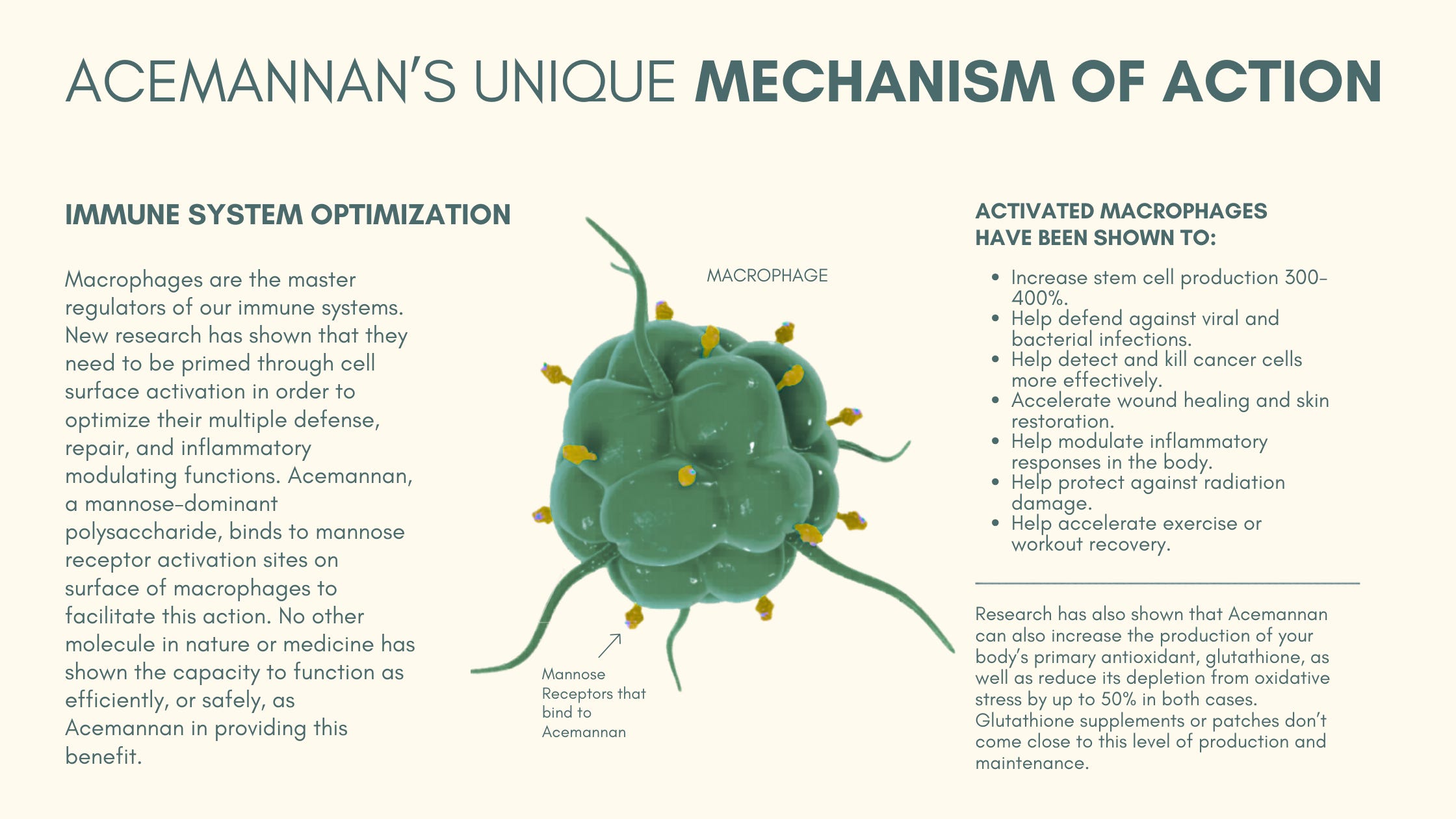
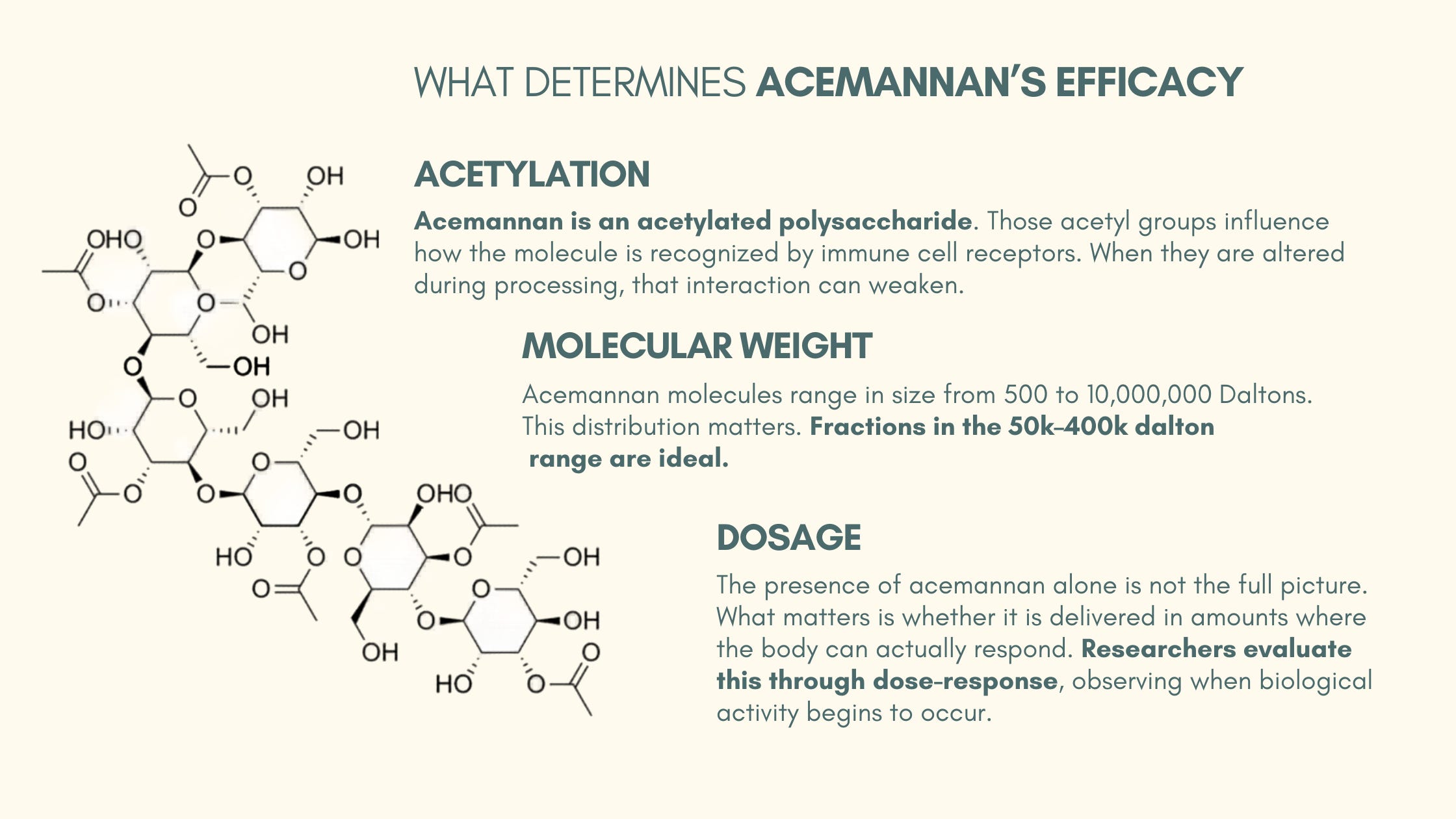
Simple Answer: Acemannan is the active compound in the inner gel of the aloe vera leaf. It’s a long chain of mannose, a polysaccharide your body uses to send signals.
Your immune cells read it like a signal and respond
It fits your macrophages, your front-line immune cells, like a key in a lock
It helps build the lining that protects your gut
If you’re looking for a more extensive answer, these slides will be helpful:
Every Alovéa product is made in a GMP-certified facility, the same manufacturing standard held to pharmaceutical-grade quality control. What goes in is clean, and what stays out matters just as much.
Made in a GMP-certified facility
Organic ingredients
Non-GMO
No artificial flavors
No artificial colors
No artificial sweeteners
Yes. Alovéa provides a Certificate of Analysis, the lab report that verifies what’s in the product and confirms it’s clean.
Shows purity and potency testing
Confirms no contaminants or fillers
Verifies the highest immunomodulating fraction available, the part of acemannan your immune cells respond to
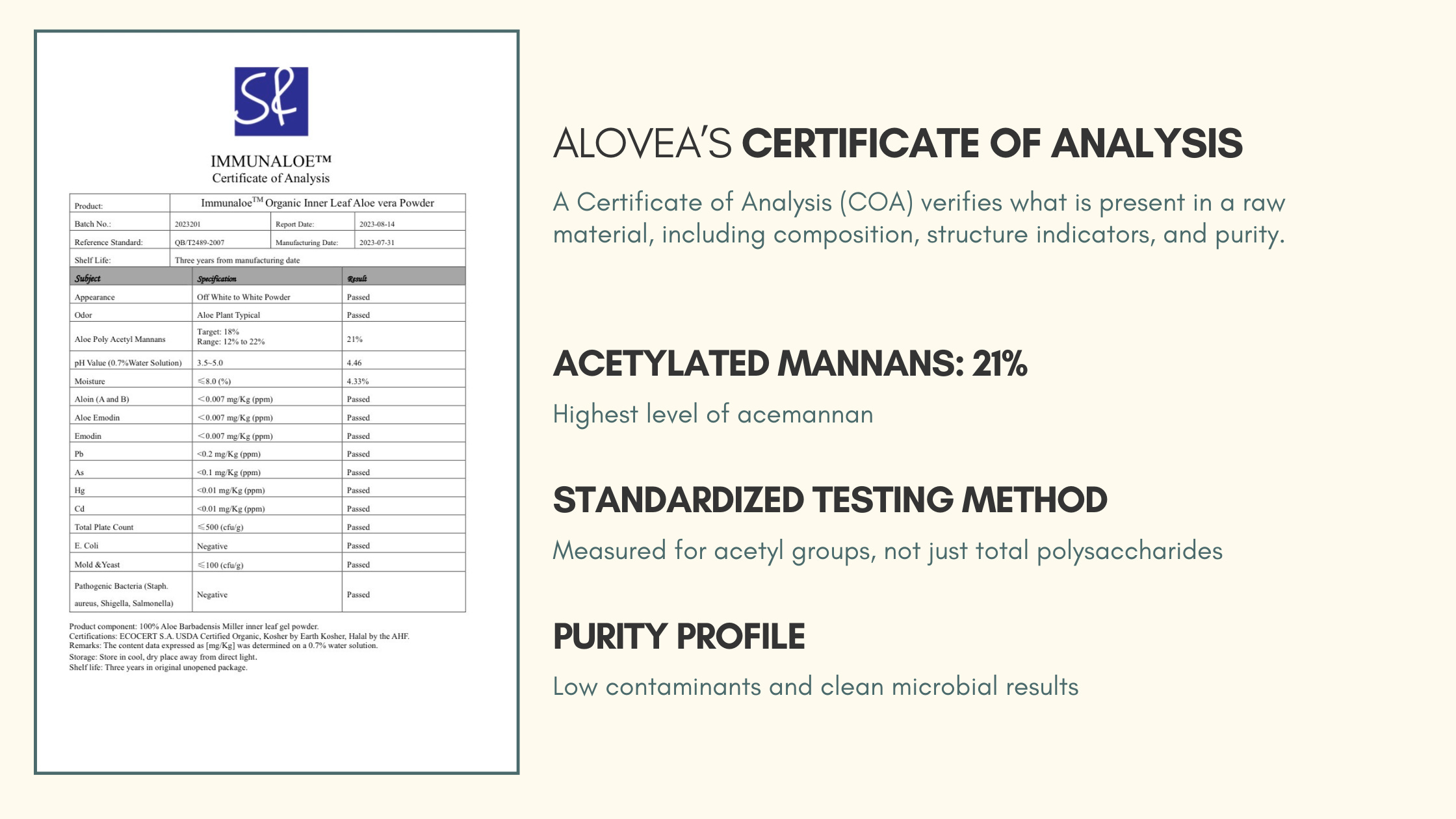
You can request the most recent copy from customer service anytime.
Your body drives its own healing, so the right amount depends on the support it needs. A starting point:
1 scoop of Alovéa AE (400 mg) = 2 Immūn capsules (200 mg each)
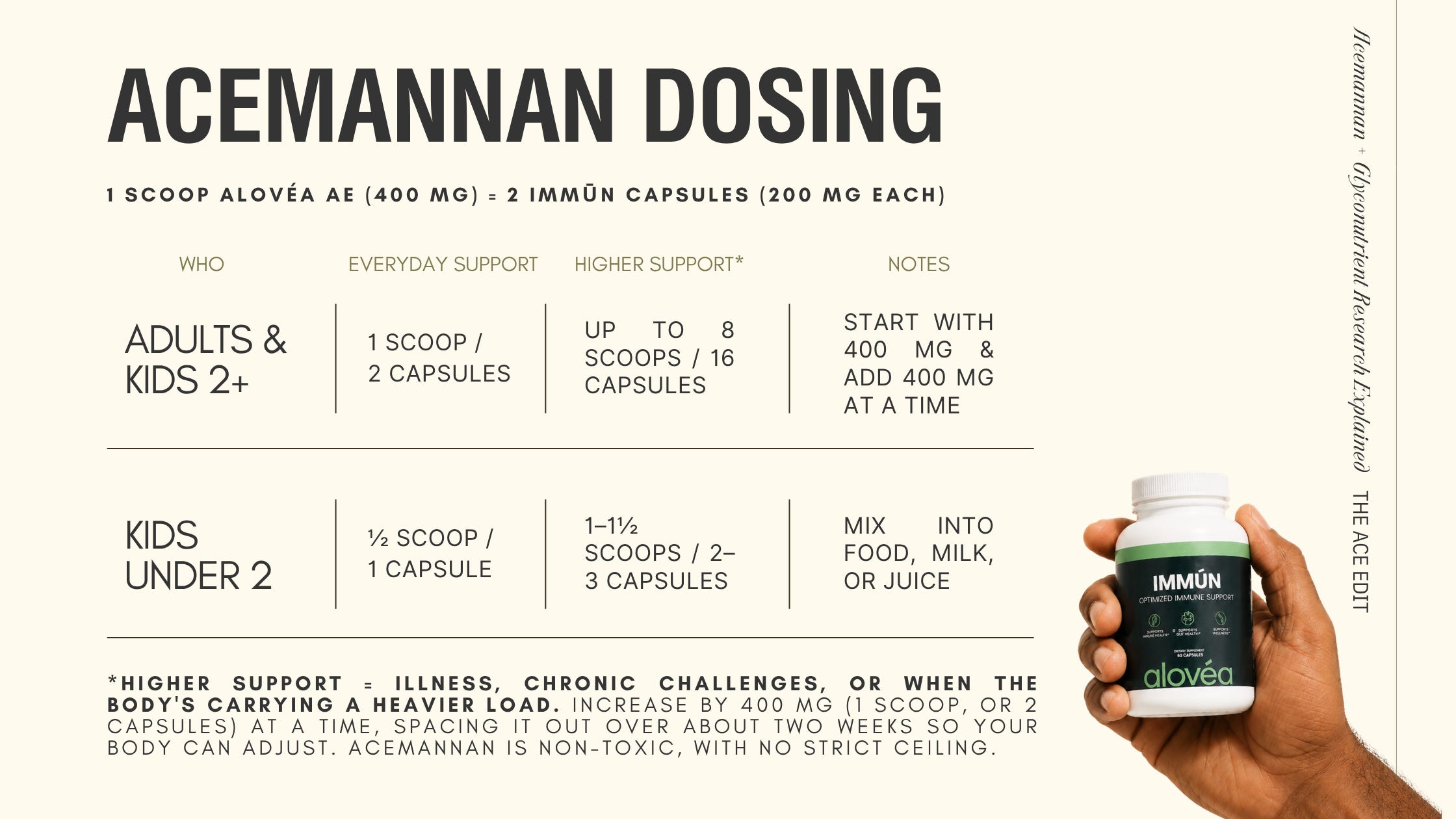
Acemannan is non-toxic, so there’s no strict ceiling. Some people take more during travel or stress, during a flare, or when the body’s carrying a heavier load.
Most people take their full amount at once, and that works well. If you’re taking a higher amount for extra support, you may want to split it across the day. Smaller amounts spaced out keep a steadier supply available to your body.
Maintenance amount → once a day is fine
Higher amount → try morning and evening
Steady supply beats one big spike
Acemannan gives your immune system input it can use, so it helps as long as you take it. How much you take can change with your life.
A maintenance amount covers everyday support
More during stress, travel, or seasonal challenges
You scale it to what your body is carrying
Some people stay on a steady amount for years. Others take more when they need it. Both work.
There’s no single timeline, and your body sets the pace based on where it’s starting from. That said, here’s what many people notice:
Week 1–2: reactivity drops, fewer flares
Weeks 4–6: better sleep, digestion, and energy
Around 3 months: mitochondrial output increases, neuroinflammation eases, and stress tolerance improves
A few things move this timeline as much as the acemannan does: what you eat, your sleep and stress, and your daily load of environmental inputs. Taken consistently, acemannan gives the body a steady supply to draw on.
Acemannan is one of the safest compounds ever studied. Researchers never found a toxic dose. Because it supports the immune system and the body’s natural cleanup process, some people notice mild, short-term shifts as the body adjusts.
Mild fatigue for a few days
A light headache as things move
Both usually pass on their own
Drinking plenty of water helps. This settles as your body finds its balance.
Cold won’t hurt acemannan at all. Heat depends on how hot and how long.
It stays stable up to 200°F for short exposures, so mixing it into a warm drink is fine.
The problem is sustained high heat, like baking at high temperature for 30 minutes or more. That’s when the structure starts to break down, and the structure is what your immune cells read.
Acemannan has a mild, earthy taste. Nothing strong. Mixed into something with flavor, most kids don’t notice it at all.
Stir it into juice, yogurt, applesauce, or a smoothie
A little flavor covers the earthiness
Acemannan is gentle enough for babies as young as 6 months, mixed into food or milk. It’s the same kind of structural sugar found in breastmilk, so it’s not foreign to a young body.
6 months and up, mixed into food or milk
Start small and go slow
Yes. Many aloe products contain anthraquinone, a compound in the outer leaf that acts as a laxative. Alovéa’s acemannan comes from the inner gel only, so it carries none of it.
Anthraquinone is what makes some aloe products harsh
Inner-gel acemannan leaves that compound out
It’s the same structural sugar found in breastmilk
As with any supplement while pregnant or nursing, if in doubt - check with your provider first.
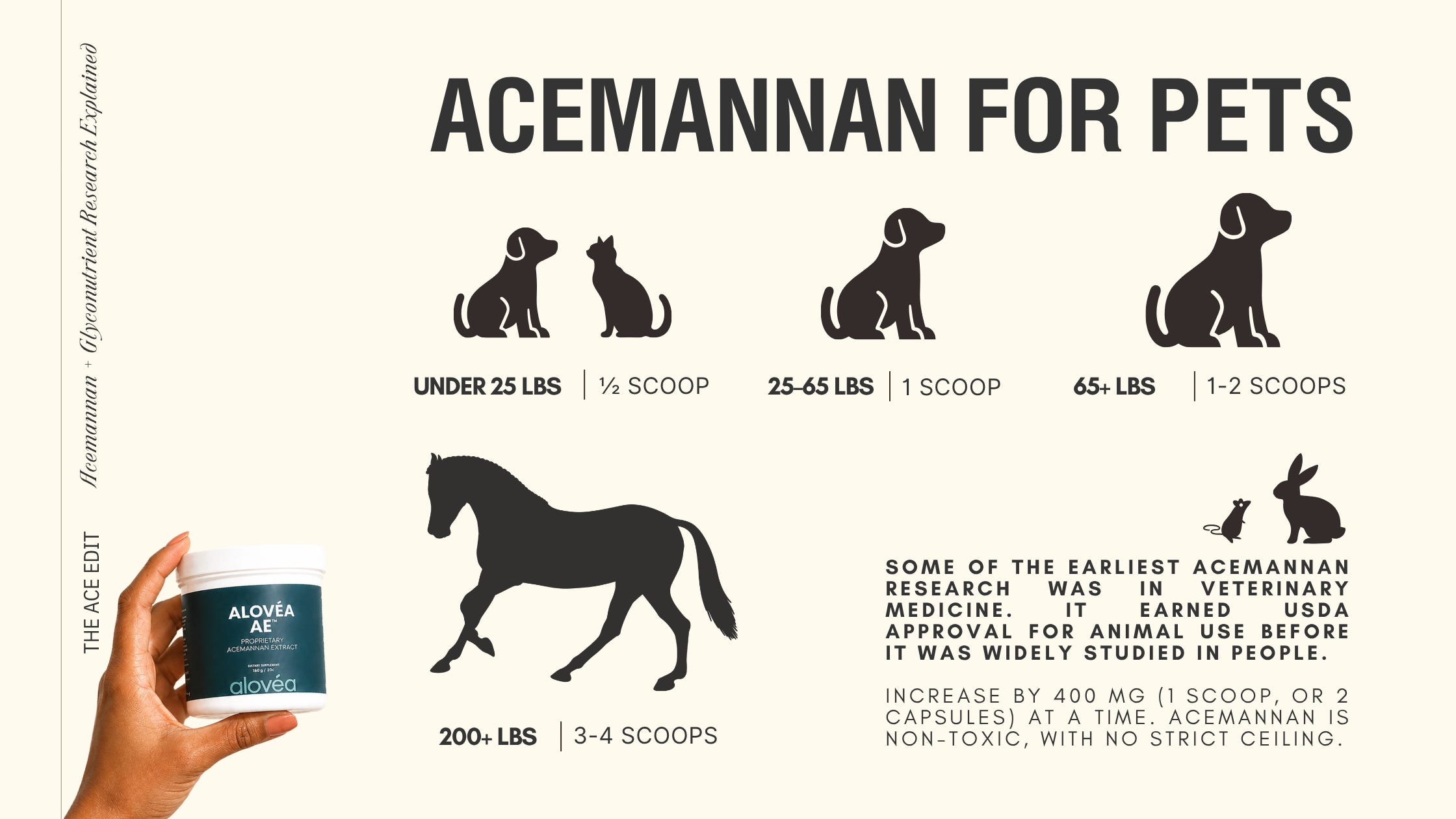
Acemannan works in animals the same way it works in people. Their immune cells read it just like yours do. Open a capsule or use the AE scoop, then mix the powder into food or water. Go by their size
Alovéa ships to many countries worldwide. To check if it’s available in yours, visit alovea.com and click the flag icon in the top right corner to change the country.

For every Alovéa product you buy, a serving of acemannan goes to a malnourished child through MannaRelief. You take care of your body, and a child in need gets nourished at the same time.
Every purchase gives a serving to a child
Delivered through MannaRelief’s giving network
No extra cost, it’s built into every order
When you take your Alovéa each day, a child somewhere is getting theirs too.

DISCLAIMER
Nothing here is medical advice. It’s education and personal experience. Always check with your own provider about what’s right for you. These statements have not been evaluated by the FDA. This product is not intended to diagnose, treat, cure, or prevent any disease.
No posts
Comments
Nothing yet. Say the first thing.
Sign in to join the conversation.