
Hey everyone —
Welcome to the July edition of the AlleyCorp Deep Tech newsletter.
This month we’re sharing highlights from our summer travels, reflections on the state of American manufacturing, and updates across the deep tech landscape. Our portfolio is on the move (👋 Radical!) and the broader ecosystem continues to inspire us.
As always, if you're building or investing in deep tech — we want to hear from you.
Thanks for reading,
~Brannon
LinkedIn | X | Subscribe here
If you missed the June Newsletter - Check it out here!

This month, I had the privilege of attending the Reindustrialize Summit— The best in class gathering of all parties that are thinking seriously about the future of American manufacturing. The quality of the guest list was its defining feature; I couldn’t walk nearly five steps without bumping into an impressive defense tech, automation, or industrial software industry leader.
Isaiah Taylor, CEO of our portfolio company Valar Atomics, took the stage to share how they're scaling small modular nuclear reactors and its moral imperative to our country's energy infrastructure. (If you’re not following Isaiah on X —you should be.)
🔗 NYT coverage
🔗 Business Insider recap
📜 Read the Techno-Industrialist Manifesto (from 2024)
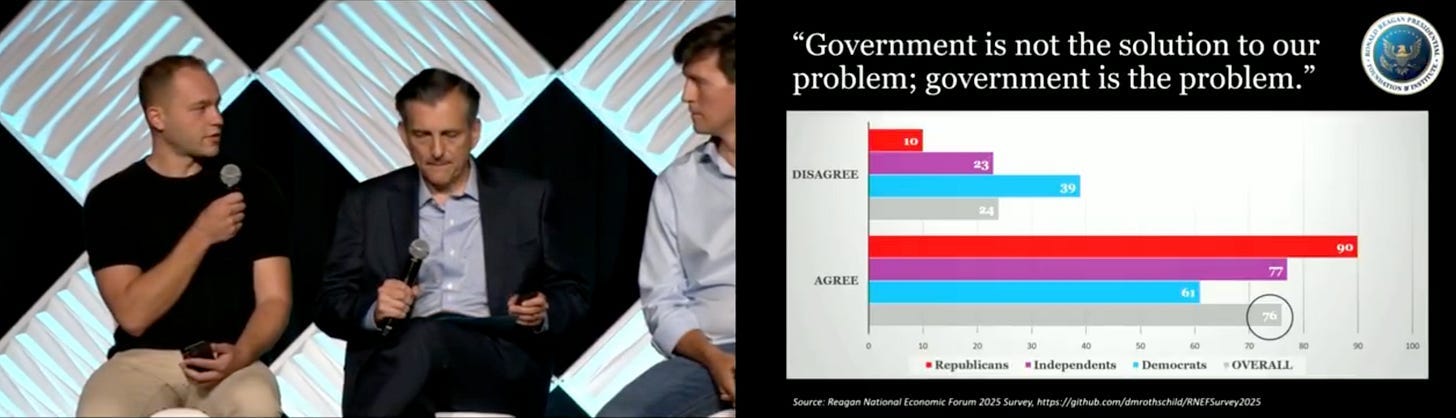
"Is the "Made in America" tag merely another "green premium" phenomen? Or does the growing momentum in domestic manufacturing represent a lasting transformation? This question has become increasingly relevant as we witness growing momentum and capital deployment for domestic manufacturing initiatives across the public and private sectors.
The Case for Lasting Change
The global pandemic fundamentally altered corporate risk calculations around supply chain resilience, creating concerns that transcend political administrations. When companies like Hyundai commit billions to build factories in the U.S. rather than Mexico, they create nearly irreversible momentum—given the multi-billion dollar investment and long term payback horizon.
The economics are also shifting in favor of domestic production. AI-enabled manufacturing could finally deliver the low-cost, high-margin production that makes US factories genuinely competitive rather than just strategically necessary. Once companies discover they can maintain healthy margins while benefiting from shorter supply chains and faster turnaround times, the business case becomes self-reinforcing. Capital providers are increasingly willing to finance and underwrite robotic systems, creating additional tailwinds for the sector. When executives see their stock prices rise after successful domestic manufacturing investments, they naturally want to replicate that success.
The Cautionary Perspective
However, parallels to the green premium remain in our view. Just as sustainability commanded a price premium six to seven years ago with promises of eventual cost parity that largely failed to materialize, "Made in America" currently requires customers willing to pay extra for strategic or resilience benefits. The Department of Defense and other strategic buyers will absorb these costs, but broader market adoption remains questionable.
The automotive industry exemplifies this challenge. Despite experiencing severe supply chain disruptions during the chip shortage, OEMs remain reluctant to pay even modest premiums—sometimes as little as 25 cents—for supply chain diversification and U.S. sourced materials. This short-term cost focus could undermine long-term resilience investments.
Political winds also shift. If geopolitical tensions ease or trade policies change, the strategic imperative for domestic production could diminish, potentially leaving companies with expensive domestic capacity competing against more efficient overseas alternatives.
The Critical Deciding Factor
The movement's ultimate success likely depends on deep tech’s execution by startups in these early stages. If AI-enabled factories (our drop in automation systems) can demonstrate genuine cost competitiveness rather than just strategic value, broader adoption becomes viable and sticky - think of it like crossing the chasm. The key is whether domestic manufacturing can transition from a premium product for strategic buyers to a mainstream option that competes on pure economics.
We appear to be in the early innings of what could become a significant transformation—but only if the technology delivers on its promises and companies can prove that domestic manufacturing works as a business model, not just a strategic hedge.
If you have thoughts about this and want to chat further, reach out to me! I’d love to discuss.
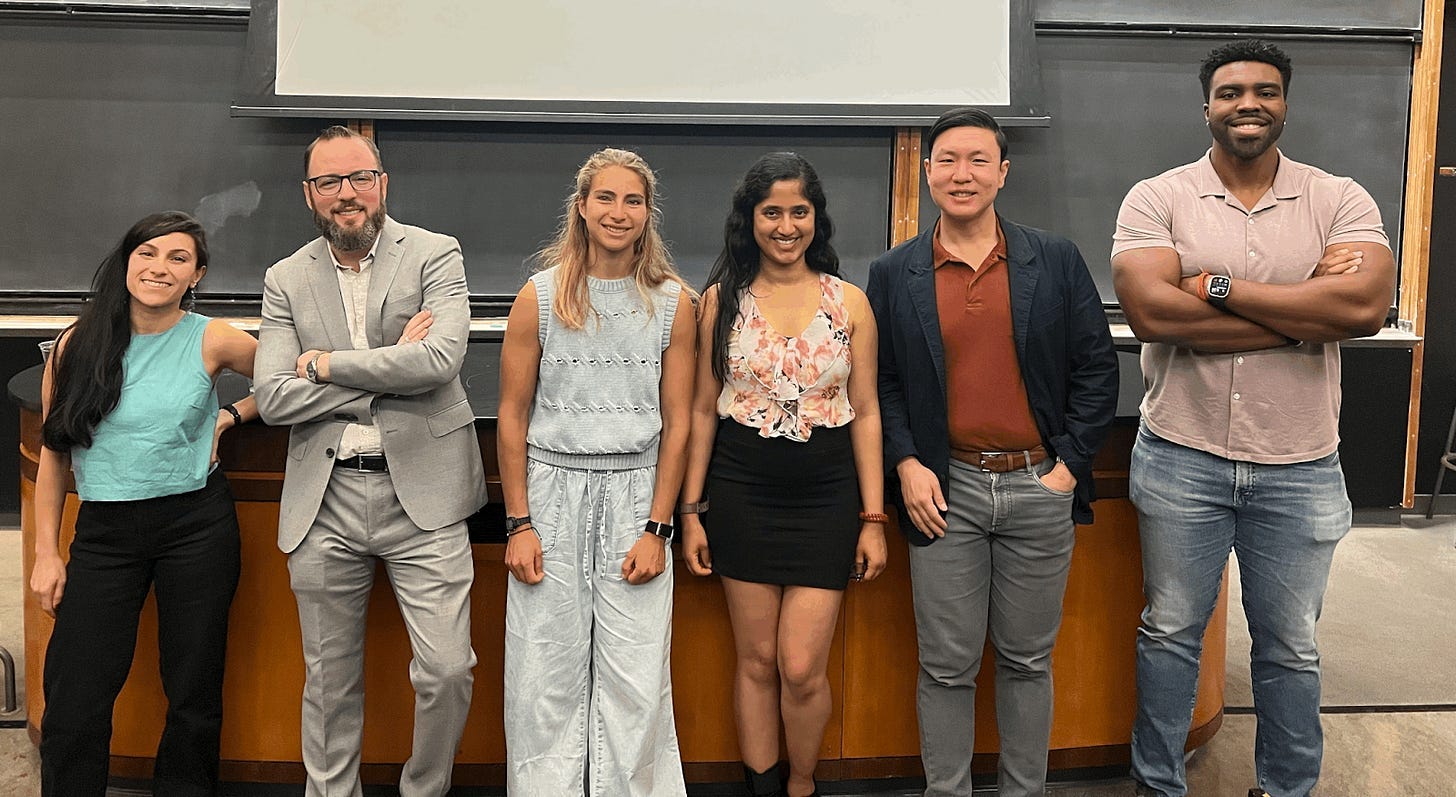
I spoke with 75+ Caltech students, PhDs, postdocs, and professors on the topic of resilience in deep tech this month, and I did it because few people embody grit like deep-tech PhDs. They spend 5-6 years of 7-day work weeks, chronically underfunded (and underpaid), in highly niche domains, with unknown outcomes—except certainty that failure and iteration will greet them along the way. That’s exactly the mindset we look for in founders and in people who want to change the world.
Big thanks to Sara Anjum for the invite. If you're a PhD thinking about your next move: we want to meet you.
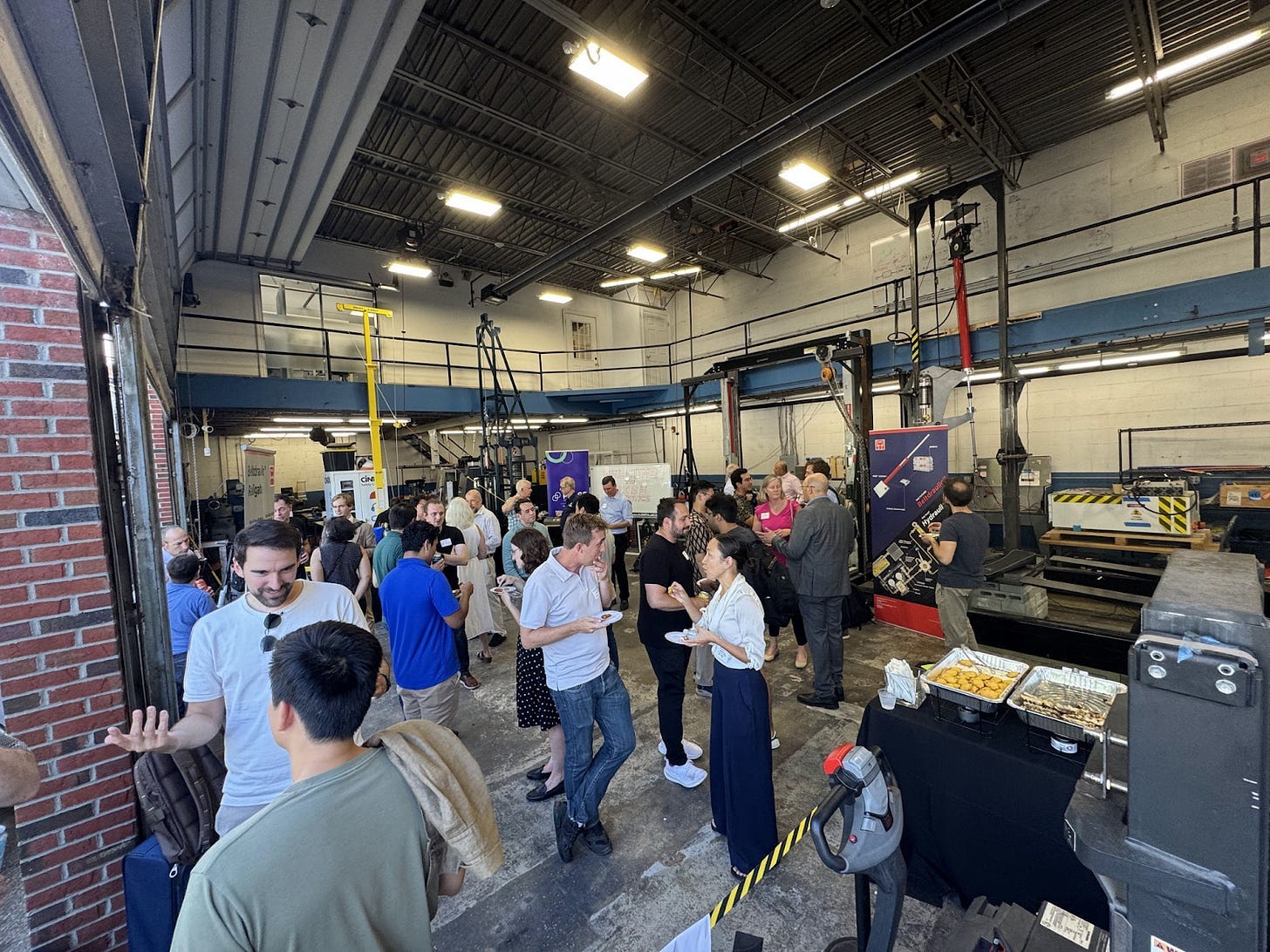
Abe gathered with 50+ top-tier founders and investors in Boston this month for an evening of serious hard tech energy hosted at Rise Robotics. There always has been, and continues to be, serious density in Boston’s robotics and industrial ecosystem—and we’re all in.
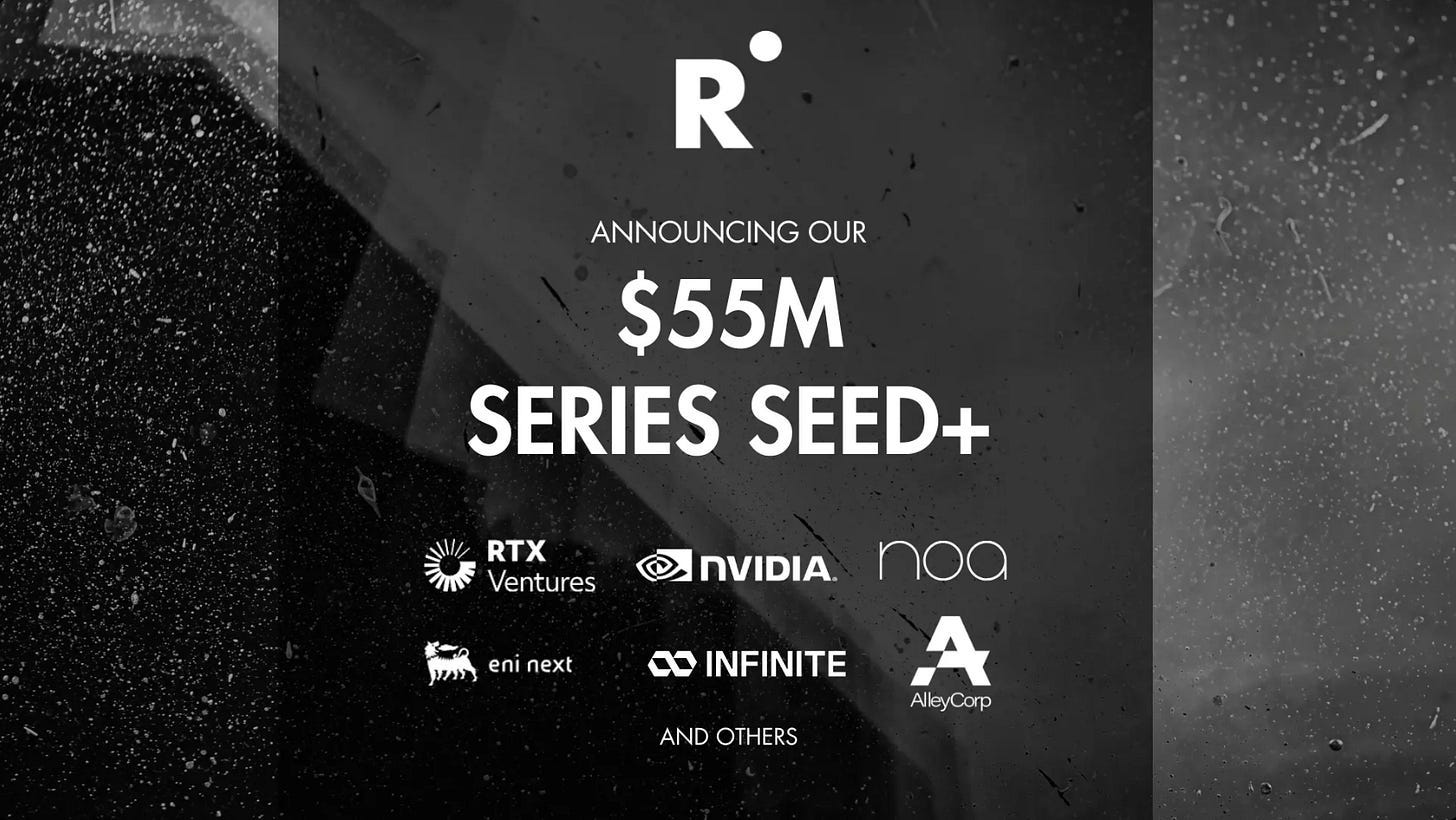
Our portfolio company, Radical AI, just raised a $55M seed round to accelerate embodied AI in materials science - the third largest equity seed round in NYC history (woohoo!).
They’re iterating faster than nearly any team we’ve ever seen—and bringing machine intelligence into physical workflows in ways that make R&D feel like software. We couldn’t be more excited about this team and this space.
Reindustrialization is real. The U.S. is investing heavily in manufacturing capacity (to the tune of $250B per year on new factory construction) —but we think VC still underweights advanced manufacturing business models and that huge opportunities remain to savvy founders and investors.
Factory intelligence: We're interested in orchestration layers that unite ecosystems of intelligent automation system to complete an entire “job description’s” worth of tasks centered around a core, high value action.
Data for robotics: How do you scalably collect high-fidelity data to improve autonomy? We see this as a key bottleneck—and opportunity.
SpaceX hits $400B valuation Bloomberg — But TechCrunch raises concerns over injury rates at Starbase: Read more
General Matter: New Thiel-backed U.S. nuclear startup. More
Funding news:
Robots teaching robots: DeepMind is letting robots teach each other via table tennis—and it’s surprisingly effective. IEEE Spectrum article
“AI turned me into a content agency of one” — smart breakdown of solo creator tools to turn yourself into a content machine ( Every.to article)
FormLabs Mafia doc — a who’s who of top-tier builders from the FormLabs ecosystem
“Deep Tech’s growth is a generational opportunity” — Alexandra Vidyuk on the generational opportunity
That’s a wrap for July. If you’ve made it this far—thank you. We write these newsletters to stay in touch with builders, operators, and fellow deep tech optimists.
Got something you're working on?
We’re always eager to meet great founders and collaborators. Don’t be a stranger.
Stay cool,
— Brannon & Abe
LinkedIn
Comments
Nothing yet. Say the first thing.
Sign in to join the conversation.